TWO BUCKET CLUB

Best Car Detailing Tools (2026)

Tools are the half of detailing you buy once. They decide what is physically possible on a car - what a bottle can reach, how fast it rinses, whether grit comes out of a seat seam at all - and the limiting spec is almost never the number on the box. Six tools, one per job, no chemicals.

By Stephen V.Last updated How we pick

If you buy one tool this year, buy the wet/dry vacuum. The RIDGID 4-gallon is the cheapest item on this page that changes an outcome you cannot reach any other way: no chemical, towel or technique gets embedded grit out of a seat seam, and a car interior does not get properly clean until something has pulled it out. After that, the order below is the order we would buy in.

This page is deliberately chemical-free. Liquids are consumables — you buy them repeatedly, you find out quickly whether they work, and a bad bottle costs you fifteen dollars. Tools obey a different rule entirely. You buy them once, you live with the decision for a decade, and the thing that limits them is usually not the headline spec. The pressure washer is limited by flow and not pressure. The polisher is limited by how forgiving it is and not how powerful. The steam cleaner is limited by runtime and whether it has a brush small enough for a vent.

So each pick below is named with the spec that actually constrains it, and every one of them is a tool rather than a bottle. Prices are live. If you want the chemicals instead, our master picks page is the counterpart to this one, and the interior pillar does the same job for the cabin.

How this is funded:we earn a commission if you buy through our links, at no extra cost to you. It never changes which product we recommend, and we’ll tell you plainly when we’d skip one. Full disclosure.

Quick picks

Ranked on published specs, value and buyer fit. Select a row to jump to the full write-up. We have not lab-tested these products — here is exactly what we do instead.

#ProductBest forPrice
1
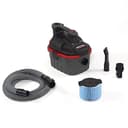
RIDGID 4-Gallon Portable Wet/Dry Vac (4000RV)

RIDGID 4-Gallon Portable Wet/Dry Vac (4000RV)

The sweet-spot car vacuum: a compact wet/dry shop vac with enough suction to actually pull debris out of seat seams and floor mats, small enough to carry around the car, and with detailing attachments available. This is what most home detailers should own.

Buy this one first
$147.60View on Amazon

Price as of October 10, 2026. #ad How we’re funded

2
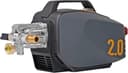
Active 2.0 Electric Pressure Washer

Active 2.0 Electric Pressure Washer

The only unit here designed around washing cars rather than cleaning concrete, and it shows in the spec that matters: 2.0 GPM of flow at a deliberately modest 1800 peak PSI. More water and less pressure is exactly the trade a detailer wants — foam comes out faster and rinsing stops being the slow part of the wash.

The wash tool
$299.99View on Amazon

Price as of October 10, 2026. #ad How we’re funded

3
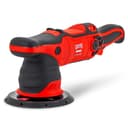
Griot's Garage G9 Random Orbital Polisher

Griot's Garage G9 Random Orbital Polisher

The polisher we'd hand a nervous first-timer: a long-throw random orbital that corrects paint efficiently while being very hard to burn paint with, backed by Griot's strong warranty reputation. Costs more than the budget units and is worth it.

The correction tool
$179.99View on Amazon

Price as of October 10, 2026. #ad How we’re funded

4
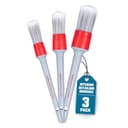
Chemical Guys All in the Details Detailing Brush Set (3-Piece)

Chemical Guys All in the Details Detailing Brush Set (3-Piece)

A tidy three-size set that covers most interior and delicate-exterior jobs — vents, seams, badges, trim and emblems — with soft bristles and comfortable handles. A sensible do-most-things set from a brand people trust.

The reach tool
$21.99View on Amazon

Price as of October 10, 2026. #ad How we’re funded

5
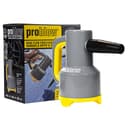
Chemical Guys ProBlow High Flow Hand-Held Dryer (EQP403)

Chemical Guys ProBlow High Flow Hand-Held Dryer (EQP403)

The middle of the category: a handheld high-flow blower priced between the accessory-grade units and the professional machines, aimed at the owner who wants to dry a whole car with air but not build a garage around it.

The drying tool
$68.99View on Amazon

$99.9931% off

Price as of October 10, 2026. #ad How we’re funded

6
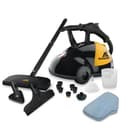
McCulloch MC1275 Heavy-Duty Steam Cleaner

McCulloch MC1275 Heavy-Duty Steam Cleaner

The one with the numbers actually stated: a 45-minute runtime and 18 accessories. For car interiors the runtime is the spec that decides whether you finish the job, and the small brushes are what get into vents and seat rails.

The deep-clean tool
$168.99View on Amazon

Price as of October 10, 2026. #ad How we’re funded

The picks in full

#1Buy this one first

RIDGID 4-Gallon Portable Wet/Dry Vac (4000RV)

The sweet-spot car vacuum: a compact wet/dry shop vac with enough suction to actually pull debris out of seat seams and floor mats, small enough to carry around the car, and with detailing attachments available. This is what most home detailers should own.

What we like

  • Strong suction that genuinely lifts embedded grit
  • Handles wet spills as well as dry debris
  • Compact and portable versus a full-size shop vac

Trade-offs

  • Corded — you're managing a hose and a cord
  • Stock nozzle is wide; add a detailing kit for tight spots
TypePortable wet/dry shop vacuum
Standout spec4-gallon wet/dry
Size4 gal
Best forThe one vacuum most home detailers should buy
Price tierMid

Specs read from the product listing, on July 19, 2026. “Not listed” means the listing does not state that figure.

#2The wash tool

Active 2.0 Electric Pressure Washer

The only unit here designed around washing cars rather than cleaning concrete, and it shows in the spec that matters: 2.0 GPM of flow at a deliberately modest 1800 peak PSI. More water and less pressure is exactly the trade a detailer wants — foam comes out faster and rinsing stops being the slow part of the wash.

What we like

  • 2.0 GPM — the highest rated flow in this group, on a standard 15-amp circuit
  • Runs a foam cannon hard — 2.0 GPM of flow makes thick foam and a quick rinse
  • 20 ft rubber hose with an M22-14mm fitting, so aftermarket detailing accessories bolt straight on
  • Deliberately low peak pressure is a feature around paint, trim and badges

Trade-offs

  • The most expensive pick here by a clear margin
  • 1800 peak PSI is the lowest on this page — it is not the tool for stripping a driveway
  • Sold as both a tool-only and a full-kit listing at different prices; check which one is in your cart
TypeCold-water electric pressure washer
Standout spec1800 peak PSI / 2.0 GPM
Size20 ft hose, 35 ft GFCI cord
Best forAnyone who bought a pressure washer specifically to detail cars
Price tierPremium

Cost-to-use note. Active rates this at 2.0 GPM from a standard 15-amp household outlet — roughly two-thirds more water per minute than the 1.2 GPM rated units on this page. That flow is what makes a foam cannon produce thick foam and what makes the rinse pass quick, which is the whole argument for paying the premium.

Specs read from the product listing, on July 20, 2026. “Not listed” means the listing does not state that figure.

#3The correction tool

Griot's Garage G9 Random Orbital Polisher

The polisher we'd hand a nervous first-timer: a long-throw random orbital that corrects paint efficiently while being very hard to burn paint with, backed by Griot's strong warranty reputation. Costs more than the budget units and is worth it.

What we like

  • Long throw removes defects faster with less effort
  • Random-orbital action is very forgiving — hard to damage paint
  • Griot's warranty and support are genuinely good

Trade-offs

  • Costs more than an entry-level budget polisher
  • Long-throw machines can be awkward on tight, curved panels
TypeLong-throw random orbital (dual-action) polisher
Standout specRandom-orbital, long throw
SizeNot listed
Best forA beginner's first, and probably only, polisher
Price tierPremium

Specs read from the product listing, on July 19, 2026. “Not listed” means the listing does not state that figure.

#4The reach tool

Chemical Guys All in the Details Detailing Brush Set (3-Piece)

A tidy three-size set that covers most interior and delicate-exterior jobs — vents, seams, badges, trim and emblems — with soft bristles and comfortable handles. A sensible do-most-things set from a brand people trust.

What we like

  • Three sizes cover vents, seams, emblems and trim
  • Soft bristles safe on interior surfaces
  • From a widely trusted detailing brand

Trade-offs

  • Only three brushes — a bigger kit gives more size options
  • Not stiff enough for scrubbing carpet or tires
TypeSoft detailing brush set (interior & trim)
Standout specThree sizes; soft bristles
Size3-piece
Best forA first all-round interior detailing brush set
Price tierMid

Specs read from the product listing, on August 7, 2026. “Not listed” means the listing does not state that figure.

#5The drying tool

Chemical Guys ProBlow High Flow Hand-Held Dryer (EQP403)

The middle of the category: a handheld high-flow blower priced between the accessory-grade units and the professional machines, aimed at the owner who wants to dry a whole car with air but not build a garage around it.

What we like

  • High-flow handheld design sized for whole-vehicle drying
  • Doubles for garage and yard work, which softens the cost
  • Cheaper than the professional machines by a wide margin

Trade-offs

  • Airflow figures are not stated on the listing
  • Corded - a hose reel and an extension lead is the reality of using it
TypeHandheld high-flow blower/dryer
Standout specNot listed
SizeNot listed
Best forOne car, dried mostly with air rather than towels
Price tierMid

Specs read from the product listing, on August 18, 2026. “Not listed” means the listing does not state that figure.

#6The deep-clean tool

McCulloch MC1275 Heavy-Duty Steam Cleaner

The one with the numbers actually stated: a 45-minute runtime and 18 accessories. For car interiors the runtime is the spec that decides whether you finish the job, and the small brushes are what get into vents and seat rails.

What we like

  • 45-minute stated runtime - enough for a full interior
  • 18 accessories including the small brushes cars need
  • Long-established model with a wide support base

Trade-offs

  • Bulky to store for something used a few times a year
  • Needs a full cool-down before refilling
TypeCanister steam cleaner
Standout spec45 min runtime, 18 accessories
SizeNot listed
Best forLong sessions with the right small tools
Price tierMid

Specs read from the product listing, on August 18, 2026. “Not listed” means the listing does not state that figure.

What limits each of these six tools

1. The vacuum: suction is the easy part, nozzle size is the hard part

Every shop vac on the shelf has enough suction for a car. What almost none of them has is a nozzle narrow enough to fit the places that actually hold dirt — the gap between seat base and backrest, the rails, the channel under the door sill. The RIDGID 4000RV is our pick because it is the sweet-spot size: enough suction to lift embedded grit, small enough to carry around the car rather than drag, and wet-capable so it handles a spilled drink and not just crumbs.

Its honest con is the one you should plan for: the stock nozzle is wide. Add a narrow-nozzle detailing kit on the same order. That upgrade is worth more than buying a bigger vacuum would be, and we cost it out end to end in shop-vac detailing setups. The whole vacuum field, including the cordless handhelds, is in best car vacuums, and if you have a dog in the car, pet hair needs agitation before suction does anything at all.

2. The pressure washer: flow, not PSI

A pressure washer does two jobs in a car wash and both of them are flow jobs. A foam cannon pushes water through soap and an orifice, so more water per minute means thicker foam. Rinsing is the slow part of a wash, and flow is what shortens it. Pressure, meanwhile, is something every consumer machine has in surplus — and more of it mainly raises the cost of a mistake.

The Active 2.0 is the only machine in our registry specified around cars rather than concrete: 2.0 GPM of rated flow at a deliberately modest 1800 peak PSI. For comparison, both the Kärcher K1700 Cube and the Westinghouse ePX3050 are rated at 1.2 GPM. Be careful reading the box generally — Pro Tool Reviews has documented how far advertised peak figures can sit from measured output, and Westinghouse itself publishes 2100 max PSI against 1800 rated. The field is ranked in best pressure washers for detailing; the number question is answered in what PSI to pressure wash a car; and the five pieces that have to fit it are in the pressure washer wash kit.

3. The polisher: forgiveness, not power

The spec that matters on a first machine is how hard it is to damage paint with, because correction is the only step in detailing that removes material you cannot put back. DetailingWiki’s worked example puts a typical paint system around 120 micrometers with roughly 40 of that being clear coat, and budgets about 10 micrometers removed per polish — while arguing, correctly, that you should measure your own panel rather than trust any published average.

The Griot’s G9 is a long-throw random orbital: it corrects efficiently and the random-orbital action makes it very hard to burn through paint, which is exactly the trade a first-timer wants. A rotary is faster and far less forgiving — dual action vs rotary explains why we never recommend one to start. If this is your first machine, the beginner polisher stack lists the five other things you need with it, and best dual-action polishers ranks the machines against each other.

4. The brushes: the cheapest tool here, and the one that reaches

Brushes are the tool that makes the difference between a cleaned interior and a detailed one, and they cost less than a bottle of wax. Agitation is what releases dirt from a textured or recessed surface; a cloth just slides over the high points. Vents, seams, badge surrounds, emblem edges, the lettering on a tailgate, lug nut recesses — all of it is brush work.

The Chemical Guys three-piece is the sensible first set: three sizes, soft bristles safe on interior plastics, comfortable handles. Its limits are real and worth knowing before you buy — three brushes is fewer size options than a big kit, and these are not stiff enough to scrub carpet or tyres. For those jobs, you want either a stiffer set from best detailing brushes or a drill: a drill brush kit puts several hundred rotations a minute into a mat or wheel well and is the single biggest labour saving in interior work. Wheel faces have their own dedicated shapes in best wheel brushes. And because brushes are the one tool here that gets dirtier than what it cleans, read how to clean detailing brushes before the bristles set hard.

5. The blower: the only tool that dries without touching the paint

Drying is where a large share of wash marring and all water spotting happens, for the simple reason that it is the step where something solid drags across the paint. A blower is the only way to remove water without contact at all, and it is the only way to get standing water out of mirror housings, badge edges, grille slats and door shuts — the places that otherwise drip onto a dry panel ten minutes later and leave a spot.

The Chemical Guys ProBlow is our pick on a cost basis: a high-flow handheld sized for whole-vehicle drying at a fraction of what the professional machines cost, and useful for garage and yard work the rest of the year. One honesty note — the listing does not state an airflow figure, so we cannot give you a CFM number and will not invent one. If you want stated numbers and a filtered intake, the field is in best car dryer blowers. A blower does not replace a towel on flat panels, and the combined routine is in how to dry a car without water spots.

6. The steam cleaner: runtime and small tools, not pressure

Steam is the tool for the jobs where you want heat and agitation but almost no water — vents, stitching, seat rails, door jambs, cup holders. Dupray describes dry vapour steam as carrying only about 5% water content, which is exactly why a car cabin tolerates it when a carpet machine would soak the foam under the carpet and leave you with a damp car for a week.

The McCulloch MC1275 wins on the two specs that decide whether you finish the job: a stated 45-minute runtime and 18 accessories including the small brushes a car actually needs. The cons are both about ownership rather than performance — it is bulky to store for something used a few times a year, and it needs a full cool-down before you can refill it. The field is in best steam cleaners for cars, the method is in how to steam clean a car interior, and the limit you should know before buying is in steam cleaner vs carpet extractor: steam loosens, it does not extract.

How to sequence the spend

Nobody buys six tools at once, and you should not. The order above is the order of marginal return for most people. The vacuum first, because it unlocks an outcome nothing else reaches. The pressure washer second, because it changes every wash you do for years. The polisher third — and only when you have actually decided to correct paint, because a machine with no pads and no liquid is an expensive paperweight. Brushes alongside anything, because they are cheap and they always get used.

The blower and the steam cleaner are both genuine luxuries in the honest sense: they make a result faster or reach further, but a towel and a brush get most of the way there. If the budget is finite, spend it on the first four and on technique. A careful wash with cheap tools beats a careless one with good ones, which is the argument detailing on a budget makes at length.

What this page is not

It is not the master picks page. Best car detailing products spans the whole site — soap, wax, coating, clay, tyre dressing and more — and is mostly chemistry. This page carries no chemicals at all, on purpose, because the buying logic for a tool is different: a consumable you can try and replace, a tool you have to get right.

It is also not a kit page. A boxed kitis one purchase containing mostly liquids and a few accessories; nothing on this page comes in anybody’s kit, and no box sold anywhere contains these six things. If you want the one-purchase starting point instead, start at the beginner kit and come back here when a tool becomes the thing holding you back.
Frequently asked questions

What tools do you need for car detailing?

Six cover almost everything: a wet/dry vacuum, a pressure washer, a dual-action polisher, a set of soft detailing brushes, a blower for drying, and a steam cleaner for deep interior work. Only the first four are close to essential — the blower and the steam cleaner make results faster and reach further rather than making them possible.

What is the first detailing tool to buy?

A wet/dry vacuum, and specifically one small enough to carry around the car. It is the cheapest tool that produces an outcome nothing else can: no chemical, towel or technique removes embedded grit from a seat seam. Budget for a narrow-nozzle attachment kit at the same time, because the stock nozzle on every shop vac is too wide for a car.

Do you need a pressure washer to detail a car?

No. A pressure washer buys you a faster rinse and a genuine pre-soak step, and nothing else — plenty of people wash beautifully with two buckets and a hose. It is the tool that most changes how a wash feels week to week, which is why it ranks second here, but it is an upgrade rather than a requirement.

Is a steam cleaner worth it for car detailing?

For vents, stitching, seat rails and door jambs, yes — heat and agitation with very little water is exactly what a cabin tolerates. For wet carpet and seats, understand the limit first: steam loosens soil but does not extract it, so a steam-only job leaves the dirt in the fibre unless you follow it with a wet vacuum or an extractor.

What should you look for in a car detailing pressure washer?

Rated flow in gallons per minute, not peak PSI. Foam thickness and rinse speed both scale with flow, and every consumer electric machine already has more pressure than paint needs. Watch for listings quoting a 'max' figure instead of a rated one — the honest listings publish both, and the rated pair is what you feel at the wand.

Are detailing brushes actually necessary?

Yes, and they are the cheapest tool on this page. Agitation is what releases dirt from a textured or recessed surface; a cloth slides across the high points and leaves the rest. Vents, seams, badge surrounds, emblem edges and lug nut recesses are all brush work, and nothing else reaches them.

Can a drill replace a polisher for car detailing?

For agitation, yes — a drill brush kit is excellent on carpet, mats and wheel wells, and it is the single biggest labour saving in interior work. For paint correction, no. A drill spins on one axis, which is precisely the motion that burns through clear coat; the whole point of a dual-action polisher is that it does not do that.

Sources

Keep reading