TWO BUCKET CLUB

Shop-Vac & Shark Vacuum Detailing Setups (2026)

The vacuum you already own plus the right hose and nozzles usually beats buying a new vacuum. Shop-vac and Shark handheld setups, costed end to end, with the fitment detail the listings leave out.

By Stephen V.Last updated How we pick

Most people asking which vacuum to buy for detailing already own a vacuum that would do the job, and are being let down by the end of the hose rather than by the motor. A 4-gallon wet/dry vac has more suction than any car needs. What it does not have is anything narrow enough to get into a seat rail, and that gap — not power — is why the car still looks dirty afterwards.

So this page is organized around setups rather than products. There are really three of them. A shop-vac setup is a wet/dry vac plus a detailing hose and small nozzles: the most capable and the most annoying to drag out. A compact wet/dry setup trades some suction for a machine you will actually carry to the driveway. A cordless handheld setup— the Shark question — trades most of the capability for the only vacuum you will use every week.

The honest framing is that these are not competing. The best answer for a lot of people is a shop vac for the deep clean twice a year and a handheld on a dock for the other fifty weeks. What is not a good answer is a 12-volt unit that plugs into the accessory socket, which is where most people start and where most people's disappointment with car vacuuming comes from.

Below: two shop-vac bases, the two accessory kits that make either of them usable inside a car, and the two Shark handhelds people actually mean when they ask about Sharks. Live prices on every row, because the arithmetic here matters — the accessories can cost as much as the vacuum.

How this is funded:we earn a commission if you buy through our links, at no extra cost to you. It never changes which product we recommend, and we’ll tell you plainly when we’d skip one. Full disclosure.

Quick picks

Ranked on published specs, value and buyer fit. Select a row to jump to the full write-up. We have not lab-tested these products — here is exactly what we do instead.

#ProductBest forPrice
1
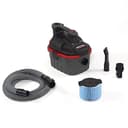
RIDGID 4-Gallon Portable Wet/Dry Vac (4000RV)

RIDGID 4-Gallon Portable Wet/Dry Vac (4000RV)

The sweet-spot car vacuum: a compact wet/dry shop vac with enough suction to actually pull debris out of seat seams and floor mats, small enough to carry around the car, and with detailing attachments available. This is what most home detailers should own.

Best shop-vac base
$147.60View on Amazon

Price as of September 3, 2026. #ad How we’re funded

2
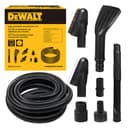
RIDGID VT2534 7-Piece Auto Detailing Vacuum Hose Accessory Kit

RIDGID VT2534 7-Piece Auto Detailing Vacuum Hose Accessory Kit

The upgrade that turns a shop vac from a garage tool into a car tool. The stock 2.5-inch hose and wide floor nozzle cannot get into a seat rail; this drops the business end to a slim hose with car-shaped nozzles, and everything after that is easier.

Best hose upgrade
$54.98View on Amazon

Price as of September 3, 2026. #ad How we’re funded

3
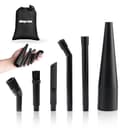
Shop-Vac Micro Cleaning Nozzle Kit (6-piece)

Shop-Vac Micro Cleaning Nozzle Kit (6-piece)

The cheapest meaningful improvement to any shop vac used on a car. Six miniature nozzles that fit a standard 1-1/4 in hose and get into vents, seat rails, console seams and the gap between the seat and the center tunnel where every coin in your life has gone.

Best cheap fix
$9.99View on Amazon

Price as of September 3, 2026. #ad How we’re funded

4
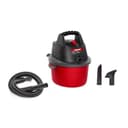
CRAFTSMAN 2.5-Gallon Wet/Dry Shop Vac

CRAFTSMAN 2.5-Gallon Wet/Dry Shop Vac

A tidy little 2.5-gallon shop vac that's easy to carry and store, with enough peak power for interior work. A good pick if the RIDGID is more vac than you want and the 12V units are too weak.

Best compact wet/dry
$49.99View on Amazon

Price as of September 3, 2026. #ad How we’re funded

5
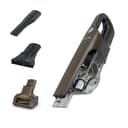
Shark UltraCyclone Pet Pro+ Cordless Handheld (CH951)

Shark UltraCyclone Pet Pro+ Cordless Handheld (CH951)

The Shark most people mean when they ask whether a Shark is good enough for detailing, and the answer is yes for maintenance and no for a full reset. Cordless, genuinely strong for a handheld, and the one to own if you want to vacuum a car in the parking space you park in rather than the garage you don't have.

Best Shark for cars
$99.99View on Amazon

Price as of September 3, 2026. #ad How we’re funded

6
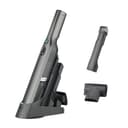
Shark WANDVAC WV201 Handheld Vacuum

Shark WANDVAC WV201 Handheld Vacuum

A 1.4-pound wand that lives on a charging dock and gets used because it is never more than ten seconds away. It will not deep-clean carpet, but the vacuum you actually reach for beats the better one in the garage cupboard.

Best grab-and-go
$89.99View on Amazon

$129.9931% off

Price as of September 3, 2026. #ad How we’re funded

The picks in full

#1Best shop-vac base

RIDGID 4-Gallon Portable Wet/Dry Vac (4000RV)

The sweet-spot car vacuum: a compact wet/dry shop vac with enough suction to actually pull debris out of seat seams and floor mats, small enough to carry around the car, and with detailing attachments available. This is what most home detailers should own.

What we like

  • Strong suction that genuinely lifts embedded grit
  • Handles wet spills as well as dry debris
  • Compact and portable versus a full-size shop vac

Trade-offs

  • Corded — you're managing a hose and a cord
  • Stock nozzle is wide; add a detailing kit for tight spots
TypePortable wet/dry shop vacuum
Standout spec4-gallon wet/dry
Size4 gal
Best forThe one vacuum most home detailers should buy
Price tierMid

Specs read from the product listing, on July 19, 2026. “Not listed” means the listing does not state that figure.

#2Best hose upgrade

RIDGID VT2534 7-Piece Auto Detailing Vacuum Hose Accessory Kit

The upgrade that turns a shop vac from a garage tool into a car tool. The stock 2.5-inch hose and wide floor nozzle cannot get into a seat rail; this drops the business end to a slim hose with car-shaped nozzles, and everything after that is easier.

What we like

  • Seven pieces including the narrow hose that makes the small nozzles reach
  • Slim hose is far easier to drag around a cabin than a stock shop-vac hose
  • Built for the same 1-1/4 in fitment RIDGID vacs already use

Trade-offs

  • Fitment is the whole story — check your vacuum's port size before ordering
  • Costs a meaningful fraction of a small shop vac on its own
  • Narrower hose means lower airflow, so it is a detailing hose, not a general one
TypeVacuum hose and nozzle accessory kit
Standout spec7 pieces; 1-1/4 in fitment
SizeNot listed
Best forMaking a 1-1/4 in RIDGID wet/dry vac usable inside a car
Price tierMid

Specs read from the product listing, on September 3, 2026. “Not listed” means the listing does not state that figure.

#3Best cheap fix

Shop-Vac Micro Cleaning Nozzle Kit (6-piece)

The cheapest meaningful improvement to any shop vac used on a car. Six miniature nozzles that fit a standard 1-1/4 in hose and get into vents, seat rails, console seams and the gap between the seat and the center tunnel where every coin in your life has gone.

What we like

  • Costs less than a bottle of soap and fixes the single biggest shop-vac limitation
  • Standard 1-1/4 in fitment, so it works with most wet/dry vacs and not just Shop-Vac
  • Six shapes covers the awkward geometry inside a modern cabin

Trade-offs

  • Tiny openings clog on anything larger than grit — vacuum the loose stuff first
  • Airflow drops sharply through a micro nozzle; it is a detail tool, not a main one
  • Small parts, easy to lose in a drawer
TypeMicro vacuum nozzle set
Standout spec6 pieces; 1-1/4 in fitment
SizeNot listed
Best forVents, seams and seat rails, on a shop vac you already own
Price tierBudget

Specs read from the product listing, on September 3, 2026. “Not listed” means the listing does not state that figure.

#4Best compact wet/dry

CRAFTSMAN 2.5-Gallon Wet/Dry Shop Vac

A tidy little 2.5-gallon shop vac that's easy to carry and store, with enough peak power for interior work. A good pick if the RIDGID is more vac than you want and the 12V units are too weak.

What we like

  • Compact and light — easy to move around the car
  • Enough suction for real interior cleaning
  • Wet/dry capability for spills

Trade-offs

  • Small 2.5-gallon drum fills quickly on a messy car
  • Corded, with a shorter hose than larger units
TypeCompact wet/dry shop vacuum
Standout spec2.5-gallon, 2.5 peak HP
Size2.5 gal
Best forA small, storable wet/dry vac for tight garages
Price tierBudget

Specs read from the product listing, on July 19, 2026. “Not listed” means the listing does not state that figure.

#5Best Shark for cars

Shark UltraCyclone Pet Pro+ Cordless Handheld (CH951)

The Shark most people mean when they ask whether a Shark is good enough for detailing, and the answer is yes for maintenance and no for a full reset. Cordless, genuinely strong for a handheld, and the one to own if you want to vacuum a car in the parking space you park in rather than the garage you don't have.

What we like

  • Cordless and light enough to hold one-handed under a seat
  • Cyclonic separation means no bag and a dust cup you empty over a bin
  • Motorized brush and crevice tools are aimed at pet hair, which is the hardest interior job

Trade-offs

  • Runtime is measured in minutes, not hours — a whole filthy car is more than one charge
  • Small dust cup fills quickly on a car with real dirt in it
  • No wet pickup at all, unlike a shop vac
TypeCordless handheld vacuum
Standout specCordless handheld, cyclonic, XL dust cup
SizeNot listed
Best forKeeping an already-clean interior clean, with no cord and no setup
Price tierMid

Specs read from the product listing, on September 3, 2026. “Not listed” means the listing does not state that figure.

#6Best grab-and-go

Shark WANDVAC WV201 Handheld Vacuum

A 1.4-pound wand that lives on a charging dock and gets used because it is never more than ten seconds away. It will not deep-clean carpet, but the vacuum you actually reach for beats the better one in the garage cupboard.

What we like

  • 1.4 lb per the listing — the lightest thing here by a wide margin
  • Charging dock means it is always charged and always visible
  • Single-touch dust-cup empty, so a 60-second job stays a 60-second job

Trade-offs

  • Small capacity and short runtime — this is a tidy-up tool, not a detailing tool
  • No motorized brush head, so embedded pet hair is beyond it
  • Costs about the same as a far more capable shop vac
TypeCordless handheld vacuum
Standout spec1.4 lb; charging dock; detachable dust cup
SizeNot listed
Best forThe grab-it-now clean-up: crumbs, footwell dust, the school run
Price tierMid

Specs read from the product listing, on September 3, 2026. “Not listed” means the listing does not state that figure.

How to build a car-detailing vacuum setup

1. Start with what you own, not with what to buy

If there is a wet/dry vac in your garage, the cheapest useful upgrade available to you costs about the same as a bottle of car soap: a set of micro nozzles that fit the hose you already have. They fix the one thing a shop vac is bad at — geometry — and they change the job more than a new machine would.

The step up from that is a dedicated detailing hose. Stock shop-vac hose is wide and stiff, which is right for sawdust and wrong for a cabin: it will not bend around a B-pillar and it drags across your paint on the way in. A narrower, more flexible hose with car-shaped nozzles on the end is the single biggest quality-of-life change in this whole category, and it is why that kit is ranked second here rather than treated as an accessory.

One thing to check before ordering either: the port size. Most wet/dry vacs use a 1-1/4 in or 2-1/2 in fitting, and accessory kits are sold per size. The number is in the listing text. Getting it wrong is the most common complaint in the category and it has nothing to do with quality.

2. Suction is not the spec that decides this

Vacuum marketing leads with peak horsepower, which is a laboratory figure measured at a moment that never occurs in use, and with amperage, which tells you what the motor draws rather than what the nozzle picks up. Neither predicts whether the machine will get sand out of a carpet seam.

The specs that actually matter for a car are duller. Hose diameter and flexibility decide where you can reach. Hose length decides whether you can do the far side of the car without moving the vacuum, which decides whether you bother. Filter type decides whether fine dust comes straight back out at you. And drum size decides how often you stop. A 4-gallon drum is comfortably enough for one car; the bigger sizes are heavier for no gain here.

3. Wet pickup is the shop vac's real advantage

The reason a wet/dry vac is the default recommendation for detailing is not suction, it is that it can pick up liquid. That matters the moment you clean fabric: any upholstery cleaner you spray into a seat has to come back out, and a dry-only vacuum leaves it in there to dry slowly and smell. Damp carpet in a closed car is exactly the environment that produces the musty smell people then try to solve with an air freshener.

This is the hard line between the shop-vac setups and the Shark setups on this page, and it is worth being blunt about: a cordless handheld cannot do this at all. If you are planning to shampoo seats or carpet — the job in upholstery and carpet cleaners — you need wet pickup or a dedicated extractor, and no Shark is a substitute for it.

4. The Shark question, answered honestly

“Is a Shark good for detailing?” comes up constantly, usually from someone who already owns one. The answer has two halves.

For maintenance— weekly crumbs, footwell dust, the aftermath of a school run, pet hair on a seat — a Shark cordless handheld is excellent, and better than a shop vac in the only way that matters, which is that it takes ten seconds to start. A vacuum on a charging dock by the door gets used. A shop vac in a cupboard behind the lawnmower does not. Over a year the handheld will remove more dirt from your car than the more capable machine, purely on that basis.

For a reset— a car that has not been done properly in two years, sand in the carpet, a full interior detail — it is the wrong tool. Runtime is measured in minutes, the dust cup is small enough to need emptying several times per car, and there is no wet pickup. You will spend the session managing the vacuum rather than cleaning the car.

A full-size Shark stick vacuum, if that is what you own, sits between the two: more capacity and runtime, but a floor-head geometry that was designed for a hallway. Take the wand off, use the crevice tool, and treat it as a slightly better handheld.

5. Three setups, costed

  • The cheap fix. A wet/dry vac you already own plus the micro nozzle kit. Under fifteen dollars if the vacuum is already there, and it solves the actual problem. Start here if this describes you.
  • The proper setup.A 4-gallon wet/dry vac plus the 7-piece auto detailing hose kit. This is the one that does everything — dry debris, wet extraction, seat rails, headliner — and it costs roughly what a single professional interior detail costs, then lasts a decade.
  • The one you will use. A cordless handheld on a dock, accepting that it is a maintenance tool. Best paired with one of the above rather than instead of it.

If you would rather compare the machines themselves head to head, the best car vacuums roundup ranks them on suction and reach, and corded vs cordless takes the trade-off apart in detail.

6. Order of operations

Vacuuming is the first job in an interior detail and, done properly, half of it. Take the mats out and do them separately, outside the car. Move the seats fully forward, do the rear footwells, then fully back and do the front — the rails hide more than anything else in the cabin. Use a crevice tool along every seam and along the base of the seat backs. A soft brush attachment or a hand detailing brush ahead of the nozzle lifts embedded grit that suction alone will not.

Do this before any cleaner goes near the interior. Spraying a surface that still has loose grit on it turns the grit into mud and works it deeper, which is genuinely worse than doing nothing. If you are agitating with a drill attachment, vacuum again after — the brush lifts dirt out of the fiber, and something still has to carry it away. The full routine is in how to clean a car interior, and removing pet hair covers the one job where technique beats suction outright.

The short version

Own a shop vac already? Buy nozzles, not a vacuum. Buying from scratch and you want it done properly once? A 4-gallon wet/dry vac and a detailing hose kit is the setup, and nothing on the market beats it for the money. Want the car to stay tidy rather than to get rescued? Put a cordless handheld on a dock somewhere you walk past.

The mistake in all three cases is the same: buying more motor when the problem is the last six inches of hose.

Frequently asked questions

Is a shop vac good for car detailing?

It is the best value tool for the job, with one caveat. Suction is not the issue — a 4-gallon wet/dry vac has far more than a car needs — but the stock hose and floor nozzle are too wide and too stiff to reach into seat rails, seams and vents. Add a narrow detailing hose or a set of micro nozzles in your vacuum's port size and it becomes the most capable car vacuum you can buy, with wet pickup that no cordless handheld offers.

Is a Shark vacuum good for detailing a car?

For maintenance, yes. A Shark cordless handheld is genuinely good on crumbs, footwell dust and pet hair, and because it lives on a charging dock it gets used weekly — which over a year removes more dirt than a better vacuum in a cupboard. For a full interior reset it is the wrong tool: runtime is short, the dust cup needs emptying several times per car, and there is no wet pickup, so it cannot extract upholstery cleaner from a seat.

What size shop vac do you need for detailing a car?

Around 4 gallons is the sweet spot, and 2.5 gallons is fine if storage or portability matters more. Bigger drums add weight and hose stiffness without adding anything useful for a car — you are never going to fill a 16-gallon drum from one interior. What matters far more than capacity is hose diameter and flexibility, filter type, and hose length, because those decide where you can reach and how often you have to move the machine.

What attachments do you need to vacuum a car properly?

A crevice tool long enough to reach the bottom of a seat rail, a small brush head for vents and hard surfaces, and ideally a narrow hose so the small tools can actually get where they need to be. Sets are sold by port size — commonly 1-1/4 in or 2-1/2 in — and the size is in the listing text rather than the photo, so check your vacuum's port before ordering. Fitment, not quality, is the usual reason these get returned.

Can you use a regular household vacuum on a car?

You can, and for dry crumbs it will work. The problems are practical rather than mechanical: a household floor head is shaped for open carpet and will not fit a footwell, most household vacuums cannot pick up liquid, and a bagged unit fills with the fine grit a car carries. If it is what you have, take the wand off and use the crevice tool. Avoid 12-volt units that run off the accessory socket — they are the most common reason people conclude that vacuuming a car does not work.

Do you need a wet/dry vac to clean car seats?

If you are spraying any liquid cleaner into fabric, yes, or something else that extracts. Whatever you spray in has to come back out; a dry-only vacuum leaves it to evaporate slowly inside a closed car, which is how interiors end up smelling musty. Wet pickup is the shop vac's real advantage over every cordless handheld, and it is the reason a wet/dry vac remains the default recommendation for interior work.

Sources

Keep reading