Why these six, in this order
1. The machine: documentation beats specification
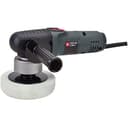
The 7424XP is not the newest or the most powerful dual-action polisher, and its short throw corrects a little slower than a modern long-throw machine. It is the one we put first for beginners anyway, for a reason that does not appear on any spec sheet: it is the machine a generation of DIY detailers learned on, so it is extremely well documented. Every tutorial, every pad recommendation, every “why is my pad stalling” thread was written with this machine in hand. When you get stuck at 9pm in a garage, that is worth more than a longer throw.
It is also forgiving by design — the dual-action motion is safe to learn on — and pads and backing plates for it are cheap and everywhere. Two honest alternatives sit either side of it. The AVID POWER is by far the cheapest way to find out whether you enjoy machine polishing at all; it is less refined and less durable, and for one correction on one car that may be entirely rational. The Griot’s G9 is the long-throw machine we would hand a nervous first-timer if budget were no object, and it is the one you will probably end up owning eventually. All three are ranked against each other in best dual-action polishers.
What you must not buy as a beginner is a rotary. A rotary spins on one axis with no oscillation, which is exactly the motion that generates heat in one spot and burns through clear coat. The difference is explained properly in dual action vs rotary polisher.
2. The pads: the part that changes how much your liquid cuts
Cut is a product of the abrasive and the foam together, not of the bottle alone. Run a mild finishing polish on a cutting pad and you get noticeably more correction than the label suggests; run an aggressive compound on a soft finishing pad and you get much less. This is the single most common source of beginner confusion — people conclude a compound is weak when the pad was wrong.
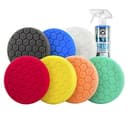
The Chemical Guys Hex-Logic kit is the most complete way to start: eight pads spanning cutting through finishing, colour-coded so pairing a pad to a product stops being guesswork. You will use two of the eight for most jobs, which is a fair criticism of the piece count, and hex-face foam loads up with residue quickly unless you clean it between sections. Note the size: 6.5 in pads want a 6 in backing plate, which is the common DA size and what the 7424XP takes. If you would rather buy fewer, better pads and wash them between jobs, the machine-washable Griot’s BOSS set and the rest of the field are in best polishing pads, and how to choose a polishing pad decodes the colours.
3 and 4. The liquids: least aggressive first, always
This is the rule that protects your paint, and it is the one beginners break. Correction removes material you cannot put back. DetailingWiki’s worked example puts a typical paint system at around 120 micrometers with roughly 40 micrometers of clear coat, and budgets about 10 micrometers removed each time you polish a panel — while arguing explicitly that you should measure your own panel rather than trust any published average, ours included. On those figures you do not have many full corrections in a car.
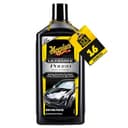
So start with Meguiar’s Ultimate Polish. Its own listing states it gently removes fine swirls and towel marks — not just fills them — and it is usually the cheapest bottle in this whole category. On a daily driver with wash marring rather than real damage, a polish on a finishing pad is frequently the entire job, and you will have spent under fifteen dollars to find that out. Its limits are honest ones: it adds no protection, so it always needs a wax or sealant on top, and anything you can catch a fingernail in is beyond it.
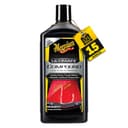
Only when the polish demonstrably is not enough do you move to Meguiar’s Ultimate Compound. It is clear-coat safe, cuts hard enough to remove swirls and light scratches, finishes glossy enough that many people stop there, and it works by hand as well as on a machine. Do a test section with the polish before you open the compound — that is the whole discipline. The full abrasive range, including the heavy-cut options you should not start with, is in best polishing compounds, and compound vs polish explains why the two words are not interchangeable.
One diagnostic worth doing before you buy any of this. Drag a fingernail across the worst defect at ninety degrees. If it glides, you are in abrasive territory and this stack will fix it. If it catches, the groove has reached or passed the base coat and no amount of polishing brings it back — that is a touch-up or body-shop job. Best car scratch removers triages a single defect by depth, which is a different question from this page’s.
5 and 6. The two consumables you will run out of immediately
Compounding and polishing strip whatever wax or sealant was on the panel and leave bare, unusually clean clear coat behind. That is the best bonding surface a protection product will ever get and the worst state to leave a car in, so you wax or seal the same day — which means you need applicators. Foam spreads a thin, even film and does not soak product away from the paint. Six in a pack means one per product, so nothing cross-contaminates, and a pad that has touched tyre dressing never goes back on paint. The field is in best applicator pads; the protection step itself is in best paint sealants.
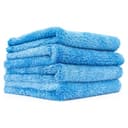
Towels are the quieter requirement and the one that catches people out. You wipe residue after every single section pass, which on a full car is dozens of wipes, and every one of them is a chance to put a fresh mar back into the paint you just corrected. The Eagle Edgeless 500 is genuinely edgeless — no stitched border, which is the usual source of a fresh mar — and plush enough to lift residue rather than smear it. Buy more than you think you need; we counted the real number in how many microfiber towels do you need. Then wash them correctly, because fabric softener kills a microfiber towel outright: how to wash microfiber towels.
Before you spend anything
Three things to get straight, because they decide whether this purchase was worth making.
Decontaminate first.Polishing a panel that still has bonded contamination on it drags that contamination around under a pad. Wash, then clay or chemically decontaminate, then correct — the sequence is in the order of detailing steps and the decontamination step itself in how to decontaminate car paint.
Work a whole panel, not a scratch.Removing a defect is rarely the hard part — matching the gloss around it is. A corrected patch on an otherwise swirled panel reads as a bright spot. Budget your time per panel, not per mark.
Do you even need to correct? Plenty of cars that look hazy are carrying a failed wax rather than swirls, and a wash plus a decent sealant transforms them for a tenth of the effort. Paint correction for beginners walks that decision before any money is spent, and can you polish a car by hand is an honest answer for anyone not ready to buy a machine at all.
What this page is not
It is not a machine ranking. Best dual-action polishers puts five machines against each other on throw, ergonomics and warranty, and names the Griot’s G9 as the overall pick. This page answers a different question — what does a first-timer put in the cart — and deliberately spends most of its six slots on everything except the machine, because that is where first corrections actually go wrong.
It is also not a claim that we tested these. We own none of these units; the specs here are read from the listings and the manufacturers’ own pages on the dates recorded under each card, and the ranking is editorial reasoning about buyer fit. Our full method is on how we pick.