How to choose a vacuum for pet hair
1. Airflow matters more than the number on the box
Vacuum marketing leads with suction, usually in kilopascals or “air watts,” because it is the bigger-sounding number. For hair, the spec that predicts results is airflow — the volume of air moving through the nozzle. Sealed suction lifts a dense object straight up; airflow is what drags a light, tangled fiber along the carpet and into the hose once it is loose.
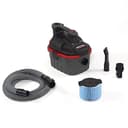
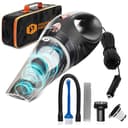
Nobody publishes comparable airflow figures in this category, so the honest proxies are hose diameter, filter condition and how much the nozzle restricts flow. A wide-mouth tool on a shop vac moves far more air than a narrow crevice tool on a handheld, which is the real reason the RIDGID resets a car faster than any cordless here. The same logic runs through corded versus cordless car vacuums.
2. The agitation step is the whole job
This is where people with a visibly hairy car go wrong. They buy a more powerful vacuum, get the same result, and conclude pet hair is impossible. It is not — the hair simply has to be unlocked from the pile first.
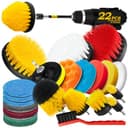
Three things do it, in ascending order of effort and effectiveness. A rubber-edged tool or a plain household rubber glove dragged across the carpet generates static and friction and rolls hair into visible clumps. A stiff-bristle brush combed in one direction does the same more aggressively. And a drill brush — a stiff nylon brush on a cordless drill — does it to a whole floor in a couple of minutes, which is why the Holikme kit is a pick here. Our drill attachment page covers the wider use case, and how to remove pet hair from a car is the full method.
One caution with a drill brush on cloth: use a medium or soft brush and keep it moving. Automotive carpet is tougher than seat fabric, but a stiff brush held in one spot at speed will fuzz upholstery.
3. Reach decides whether the job actually gets finished
The hair you can see is the easy half. The rest is under the seat rails, in the gap between seat and center tunnel, down the sides of the seat base and along the trim seams. A vacuum you cannot get into those places leaves a car that looks clean until the sun hits it at an angle.
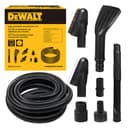
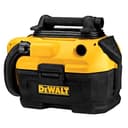
This is the argument for the DEWALT hose kit, and for the broader point that a shop vac you already own plus the right accessories usually beats a new machine. The published contents of that kit — a 1-1/4 in by 14.75 ft hose, soft and stiff bristle brushes, nozzles and adapters for three port sizes — solve the two problems that stop people using a shop vac on a car: the hose is too short, and the fitting is wrong. We cost the whole approach out in shop-vac detailing setups.
4. Cordless versus corded, for a hairy car specifically
Hair is the use case where cordless runtime bites hardest. Light dust is a five-minute job; a shedding season reset is a forty-minute one, with the motor working against a filter that is clogging as you go. A handheld that is brilliant for crumbs can run flat halfway through the second row.
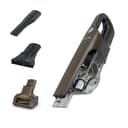
So the honest split is by frequency. If you vacuum weekly and are keeping an already-clean car clean, cordless wins on sheer likelihood of being used — the Shark lives on a shelf in the garage and gets picked up. If you are resetting a car that has not been done in months, plug something in. The DEWALT 20V unit is the compromise if you already own the batteries, because the mains lead is there for when the battery dies mid-footwell.
5. Empty the thing early and often
Pet hair kills vacuum performance faster than any other debris, because it mats across the filter surface rather than falling into the canister. Suction at the nozzle can halve within one footwell. Every machine here performs noticeably better if you stop twice during a car and clear the filter, and cyclonic designs like the Shark exist specifically to delay that moment rather than eliminate it.
If you only take one habit from this page, take that one. It is free and it does more for your results than a hundred dollars of extra machine.
6. Prevention is cheaper than suction
A seat cover or a cargo liner costs less than any vacuum here and removes most of the problem at the source. Failing that, an old rule still holds: brush the dog outside the car, not in it. And when the carpet needs more than hair removal — mud, drool stains, the smell that comes with a wet dog — that is a different job, covered in how to clean car carpet and how to get smells out of a car.