Steam Cleaner vs Carpet Extractor
These are not competing machines. A steam cleaner loosens soil; an extractor removes it. For a car interior that distinction decides everything - because the failure mode in a car is not dirt left behind, it is water left behind, in foam bonded to a steel floor pan with nowhere to drain.
How this is funded:we earn a commission if you buy through our links, at no extra cost to you. It never changes which product we recommend, and we’ll tell you plainly when we’d skip one. Full disclosure.
The distinction that decides the whole question
Cleaning a fabric surface is two separate actions. First you have to break the bond between the soil and the fibre — with heat, chemistry, agitation, or some combination. Then you have to physically carry that loosened soil out of the material. Miss the first and nothing moves. Miss the second and you have redistributed the dirt rather than removed it.
A steam cleaneris very good at the first action and does not do the second at all. It delivers hot vapour that softens soil and breaks its grip, and then stops. Something else — a microfiber bonnet over the tool, a towel, a vacuum — has to do the carrying away.
A carpet extractor does both in one pass. It sprays cleaning solution into the pile and immediately sucks it back out, bringing the soil with it into a recovery tank you then look at with a mixture of satisfaction and disgust.
That makes the extractor sound strictly better, and in a house it mostly is. In a car it is not, for one structural reason.
Why a car is not a living room
Car carpet is not laid over a floor. It is bonded to a layer of sound-deadening foam which sits directly on a steel floor pan, and there is no underlay, no air gap and nowhere for water to drain. Whatever liquid goes in and does not come back out stays in the foam, under a carpet, in a sealed metal box that sits in the sun.
The consequence is that the failure mode in a car is reversed from the one you expect. The risk is not leaving dirt behind. It is leaving water behind, and the US EPA’s guidance on moisture and mould is blunt about the timescale: mould will grow on persistently damp materials, and the control measure is drying promptly rather than cleaning harder. A car that smells worse a week after a deep clean than it did before is almost always a car that was over-wetted. In the worst case the moisture sits against a floor pan and does what moisture does to steel.
That is the context for everything below, and it is the reason how to clean car carpet leads on water control rather than on cleaning power.
Side by side
| Steam cleaner | Carpet extractor | |
|---|---|---|
| What it does | Heats and softens soil with near-dry vapour | Sprays solution, then sucks it back out |
| Removes the dirt from the car? | No — you wipe or vacuum it away afterwards | Yes — that is the whole mechanism |
| Water added to the interior | Very little. Dupray describes dry vapour as only about 5% water content | A lot, by design — the risk is leaving some behind |
| Best on | Vents, stitching, seat rails, door jambs, cup holders, headliners | Floor carpet, cloth seats, mats, set-in liquid stains |
| Worst on | Deep soil in thick carpet pile — it loosens but cannot lift | Tight crevices and vertical trim; the nozzle will not fit or seal |
| Odour and sanitising | Heat is its advantage here | Depends entirely on the chemistry you put in it |
| Drying time afterwards | Minutes to an hour | Hours, and days if over-wetted |
| Also useful at home | Yes — bathrooms, grout, kitchens | Yes — rugs, furniture, stairs |
Where steam wins, and why it is the better first buy
Think about where grime in a car cabin actually accumulates. Not in the middle of the carpet — in the edges. Vent slats. Seat stitching. The channel where the seat base meets the backrest. Seat rails. Door jambs and shuts. Cup holders, with their sticky rings. Switch surrounds. Headliner edges. Every one of those is a crevice, and a crevice is exactly where an extractor nozzle cannot fit or cannot seal.
Steam gets into all of them, with heat and almost no liquid. Dupray describes dry vapour steam as carrying very low water content — only about 5% — and presents it as suitable for leather or fabric seats, door jambs, cup holders, dashboards, headliners, vents and central consoles. It needs no chemistry at all, which matters in a closed cabin you then sit in, and its heat is a genuine advantage on odour.
The practical technique Dupray recommends for upholstery is a triangle tool with a microfiber cloth or bonnet wrapped around it — which is the elegant part of the method, because the bonnet solves the extraction problem. Steam loosens, the cloth carries it away, and the car never gets wet. The full order of operations is in how to steam clean a car interior.
Steam is not universally safe, and the exclusions are worth knowing before you buy: screens and instrument clusters, printed or adhesive-backed graphics and badges, unsealed wood or wood-effect trim, airbag labels, exposed electrical connectors, and perforated leather. On leather generally, use a bonnet rather than bare vapour and condition afterwards — how to clean leather car seats covers that properly.
Where an extractor wins, and it is not nothing
One job, and it is a real one: getting set-in soil and liquid out of carpet and cloth.A spilled drink that went into the pile. Years of accumulated grey in a footwell. A pet accident. A smoker’s cloth seats. Anything where the soil is suspended throughout the fibre rather than sitting on a surface.
Here, steam genuinely cannot substitute. Loosening soil in the middle of a half-inch carpet pile without removing it means it migrates — usually downward, into the foam, where it becomes next summer’s smell. An extractor is the only tool that both wets and recovers, and watching the recovery tank fill is the only direct evidence that soil has left the car.
If you go this route, the discipline is all about water. Use the least solution that keeps the pile damp rather than wet. After every wet pass, do two or three suction-only passes. Keep going until the recovery tank stops filling. Then dry the car aggressively — doors open, a fan if you have one, and do not close it up overnight. The chemistry to pair with it is in best upholstery and carpet cleaners.
The answer most people should actually hear
You probably do not need to choose, because you probably already own half of the extractor.
A wet/dry shop vacuum supplies the suction half. A spray bottle of fabric cleaner supplies the solution half. Spray, agitate with a brush or a drill brush, then suck it out with the shop vac — and repeat. What you lose compared with a real extractor is the simultaneous spray-and-recover, which makes the job slower and slightly less efficient per pass. What you gain is not buying a single-purpose machine for a job you do twice a year, and you keep full control over how much water goes in, which is the thing that matters most in a car.
So the sequence we would actually recommend for most people: a wet/dry vacuum first, because it is the tool that unlocks interior work generally. Then a steam cleanerwhen the vents, seams and jambs start bothering you, which is most of what makes an interior look unfinished. An extractor only if you have a recurring carpet-and-cloth problem that justifies a dedicated machine — or borrow or rent one for the weekend you need it.
And if the answer turns out to be hose and nozzle fitment rather than a new machine at all, shop-vac detailing setups costs that out end to end, and best car detailing tools places both machines in the wider order of what to buy first.
Two honest limits on both machines
Neither one replaces vacuuming and agitation.Dry-clean first, always: strip the mats, vacuum thoroughly, and work a brush through the pile so trapped grit and hair lift to where suction can reach them. Every minute spent dry is a minute you do not spend getting the car wet. Pet hair in particular is a mechanical problem rather than a suction one — best car vacuums for pet hair explains why.
Neither one fixes a stain that has dyed the fibre. There is a difference between soil sitting in a fibre and a dye that has bonded to it. Coffee, red wine and some ink will lighten and stop spreading and then stop improving, and at that point more water and more heat make things worse rather than better. Know when to stop.
The machines, one per job
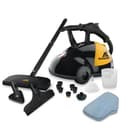
The steam cleaner
McCulloch MC1275 Heavy-Duty Steam Cleaner
The one with the numbers actually stated: a 45-minute runtime and 18 accessories. Runtime is the spec that decides whether you finish a car interior rather than stopping halfway to refill, and the small brushes are what get into vents and seat rails. Bulky to store for something used a few times a year, and it needs a full cool-down before refilling.
$168.99View on AmazonPrice as of October 10, 2026. #ad How we’re funded
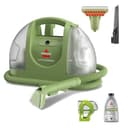
The extractor
BISSELL Little Green Multi-Purpose Portable Carpet Cleaner (1400B)
The only portable extractor we stock, and the right shape for a car: it sprays and sucks in one pass so soil actually leaves the vehicle instead of migrating into the foam. Use the least solution that keeps the pile damp, then repeat dry suction passes until the recovery tank stops filling.
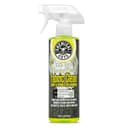
The chemistry for either
Chemical Guys Citrus Fabric & Carpet Cleaner, Ready-to-Use (CWS21916SW)
Ready to use, so there is no dilution to guess at — which matters here because guessing a dilution is one of the common ways people end up with carpet wetter and dirtier than they started. Works as the spray half of the shop-vac method as well as in an extractor.
$9.99View on AmazonPrice as of October 10, 2026. #ad How we’re funded
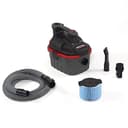
The half of an extractor you may already own
RIDGID 4-Gallon Portable Wet/Dry Vac (4000RV)
A 4-gallon wet/dry vac supplies the suction side of the spray-and-recover method, and it handles the dry-clean pass that has to happen first either way. Strong enough to lift embedded grit, small enough to carry around the car. Add a narrow-nozzle kit — the stock nozzle is too wide for seat seams.
$147.60View on AmazonPrice as of October 10, 2026. #ad How we’re funded
The short version
Steam loosens, an extractor removes. In a car, where water has nowhere to drain, that makes steam the better general-purpose machine and the better first buy — vents, seams, rails and jambs are where cabin grime lives, and steam reaches all of them with almost no liquid. Reach for an extractor only for set-in soil in carpet and cloth, and understand that you can approximate one with a wet/dry vacuum and a spray bottle. Whichever you use, dry-clean first and put in the least water that does the job.
Work safely. Detailing chemicals and machine polishers can damage paint, trim or your own skin if misused. Always follow the manufacturer’s instructions, test in an inconspicuous spot first, work out of direct sun, and wear eye protection and gloves where the label calls for them. Two Bucket Club is general guidance from an enthusiast, not a substitute for a product’s own directions.
Frequently asked questions
Is a steam cleaner or a carpet extractor better for a car?
A steam cleaner, for most people and most of a car interior — vents, stitching, seat rails, door jambs and cup holders are where cabin grime actually lives, and steam adds almost no water. An extractor is the better machine for one specific job: lifting set-in soil and liquid stains out of floor carpet and cloth seats. Many people end up owning a steam cleaner and borrowing an extractor.
Does a steam cleaner remove dirt from car seats?
It loosens it; it does not remove it. Steam softens soil and breaks its bond with the fibre, but something still has to carry it away — a microfiber bonnet over the tool, a towel, or a wet vacuum afterwards. A steam-only job on dirty cloth frequently drives the loosened soil deeper rather than out, which is the single most common disappointment with the machine.
Can you use a carpet cleaner on car seats?
Yes, and it works well on cloth seats and floor carpet, with one firm caution: control how much water you put in. Car carpet is bonded to foam over a steel floor pan and there is nowhere for excess water to drain, so over-wetting means a damp car for days and, at worst, mould and corrosion. Multiple dry suction passes after each wet pass is the discipline.
Will a steam cleaner damage a car interior?
It can, on specific surfaces. Keep it off screens and instrument clusters, off printed or adhesive-backed graphics and badges, off unsealed wood or wood-effect trim, and away from electrical connectors and airbag labels. Use a bonnet or cloth over the tool rather than bare steam on leather, keep moving, and never dwell in one spot.
Do you need an extractor if you have a wet/dry vacuum?
Often not. A wet/dry shop vac does the extraction half — the suction — and you can supply the solution half with a spray bottle of fabric cleaner. You lose the simultaneous spray-and-suck of a real extractor, which makes the job slower, but for a car's square footage that is a reasonable trade and it uses a machine you probably already own.
How long does car carpet take to dry after extraction?
Hours in warm weather with the doors open, and genuinely days if it was over-wetted. The way to shorten it is to put less water in rather than to dry harder afterwards: use the least solution that keeps the pile damp, then do repeated suction-only passes until the recovery tank stops filling.
Can you use a steam cleaner on leather car seats?
With care, and never with bare steam held close. Wrap the tool in a microfiber bonnet or cloth so what reaches the hide is warm and damp rather than hot vapour, keep moving, and follow with a leather conditioner — heat and moisture both pull oils out of leather. If the seats are perforated, stay off them entirely.
Is steam cleaning a car interior worth it?
For vents, stitching, seams, rails, jambs and plastics, yes — nothing else cleans those as well with as little water, and it needs no chemistry. For wet carpet and heavily soiled cloth, understand the limit before you buy: steam without extraction leaves the soil in the fibre.
Sources
- Dupray — Refresh your car's interior with steam — Steam-cleaner manufacturer on interior detailing: dry vapor steam carries “very low water content (only 5%)” and is presented as safe on leather or fabric seats, door jambs, cup holders, dashboards, headliners, vents and central consoles, and on wheels, rims and body with 220 V machines; the recommended upholstery technique is “the triangle tool with a microfiber cloth or bonnet wrapped around it”; it is used for heavy stains, odors and salt stains (accessed October 5, 2026)
- US EPA — A Brief Guide to Mold, Moisture and Your Home — EPA guidance that wet materials should be dried within 24–48 hours to prevent mold growth (accessed August 23, 2026)
- International Detailing Association — Detailing Resources — IDA's public detailing resource library (accessed July 19, 2026)
Keep reading
Best Steam Cleaners for Cars
The machines ranked on runtime and whether they include tools small enough for a car.
See the steam cleanersBest Upholstery & Carpet Cleaners
The chemistry side — foams, stain formulas and the one portable extractor we stock.
Compare the cleanersHow to Clean Car Carpet
The agitate-and-extract routine, with and without a machine, and why over-wetting is the real risk.
Read the methodHow to Steam Clean a Car Interior
The order, the tools and the surfaces to keep steam away from entirely.
Read the method