What PSI to Pressure Wash a Car?
Short answer: almost any consumer electric washer has enough pressure, most have more than paint ever needs, and the number printed on the box is frequently a peak rather than a rating. What decides whether you damage anything is the nozzle and the distance.
How this is funded:we earn a commission if you buy through our links, at no extra cost to you. It never changes which product we recommend, and we’ll tell you plainly when we’d skip one. Full disclosure.
The honest answer to the question as asked
People arrive at this question for one of two reasons: they are about to buy a machine and want to know what number to look for, or they already own one and want to know whether it is going to wreck their paint. The answers are different, and neither is a single PSI figure.
If you are buying, the number to shop on is not PSI at all. Every consumer-grade electric washer on the market has enough pressure to clean a car, and most have considerably more than paint requires. The spec that changes your Saturday is flow — gallons per minute — because rinsing is the slow part of a wash and flow is what makes it fast. That argument is laid out in full in our pressure washer roundup, which ranks on rated GPM for exactly this reason.
If you already own one, the answer is that the machine matters far less than how you point it. Which brings us to the number nobody mentions.
Force at the paint is not the number on the box
Pressure at the pump is not force at the panel. Between the two sit the nozzle and the distance, and both change the outcome by more than the machine’s rating does.
A nozzle spreads the output across an angle. A 40-degree fan distributes it over a wide band; a 0-degree or rotary turbo tip concentrates the entire output into a spinning point. That is why a high-pressure machine with a wide tip can be gentler on a panel than a modest machine with a turbo nozzle. It is also why Kärcher’s own car-washing guidance does not talk about PSI at all and instead says: always wash your car with the flat jet and not with the rotor nozzle.
Distance does the rest. The jet spreads and loses energy as it travels, so the same nozzle at six inches and at two feet are different tools. Kärcher’s stated minimums are 15 centimetres — about six inches — from the car’s surface, and 30 centimetres from tyres, with the note that at that distance the tyres will not be damaged. Those two numbers are more useful than any PSI figure you will find, because they are what you actually control while holding the lance.
The PSI on the box is often not the PSI of the machine
There is a genuine measurement problem in this category and it is worth knowing about before you shop. Many manufacturers advertise a peak or “max” figure — measured at the pump, under ideal conditions, often not at the nozzle — rather than a rated, certified output. Pro Tool Reviews has bench-tested the gap between advertised headline numbers and real performance, and it is not small.
You can spot the honest listings easily, because they publish both. A washer quoted as “2350 max PSI / 1.8 max GPM (2000 / 1.1 rated)” is telling you the truth in the parenthesis. A washer quoted as a flat certified figure — the Kärcher K1700 Cube’s 1700 PSI and 1.2 GPM with a CETA certification behind it — is also telling you the truth, and it is the figure comparable across brands. A washer quoting one impressive number with no qualifier is the one to be sceptical of.
The practical upshot: a “3000 PSI” washer and a “1700 PSI” washer are frequently much closer in real output than the labels suggest, and the cheaper one may well be the one being honest.
What can actually get damaged
Intact, modern automotive paint in good condition is tougher than this question implies, and the realistic failure modes are almost all edges and openings rather than flat panels:
- Already-damaged paint. A lifting stone chip or a patch of peeling clear coat is a flap, and pressure gets under it. If the car has either, work around it and keep well back.
- Seals and openings. Door and window seals, the base of the windscreen, light units and the gap around a sunroof. Pressure driven at a seal can push water past it.
- Badges, emblems and trim clips. Anything adhesive-mounted can be lifted at close range with a narrow tip.
- Tyre sidewalls. This is the one most people underestimate and the reason Kärcher gives tyres their own, larger distance.
- Wraps and paint protection film. Edges are vulnerable; stay back and never aim across an edge.
Notice what is not on that list: flat, healthy paint, which is the thing everybody worries about. The honest risk in a car wash is still the contact stage, not the rinse — washing without scratching is where the swirl marks come from.
The technique, in five lines
- Widest fan tip you have. Never a rotor or turbo nozzle on bodywork.
- Keep at least a hand’s span off paint and roughly double that off tyres.
- Work bottom up, as Kärcher advises, so you can see what you have covered.
- Keep the jet moving. Static dwell on one spot is where damage happens.
- Pre-rinse, foam, let it dwell, rinse again — then do the contact wash. The pressure washer’s real job is removing grit before a mitt ever touches the paint.
So what should you buy?
For a detailing-first machine, the priority order is flow first, honest published specs second, pressure a distant third. Anything from roughly the middle of the consumer electric range has more pressure than you will use with a 40-degree tip, and the extra you pay for a bigger headline number buys capability for driveways rather than cars.
The one genuine reason to want pressure in reserve is the foam cannon. A cannon needs flow and pressure to produce thick, clinging foam, and a very low-output machine makes watery foam that slides off before it has dwelled. Match the two together rather than buying either in isolation — foam cannon versus foam gun explains what each setup needs.
Machines that get this right
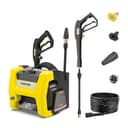
The honest spec
Kärcher K1700 Cube Pressure Washer
A flat 1700 PSI and 1.2 GPM with a CETA certification behind it rather than a peak figure with an asterisk — which makes it the easiest machine here to compare against anything else. Modest on paper, entirely sufficient on a car, and it stores in a fraction of the space.
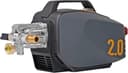
Best for detailing specifically
Active 2.0 Electric Pressure Washer
The one unit here designed around washing cars rather than cleaning concrete: 2.0 GPM of flow at a deliberately modest 1800 peak PSI. More water and less pressure is exactly the trade a detailer wants, because rinsing is the slow part.
$299.99View on AmazonPrice as of October 4, 2026. #ad How we’re funded
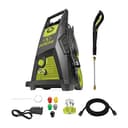
Honest about both numbers
Sun Joe SPX3550 Brushless Induction Pressure Washer
Publishes 2350 PSI / 1.8 GPM max alongside 2000 PSI / 1.1 GPM rated, which is the transparency this category mostly lacks — and a brushless induction motor instead of the universal motor almost everything in the price band uses.
$269.99View on AmazonPrice as of October 4, 2026. #ad How we’re funded
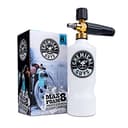
The reason to own one at all
Chemical Guys TORQ Professional Foam Cannon
A pressure washer without a foam cannon is a hose with ambition. Adjustable spray and foam-mix dials and a standard fitting, producing the thick clinging pre-soak that lifts grit off before a mitt touches the paint — which is the actual safety argument for the whole setup.
$99.97View on AmazonPrice as of October 4, 2026. #ad How we’re funded
Work safely. Detailing chemicals and machine polishers can damage paint, trim or your own skin if misused. Always follow the manufacturer’s instructions, test in an inconspicuous spot first, work out of direct sun, and wear eye protection and gloves where the label calls for them. Two Bucket Club is general guidance from an enthusiast, not a substitute for a product’s own directions.
Frequently asked questions
What PSI is safe to wash a car?
Rather than a single number, the manufacturers answer this with nozzle and distance. Kärcher's own guidance is to always use the flat jet and never the rotor nozzle, keep a minimum of 15 centimetres (about six inches) from the car's surface and 30 centimetres from tyres, and wash from the bottom up. A typical consumer electric washer used that way is fine on paint.
Is 3000 PSI too much for a car?
It is far more than paint needs, and it raises the cost of a mistake rather than guaranteeing one. Force at the surface is a product of pressure, nozzle angle and distance — a 3000 PSI machine with a wide fan tip held well back can be gentler than a 1700 PSI machine with a turbo nozzle held close. Buy for flow instead, and keep the tip wide.
Is PSI or GPM more important for car detailing?
GPM, clearly. Pressure dislodges stuck dirt; flow carries it off the panel and rinses foam out of panel gaps. Rinsing is the slow part of a wash, and flow is what shortens it. Our pressure washer roundup ranks on rated flow for exactly that reason.
Which pressure washer nozzle should you use on a car?
The widest fan you have — a 40 degree white tip for rinsing and soap, 25 degree black or green for wheel wells and lower panels if needed. Never the rotor or turbo nozzle, which concentrates the entire output into a spinning point. Kärcher is explicit about this: flat jet only.
Why is the PSI on the box different from the real PSI?
Because many manufacturers publish a peak or 'max' figure measured at the pump under ideal conditions rather than a rated, certified output at the nozzle. Pro Tool Reviews has documented the gap between those advertised numbers and bench-measured performance. The giveaway is a listing that quotes two sets of figures — the lower, rated pair is the honest one.
Can a pressure washer damage car paint?
Intact, undamaged paint is tough, and the realistic risks are elsewhere: lifting an edge of peeling clear coat or a stone chip, driving water past door and window seals, blasting a loose badge or trim clip, and etching a tyre sidewall with a turbo nozzle. Wide tip, sensible distance, and never hold the jet static on one spot.
Sources
- Kärcher — Car Washing at Home: Tips and Tricks — Pressure-washer manufacturer technique guidance: “Always wash your car with the flat jet and not with the rotor nozzle”; “Keep a minimum distance of 15 centimetres” from the car's surface and “For tyres, it should be a minimum of 30 centimetres”; “Always clean from the bottom up, to avoid missing any spots”; with the right method and that minimum distance the tyres will not be damaged (accessed October 5, 2026)
- Pro Tool Reviews — Pressure Washer PSI That's Too Good to Be True? It Probably Is! — Independent bench measurements of "PSI Max"/"GPM Max" claims vs PWMA-certified rated performance (accessed July 19, 2026)
- Chemical Guys — Two Bucket Method Car Wash Guide — Manufacturer how-to on the two-bucket wash and grit guards (accessed July 19, 2026)
Keep reading
Best Pressure Washers for Car Detailing
The machines compared on rated flow rather than headline PSI, because flow is what rinses a car.
See the picksBest Foam Cannons
The accessory that makes a pressure washer worth owning for detailing, and what it needs from your machine.
Compare the cannonsHow to Wash a Car Without Scratching
The pressure washer is the safe part of a wash. The mitt is where the swirls come from.
Read the methodThe Two-Bucket Method
What the contact wash should look like once the pressure washer has done its job.
Learn the method