TWO BUCKET CLUB

Best Pressure Washers for Car Detailing (2026)

The washer that feeds your foam cannon, compared on rated flow rather than the headline PSI number — because flow is what actually rinses a car, and the big number on the box is usually a momentary peak.

By Stephen V.Last updated How we pick

A pressure washer is the piece of gear that unlocks everything else in a home wash. It is what lets a foam cannon make thick, clinging foam instead of watery suds, and it is what rinses that foam — along with most of the loose grit — off the paint before your mitt ever touches a panel. Buy the wrong one and the foam is thin, the rinse takes forever, and you end up doing more contact work on a dirtier car, which is exactly how swirls happen.

The buying mistake almost everyone makes is shopping on PSI. Pressure is not what cleans a car; flow is. Gallons per minute (GPM) is the number that carries dirt off a panel and blasts foam out of a cannon, and it is the number manufacturers advertise least loudly. Worse, the headline figure on most boxes is a “max” rating — a momentary peak, not what the unit holds while you are actually working. When Pro Tool Reviews put a bench gauge on the Sun Joe SPX3000, a unit sold on a 2030 PSI / 1.76 GPM “max” claim, it measured roughly 1450 PSI and 1.24 GPM in use — about 29% below both printed numbers. That gap is normal for the category, not a scandal, but it means the number you shop on is not the number you get.

So this list is ranked the way a detailer would rank it: rated flow first, foam cannon compatibility second, and raw pressure a distant third. Every pick below is a cold-water electric unit, because gas washers are louder, heavier, and produce far more pressure than paint ever wants. Prices move constantly on this category, so each row shows a live price rather than a number we typed in months ago.

How this is funded:we earn a commission if you buy through our links, at no extra cost to you. It never changes which product we recommend, and we’ll tell you plainly when we’d skip one. Full disclosure.

Quick picks

Ranked on published specs, value and buyer fit. Select a row to jump to the full write-up. We have not lab-tested these products — here is exactly what we do instead.

#ProductBest forPrice
1
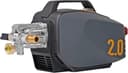
Active 2.0 Electric Pressure Washer (Full Kit)

Active 2.0 Electric Pressure Washer (Full Kit)

The only unit here designed around washing cars rather than cleaning concrete, and it shows in the spec that matters: 2.0 GPM of flow at a deliberately modest 1800 peak PSI. More water and less pressure is exactly the trade a detailer wants — foam comes out faster and rinsing stops being the slow part of the wash.

Best overall for detailing
$369.99View on Amazon

Price as of July 20, 2026. #ad How we’re funded

2
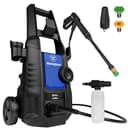
Westinghouse ePX3050 Electric Pressure Washer

Westinghouse ePX3050 Electric Pressure Washer

The cheapest sensible way into a foam-cannon wash, and the listing includes a foam cannon in the box — so it is close to a complete starting setup for the price of the cannon alone elsewhere. Westinghouse is also unusually upfront, publishing a rated 1800 PSI / 1.2 GPM next to the 2100 / 1.76 'max' headline.

Best value
$109.00View on Amazon

Price as of July 20, 2026. #ad How we’re funded

3
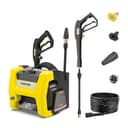
Kärcher K1700 Cube Pressure Washer

Kärcher K1700 Cube Pressure Washer

The honest one. Kärcher quotes a flat 1700 PSI and 1.2 GPM with a CETA certification behind it rather than a peak figure with an asterisk, and the cube body stores in a fraction of the space a wheelbarrow-frame washer needs. Modest on paper, and the paper is accurate.

Best compact
$169.99View on Amazon

$206.9918% off

Price as of July 20, 2026. #ad How we’re funded

4
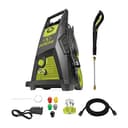
Sun Joe SPX3550 Brushless Induction Pressure Washer

Sun Joe SPX3550 Brushless Induction Pressure Washer

A brushless induction motor instead of the universal motor almost everything else in this price band uses — quieter, cooler and longer-lived. Sun Joe also publishes both sets of numbers (2350 PSI / 1.8 GPM max against 2000 PSI / 1.1 GPM rated), which is more candour than most of this category manages.

Best brushless motor
$269.99View on Amazon

Price as of July 20, 2026. #ad How we’re funded

5
Greenworks 2700 PSI Brushless Electric Pressure Washer

Greenworks 2700 PSI Brushless Electric Pressure Washer

The pick for a household where the washer has to do the driveway and the fence as well as the car. It has the most headroom here and a brushless motor, but 2700 PSI is far more pressure than paint ever wants — which makes nozzle discipline mandatory rather than optional.

Best for the driveway too
$329.89View on Amazon

$449.9927% off

Price as of July 20, 2026. #ad How we’re funded

The picks in full

#1Best overall for detailing

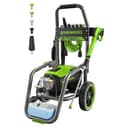
Active 2.0 Electric Pressure Washer (Full Kit)

The only unit here designed around washing cars rather than cleaning concrete, and it shows in the spec that matters: 2.0 GPM of flow at a deliberately modest 1800 peak PSI. More water and less pressure is exactly the trade a detailer wants — foam comes out faster and rinsing stops being the slow part of the wash.

What we like

  • 2.0 GPM — the highest rated flow in this group, on a standard 15-amp circuit
  • Runs a foam cannon hard; the full kit ships with a 600 ml foam blaster
  • 20 ft rubber hose with an M22-14mm fitting, so aftermarket detailing accessories bolt straight on
  • Deliberately low peak pressure is a feature around paint, trim and badges

Trade-offs

  • The most expensive pick here by a clear margin
  • 1800 peak PSI is the lowest on this page — it is not the tool for stripping a driveway
  • Sold as both a tool-only and a full-kit listing at different prices; check which one is in your cart
TypeCold-water electric pressure washer
Standout spec1800 peak PSI / 2.0 GPM
Size20 ft hose, 35 ft GFCI cord
Best forAnyone who bought a pressure washer specifically to detail cars
Price tierPremium

Cost-to-use note. Active rates this at 2.0 GPM from a standard 15-amp household outlet — roughly two-thirds more water per minute than the 1.2 GPM rated units on this page. That flow is what makes a foam cannon produce thick foam and what makes the rinse pass quick, which is the whole argument for paying the premium.

Specs read from the product listing, on July 20, 2026. “Not listed” means the listing does not state that figure.

#2Best value

Westinghouse ePX3050 Electric Pressure Washer

The cheapest sensible way into a foam-cannon wash, and the listing includes a foam cannon in the box — so it is close to a complete starting setup for the price of the cannon alone elsewhere. Westinghouse is also unusually upfront, publishing a rated 1800 PSI / 1.2 GPM next to the 2100 / 1.76 'max' headline.

What we like

  • Ships with a foam cannon and a turbo nozzle, so it washes a car out of the box
  • Manufacturer publishes the rated figures (1800 PSI / 1.2 GPM) alongside the max ones
  • 14 lb — light enough to carry out and put away without thinking about it
  • 35 ft GFCI cord reaches around most cars from one outlet

Trade-offs

  • 1.2 GPM rated flow is the floor of what is comfortable — rinsing takes longer than the high-flow picks
  • A bundled cannon is a starter piece, not the equal of a dedicated one
  • Very light body: easy to store, less planted than the wheeled units when you pull the hose taut
TypeCold-water electric pressure washer
Standout spec2100 max PSI / 1.76 max GPM (1800 / 1.2 rated)
Size14 lb, 35 ft GFCI cord
Best forA first pressure washer, bought to run a foam cannon on a budget
Price tierBudget

Cost-to-use note. Westinghouse lists 2100 max PSI and 1.76 max GPM on the box and 1800 rated PSI / 1.2 rated GPM in the specification table. The rated pair is what you will actually feel at the wand — budget your expectations around those numbers, not the headline.

Specs read from the product listing, on July 20, 2026. “Not listed” means the listing does not state that figure.

#3Best compact

Kärcher K1700 Cube Pressure Washer

The honest one. Kärcher quotes a flat 1700 PSI and 1.2 GPM with a CETA certification behind it rather than a peak figure with an asterisk, and the cube body stores in a fraction of the space a wheelbarrow-frame washer needs. Modest on paper, and the paper is accurate.

What we like

  • CETA-certified rating — the PSI and GPM claims were verified by an independent lab
  • Compact cube body at 16.3 lb stores on a shelf
  • On/off foot switch and an onboard detergent tank
  • Three-year limited warranty

Trade-offs

  • 1.2 GPM is modest flow; foam rinses off noticeably slower than the 2.0 GPM pick
  • 1700 PSI is the second-lowest here, which is fine on paint and limited on concrete
  • The 0.3 gal detergent tank runs dry quickly on a full car
  • The bundled turbo nozzle should never be pointed at bodywork
TypeCold-water electric pressure washer
Standout spec1700 PSI / 1.2 GPM, CETA certified
Size16.3 lb, 0.3 gal detergent tank
Best forSmall garages, and anyone who wants a verified number rather than a peak
Price tierMid

Cost-to-use note. A CETA certification means an independent lab verified the pressure and flow claims, so the 1700 PSI / 1.2 GPM here is directly comparable to another certified unit. Most of this category quotes uncertified 'max' figures that are not comparable to anything.

Specs read from the product listing, on July 20, 2026. “Not listed” means the listing does not state that figure.

#4Best brushless motor

Sun Joe SPX3550 Brushless Induction Pressure Washer

A brushless induction motor instead of the universal motor almost everything else in this price band uses — quieter, cooler and longer-lived. Sun Joe also publishes both sets of numbers (2350 PSI / 1.8 GPM max against 2000 PSI / 1.1 GPM rated), which is more candour than most of this category manages.

What we like

  • Brushless induction motor — quieter and cooler-running than a universal motor
  • Sun Joe publishes rated figures (2000 PSI / 1.1 GPM) as well as max ones
  • Large 40.6 fl oz onboard detergent tank
  • Five quick-connect nozzles plus a total-stop system that cuts the pump off the trigger

Trade-offs

  • 1.1 GPM rated flow is the lowest rated figure on this page
  • Ships with a 0-degree pencil-jet nozzle that has no business near paint
  • 20 ft hose means repositioning the unit partway around a larger vehicle
TypeCold-water electric pressure washer
Standout spec2350 max PSI / 1.8 max GPM (2000 / 1.1 rated)
Size20 ft hose, 40.6 fl oz detergent tank
Best forBuyers who care about motor longevity and noise as much as output
Price tierMid

Cost-to-use note. The gap between Sun Joe's max and rated figures is the clearest illustration on this page of why the headline number misleads: 2350 PSI / 1.8 GPM on the box, 2000 PSI / 1.1 GPM under typical load. Both are published by the manufacturer; only one describes washing a car.

Specs read from the product listing, on July 20, 2026. “Not listed” means the listing does not state that figure.

#5Best for the driveway too

Greenworks 2700 PSI Brushless Electric Pressure Washer

The pick for a household where the washer has to do the driveway and the fence as well as the car. It has the most headroom here and a brushless motor, but 2700 PSI is far more pressure than paint ever wants — which makes nozzle discipline mandatory rather than optional.

What we like

  • The most pressure headroom on this page for non-car jobs
  • Brushless motor with the manufacturer's long motor warranty
  • Ships with 15, 25, 40, turbo and soap nozzles
  • Wheeled frame rolls rather than needing to be carried

Trade-offs

  • 2700 PSI is well past anything car paint benefits from — use the 40-degree tip and keep your distance
  • Greenworks publishes a 1.2 GPM rated flow behind the 2.3 GPM 'max' headline, so it is not the high-flow unit the box implies
  • The heaviest and bulkiest pick here; it needs floor space
  • Turbo nozzle is for concrete only
TypeCold-water electric pressure washer
Standout spec2700 PSI / 2.3 GPM max, brushless
SizeNot listed
Best forOne washer covering the car, the patio and the siding
Price tierPremium

Cost-to-use note. Worth reading twice: Greenworks quotes up to 2.3 GPM max but a 1.2 GPM rated flow under normal operation for its 2700 PSI models. On flow — the spec that actually rinses a car — this sits with the budget picks despite the highest pressure figure on the page.

Specs read from the product listing, on July 20, 2026. “Not listed” means the listing does not state that figure.

How to choose a pressure washer for car detailing

Detailing asks something different of a pressure washer than cleaning a driveway does. A driveway wants pressure to chisel dirt out of concrete. Paint wants the opposite: enough flow to float contamination away, and as little pressure as you can get away with. Judge a washer on these five things, in this order.

1. Rated flow (GPM) is the spec that matters

Flow is what moves dirt. A high-pressure, low-flow unit fires a thin, aggressive stream that has to be walked slowly across every panel; a higher-flow unit sheets water across the same panel and takes the grime with it. Flow is also what a foam cannon runs on — the cannon mixes soap into the water stream, so more water through it means more foam, faster. Anything around 1.2 GPM rated will work with a foam cannon. Getting up toward 2.0 GPM is where rinsing stops feeling like a chore.

This is the single reason the Active 2.0 leads this list despite having the lowest peak pressure of the five. It was built specifically for car washing, and the design choice was to spend the available power from a standard 15-amp household circuit on water volume rather than on a headline pressure figure.

2. Read the rated number, not the “max” number

Almost every consumer washer is now advertised with a “PSI Max” and “GPM Max” figure. Those are momentary peaks measured under favourable conditions, not sustained working output, and the gap between the two is routinely 25–40%. Manufacturers frequently publish both numbers if you scroll far enough: Westinghouse lists the ePX3050 at 2100 max PSI / 1.76 max GPM and also at 1800 rated PSI / 1.2 rated GPM. Sun Joe quotes the SPX3550 at 2350 PSI / 1.8 GPM max and 2000 PSI / 1.1 GPM rated under typical load. Greenworks lists its 2700 PSI unit at up to 2.3 GPM max and a 1.2 GPM rated flow under normal operation. None of these companies is hiding anything — but the number on the front of the box is not the number you will feel.

The shortcut: look for a PWMA- or CETA-certified rating, which means an independent lab verified the PSI and GPM claims against a published test standard rather than the manufacturer’s own bench. The Kärcher below carries one; most of the category does not. Where a certified figure exists, that is the one to compare across brands. Where it does not, assume the real working output sits meaningfully below the headline.

Notice what this does to the ranking. Greenworks has the biggest number on this page by a wide margin — and once you read the rated flow, it is level with the cheapest pick here on the spec that rinses a car. The Active 2.0 has the smallest pressure figure and is still our first choice.

3. It has to feed your foam cannon

A foam cannon is not optional equipment on a safe wash — it is the pre-soak that gets grit off the paint before contact. Two fitment details decide whether a cannon and a washer play nicely. First, the connector: most consumer electrics use a 1/4-inch quick-connect at the wand, and most cannons ship with a matching adapter, but M22 threaded outlets are common too and occasionally need a cheap fitting. Second, minimum pressure: cannons need real pressure-washer pressure to aerate soap, and every unit on this list clears that comfortably. If you are still deciding whether you need the washer at all, our foam cannon vs foam gun comparison explains exactly what the pressure washer buys you in foam thickness.

4. Electric over gas, for almost everybody

Gas washers exist for a reason, and that reason is not washing cars. They start at pressures well beyond what paint, trim, badges and older decals want, they are loud enough to be antisocial in a driveway, and they need fuel, oil and winterising. A cold-water electric unit plugs into a normal outlet, starts and stops with the trigger, weighs less than most people expect, and produces more than enough pressure for a car. The only real argument for gas is if the washer is doing double duty on serious property work, in which case buy the gas unit for the property and accept that you will be careful with it near paint.

5. The boring specs that decide whether you actually use it

Hose length, cord length and weight sound like footnotes until you are dragging an extension lead around a car in the cold. A 35-foot cord will reach around most vehicles from one outlet; a 20-foot hose usually means repositioning the unit halfway through. Storage matters too — the 14-pound Westinghouse and the 16.3-pound Kärcher cube live on a shelf, while a wheeled frame like the Greenworks wants floor space. And an onboard detergent tank is genuinely useful for the parts of the job a foam cannon does not cover, though it will never make foam the way a cannon does.

How much pressure is actually safe on paint?

Healthy, intact factory paint tolerates consumer pressure-washer output at a sensible distance without drama. The damage cases are almost always about technique rather than the number on the box: holding a zero-degree pencil-jet tip inches from a panel, aiming a turbo nozzle at a badge or a plastic trim edge, or blasting at paint that is already lifting, chipped or previously resprayed. Use a 25- or 40-degree fan tip for the car, keep roughly a foot of distance, and never point a turbo nozzle at bodywork — it belongs on concrete.

The other honest caveat is that a pressure washer will happily strip a deteriorating wax and will find its way behind loose trim and old seals. If a panel has flaking clear coat, a pressure washer will accelerate the flake. That is not a reason to avoid one; it is a reason to look at your paint before you aim at it.

What a pressure washer does not replace

Foam and a rinse remove the loose stuff. They do not remove road film, bonded fallout or the tar that a rinse simply flows over — which is why the contact wash still happens after the foam dwells. Foam the car, let it sit a few minutes, rinse, then do a proper two-bucket contact wash with a pH-neutral shampoo. The pressure washer’s job is to make that contact wash as short and as low-risk as possible, not to eliminate it.

Budget accordingly, too. A washer on its own is half a setup: you will want a cannon, a dedicated snow-foam soap and a decent mitt before the whole thing works as intended. If you are assembling a wash setup from nothing, our beginner detailing kit guide lays out the order to buy things in so you do not end up owning three products that do the same job.

Frequently asked questions

Is PSI or GPM more important for washing a car?

GPM. Flow is what carries dirt off a panel and what a foam cannon uses to make foam, while pressure mostly determines how aggressive the stream is. For detailing, a unit with a rated 1.2 GPM or higher will run a foam cannon fine, and around 2.0 GPM makes rinsing noticeably faster. High PSI with low flow is the worst combination for paint.

Why is the PSI on the box different from what the washer actually does?

Most consumer washers are advertised with a 'PSI Max' and 'GPM Max' figure, which is a momentary peak rather than sustained working output. Independent bench testing has found real-world figures roughly 25 to 40 percent below the headline numbers. Look for a PWMA- or CETA-certified rating, which means an independent lab verified the claim against a published test standard, and compare those figures across brands instead. Several manufacturers also publish a 'rated' PSI and GPM in the specification table — that pair is the useful one.

How much pressure will damage car paint?

Intact factory paint handles consumer electric pressure washers at a normal working distance without issue. Damage nearly always comes from technique: a zero-degree or turbo nozzle held close to a panel, spraying directly at badges, trim edges or loose seals, or washing paint that is already chipped, lifting or previously resprayed. Use a 25 or 40 degree fan tip, keep about a foot back, and keep the turbo nozzle for concrete.

Will any foam cannon fit any pressure washer?

Not automatically. Most consumer electric washers use a 1/4-inch quick-connect and most cannons ship with that adapter, but M22 threaded outlets are common and some brands use proprietary fittings. Check your washer's outlet against the cannon's inlet before buying — an inexpensive adapter resolves most mismatches. Every washer on this page produces more than enough pressure to run a cannon.

Do I need a gas pressure washer for detailing?

No, and for most people gas is the wrong tool. Gas units start at pressures well above anything paint benefits from, they are loud, heavy, and need fuel and maintenance. A cold-water electric washer plugs into a standard outlet, produces plenty of pressure for a car, and is easier to store. Gas only makes sense if the same machine is doing serious property work.

Can a pressure washer replace washing the car by hand?

No. Foam and a rinse remove loose grit and surface grime, which is the point — it means your mitt drags far less dirt across the clear coat. But road film, bonded contamination and tar need contact. Foam, dwell, rinse, then do a two-bucket contact wash with a pH-neutral shampoo.

Sources

Keep reading