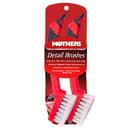
How to choose a detailing brush set
Detailing brushes are cheap enough that most people over-think them, but a few things genuinely matter. Judge a set on these.
1. Bristle type: boar’s hair vs synthetic
Boar’s hairis the classic soft natural bristle — gentle on dashboards, screens, leather and delicate trim, and great for dry dusting and light cleaning. Synthetic bristles are more chemical-resistant and hold up better when you’re scrubbing an all-purpose cleaner into carpet or a grimy seam. Neither is “better” — boar’s hair for delicate surfaces, synthetic for wet, aggressive work — and a good kit often mixes both.
2. A range of sizes
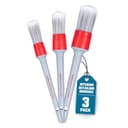
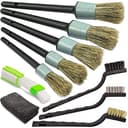
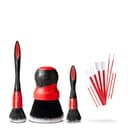
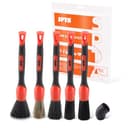
The single most useful feature is having several sizes. A slim brush gets into vents and lettering, a medium one handles trim and console panels, and a larger one agitates cleaner across seats and mats. This is why the big multi-piece kits are such good value: you end up reaching for a different size for almost every task, and buying them individually costs far more.
3. Soft, protected construction
The whole point of these brushes is to clean without marring, so the bristles must be soft and the metal ferrule (the band that holds the bristles) should be coated or recessed so it can’t scrape a surface as you work. This matters most on painted trim and screens. A cheap brush with an exposed metal ferrule is a scratch risk on anything glossy — check that the set you buy protects it.
4. Match the brush to the job
Keep your soft interior brushes for interiors and delicate trim, and don’t press a dusting brush into wheel duty — brake dust and grit will wreck soft bristles and can transfer to paint later. If you’re dressing tires or scrubbing wheels, use a dedicated wheel brush. A two-tool split — soft brushes for the cabin, stiff brushes for the wheels — keeps each working well and keeps grit where it belongs. Technique matters as much as the split does: how to use a detailing brush covers how wet the bristles should be, which direction to work, and what goes underneath to catch what you loosen.
Where detailing brushes earn their keep
Once you own a set you’ll use them constantly. They agitate interior cleanerinto upholstery and carpet so it actually lifts dirt; they knock dust out of vents and speaker grilles; they clean the seams and stitching on seats; and outside they safely work grime out of emblems, badges and the trim where a mitt just slides over the top. They’re also the best tool for loosening embedded pet hair before you vacuum. Our interior cleaning guide shows where each size fits into a full interior routine.
For a few dollars, a brush set does jobs no towel or vacuum can. If you’re building a kit from scratch, it’s one of the first things worth adding after soap, a mitt and a vacuum.
One thing to know before the first use, because it decides how long a set lasts and whether it stays safe on a dashboard: a brush funnels everything it picks up down into the ferrule, where you cannot see it and rinsing the tips never reaches it. How to clean detailing brushes covers the two-minute routine and the contamination rule that matters more than washing — a brush used on wheels never goes back on an interior. For where brushes sit among everything else worth owning, see best car detailing tools.