How to Steam Clean a Car Interior
The appeal is not that steam is stronger than a cleaner. It is that steam delivers heat and agitation while putting almost no liquid into a cabin that has nowhere to drain — which is the one constraint every other interior method is fighting.
How this is funded:we earn a commission if you buy through our links, at no extra cost to you. It never changes which product we recommend, and we’ll tell you plainly when we’d skip one. Full disclosure.
Why steam suits a car specifically
Every interior cleaning method is a negotiation with the same problem: a car cabin cannot dry. The carpet is bonded to foam over a steel floor pan, the seats hold water in their foam, and the whole assembly is sealed up the moment you drive away. Liquid you put in has no route out except evaporating upward.
Steam sidesteps that. Dry vapor steam carries very little liquid water — Dupray puts the water content of its machines’ output at only 5 percent — so you get the two things that actually clean, heat and agitation, with a small fraction of the moisture a spray-and-wipe routine introduces. Heat softens and releases grease and dried soil that a room-temperature cleaner needs dwell time and surfactant to touch.
There is one honest limitation to state up front, because it is the thing people discover on their first attempt: steam does not extract. It releases soil and leaves it sitting on the surface. If you steam a seat and walk away, you have redistributed dirt rather than removed it. Every step below pairs the steam head with a cloth, and that pairing is the whole technique.
Step 1: Everything dry comes out first
Steam turns loose dust into mud instantly. Pull the mats, empty the door pockets, and vacuum properly — seams, under the seats, along the rails, the gap between seat and centre tunnel. This is not a warm-up for the real job; on a normally dirty car it removes most of what was bothering you. Our vacuum picks cover the hardware, and if there is a dog involved, hair needs its own approach first — agitate, then extract.
Step 2: Set the machine up properly
Fill it and let it reach full pressure before you start. A machine that has not finished heating spits condensed water rather than dry steam, which is precisely the wet mess you bought it to avoid, so purge the first burst into a towel away from the car.
If your tap water is hard, use distilled. Mineral scale shortens a boiler’s life, and minerals carried in the steam dry as white marks on dark trim. The same hardness that spots your paint spots your dashboard — we explain the bands in how to remove water spots from car glass.
Finally, plan your tools. A small brush tool for crevices and vents, a wide tool with a microfiber bonnet for upholstery and carpet, and a stack of clean towels. Tooling, not wattage, is what makes a machine good at cars.
Step 3: Hard surfaces, working top down
Start high so falling soil lands on surfaces you have not done yet. Vents first — this is where steam is dramatically better than a spray, because you can drive heat into a vent slat and follow it with a brush instead of trying to wipe inside something a finger does not fit into.
Then console seams, cup holders, switch surrounds, door shuts and the sill plates. Wipe behind the steam head immediately with a microfiber towel. The rhythm is short burst, brush, wipe — not a long dwell in one place.
Keep steam away from:screens and instrument clusters, where moisture can get behind the glass; adhesive edges such as badges, emblems, headliner seams and any trim that is clipped and glued; airbag covers and exposed electrical connectors; and anything already cracked or lifting, because heat will finish the job. Dupray’s own list of surfaces its machines are used on covers seats, door jambs, cup holders, dashboards, headliners, vents and consoles, and the common thread is that they are all intact, sealed surfaces.
Step 4: Upholstery and carpet
Wrap a microfiber bonnet or cloth around the wide tool — this is the technique Dupray itself recommends for upholstery, and it is the step that converts steam from a loosening tool into a cleaning tool. The steam releases the soil through the cloth and the cloth takes it away in the same pass.
Work in overlapping passes and keep the head moving. Change or rotate the bonnet as soon as it looks dirty, because a loaded cloth just moves soil around. On a stain, two or three light passes with a fresh cloth face beats one long dwell, which risks driving the stain deeper into the foam.
Headliners deserve special care. The fabric is bonded to a backing board with adhesive that heat can release, and a sagging headliner is an expensive repair. Light, brief passes only, with the cloth doing most of the contact.
Step 5: Dry and air out
Steam adds far less moisture than a wash, but it is not zero, and the floor pan rule has not changed. Open the doors, run a fan or set the blower to fresh air, and leave it until everything is dry to the touch. On a dry day that is often under an hour.
Where steam genuinely beats a bottle — and where it does not
Steam wins on vents, seams, cup holders, seat rails, greasy switch surrounds and anywhere a brush can reach but a towel cannot. It wins on anyone who would rather not spray chemistry inside a sealed cabin they then sit in. It wins on old, dried, stuck-on soil, where heat does in seconds what dwell time does in minutes.
It loses on volume liquid spills, where extraction is the entire problem and an extractor is the right tool. It loses on leather, which generally wants a dedicated cleaner and conditioner rather than heat — see how to clean leather car seats. And it is slower than a spray for a quick weekly wipe-down, which is why most people who own a steamer still own an interior cleaner.
The machines worth using for this
Two specs predict whether a steam session on a car finishes: runtime and tooling. A machine that empties halfway through the driver’s seat means a refill and a reheat, and a machine with no small brushes cannot do the vents that are steam’s best argument in the first place. Our steam cleaner roundup ranks the category on exactly those two specs; the three below are the ones that suit a car rather than a kitchen floor.
Machines that suit a car interior
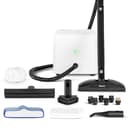
The full-interior machine
Dupray Neat Steam Cleaner
A canister steamer built around a metal boiler rather than a plastic handheld tank, which is the difference between steaming a whole interior and running out partway through the first seat. The right call if you intend to do whole cars rather than touch-ups.
$179.00View on AmazonPrice as of October 4, 2026. #ad How we’re funded
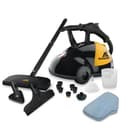
Best stated runtime
McCulloch MC1275 Heavy-Duty Steam Cleaner
The one with the numbers actually published: a 45-minute runtime and 18 accessories. For a car interior the runtime is the spec that decides whether you finish, and the small brushes are what get into vents and seat rails.
$168.99View on AmazonPrice as of October 4, 2026. #ad How we’re funded

Cheapest way in
PurSteam 10-in-1 Steam Mop with Detachable Handheld
Really a floor steamer whose handheld unit detaches, and that is how to judge it — the least expensive way to get steam into a car, provided you accept a small tank and frequent refills on a full interior.
$89.99View on AmazonPrice as of October 4, 2026. #ad How we’re funded
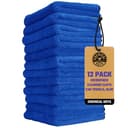
The other half of the method
Chemical Guys Professional Microfiber Towels (12-Pack)
Steam releases soil and leaves it there, so the cloth is not an accessory — it is the extraction step. A twelve-pack means you can change to a clean face the moment one loads up, which is what keeps you cleaning rather than smearing.
$36.99View on AmazonPrice as of October 4, 2026. #ad How we’re funded
Work safely. Detailing chemicals and machine polishers can damage paint, trim or your own skin if misused. Always follow the manufacturer’s instructions, test in an inconspicuous spot first, work out of direct sun, and wear eye protection and gloves where the label calls for them. Two Bucket Club is general guidance from an enthusiast, not a substitute for a product’s own directions.
Frequently asked questions
Is steam cleaning good for a car interior?
Yes, for ground-in soil on hard surfaces, vents, seams and fabric. Steam supplies heat and agitation while adding very little liquid, which suits a cabin that has no way to drain. What it does not do is extract — it releases the soil and leaves it there, so a cloth or vacuum has to follow it.
Can steam damage a car interior?
It can, in specific places. Keep it off screens and instrument clusters, away from adhesive edges like trim badges and headliner seams, and off unsealed or worn leather. Never hold the nozzle still against one spot, and never aim steam at airbag covers or electrical connectors. Test any questionable surface in a hidden area.
Do you need chemicals when steam cleaning a car?
Much less of them, and for routine cleaning often none. Heat does what a surfactant otherwise would on light soil. For grease, old food spills and set-in stains, a small amount of cleaner sprayed first and then worked with steam beats either on its own.
What kind of steam cleaner do you need for car detailing?
A canister machine with a metal boiler and small brush tools, rather than a handheld garment steamer. The spec that decides whether you finish an interior is runtime — a tank that empties after one seat means refilling and re-heating halfway through — and the small tools are what reach vents and seat rails.
Can you steam clean leather car seats?
Coated leather, carefully and briefly, keeping the nozzle moving and never dwelling. Dupray lists leather and fabric seats among the surfaces its machines are used on. Unsealed, perforated or cracked leather is a different matter — there the heat and moisture can get behind the surface, so use a dedicated leather cleaner instead.
Is a steam cleaner better than an upholstery extractor?
They solve different halves of the problem. Steam releases soil with heat and barely wets anything; an extractor floods and then pulls the solution back out. For light-to-moderate soil and tight areas, steam is cleaner and faster. For a seat soaked in something, an extractor is the right tool because removal is the hard part.
Sources
- Dupray — Refresh your car's interior with steam — Steam-cleaner manufacturer on interior detailing: dry vapor steam carries “very low water content (only 5%)” and is presented as safe on leather or fabric seats, door jambs, cup holders, dashboards, headliners, vents and central consoles, and on wheels, rims and body with 220 V machines; the recommended upholstery technique is “the triangle tool with a microfiber cloth or bonnet wrapped around it”; it is used for heavy stains, odors and salt stains (accessed October 5, 2026)
- International Detailing Association — Detailing Resources — IDA's public detailing resource library (accessed July 19, 2026)
- US EPA — Safer Choice — EPA program certifying safer cleaning-product chemistry (accessed July 19, 2026)
Keep reading
Best Steam Cleaners for Cars
The machines compared on runtime and tooling — the two specs that decide whether you finish an interior.
Compare the machinesHow to Clean Car Carpet
The bottle-and-brush route to the same result, and why extraction matters more than chemistry.
Read the guideBest Interior Detailing Products
One pick per surface, if you would rather not buy a machine at all.
See the shortlistHow to Clean a Car Interior
The full top-down sequence a steam session should slot into.
Read the method