TWO BUCKET CLUB

Alternatives to Meguiar's Ultimate Compound (2026)

Ultimate Compound is the default first compound, and it is a good one. These are the registry alternatives worth switching to - a longer working time, a true one-step, a heavier cut, and a cheaper bottle - and which of those reasons applies to you.

By Stephen V.Last updated How we pick

The closest alternative is Griot’s Garage Complete Compound. It is the same idea — a clear-coat-safe medium cut that removes swirls, oxidation and water spots and wipes off cleanly — with the one spec that genuinely beats the original for a first-timer: a long open working time that is very hard to over-work. It is for anyone who found Ultimate Compound flashed off faster than they could work it. The budget pick is Turtle Wax Rubbing Compound, the cheapest bottle here and the one to keep on a shelf for spot-correcting an older panel — it is coarse, so it is a different tool rather than a cheaper copy. If you want to replace two products with one, 3D One is the one-step answer.

First, what you would be leaving. Meguiar’s Ultimate Compound’s listing describes a clear-coat-safe rubbing and polishing compound in a 15.2 oz bottle that cuts and finishes in one and can be used by hand or by machine, and it is cheap per ounce and stocked almost everywhere. We rank it first on our polishing compounds roundup and that has not changed. If it is working for you, there is no reason on this page to switch.

People look for an alternative for four reasons, and they want four different products. Working time— the product dries before you have finished the section. One-step— you would rather buy one bottle than a compound and a polish. More cut— the defect is deeper than a medium compound reaches. Price or availability— you want something on the shelf at the parts store tonight. Each pick below answers exactly one of those. Live prices on every row.

How this is funded:we earn a commission if you buy through our links, at no extra cost to you. It never changes which product we recommend, and we’ll tell you plainly when we’d skip one. Full disclosure.

Quick picks

Ranked on published specs, value and buyer fit. Select a row to jump to the full write-up. We have not lab-tested these products — here is exactly what we do instead.

#ProductBest forPrice
1
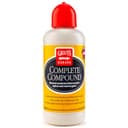
Griot's Garage Complete Compound

Griot's Garage Complete Compound

A friendly, medium-cut compound aimed squarely at DIYers: it removes swirls, oxidation and water spots on all automotive finishes and wipes off cleanly, with a long working time that is very forgiving on a first correction.

Closest match overall
$13.99View on Amazon

Price as of November 20, 2026. #ad How we’re funded

2
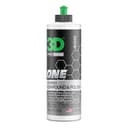
3D One Hybrid Compound & Polish

3D One Hybrid Compound & Polish

A true one-step: an adaptive abrasive that starts cutting like a compound and breaks down to finish like a polish, so a single product and pad can correct and refine in one pass. That makes it a favorite for people who don't want to buy a separate compound and polish.

Best one-step replacement
$31.99View on Amazon

Price as of November 20, 2026. #ad How we’re funded

3
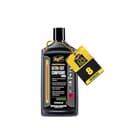
Meguiar's Mirror Glaze M105 Ultra-Cut Compound

Meguiar's Mirror Glaze M105 Ultra-Cut Compound

The heavy hitter: a professional body-shop compound with serious cutting power for deep swirls, sanding marks and heavy oxidation. It removes defects fast but leaves haze that you must follow with a polish, so it is a tool for real correction rather than a one-and-done.

Best if you need more cut
$13.95View on Amazon

Price as of November 20, 2026. #ad How we’re funded

4
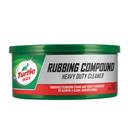
Turtle Wax Rubbing Compound (Heavy Duty Cleaner)

Turtle Wax Rubbing Compound (Heavy Duty Cleaner)

The budget option that's easy to find on any parts-store shelf. It's a heavy-duty rubbing compound for cutting through oxidation, stains and heavy defects on older single-stage paint, and it's cheap enough to keep around for spot jobs — just go carefully, because it's coarse.

Best on a budget
$7.58View on Amazon

$8.9916% off

Price as of November 20, 2026. #ad How we’re funded

5
Meguiar's Ultimate Polish (Pre-Wax Glaze)

Meguiar's Ultimate Polish (Pre-Wax Glaze)

The cheapest way to make a black car look expensive. The listing is unusually direct about it - conditioning oils add depth of color and gloss before waxing, especially on dark colored cars - and it removes the fine towel marks that make black paint look hazy in the first place.

Best finishing partner
$9.67View on Amazon

$12.9926% off

Price as of November 20, 2026. #ad How we’re funded

The picks in full

#1Closest match overall

Griot's Garage Complete Compound

A friendly, medium-cut compound aimed squarely at DIYers: it removes swirls, oxidation and water spots on all automotive finishes and wipes off cleanly, with a long working time that is very forgiving on a first correction.

What we like

  • Long open working time — hard to over-work, easy to learn on
  • Removes swirls, oxidation and water spots on all clear coats
  • Wipes off cleanly with little dust

Trade-offs

  • Medium cut — deep defects still need a heavier compound first
  • Best results come on a machine, not by hand
TypeClear-coat-safe correcting compound
Standout specMedium cut; long working time
Size16 oz
Best forA beginner-safe medium cut with a long working time
Price tierBudget

Cost-to-use note. Spreads easily, so a small amount covers a section; a bottle lasts across several full corrections.

Specs read from the product listing, on August 7, 2026. “Not listed” means the listing does not state that figure.

#2Best one-step replacement

3D One Hybrid Compound & Polish

A true one-step: an adaptive abrasive that starts cutting like a compound and breaks down to finish like a polish, so a single product and pad can correct and refine in one pass. That makes it a favorite for people who don't want to buy a separate compound and polish.

What we like

  • Cuts and finishes in a single step on many finishes — fewer products, less time
  • Body-shop safe and dust-free formula that stays workable
  • Pairs well with a dual-action polisher and a medium pad

Trade-offs

  • A one-step compromise — a dedicated compound-then-polish will out-cut and out-finish it on tough paint
  • Pricier per ounce than a basic compound
TypeHybrid one-step compound + finishing polish
Standout specAdaptive abrasive: cut then finish
Size16 oz
Best forOne-step correction without buying two products
Price tierMid

Cost-to-use note. As a one-step it replaces two products; a modest amount per section keeps a bottle going across many details.

Specs read from the product listing, on August 7, 2026. “Not listed” means the listing does not state that figure.

#3Best if you need more cut

Meguiar's Mirror Glaze M105 Ultra-Cut Compound

The heavy hitter: a professional body-shop compound with serious cutting power for deep swirls, sanding marks and heavy oxidation. It removes defects fast but leaves haze that you must follow with a polish, so it is a tool for real correction rather than a one-and-done.

What we like

  • Aggressive cut that tackles defects milder compounds can't touch
  • A body-shop staple trusted for heavy correction and after wet-sanding
  • A little cuts a lot, so a small bottle goes far

Trade-offs

  • Leaves haze — you must follow with a finishing polish to restore gloss
  • Fast-acting and less forgiving; easy to be too aggressive for a beginner
TypeAggressive body-shop cutting compound
Standout specHeavy cut; needs a follow-up polish
Size8 oz
Best forSerious defect removal on badly neglected paint
Price tierMid

Cost-to-use note. Very concentrated cutting power — you use small amounts, so even the 8 oz bottle corrects a lot of paint.

Specs read from the product listing, on August 7, 2026. “Not listed” means the listing does not state that figure.

#4Best on a budget

Turtle Wax Rubbing Compound (Heavy Duty Cleaner)

The budget option that's easy to find on any parts-store shelf. It's a heavy-duty rubbing compound for cutting through oxidation, stains and heavy defects on older single-stage paint, and it's cheap enough to keep around for spot jobs — just go carefully, because it's coarse.

What we like

  • Inexpensive and available almost everywhere
  • Strong cut for oxidation and heavy stains on older finishes
  • Fine for spot-correcting a rough panel on a budget

Trade-offs

  • Coarse and less refined — can leave its own marring on modern clear coats if you're heavy-handed
  • Not for delicate finishing; follow with a polish for gloss
TypeHeavy-duty rubbing compound
Standout specAggressive cut; budget shelf staple
Size10.5 oz
Best forA cheap, aggressive cut for older or single-stage paint
Price tierBudget

Cost-to-use note. Cheap per bottle and per ounce; a low-cost way to keep a heavy cut on hand for occasional jobs.

Specs read from the product listing, on August 7, 2026. “Not listed” means the listing does not state that figure.

#5Best finishing partner

Meguiar's Ultimate Polish (Pre-Wax Glaze)

The cheapest way to make a black car look expensive. The listing is unusually direct about it - conditioning oils add depth of color and gloss before waxing, especially on dark colored cars - and it removes the fine towel marks that make black paint look hazy in the first place.

What we like

  • Usually the cheapest bottle on this page by a wide margin
  • Listing states it gently removes fine swirls and towel marks, not just fills them
  • Explicitly aimed at dark colored cars by the maker, rather than by us
  • Safe on all glossy paints including clear coats; hand or dual-action polisher

Trade-offs

  • A polish and glaze only - it adds no meaningful protection, so it always needs a wax on top
  • Fine swirls and towel marks only; anything you can catch a fingernail in needs a real compound
  • Adds a whole extra pass to a wash day, which is why most people skip it
TypePre-wax polish & glaze
Standout specRemoves fine swirls and towel marks before waxing
Size16 oz
Best forThe pre-wax step on a budget, by hand or with a polisher
Price tierBudget

Specs read from the product listing, on August 24, 2026. “Not listed” means the listing does not state that figure.

Who each pick is for

  • Griot’s Garage Complete Compound— for the person whose complaint is working time. A medium cut on all clear coats with a long open time, low dust and a clean wipe-off. The like-for-like swap.
  • 3D One Hybrid Compound & Polish— for someone who wants one bottle and one pad to do the whole correction. An adaptive abrasive that starts cutting and breaks down to finish, and a body-shop safe dust-free formula.
  • Meguiar’s M105 Ultra-Cut— for deep swirls, sanding marks and heavy oxidation that a medium compound will not touch. It leaves haze by design, so it needs a finishing polish afterwards. Not a beginner’s first bottle.
  • Turtle Wax Rubbing Compound— the budget pick. Cheap, on almost every parts-store shelf, and genuinely strong on oxidation and stains on older single-stage paint. Coarse enough to need care on a modern clear coat.
  • Meguiar’s Ultimate Polish— not an alternative to the compound at all, but the product most people are actually missing. If your finish looks hazy after compounding, this is the pass that fixes it, and it is the cheapest bottle on this page.

Pick your reason, then pick the bottle

“It dried before I finished the panel”

Buy the Griot’s. Working time is a real formulation difference, not a technique problem, and it is the spec that leads the Griot’s verdict: long open time, hard to over-work, wipes off with little dust. It matters most in warm weather, in a garage without climate control, and on a first correction when you are moving slowly on purpose.

Two things that also help regardless of product: work smaller sections (2 ft squares, not whole doors), and work out of the sun on cool panels. Chemical Guys puts a 50–85°F working range on paint work and tells you to check that the surface is cool to the touch — hot paint flashes any compound early.

“I do not want to buy two products”

Buy 3D One. Its adaptive abrasive is designed to cut first and then break down to a finish in the same pass, which is a genuinely different mechanism from a medium compound that happens to finish reasonably well. The honest trade is in its own cons: a dedicated compound followed by a dedicated polish will out-cut and out-finish a one-step on tough paint, and it costs more per ounce. For one car with normal wash swirls, that trade is worth taking. Our compound vs polish guide explains the two-step it replaces.

“It did not remove the scratch”

First, check whether a compound was ever the right answer. Run a fingernail across the defect: if it catches, the scratch is through the clear coat and no abrasive on this page will remove it safely — see best car scratch removers and how to remove scratches from a car. If it does not catch, you need more cut, and M105 is the step up: a body-shop staple used after wet-sanding, concentrated enough that small amounts correct a lot of paint.

Buy it with your eyes open. M105 removes defects fast and leaves haze that you must follow with a polish, and it is less forgiving than anything else here. And remember what you are spending: DetailingWiki’s worked example of a typical paint system is a 40 micrometer clear coat with roughly “10 micrometer each time you polish,” and it deliberately declines to publish a safe minimum, recommending you measure the panel instead. A heavy cut is not free.

“I want something cheaper, or something tonight”

Buy the Turtle Wax. It is the cheapest bottle on this page and the most widely stocked, and on older or single-stage paint its stronger cut is an advantage rather than a risk. On a modern clear coat it is coarse enough to leave its own marring if you are heavy-handed, so plan on a polish afterwards. Treat it as a spot-correction tool rather than a whole-car product.

What people usually get wrong about switching

The pad matters as much as the bottle.A medium compound on a cutting pad behaves like a heavier compound; the same compound on a finishing pad behaves like a polish. If a compound is under-performing, try a more aggressive pad before you buy a more aggressive liquid — it is cheaper and more reversible. See best polishing pads and how to choose a polishing pad.

By hand, all of these under-deliver. Ultimate Compound and Ultimate Polish both state hand use on the listing and both say the same thing we do: a machine gets far more out of them. If you are correcting by hand, read can you polish a car by hand before you blame the product, and consider that a polisher under $200 changes the result more than any bottle swap will.

Decontaminate first or you will keep marring. Compounding over bonded iron or embedded grit grinds that grit into the clear coat, and the result looks like a bad compound. An iron remover then a clay bar, then abrade.

Protect it afterwards.Freshly compounded paint has nothing on it. DetailingWiki’s oxidation reference notes that protective products can seal the surface well enough to prevent it oxidizing, and that sealants and ceramic coatings have more effect on UV than wax does — so finish the same day with a wax, sealant or coating.

Our call

Switch to Griot’s Complete Compound if your issue is working time or dust. It is the same class of product with a friendlier open time, at a similar price.

Switch to 3D One if you want to stop owning two bottles. You pay more per ounce and you save a whole pass.

Add M105 rather than switching to it if the problem is depth. Keep the medium compound for the rest of the car and use the heavy cut only where it is needed, then polish.

And if nothing is wrong, stay. Ultimate Compound is still our top pick in the category and we are not going to pretend otherwise to sell you a different bottle. The best reason to read this page is that one of the four problems above is yours.
Frequently asked questions

What is the best alternative to Meguiar's Ultimate Compound?

Griot's Garage Complete Compound. It is the closest like-for-like swap - a clear-coat-safe medium cut that removes swirls, oxidation and water spots on all automotive finishes - and the reason to prefer it is a long open working time that is hard to over-work, plus a clean, low-dust wipe-off. If you want a single bottle to replace both a compound and a polish, 3D One is an adaptive-abrasive one-step. If you need more cutting power, Meguiar's M105 is the body-shop heavy cut. On a budget, Turtle Wax Rubbing Compound is the cheapest and most widely stocked option here.

Why would I switch away from Ultimate Compound at all?

There are four honest reasons and they lead to four different products. Working time, if the product flashes off before you finish a section - go to the Griot's. Product count, if you would rather own one bottle than a compound plus a polish - go to 3D One. Cut, if the defect is deeper than a medium compound reaches - add M105. Price or availability, if you want something cheap on a parts-store shelf tonight - the Turtle Wax. If none of those four is your situation, Ultimate Compound is still our first pick in the category and switching gains you nothing.

Is there a cheaper compound that works as well?

Cheaper, yes; the same, no. Turtle Wax Rubbing Compound is the lowest-priced option here and it genuinely cuts - it is strong on oxidation and stains on older or single-stage paint. What you give up is refinement: it is coarse enough that it can leave its own marring on a modern clear coat if you are heavy-handed, so it wants a finishing polish afterwards. That makes it an excellent shelf product for spot-correcting a rough panel and a poor choice as your only compound on a newer car.

What is the difference between a one-step like 3D One and a compound?

The abrasive. A conventional compound has a fixed cut level, and if it happens to finish reasonably well that is a bonus. A one-step uses an adaptive abrasive designed to start cutting like a compound and then break down to finish like a polish inside the same pass, so one product and one pad can both correct and refine. The documented trade-off is that a dedicated compound followed by a dedicated polish will out-cut and out-finish a one-step on difficult paint, and the one-step costs more per ounce.

Do I need a more aggressive compound or a more aggressive pad?

Try the pad first - it is cheaper and far more reversible. The same liquid on a cutting pad behaves like a heavier product, and on a finishing pad behaves like a polish, so pad choice shifts the effective cut level substantially. The sequence that avoids wasted money is: correct section size and cool panel, then a more aggressive pad, then a more aggressive compound. Jumping straight to a body-shop heavy cut is how people remove more clear coat than the defect required.

Will any of these remove a scratch I can feel with my fingernail?

No, and that is a useful test precisely because it is unambiguous. If a fingernail catches in the defect, it has gone through the clear coat, and abrading enough material to level it would take out more clear coat than the panel can spare. Those need filling or paint rather than correction. Everything on this page addresses defects above that threshold: wash swirls, light scratches, water etching, oxidation and towel marks.

What should I use after compounding?

A polish if the finish looks hazy, then protection either way. Meguiar's M105 in particular leaves haze by design and expects a finishing polish afterwards - Meguiar's Ultimate Polish is the cheapest bottle on this page and does exactly that job. After that, freshly compounded paint is completely bare, so apply a wax, sealant or ceramic coating the same day. DetailingWiki's oxidation reference notes that sealants and coatings both have more effect on UV than wax does, which is worth knowing if the car lives outdoors.

Sources

  • DetailingWiki — Minimum paint thickness — Detailing reference wiki on how much paint a correction step costs: a worked example of a 120 micrometer paint system with a 40 micrometer clear coat, and roughly “10 micrometer each time you polish”; it explicitly argues against publishing a single minimum-thickness number and recommends measuring the panel instead (accessed October 5, 2026)
  • DetailingWiki — What is oxidation — Detailing reference wiki (Vinnie van Rooij): oxidation changes the paint surface so "the smooth flat and highly refractive surface changes into a matte surface with a low refractive index. Simply put: less shiny"; fading "happens mainly to cars that have no clear coat," and while red is said to fade most, "there are no statistics that support this claim" - DuPont research simply found red was among the most popular colors; prevention is possible because "certain protective products seal in the surface well enough to prevent it from oxidizing," but "a layer of wax will oxidize more then the surface underneath," a sealant "might offer more protection against oxidation because it uses different ingredients that are less prone to disintegration," ceramic coatings "might offer more protection seeing as their hard and tough nature," and "these last 2 protective products will also have more effect on UV than wax"; two forms cannot be reversed at all - "surface breakdown" and "rubber vulcanization," where "using a dressing will hide it a bit" (accessed October 18, 2026)
  • Chemical Guys — Why Waxing Your Car In Direct Sunlight Could Be A Mistake — Manufacturer guidance on waxing temperature: sun makes wax flash-dry into streaks and residue, a 50–85°F working range, check the surface is cool to the touch, allow 30–60 minutes in shade to cool, and work early morning or late afternoon (accessed September 18, 2026)
  • International Detailing Association — Detailing Resources — IDA's public detailing resource library (accessed July 19, 2026)

Keep reading