Who each pick is for
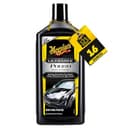
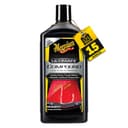
- Meguiar’s Ultimate Polish— for anyone whose paint is clean but flat-looking. A pre-wax polish and glaze that removes fine swirls and towel marks by hand or machine. Our budget pick and the single most visible improvement here.
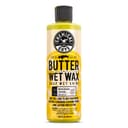
- Chemical Guys Butter Wet Wax— for the person who wants the warm, wet carnauba look and does not mind reapplying. Easy on, easy off, forgiving if you leave it a minute too long.
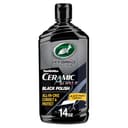
- Turtle Wax Ceramic Black Polish & Wax— for black, dark gray and dark blue cars where one bottle is the whole plan. Black-pigmented carnauba with ceramic polymers; the listing states a 24-hour cure, so plan the weather.
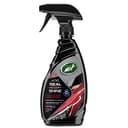
- Turtle Wax ICE Seal N Shine— for anyone who would rather have months of protection than maximum gloss. A carnauba-sealant hybrid: less character than a pure wax, more staying power.
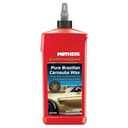
- Mothers California Gold Pure Brazilian Carnauba— for the enthusiast who wants a true final-step wax with no cleaners in it, applied over paint that is already corrected. It does not clean, by design.
- Meguiar’s Ultimate Compound— for paint with real defects rather than dullness: visible swirls, water etching, oxidation. This is the step before a polish, not instead of it.
Which one do you actually need?
Run your fingernail across the defect. If you can feel it, no polish and no wax will remove it — that is a scratch through the clear coat and it needs filling or respraying. If you cannot feel it but you can see it, this page is the right place to be, and the question becomes how deep the haze goes.
Dull but clean paint— use a polish, then a wax. Most cars that look “tired” are not scratched; they are covered in a film of bonded contamination and a fine web of wash marring. Our compound vs polish guide is the clearest version of that distinction.
Visible swirls in direct sun— start with a compound, follow with the polish, then wax. Ultimate Compound is on this page for that case, and our compounds roundup ranks the whole field if the damage is the main problem.
Gritty paint that feels rough— nothing on this page comes first. Decontaminate before you abrade: an iron remover for bonded metal and a clay bar for everything else. Polishing over embedded grit grinds it into the clear coat.
How to do a polish-and-wax properly
- Wash and dry completely. Polishing a dirty panel is sanding with dirt. Use a pH-neutral car wash soap, not dish soap.
- Decontaminate if the paint feels rough. Iron remover, then clay, then dry. Skip this only if the finish is already glass-smooth.
- Work out of the sun, on cool paint.Chemical Guys puts the working range at 50–85°F, says to check that the surface is cool to the touch, and suggests 30 to 60 minutes in shade to cool a hot panel. Turtle Wax says the same thing independently: “Never attempt to wax in direct sunlight or extreme cold. The heat from direct sunlight will ‘bake’ the wax onto the car’s surface.”
- Polish one panel at a time, with an applicator or a dual-action machine. Overlapping passes, moderate pressure, and stop when the product goes clear. Our polishing by hand guide covers what hand application can and cannot achieve.
- Wipe off with a clean towel, then inspect.A fresh microfiber for removal, never the application pad. If the panel still looks hazy in sun, do a second pass before you wax — wax over haze locks it in.
- Wax thin. A thick coat does not last longer, it just takes longer to buff off and leaves streaks. One thin, even layer.
- Let it cure before it gets wet. The Turtle Wax ceramic products on this page state a 24-hour cure on the listing. Rain inside that window is a wasted afternoon.
Three things to be skeptical about
Beading is not a test of protection.This is the most useful thing we can tell you about judging any wax. DetailingWiki makes the point about quick detailers and the mechanism holds for anything applied on top: a fresh layer “can improve beading and sheeting for a short period of time, mostly because the layer that interacts with the water is actually the quick detailer and not the protective layer underneath,” so a surface “may show good beading and sheeting even though the layer underneath is worn.” Water behaving nicely the afternoon you apply something tells you almost nothing about next month.
“Boosting” a wax is not a thing.The same source is explicit that calling a quick detailer a booster “would imply that it revives the layer of wax underneath, which is not the case.” Toppers add their own thin film. They do not resurrect what is already gone.
Wax is not UV protection in the way coatings are. DetailingWiki’s oxidation write-up notes that “a layer of wax will oxidize more then the surface underneath,” while a sealant “might offer more protection against oxidation because it uses different ingredients that are less prone to disintegration,” and that sealants and ceramic coatings “will also have more effect on UV than wax.” If sun damage is your actual concern, read how to protect car paint from sun and consider a sealant or a ceramic coating instead of a wax.
Our call
Buy Ultimate Polish and Butter Wet Wax if you want the best result for under thirty dollars. Two steps, one afternoon, and the difference is obvious in daylight.
Buy the Turtle Wax Ceramic Black Polish & Wax if your car is dark and you want one bottle. Black-pigmented products are the one place where the one-step compromise genuinely pays off, because the pigment hides what the mild abrasive does not remove. Our black car wax roundup goes deeper on that.
Buy Seal N Shine if you would rather do this twice a year than four times. You trade some of the warmth of a carnauba for a sealant that stays.
And if the paint has real defects, stop reading this page and start with a compound. No wax improves damaged paint; it just makes it shinier damage.