Who each pick is for
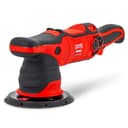
- Griot’s Garage G9— for the first-timer who wants to buy once. A smooth 9mm orbit, random-orbital action that is very hard to burn paint with, and the best support reputation of the three machines here.
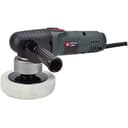
- Porter-Cable 7424XP— for anyone who learns from video. It is the most documented polisher ever made, pads and backing plates for it are cheap and everywhere, and the dual-action motion is forgiving.
- AVID POWER dual-action buffer— the budget pick. For a one-off correction, or for finding out whether this is a hobby you want. It removes light-to-moderate swirling and it often ships with starter pads.
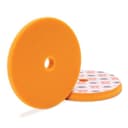
- Griot’s BOSS Correcting Foam Pads— for the G9 or any machine running a 6 in backing plate. Mid-cut, two-pack, and machine-washable, which is the spec that matters: a pad you can clean properly costs a fraction of one you throw away.
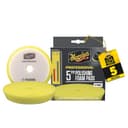
- Meguiar’s Professional 5 in Polishing Pads— for the Porter-Cable, the AVID, or any 5 in fitment. The lowest cost per pad here, and a polishing cut rather than a cutting cut, so pair them with a one-step product.
What $200 has to cover
Here is the arithmetic nobody puts in a headline. A realistic first-correction budget is a machine, at least two pads, and a compound or one-step polish. At our picks’ prices that works out roughly as:
- The frugal build:AVID POWER plus the Meguiar’s 5 in pads plus a bottle of one-step compound — comfortably under a hundred dollars all in, and genuinely capable on light swirling.
- The buy-once build:Porter-Cable 7424XP plus the Griot’s BOSS pads — under two hundred dollars together, with the compound as the only thing left to add.
- The best machine build: the G9 on its own uses most of the two hundred, which is a reasonable choice if you already own pads or intend to buy them next month. Just do not buy a machine and no pads.
Our polishing pad roundup covers cut levels properly, and how to choose a polishing pad explains which color does what.
How to choose a polisher at this price
1. Random orbital, not rotary — at any budget
Every machine on this page is a dual-action random orbital, and that is not a compromise forced by the price. A rotary spins on a fixed axis and generates heat fast enough to burn through a clear coat in seconds in inexperienced hands. A random orbital oscillates as well as rotates, which stalls under heavy pressure instead of digging in. Our dual-action vs rotary guide explains the mechanism. If anyone recommends a rotary as a first machine, ignore them.
2. Throw is a speed spec, not a safety spec
Throw is how far the pad travels per orbit. The G9 lists a 9mm throw; the Porter-Cable is a classic short-throw machine. A longer throw — 15 mm and up — covers large flat panels faster, which is why professionals use them, and the two registry machines with longer throws both sit above this page’s cap. What a shorter throw costs you is time, not quality: a 9mm machine corrects more slowly on big flat panels, and it is easier to control on curves and tight areas. For one car, a few weekends a year, that trade is fine.
3. Backing plate size decides your pad bill
Check the plate before you buy pads. The Griot’s BOSS pads here are 6.5 in and want a 6 in plate with the torque to drive them; the Meguiar’s pads are 5 in, which is the most common DA fitment and the cheapest to feed. Mismatching plate and pad is the most common ordering mistake in this category, and a too-large pad on a small plate will shred its edge.
4. Pads are the consumable — buy washable ones
A pad loads up with spent compound and dead clear coat within a panel or two. You either clean it on the fly or you swap it, and either way you need more than one. Machine-washable foam is the spec that quietly saves the most money over a couple of years, which is why it leads the Griot’s pad verdict.
The thing to be careful about
Polishing is the only step in detailing that spends something you cannot replace. DetailingWiki’s worked example of a typical paint system puts the clear coat at around 40 micrometers with roughly “10 micrometer each time you polish” — and it deliberately refuses to publish a single safe minimum thickness, recommending that you measure the panel instead. Two practical consequences:
Use the mildest product that works. Start with a polish, step up to a compound only if the polish does not clear the defect. Our compound vs polish guide is the test to run first.
Do not polish on a schedule.Correct when there is something to correct. A car polished every spring is a car with measurably less clear coat than one polished when it needs it, and oxidation resistance lives in that clear coat — DetailingWiki notes that protective products can seal the surface well enough to prevent oxidizing in the first place, which is the cheaper strategy.
How to use a first polisher without damaging anything
- Wash and decontaminate first. An iron remover and a clay bar. Polishing over embedded grit is sanding with grit.
- Tape off trim and badges. Compound stains textured black plastic and it is far harder to remove than it is to mask.
- Prime the pad, then do a 2 ft test square. Four pea-sized dots of product, spread at low speed, then work at speed four to five. Inspect in direct light before you commit to a whole panel.
- Keep the pad flat and let the machine do the work. Leaning on a random orbital stalls the oscillation, which is exactly the motion doing the correcting.
- Clean the pad every panel. A compressed-air blast or a brush. A loaded pad stops cutting and starts marring.
- Wipe down and inspect under a light. Our swirl mark guide covers what you are looking for and when to stop.
- Protect what you just corrected.Bare polished paint has no protection on it at all — finish with a wax or a sealant the same day.
Our call
Buy the G9 if this is a hobby you are going to keep. It is the smoothest machine under the cap, the most forgiving, and the one with real support behind it.
Buy the Porter-Cable plus the BOSS pads if you want the best complete setup for the money. Two hundred dollars, nothing missing except the compound, and a tutorial for every situation you will hit.
Buy the AVID POWER if you are not sure yet. Fifty dollars to find out whether you enjoy standing at a fender for an hour is a fair price, and if you do, the better machine will still be there.
If you can go above two hundred, our main dual-action polisher roundup covers the longer-throw machines, and best polisher for beginners is the version of this page written around forgiveness rather than price.