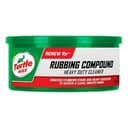
How to choose a polishing compound
Compounds look interchangeable on the shelf, but a few real differences decide whether one fixes your paint or wastes an afternoon. Judge them on these.
1. Cut level is the whole decision
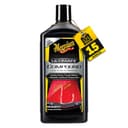
Compounds sit on a spectrum from mild to aggressive. A heavy cut (like an ultra-cut body-shop compound) removes deep swirls, sanding marks and heavy oxidation fast, but leaves a haze you must refine away with a polish afterward. A medium or one-stepcompound removes the light-to-moderate swirls most daily drivers actually have and finishes glossy enough to skip a separate step. The honest move is to start with the least aggressive product that will do the job, and only step up if it isn’t cutting — less clear coat removed means more corrections your paint can survive over its life.
2. Does it finish, or does it need a polish after?
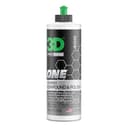
Aggressive compounds cut fast but micro-mar the surface as they work, so they need a follow-up finishing polishto restore full clarity. One-step and hybrid products use abrasives that break down as you work them, so they finish down to a gloss on their own. If you want the simplest path, a one-step is the answer; if you have serious defects, accept that it’s a two-product job. On dark paint this stops being a preference and becomes the whole decision, which is why we sort the same products differently in best polishing compounds for black cars. If the problem is chalky, faded paint rather than swirls, start with how to remove oxidation from car paint instead.
3. Working time and dusting
A compound with a long working timestays wet and workable on the panel, which is far more forgiving — you have time to spread it and work it without it flashing off and grabbing. Low-dust formulas keep the job cleaner and let you see your progress. Both matter most for a beginner, which is why the friendliest picks here are the ones that stay open a long time and wipe off cleanly.
4. By hand or by machine
You can use any of these by hand, and for a small scratch that’s fine. But a compound only reaches its potential on a dual-action polisher, which applies even pressure and the consistent motion the abrasives are designed for. If you’re correcting a whole car, budget for the machine — it does more for your results than spending up on the compound. Buying both at once for the first time? Best car polisher for beginners puts the machine, the pads and the two liquids in one cart in the order you should try them, and makes the case for starting with a polish rather than a compound at all.
Compound, then polish, then protect
Compounding is one step in a sequence. You should always decontaminatethe paint first so you’re not dragging bonded grit under the pad, then compound to remove defects, then follow with a finishing polish if the compound left haze, and finally seal the bare, freshly polished paint with a wax, sealant or coating — because correction strips away whatever protection was there. Skipping that last step leaves your new gloss exposed. The full running order is laid out in our order of detailing steps guide, and the swirl-removal walkthrough shows the technique panel by panel.
Get the cut level right and work methodically, and an inexpensive compound will transform tired paint. Reach for the heavy cut you don’t need and rush it, and you’ll spend the next weekend chasing your own haze.
If what you are fixing is one specific mark rather than a whole panel of swirls, start with our scratch remover triage instead — it sorts the job by how deep the damage actually goes before it recommends a product.