Who each pick is for
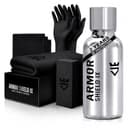
- AvalonKing Armor Shield IX— for the first-time coater. It arrives as an all-in-one beginner kit, which matters because the things people forget to buy (applicator, prep, removal towels) are the things that ruin a coating job.
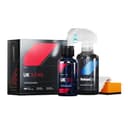
- CarPro CQUARTZ UK 3.0— for someone coating in cooler weather or in a garage without climate control. The listed formula is cool-weather friendly, which is the single most useful spec in this category in November.
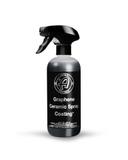
- Adam’s Graphene Ceramic Spray— for the person who wants coating-like behavior with wax-like effort. A graphene and SiO2 spray that goes on panel by panel with no cure window to manage.
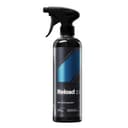
- CarPro Reload 2.0— for anyone who already has a coating and wants to maintain it. A silica and siloxane spray sealant designed as a topper rather than as a standalone coating.
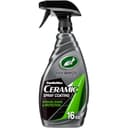
- Turtle Wax Hybrid Solutions Ceramic Spray— the budget pick. The cheapest way onto the SiO2 ladder, and the honest recommendation for someone who wants the water behavior without the weekend.
What the price band actually changes
Three things separate a sub-$100 kit from a professional install, and only one of them is the bottle.
Layers. A pro install is usually two or more layers with a dedicated cure between them. A single DIY kit is one layer. More layers means more thickness and a longer life, and it is also why pro quotes scale the way they do.
Correction. This is the big one. A coating locks in whatever the paint looks like underneath it, including every swirl mark. Professional pricing includes machine polishing first, which is often most of the labor. If you are coating at home, budget time for a compound and a polisher, or accept that you are sealing in the current finish for a couple of years.
Environment. Coatings cure, and cure chemistry cares about temperature, humidity and dust. A controlled bay is part of what you pay for. Our can you apply ceramic coating yourself guide is honest about which of those you can work around in a home garage.
Coating kit or spray coating?
Under a hundred dollars you can buy either, and they are not the same product class even though both say “ceramic.”
A coating kit (Armor Shield IX, CQUARTZ UK) is a bottle of resin applied with a suede-wrapped block, panel by panel, with a flash time and a wipe-off window you have to hit. Get it wrong and you get high spots that need polishing out. Get it right and you get years rather than months.
A spray coating(Adam’s graphene, Reload, Turtle Wax) is sprayed and wiped like a detailer. It is close to impossible to ruin, it takes twenty minutes, and it lasts months rather than years. For most people this is the correct product, and our ceramic spray roundup ranks the full field.
The decision is honestly about appetite for risk, not budget. A spray coating at fifteen dollars that you apply four times a year is more protection than a seventy-dollar kit still in the box.
How to coat a car at home without wasting the bottle
- Wash, then decontaminate. An iron remover for bonded metal, then a clay bar. The surface has to be chemically clean, not just visually clean.
- Polish if the paint has visible defects. You get one chance; a coating over swirls is swirls for two years. Read how to remove swirl marks if you are unsure what you are looking at.
- Panel-wipe to remove polishing oils. Skipping this is the most common cause of a coating that will not bond.
- Work in shade, on cool panels, one section at a time.The same temperature discipline every protection product needs — Chemical Guys puts a 50–85°F range on wax work and tells you to check the surface is cool to the touch, and a coating is less forgiving than a wax.
- Follow the flash time on the bottle, not a video. Flash times vary by product and by temperature. Wipe too early and you remove it; too late and you fight high spots.
- Keep it dry for the stated cure. This is the step that decides whether the coating performs. Check the weather before you open the bottle.
- Maintain with the right soap.A coated car wants a plain pH-neutral shampoo, not a wash-and-wax — see soap for ceramic coated cars and coating maintenance.
What we will not tell you
How many years any of these lasts.Manufacturer durability claims in this category are unverifiable by us and vary enormously with prep, climate and wash habits. Where a maker publishes a claim we say that the maker published it — Adam’s states multi-year durability for its full graphene coating, for example — and where none is published, the spec renders “Not listed.” We own none of these units and we have run no durability test.
That beading proves it is working.DetailingWiki is explicit on the mechanism: a fresh top layer “can improve beading and sheeting for a short period of time, mostly because the layer that interacts with the water is actually the quick detailer and not the protective layer underneath,” so a surface “may show good beading and sheeting even though the layer underneath is worn.” If you top your coating regularly, beading tells you about the topper.
That it replaces UV protection entirely.It is better at that job than wax — DetailingWiki notes that sealants and ceramic coatings “will also have more effect on UV than wax” — but a car parked in full sun still oxidizes. See how to protect car paint from sun.
Our call
Buy Armor Shield IX if you want a genuine coating and a weekend to do it. The complete-kit format is the reason it is our pick over bottle-only options at a similar price.
Buy CQUARTZ UK 3.0 if you are coating in cool weather or you have done this before. It is the most capable chemistry under the cap and the least forgiving.
Buy the Turtle Wax ceramic spray if you want the honest low-effort answer. Fifteen dollars, twenty minutes, repeat quarterly. Nobody will be able to tell from six feet away.
And if you want to spend more than a hundred dollars, our main ceramic coating roundup covers the premium end, including the two kits that sit just above this page’s cap.