How to Clean Car Carpet
Car carpet is glued to a steel floor pan over sound-deadening foam, with no airflow underneath and no way for water to escape. That single fact decides the whole method: agitate hard, wet as little as possible, and get back out everything you put in.
How this is funded:we earn a commission if you buy through our links, at no extra cost to you. It never changes which product we recommend, and we’ll tell you plainly when we’d skip one. Full disclosure.
Start with the thing that makes car carpet different
House carpet sits on underlay over a floor with air beneath it. Automotive carpet is a moulded piece bonded to sound-deadening foam, which is itself bonded to a painted steel floor pan. There is no underfloor, no airflow and no drainage. Whatever liquid you put into that assembly either evaporates upward through the pile or stays there.
That one structural fact explains nearly every car-carpet problem people actually have. It is why a car can smell worse after being cleaned than before. It is why stains reappear two days later — the soil was never extracted, it simply wicked back to the surface as moisture travelled up. And it is why the US EPA’s central message about mold is about moisture rather than cleaning: control the moisture and you control the growth. A closed car with damp carpet, parked in the sun, is close to an ideal incubator.
So the governing rule of this whole guide is: the less water you use, the better your result will be— and whatever you do use, get back out.
Step 1: Strip it out and dry-clean first
Pull the floor mats, and treat them as a separate job. They come out of the car, which means they can be scrubbed properly, rinsed with a hose and hung to dry in the sun — none of which is available to you on the carpet itself. A dilutable all-purpose cleaner is ideal for mats and overkill indoors; see the APC roundup.
Then vacuum, but agitate before you do. Dry soil and grit work their way to the base of the pile where suction cannot reach, and a stiff brush or a drill brush run over the carpet lifts it to the surface first. This step alone accounts for a surprising share of the result — a lot of what people read as “stained” carpet is dry soil packed into the pile, and it vacuums out once it has been loosened. Our vacuum picks and drill attachment page cover the hardware.
Step 2: Pre-treat stains individually
Deal with spots before you clean the floor as a whole, while the surrounding carpet is still dry and you can see exactly what you are working on. Spray a fabric and carpet cleaner directly onto the stain, give it a minute or two to dwell, and resist the urge to scrub immediately — dwell time is free, mechanical effort is not.
Know what you are dealing with, because the two broad classes behave differently. Water-based soil — coffee, soda, mud, salt — releases readily and mostly needs extraction. Oil-based soil — grease, food, the sunscreen that transferred off someone’s legs — needs a cleaner with real surfactancy and usually two or three cycles. Salt stains in particular are a winter speciality and are covered in how to wash a car in winter.
Step 3: Agitate — this is the step that does the work
If one idea separates a professional interior from a DIY one, it is this: cleaning cloth is mechanical, not chemical. The cleaner releases soil from the fiber; the brush is what actually moves it. People who are unhappy with their results have almost always substituted more product for more agitation.
Work in overlapping passes across a small section at a time, keeping the carpet damp rather than wet. A medium stiff brush is right for floor carpet — it is far tougher than seat fabric. A drill brush does the same job to a whole footwell in a fraction of the time, which is why it is a pick below; keep it moving and use a medium rather than a stiff head.
Step 4: Extract, or blot like you mean it
This is the step that separates a carpet that stays clean from one that looks clean for two days. The soil is now suspended in liquid sitting in your carpet, and if you leave it there it dries back into the fibers.
A portable extractor sprays solution in and suctions the dirty water back out in one pass, which is the entire reason the category exists. Without one, press a dry microfiber towel firmly into the pile — press, do not wipe — and lift. Repeat with fresh dry towels until they come away almost clean. A wet/dry vacuum run slowly over the carpet afterwards pulls out a surprising amount more.
Step 5: Dry it properly, and do not rush this
Open every door. Run a fan into the footwells if you have one, or set the car’s own blower to fresh air rather than recirculate and let it run. A dry, breezy day does most of the work for you; a humid one roughly doubles the time. Do not close the car up until the carpet is dry to the touch at the base of the pile, not just on top.
If you only half-dry it, you will know within about seventy-two hours, because the car will smell. At that point the fix is airflow and patience rather than more product — getting smells out of a car covers the stubborn cases.
What to clean it with
A ready-to-use foaming fabric cleaner is the right default, specifically because there is nothing to mix. Guessing a dilution is the most common route to a seat or footwell that ends up wetter and dirtier than it started. If you are doing this regularly, or the carpet is genuinely soiled rather than dusty, a portable extractor changes the job more than any bottle will. The full product comparison is in best car upholstery cleaners.
What to use
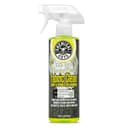
The default cleaner
Chemical Guys Citrus Fabric & Carpet Cleaner, Ready-to-Use (CWS21916SW)
Ready to use, so there is no dilution to guess at — which matters more than it sounds, because guessing a dilution is the most common way people leave carpet wetter and dirtier than they found it. Foaming action keeps the product on the surface rather than running into the foam underneath.
$9.99View on AmazonPrice as of October 4, 2026. #ad How we’re funded
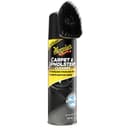
Best for spot work
Meguiar's Carpet & Upholstery Cleaner (G9719)
A dual-purpose sprayer switches between a narrow stream for a single stain and a wide mist for a whole footwell, so one can covers both jobs. Useful when the carpet is basically fine and the problem is three specific marks.
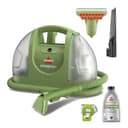
If you want real extraction
BISSELL Little Green Multi-Purpose Portable Carpet Cleaner (1400B)
Sprays solution in, scrubs, and suctions the dirty water back out — which solves the actual problem with cleaning car cloth by hand, because carpet you cannot pull water out of is carpet that dries dirty and smells. The 48 oz tank is enough for a full interior.
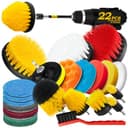
The agitation shortcut
Holikme 22-Piece Drill Brush Attachment Set
Scrub brushes on a cordless drill do to a whole footwell in two minutes what a hand brush does in fifteen, and agitation is the step that decides the result. Use a medium brush on carpet, keep it moving, and stay off seat upholstery with it.
$19.99View on AmazonPrice as of October 4, 2026. #ad How we’re funded
Two things to stop doing
Stop pouring. A cup of solution in a footwell goes straight past the pile into the foam, where you cannot reach it and it cannot evaporate. Damp is the target.
Stop scrubbing wet, dirty towels across the carpet.Once a towel is saturated it stops absorbing and starts redistributing. Keep a stack of dry towels and swap often — washing them properly is what makes keeping a stack affordable.
Frequently asked questions
How do you clean car carpet at home?
Vacuum thoroughly after agitating the pile with a brush, pre-treat stains with a fabric and carpet cleaner, work it in with a brush rather than adding more liquid, then blot everything back out with dry microfiber towels. Finish by drying the car fully with the doors open or a fan running. No machine is required.
Can you clean car carpet without a machine?
Yes, and for routine dirt the result is close to identical. What an extractor buys you is the extraction step — pulling the dirty solution back out rather than blotting it. Without one, use far less liquid than you think and spend the saved effort on agitation and on blotting with dry towels.
Why does my car smell musty after cleaning the carpet?
Because water went in and did not come back out. Car carpet sits on sound-deadening foam bonded to a steel floor pan, with no airflow underneath. The US EPA's guidance on mold is that controlling moisture is the control for mold growth, and a closed car with damp carpet is about the best growth environment you can build.
What is the best cleaner for car carpet?
A ready-to-use foaming fabric and carpet cleaner, because there is no dilution to guess at and guessing a dilution is the usual way people end up with a wetter, dirtier seat than they started with. Keep a dilutable all-purpose cleaner for floor mats, which you can take out of the car and rinse properly.
How do you get old stains out of car carpet?
Pre-treat, dwell, agitate, extract — and repeat the cycle two or three times rather than escalating to a stronger chemical on the first pass. Most stains that survive one attempt are not resisting the cleaner; they were never fully extracted, so the soil wicks back up as the carpet dries.
Should you use a steam cleaner on car carpet?
It works well, with one caveat. Steam carries very little water, which suits a car, and heat plus agitation lifts ground-in soil that a spray will not. But steam does not extract — it loosens soil and leaves it there. Pair a steamer with a vacuum or towels, or use an extractor for heavily soiled carpet.
Sources
- US EPA — A Brief Guide to Mold, Moisture and Your Home — EPA guidance that wet materials should be dried within 24–48 hours to prevent mold growth (accessed August 23, 2026)
- International Detailing Association — Detailing Resources — IDA's public detailing resource library (accessed July 19, 2026)
- US EPA — Safer Choice — EPA program certifying safer cleaning-product chemistry (accessed July 19, 2026)
Keep reading
Best Car Upholstery Cleaners
The full product comparison for cloth, carpet and the portable extractor that changes the job.
Compare the cleanersHow to Clean Car Seats
Same chemistry, different substrate — and the over-wetting mistake that leaves cloth seats damp for days.
Read the guideHow to Get Smells Out of a Car
What to do when the carpet is clean and the smell is still there, which usually means it is still wet.
Read the guideBest Car Vacuums for Pet Hair
If what is in the carpet is fur rather than dirt, suction is not the answer — agitation is.
See the picks