How to choose an all-purpose cleaner
1. Concentrate or ready to use
A concentrate is cheaper per usable bottle by a wide margin and lets you set the strength for the job. It requires spray bottles, a measuring approach and the discipline to label them. A ready-to-use product removes the possibility of mixing something too strong for a dashboard, which is a genuine benefit if you are cleaning interiors and nothing else. Neither is wrong; buy for how you actually work.
2. Dilution range is the spec that matters
The useful question is how far a product dilutes and still works. A concentrate that can go from a light interior mix down to a heavy degreasing mix covers every job in the car. Where a maker publishes ratios, follow them. Where they do not, start weak — you can always add more product, but you cannot un-clean a faded dashboard.
3. Surface safety, honestly
Test any new APC on a hidden section first. The surfaces that most often go wrong are untreated leather, which dries and cracks; soft-touch and rubberized plastics, which can go tacky or lose their finish; bare or polished aluminum, which stains with alkaline cleaners; and older, sun-baked plastics that were already fragile. The EPA’s Safer Choice program is a reasonable place to start if you would rather avoid the harshest chemistry outright.
4. Rinse-off or wipe-off
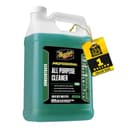
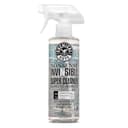
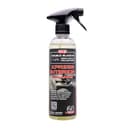
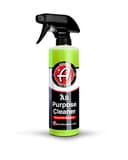
Outside the car — wheel wells, engine bays, tires — you spray, agitate and rinse. Inside, there is no rinse step, so residue matters. A product designed for interiors is formulated to leave nothing behind; a degreaser used on a dashboard leaves a film that attracts dust within a week. That difference is why two picks on this page are interior-first products.
Where APC is the right tool, and where it is not
Right tool: floor mats, carpets, cloth seats, door jambs, engine bays, wheel wells, tire sidewalls before dressing, plastic trim (including faded exterior trim before a trim restorer goes on), and general grime on any hard surface that can take it. On cloth seats and carpet an APC is the blunt option — effective, but a foaming upholstery and carpet cleaner keeps more product at the fiber surface and less of it in the seat padding.
One job people forget an APC is perfect for: washing your own tools. A weak dilution lifts road film, interior dressing and skin oils out of brush bristles better than water alone, which is the routine in how to clean detailing brushes — interior strength, not wheel-well strength.
Wrong tool: leather, which wants a dedicated leather cleaner and conditioner; glass, where an ammonia-free glass cleaner gives a streak-free result an APC cannot; painted panels, where it strips wax and offers nothing a pH-neutral shampoo does not; infotainment screens, which have anti-glare coatings that alkaline cleaners can damage; and wheels with delicate finishes, where a pH-balanced wheel cleaner is the safer choice.
Our APC vs dedicated interior cleaner guide works through where the line sits in more detail.
Working safely with a strong cleaner
Ventilate the car — doors open, not a closed cabin. Wear gloves with anything you are mixing at full strength; alkaline degreasers are hard on skin. Do not let a cleaner dry on any surface, especially in sun: dwell time is measured in seconds to a couple of minutes, then agitate with a soft detailing brushand wipe or rinse. Never mix two chemicals in the same bottle, and never spray an APC directly onto a screen, gauge cluster or perforated leather — mist the towel instead.
Follow that and one bottle covers most of a full interior clean plus the dirty outside jobs, for less than the cost of the sprays it replaces.