How Many Microfiber Towels Do You Need?
For a full detail: around sixteen to twenty-five, in three different grades. For a wash and dry: four or five. Almost everybody buys a quarter of that, and then finishes the job with a towel that is already full - which is not an inconvenience, it is how swirl marks happen.
How this is funded:we earn a commission if you buy through our links, at no extra cost to you. It never changes which product we recommend, and we’ll tell you plainly when we’d skip one. Full disclosure.
Why the count is a paint-safety question
This looks like a shopping-list question and it is not. A microfiber towel works by trapping dirt and liquid inside a dense pile of split fibres. That capacity is finite. Past it, the towel stops collecting and starts redistributing— dragging what it already holds back across whatever you are wiping.
On an interior panel that means streaks. On paint it means fine scratches, because what the towel is holding after a polish is abrasive compound residue, and what it is holding after a wash is road grit. This is the same mechanism as a loaded wash mitt, which is the entire reason for the two-bucket method: give the grit somewhere to go other than back onto the car.
So running short on towels is not a minor annoyance that costs you ten minutes. It is the moment a careful detail starts undoing itself, usually on the last two panels, when you are tired and the only clean towel left is the one you were saving for the glass. The fix costs very little: buy the dirty grades in bulk, buy the paint grade properly, and have more of both than you think you need.
Count it job by job
The honest way to answer “how many” is to add up the jobs, because the count is driven by how many separate towels each stage needs rather than by the size of the car. Below is the breakdown we would plan a full detail around. The numbers are planning estimates derived from how the work divides — not stopwatch measurements, and not test data.
| Job | Towels | Grade | Why that many |
|---|---|---|---|
| Drying the paint | 1 large sheet, or 2-3 waffle weave | Dedicated drying towel | A wet car holds more water than one towel absorbs. Running out mid-dry means finishing with a saturated towel, which pushes water around rather than lifting it. |
| Door shuts, sills, fuel flap | 1-2 | General purpose | These drip onto dry panels later and are dirtier than the paint, so they get their own towel and never the drying sheet. |
| Glass, inside and out | 2 | General purpose, low pile | One to apply and spread, one dry to finish. One towel for both is the single most common cause of streaks. |
| Removing wax or sealant | 2-4 | Plush, edgeless | Residue loads a towel quickly, and a loaded towel smears instead of lifting. Fold to eight faces and change towel when all eight are used. |
| Polishing residue, per panel | 3-6 across a car | Plush, edgeless | Compound residue is abrasive. Wiping it with a towel that already holds it is how corrected paint picks up fresh marring. |
| Interior panels and trim | 2-3 | General purpose | One damp with cleaner, one dry to buff, and a third for anything greasy. Interior towels pick up dressing and should not go near paint. |
| Wheels, tyres, arches | 2-3 | Budget, dedicated | Brake dust is metallic. These towels are permanently retired from paint duty, which is why they should be the cheap ones. |
| Engine bay and dirty jobs | 1-2 | Budget, disposable | Oil and grease do not wash out reliably. Use something you are willing to bin. |
Added up, a full detail lands somewhere between sixteen and twenty-five towels. A wash-and-dry only needs the first three rows: four or five. A wash, dry and wax needs those plus the wax row: eight or nine.
If that sounds like a lot, notice where the volume sits. Most of it is in the cheap grades — wheels, interior, door shuts, engine bay — which is why a 12-pack or a 48-pack is the sensible way to buy them. The expensive towels are only needed for the four or five jobs that actually touch finished paint.
The folding trick that makes the numbers work
One towel is not one surface. Fold a standard 16 x 16 in towel in half and in half again: you now have four faces on the front and four on the back, so eight usable surfaces from a single towel. Work one face until it loads up, turn to the next, and keep track.
This is why a 12-pack of 16 x 16 in towels goes much further than the piece count suggests, and it is also how you decide when a towel is actually finished for a job rather than guessing. When all eight faces have been used on wax residue, that towel is done — it goes in the laundry basket, not back on the hood.
It is also the reason size matters as much as GSM. A 36 x 25 in drying sheet is not eight faces of anything; it is one big absorbent surface you lay over a panel and pull. Different tool, different maths.
Three grades, and the rule that separates them
Paint-contact plush. Edgeless, high pile, for drying aids, wax and sealant removal and polish residue. Edgeless matters because a stitched border is the usual source of a fresh mar on an otherwise perfect panel. Buy fewer, better. These are the towels you protect.
Drying.Its own category, because absorbency per square inch is the spec rather than pile softness. Either one big sheet or a three-pack of waffle weaves — the comparison is in best microfiber drying towels, and the method that keeps spots off the car is in how to dry a car without water spots.
General purpose and budget. Glass, interior plastics, door shuts, wheels, arches, engine bay, spills. Bought in bulk, used freely, replaced without ceremony. Lower pile is actually better on glass, and nobody should be buffing a wheel with a 500 GSM towel.
And the rule that matters more than any of the above: towels do not move between grades.A towel that has touched wheels carries metallic brake dust; one that has touched tyre dressing carries silicone that smears on glass. Chemical Guys’ own laundering guidance is to separate paint-safe towels from wheel, engine or heavily soiled towels before washing them— they should not even share a cycle. Colour code them, buy each grade in a different colour, keep separate bins. Our picks are deliberately different colours for that reason.
A note on GSM, and on listings that do not state it
GSM — grams per square metre — is a measure of pile weight, and it is a reasonable proxy for plushness. Higher is softer and holds more, which is what you want on paint; lower is leaner and better for glass. Our plush pick is stated at 500 GSM and our waffle drying pick at 390 GSM.
What is worth knowing is how often the figure simply is not published. Of the general-purpose and budget towels we stock, several state neither GSM nor dimensions on the listing — we record that as “Not listed” rather than estimating, because a pile weight nobody published is not a spec. For a wheel towel it does not matter. For a paint-contact towel it is a reason to buy the one that does publish. The full argument is in microfiber GSM explained.
Buy once, then make them last
The reason this purchase is not expensive in the long run is that microfiber is durable when cared for — trade press puts a properly maintained towel at approximately 500 washes. The things that cut that short are all self-inflicted: fabric softener, which will clog the wedge-shaped filaments and render the towel useless; bleach, which strips the colour you are using to keep your grades apart; and high dryer heat, which melts and closes the fibres. Warm water, microfiber-safe detergent, low heat or air dry. The full routine is in how to wash microfiber towels.
Which turns the count into a one-off decision rather than a running cost. Buy twenty-odd towels in three grades once, launder them correctly, and you are set for years — and you will never again finish a hood with the towel you already used on the wheels.
One pick per grade
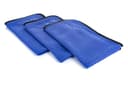
The drying grade
The Rag Company Dry Me A River Waffle-Weave Drying Towel
390 GSM waffle weave with suede edges, so there is no stitched border to drag across paint, and a three-pack means you can dry a whole car without wringing one out mid-job — which is the specific failure this page is about. At 16 x 24 in it is a wipe-and-go towel rather than a drape-over-the-roof sheet.
$24.95View on AmazonPrice as of October 10, 2026. #ad How we’re funded
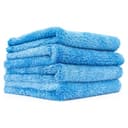
The paint-contact grade
The Rag Company Eagle Edgeless 500 Microfiber Towels
500 GSM, genuinely edgeless, 16 x 16 in — which folds to eight faces, so one towel covers a real amount of wax removal before it is finished. This is the grade to buy fewer and better of; it costs several times what a bulk multipack does per towel, and it is the only one that touches corrected paint.
$25.95View on AmazonPrice as of October 10, 2026. #ad How we’re funded
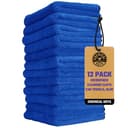
The general-purpose grade
Chemical Guys Professional Microfiber Towels (12-Pack)
Twelve towels in the standard 16 x 16 in size, which is the right way to buy the ones you burn through — interior, door jambs, glass, trim. Single colour, so it is easy to keep this set to its own duty. GSM is not stated, which is fine for everything except a final wax buff.
$36.99View on AmazonPrice as of October 10, 2026. #ad How we’re funded
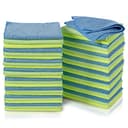
The dirty-jobs grade
Zwipes Microfiber Cleaning Cloths (48-Pack)
Forty-eight cloths for the price of a few premium towels, which is the point: enough that you can bin a filthy one rather than trying to recover it. Wheels, arches, engine bay, spills. Not plush, and we would not put one near a freshly polished hood.
$25.01View on AmazonPrice as of October 10, 2026. #ad How we’re funded
The short version
Full detail: sixteen to twenty-five, across three grades. Wash and dry: four or five. Fold each towel to eight faces and change it when they are used. Buy the dirty grades in bulk and the paint grade properly. And never let a wheel towel touch paint, or share a wash cycle with one that does.
Frequently asked questions
How many microfiber towels do you need to detail a car?
Around sixteen to twenty-five for a full detail, spread across three grades: a drying towel or two, four to eight plush edgeless towels for wax and polish residue, and eight or more general-purpose and budget cloths for glass, interior, door shuts, wheels and engine bay. For a simple wash and dry, four or five is enough.
How many microfiber towels does it take to dry a car?
One large sheet of around 36 x 25 in usually does a mid-size car on its own. With smaller waffle-weave towels of around 16 x 24 in, budget two or three — which is exactly why they are commonly sold in three-packs. A single standard towel will be saturated before you finish, and a saturated towel pushes water around instead of absorbing it.
Can you use one microfiber towel for the whole car?
No, and this is the mistake that costs paint. A towel holds a finite amount of dirt and residue; past that it starts redistributing what it has collected. Worse, a towel that has touched wheels carries metallic brake dust, and one that has touched tyre dressing carries silicone — neither belongs on paint or glass afterwards.
How do you fold a microfiber towel for detailing?
Fold a 16 x 16 in towel in half and in half again. That gives you four faces on the front and four on the back — eight usable surfaces from one towel. Work one face until it loads up, then turn to the next. When all eight are used, the towel is finished for that job, which is how you get a realistic count for a car.
What GSM microfiber towel do you need?
It depends on the job, which is why one grade cannot cover a car. Plush, high-GSM towels — 500 GSM edgeless, for example — lift wax and polish residue without hazing paint. Mid-weight waffle weaves around 390 GSM hold water for drying. Low-pile general-purpose cloths are better for glass and interior. Many listings do not state GSM at all, which is worth knowing before you pay for a number.
Should you buy microfiber towels in bulk?
For the dirty grades, yes — a 12-pack or a 48-pack drops the per-towel cost sharply and means you can throw a filthy one away without thinking about it. For paint-contact towels, no: buy fewer, better, edgeless towels, because the stitched border on a cheap towel is the usual source of a fresh mar.
How long do microfiber towels last?
Trade guidance puts a properly maintained towel at approximately 500 washes, which is years of home use. The things that end a towel early are all avoidable: fabric softener, which clogs the fibres and renders the towel useless; high dryer heat, which melts and closes the filaments; and washing paint towels with cotton or with wheel towels.
Do you need separate towels for wheels and paint?
Yes, permanently, and it is the most important rule on this page. Brake dust is metallic and embeds in the pile. Chemical Guys' own laundering guidance is to separate paint-safe towels from wheel, engine or heavily soiled towels before washing — meaning they should not even share a wash cycle, let alone a panel.
Sources
- Chemical Guys — How To Wash Microfiber Towels: Keep Them Soft And Scratch-Free — Manufacturer laundering guidance: “Use warm water, not hot, to help break down waxes and polish residues without damaging fibers”; “Choose a microfiber-safe detergent without fabric softeners, fragrances, or additives”; “Never use fabric softener or dryer sheets. These coat the microfiber strands, reducing their ability to trap dirt and absorb water”; “Dry towels on low heat or air dry them completely. High heat can melt or harden synthetic fibers”; separate paint-safe towels from wheel, engine or heavily soiled towels before washing (accessed October 5, 2026)
- Professional Carwashing & Detailing — How to properly wash and care for microfiber towels — Trade-press guidance (Maria Woodie, March 1, 2016): microfiber should be washed in cold or warm water and the temperature should “never exceed around 105 degrees Fahrenheit”; wash separately from other fabrics, especially cotton; “Fabric softener will actually clog the small wedge-shaped filaments of the microfiber and render it useless”; no bleach, because it “will take the color out of the cloth”; dry on the “coolest setting, either permanent press or air fluff” because “high heat will cause melting, which will close the wedge-shaped fibers”; a properly maintained towel lasts “approximately 500 washes” (accessed October 5, 2026)
- Chemical Guys — Two Bucket Method Car Wash Guide — Manufacturer how-to on the two-bucket wash and grit guards (accessed July 19, 2026)
- International Detailing Association — Detailing Resources — IDA's public detailing resource library (accessed July 19, 2026)
Keep reading
Best Microfiber Drying Towels
The drying grade specifically — big sheets versus waffle three-packs, and what each suits.
See the towelsBest Microfiber Towels for Cars
The buffing and general-purpose grades, including the bulk packs for dirty duty.
Compare the towelsHow to Wash Microfiber Towels
How to get 500 washes out of a towel instead of twenty, and the one product that destroys them.
Read the guideMicrofiber GSM Explained
What the number means, when it matters, and when a listing quoting no GSM is telling you something.
Understand GSM