How to choose a carpet extractor for a car
1. Recovery first, and it is not usually a published number
Recovery is how much of the solution the machine pulls back out, and it decides how long your car is damp. Unfortunately almost nobody in the consumer end of this category publishes a water-lift or airflow figure — none of the four portables here does, and neither does the professional machine’s listing. So we are not printing suction numbers for any of them, because there are none to print.
What you can read instead is the shape of the tool. A nozzle sized for upholstery, with a clear head so you can see what is coming out, held flat against the fabric, recovers far more than a wide floor head skating over a contoured seat. Every pick here ships an upholstery-sized tool; that is part of why they are on the page and a lot of household spot cleaners are not.
And the technique matters more than the machine: one wet pass, then three or four dry passes with the trigger off. Most people do one of each and wonder why the seat is still soaked.
2. Heat, and whether you need it
Heat is the one genuine functional divide in this category. Warm solution moves set-in body oils — the gray sheen on a driver’s seat bolster and the headrest — in a way cold solution does not. It is the main reason professional interior machines cost what they do.
Two honest caveats. First, nobody here publishes a temperature: Bissell describes HydroSteam as combining hot water and steam without giving a figure, and the Mytee listing does not publish one either, so there is no paper comparison to make. Second, heat is not a substitute for extraction. A hot, thoroughly wetted seat you cannot pull dry is worse than a cold, properly extracted one. If your cloth is newish and the problem is a spill, cold plus good chemistry is fine. If the problem is five years of body oil, heat is worth the step up.
3. Is the real problem hair?
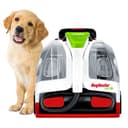
Pet hair does not respond to liquids at all. Hair woven into automotive carpet is held mechanically, and a machine that sprays and sucks will pass straight over it — which is why one pick here leads on a powered agitating pet tool rather than on suction. If your car’s issue is a dog rather than a drink, read best car vacuums for pet hair before you buy an extractor at all: the agitation-first tools there solve the hair problem for a fraction of the money, and then the extractor only has to deal with what is left.
4. Will you use it on anything but the car?
This is the question that decides whether the price is reasonable. Every portable on this page also does house carpet, stairs, a sofa and a mattress. Bought for the car alone, a machine used twice a year is a hard sell against a $15 bottle of upholstery cleaner. Bought for a household with kids, pets and a car, it is one of the better tools in this hobby. Be honest with yourself about which one you are.
Extractor, steamer or shop vac? They are not the same tool
These three get recommended interchangeably and they do different things.
An extractoris the only one that puts solution in and takes it back out. That makes it the right tool for soiled cloth seats and carpet — soil suspended in liquid, then removed.
A steamerputs almost no water in at all. Dupray, which makes them, describes dry vapor steam as carrying “very low water content (only 5%)” and presents it as safe across seats, door jambs, cup holders, dashboards, headliners and vents. That makes a steamer the better tool for hard surfaces, crevices and vents — places an extractor nozzle cannot seal against — and the worse tool for lifting a large soiled area of carpet, because there is nothing to extract. Our steam cleaner vs carpet extractor comparison takes that apart properly, and best steam cleaners for cars covers the machines.
A wet/dry shop vacuumhas the suction but no solution feed, so it cannot flush soil out of fibers — it only removes what is already loose or already wet. It is, however, a genuinely good way to speed up drying after any of the above, and if you already own one, a shop-vac detailing setupplus a bottle of cleaner gets you most of the way for a fraction of an extractor’s price.
How to actually use one on a car
- Vacuum thoroughly first. Non-negotiable. Dry debris turns into mud the moment solution hits it, and hair clogs a recovery nozzle in seconds. Our car vacuum picks cover this half.
- Pre-spray and let it dwell.The machine’s own solution tank is for flushing; the cleaning is mostly done by a dedicated fabric cleaner sprayed on and given a few minutes. Dwell is what breaks the bond; the extractor just carries it away.
- Agitate. A drill brush or a stiff hand brush on carpet, a softer one on seat cloth. This is the step that does the work.
- One wet pass, then dry passes. Trigger on for one slow pass, then three or four passes with the trigger off, overlapping, pressing the head flat. Repeat on a bad area rather than flooding it on the first pass.
- Open everything and move air.Doors open, a fan or a blower in the footwell, and finish the car in the morning rather than the evening. The EPA’s 24-to-48-hour window is the number to beat, and in a closed car in cool weather you can lose that race.
- Rinse the machine out. Tanks and hose, every time. A portable extractor left wet starts smelling faster than the car did.
Our call
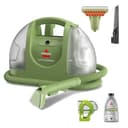
Buy the standard Little Green if you want one answer. It is the machine that made this category domestic, it extracts properly, it stores on a shelf, and it costs a fraction of anything professional.
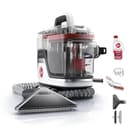
Buy the Hoover CleanSlate Plusif the price of entry is the deciding factor — it is the cheapest unit here that genuinely sprays and recovers rather than just wetting fabric.
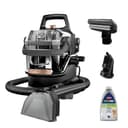
Step up to the HydroSteam only for a specific reason: older cloth, set-in body oils, or a car that has been lived in for years. Heat is worth money on that problem and close to nothing on a fresh spill.
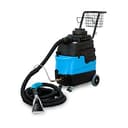
And skip the Mytee unless you are charging money for this. It is the best machine on the page by a wide margin and the wrong purchase for one family car — roughly ten times the cost of the Little Green to solve a problem that comes up twice a year. We would rather lose the sale than pretend otherwise.