How to Wash Microfiber Towels
Fabric softener is the one mistake that kills a towel outright, and heat is the one that kills it slowly. Here is the routine that keeps microfiber absorbent and safe on paint, and the honest signal that a towel is finished.
How this is funded:we earn a commission if you buy through our links, at no extra cost to you. It never changes which product we recommend, and we’ll tell you plainly when we’d skip one. Full disclosure.
Why this matters more than it sounds
A good drying towel costs more than a bottle of wax, and the thing most likely to destroy it is not the car — it is your laundry room. Worse, a badly laundered towel does not announce itself. It still looks like a towel. It simply stops absorbing, starts pushing water around the panel instead of lifting it, and begins carrying whatever it has trapped across your paint. A large share of the fine scratching people blame on their wash soap comes from a towel that was washed with the bath linen.
It helps to know what microfiber actually is. The fibers are split synthetic filaments — typically a polyester and polyamide blend — and when split they take on a wedge-shaped cross-section. Those wedges are the whole technology. They create enormous surface area, which is what holds water, and they create millions of tiny hooks, which is what traps grit instead of dragging it. Everything that can go wrong with a microfiber towel is some version of those wedges getting filled in or melted shut.
Before the machine: sort them
Sorting is the step people skip and the one professionals treat as non-negotiable. Chemical Guys’ own laundering guidance is to separate paint-safe towels from wheel, engine or heavily soiled towels before washing, and the reason is contamination transfer: brake dust and road grime released by one towel will redeposit on another in the same drum. A towel that has wiped a wheel is never again a paint towel, no matter how clean it looks.
The practical system is colour coding, which is also the real argument against bleach. Buy your paint towels in one colour and your dirty-job towels in another, and sorting becomes automatic rather than a decision. If a towel gets demoted — dropped on the driveway, used on a wheel in a hurry — it is demoted permanently.
Then shake each towel out before it goes in. Dried polish, sand and grit shaken out over a bin stays out of the wash water, where it would otherwise circulate and embed in every other towel in the load.
The wash
Wash microfiber on its own. Never with cotton, which is the single most common mistake after softener. Cotton sheds lint continuously, and microfiber is engineered to grab exactly that kind of loose fiber. A towel washed with cotton comes out furred with lint that then transfers onto paint.
Cold or warm water, never hot.Chemical Guys recommends warm rather than hot specifically because warm is enough to break down wax and polish residue without damaging the fibers. Professional Carwashing & Detailing puts a number on the ceiling: the temperature should never exceed around 105 degrees Fahrenheit. Microfiber is plastic. Heat deforms it, and the deformation is permanent.
Liquid detergent, no additives. A microfiber-safe detergent without fabric softeners, fragrances or additives is what Chemical Guys specifies, and dedicated microfiber detergents exist for exactly this reason. A plain, free-and-clear liquid detergent is a perfectly good substitute. Avoid powders, which can fail to dissolve fully in cold water and leave abrasive residue in the pile.
No fabric softener, and no dryer sheets either. This is the one rule with no exceptions. Softener coats fibers with a waxy film to make them feel soft, which is the precise opposite of what microfiber needs. Chemical Guys warns that it coats the strands and reduces their ability to trap dirt and absorb water; the trade press goes further and says it clogs the wedge-shaped filaments and renders the towel useless. A dryer sheet does the same thing at the other end of the process.
No bleach. Beyond fiber damage, bleach takes the colour out of the cloth, which destroys the colour-coding system that keeps your paint towels paint towels.
An extra rinse cycle is worth setting if your machine offers one. Detergent left in the pile is itself a residue, and it is the usual explanation for a clean-looking towel that streaks glass.
Drying, which is where towels actually die
Air drying is best and takes a few hours on a rack. If you use a machine, use the lowest heat it has — Chemical Guys says low heat or complete air drying, and the trade guidance is the coolest setting, permanent press or air fluff. High heat melts the fibers and closes the wedges, and a towel that comes out of a hot dryer feeling stiff and slightly crisp has already been damaged. Nothing brings it back.
Pull towels out slightly before they are completely dry if you can. And keep them out of a dryer that has just run a load of cotton, because the lint trap and the drum will hand that lint straight to them.
How to tell a towel is finished
Microfiber does not wear out visibly, which is why people keep using towels long past the point they should. Three honest signals:
- It stops grabbing. A healthy towel catches slightly on dry skin or a fingernail. One that slides smoothly has lost its texture.
- It pushes water instead of absorbing it. A drying towel that leaves a wet film rather than a dry panel is done, whatever it looks like.
- It leaves lint or haze on a clean panel. At that point it has started adding work rather than removing it.
The trade estimate is approximately 500 washes for a well-maintained towel, with manufacturer claims of a thousand treated as optimistic. Either way the number is large enough that laundering habits, not purchase price, determine what a towel costs you per use. A retired paint towel is not rubbish, though — demote it to wheels, door jambs, engine bays and garage duty, where texture no longer matters.
Which towels are worth this routine
Honestly, all of them — the routine costs nothing. But it matters most on the plush towels that touch paint and on the big drying towels, which are the expensive ones and the ones whose failure mode is scratching rather than just inefficiency. The three below are the towels worth building a laundry habit around, and the third is the one most people are actually replacing when they find this page.
Towels worth looking after (and replacing with)
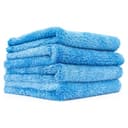
The paint towel
The Rag Company Eagle Edgeless 500 Microfiber Towels
500 GSM and genuinely edgeless, which is the towel detailers reach for when the surface is paint. Plush enough to buff wax or coating residue off without leaving the fine haze a cheap towel puts back — and the one in your collection most worth protecting from a hot dryer.
$25.95View on AmazonPrice as of October 4, 2026. #ad How we’re funded
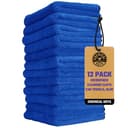
The everything-else bin
Chemical Guys Professional Microfiber Towels (12-Pack)
A twelve-pack in the standard 16 x 16 in size, which is the right way to buy the towels you burn through on interiors, door jambs, wheels and glass. Buying these in bulk is what lets you retire a paint towel the moment it stops grabbing.
$36.99View on AmazonPrice as of October 4, 2026. #ad How we’re funded
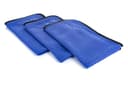
The drying towel
The Rag Company Dry Me A River Waffle-Weave Drying Towel
A waffle weave with suede edges and no stitched border to drag across paint, sold three to a pack so a whole car gets dried without wringing. It is also the towel that suffers most from softener, because absorbency is the entire specification.
$24.95View on AmazonPrice as of October 4, 2026. #ad How we’re funded
The short version, if you remember nothing else
Wash them alone, cool, with plain liquid detergent. No softener, no dryer sheet, no bleach, no cotton in the load. Dry cool or hang them. Keep paint towels and wheel towels permanently separate, and retire a towel the moment it stops grabbing at your skin. Do that and a good towel outlasts several bottles of everything else in the garage — which is roughly the opposite of how most people’s microfiber actually ends up.
Frequently asked questions
How do you wash microfiber towels for car detailing?
Shake them out, sort them by job, and wash them on their own in cold or warm water with a liquid detergent and no fabric softener. Professional Carwashing & Detailing advises the water temperature should never exceed around 105 degrees Fahrenheit. Then dry on the coolest setting or air dry. That is the whole routine.
Why can't you use fabric softener on microfiber?
Because softener works by depositing a waxy coating on fibers, and microfiber cleans by having millions of open wedge-shaped filaments that trap dirt and water. Professional Carwashing & Detailing puts it bluntly: fabric softener clogs those filaments and renders the towel useless. It is not reversible in any reliable way.
What temperature should you wash microfiber towels at?
Cold or warm, not hot. Chemical Guys recommends warm water specifically because it breaks down wax and polish residue without damaging fibers, and the trade press puts a ceiling on it at around 105 degrees Fahrenheit. Microfiber is a synthetic — heat is what deforms it, and the damage is permanent.
Can you put microfiber towels in the dryer?
Yes, on the lowest heat setting or air fluff only. Chemical Guys' guidance is low heat or complete air drying, because high heat melts or hardens synthetic fibers. The trade advice is the same: high heat melts the wedge-shaped fibers closed, which is exactly the surface that does the cleaning.
Should you use bleach on microfiber towels?
No. Besides being harsh on the fiber, bleach will take the color out of the cloth — and color is how you keep your paint towels separate from your wheel towels, which is the single most useful habit in microfiber care. If towels are badly stained, retire them to dirty-job duty rather than bleaching them.
How long do microfiber towels last?
Professional Carwashing & Detailing puts a properly maintained towel at approximately 500 washes, and notes that manufacturer claims of 1,000 are optimistic in real-world use. In practice the towel tells you first: when it stops grabbing at dry skin and starts pushing water around instead of absorbing it, it is done on paint.
Sources
- Chemical Guys — How To Wash Microfiber Towels: Keep Them Soft And Scratch-Free — Manufacturer laundering guidance: “Use warm water, not hot, to help break down waxes and polish residues without damaging fibers”; “Choose a microfiber-safe detergent without fabric softeners, fragrances, or additives”; “Never use fabric softener or dryer sheets. These coat the microfiber strands, reducing their ability to trap dirt and absorb water”; “Dry towels on low heat or air dry them completely. High heat can melt or harden synthetic fibers”; separate paint-safe towels from wheel, engine or heavily soiled towels before washing (accessed October 5, 2026)
- Professional Carwashing & Detailing — How to properly wash and care for microfiber towels — Trade-press guidance (Maria Woodie, March 1, 2016): microfiber should be washed in cold or warm water and the temperature should “never exceed around 105 degrees Fahrenheit”; wash separately from other fabrics, especially cotton; “Fabric softener will actually clog the small wedge-shaped filaments of the microfiber and render it useless”; no bleach, because it “will take the color out of the cloth”; dry on the “coolest setting, either permanent press or air fluff” because “high heat will cause melting, which will close the wedge-shaped fibers”; a properly maintained towel lasts “approximately 500 washes” (accessed October 5, 2026)
- International Detailing Association — Detailing Resources — IDA's public detailing resource library (accessed July 19, 2026)
Keep reading
Best Microfiber Towels for Cars
Plush for paint, general-purpose for everything else, bulk for the dirty jobs — compared on cost per towel.
See the towel picksBest Microfiber Drying Towels
The towels this laundry routine is most worth protecting, because they are the expensive ones.
Compare drying towelsMicrofiber GSM, Explained
What grams per square meter measures, and why a higher number is not automatically better.
Read the explainerHow to Wash a Car Without Scratching
Most wash swirls come from a contaminated towel or mitt, not from the soap. This is the prevention side.
Read the method