Build Your Own Kit vs a Pre-Made Kit
One box, one decision, one price — or a shortlist of category winners that costs more and gets replaced less. The honest trade-off, and the hybrid most people should actually buy.
How this is funded:we earn a commission if you buy through our links, at no extra cost to you. It never changes which product we recommend, and we’ll tell you plainly when we’d skip one. Full disclosure.
What each approach is really buying you
A pre-made kitis a decision-removal service. Someone has chosen a soap, a wax, a mitt and some towels that work together, put them in a box, and priced the bundle below the sum of its parts. For a beginner that is worth real money, because the most common reason a first detailing purchase goes wrong is not buying a bad product — it is buying four products that do not add up to a complete process, and discovering it halfway through a Saturday.
Building your ownis buying the best answer in each category rather than an average answer across all of them. Nothing in it is a compromise, nothing gets replaced for being mediocre, and you learn what each product is for as you choose it. It costs more up front and demands that you know what a complete process looks like — which, if you are reading a guide about it, you may not yet.
The economics, honestly
A boxed kit is cheaper today. A self-built setup is cheaper over a couple of years, because the kit contains items you will buy again. That is not a criticism of kits — it is how the bundle price is achieved. Kit manufacturers economize where a buyer is least likely to notice, and that is almost always the microfiber towels and the applicators.
The other side of the ledger: both are dramatically cheaper than paying for the work. A complete home setup costs about the same as one full-service professional detail, and after that each wash costs pennies of concentrate — the arithmetic is laid out in our cost guide.
Where kits genuinely win
- Completeness. Everything needed for a full wash-and-protect arrives at once, and nothing is missing at the point you need it.
- Compatibility. The soap will not strip the wax that came with it, and the applicator suits the product it is packed beside.
- Gifting. A boxed kit is a genuinely good present for someone who has just bought a car; a shortlist of five separate items is not. Our gift guide leans on this.
- Price per item. Bundle pricing is real, particularly on the buckets and hardware. The kits and getting-started hub collects every boxed option we rate, including the interior-only ones.
Where building your own wins
- The pieces that touch your paint.A mitt and towels are the cheapest place to upgrade and the most consequential — they are what actually contacts the clear coat.
- Protection. Kit waxes tend to be entry-level. A dedicated sealant lasts several times longer for a modest premium.
- Specific problems. A car with heavy brake dust wants a real wheel cleaner, not the general-purpose spray in a box.
- Not paying twice. Everything you buy is the thing you would have upgraded to anyway.
The hybrid most people should buy
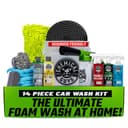
The box
Chemical Guys 14-Piece Arsenal Builder Car Wash Kit
The hardware and consumables that are annoying to source individually — buckets, soap and the pieces that make a first wash possible without four separate orders.
$124.99View on AmazonPrice as of October 18, 2026. #ad How we’re funded
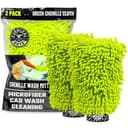
The upgrade that matters
Chemical Guys Chenille Microfiber Wash Mitt
The thing that actually touches your paint. Upgrading the mitt is the cheapest way to make any kit safer, and a deep chenille pile lifts grit away rather than dragging it.
$17.98View on AmazonPrice as of October 18, 2026. #ad How we’re funded
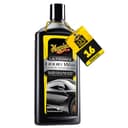
The protection upgrade
Meguiar's Ultimate Liquid Wax
Kit waxes are usually entry-level. A proper synthetic protection layer lasts far longer, which means fewer applications for a small premium over what came in the box.
$29.99View on AmazonPrice as of October 18, 2026. #ad How we’re funded
The hybrid: what most experienced detailers actually did
Very few people took one path all the way. The common pattern is to buy a kit first, use it for a season, work out which two items annoy you, and replace those with category winners. That is a genuinely sensible route: you learn what matters by using things rather than by reading about them, and the total spend is spread out.
If you would rather skip the first replacement cycle, buy the kit for the hardware and immediately upgrade the two contact points — the wash mitt and the drying towel. Those two changes cost little and remove most of the risk of scratching your paint, which is the only part of this decision that is not reversible.
What neither option includes
Almost no kit at any price includes the decontamination and correction stages. A clay bar kit, an iron remover and a polisherare second-stage purchases, and rightly so — they are for fixing paint rather than maintaining it, and most people should wash a car properly a few times before buying a machine that removes clear coat.
Get the wash-and-protect loop right first. Once that is routine, the full order of steps shows where the rest fits in.
Frequently asked questions
Is a pre-made car detailing kit worth it?
For a first purchase, usually yes. A boxed kit removes the two things that stall beginners — not knowing what to buy and not knowing what works with what — and it is cheaper than buying the same number of items separately. The trade-off is that most kits contain one or two items you will replace within a year.
What is usually the weakest part of a detailing kit?
The towels and the applicators, followed by whatever protection product is included. Kits economize on the consumables because they are the least visible part of the value proposition, and a thin microfiber towel is exactly the thing you should not be dragging across paint.
Is it cheaper to build your own detailing kit?
No, not up front. Buying the best product in each category costs more than a boxed kit containing similar categories. It is cheaper over two or three years, because nothing in it needs replacing for being mediocre — you are paying more once instead of twice.
What should a beginner detailing kit contain?
A pH-neutral wash soap, a wash mitt, two buckets with grit guards, a drying towel, a few plush microfiber towels, an applicator pad, and one protection product such as a wax or spray sealant. Anything beyond that — clay, iron remover, a polisher — is a second-stage purchase once you have washed the car a few times.
Can I mix products from different brands in my own kit?
Yes, and building your own kit means you will. Products from different brands work fine in sequence — soap from one, wax from another. The only real exceptions are systems designed to interlock, such as color-coded pads and compounds, or a coating and its matching topper.
Sources
- Chemical Guys — How Much Does a Car Detail Cost? — On professional detailing prices vs DIY (accessed July 19, 2026)
- International Detailing Association — Detailing Resources — IDA's public detailing resource library (accessed July 19, 2026)
- Mordor Intelligence — Car Care Products Market — Car care products market size and growth (CAGR) (accessed July 19, 2026)
Keep reading
Best Car Detailing Kits
The pre-boxed option, compared on what is actually inside and what is filler.
See the kitsThe Beginner Car Detailing Kit
The build-your-own version — one best pick per job, with live prices.
See the starter kitBest Interior Detailing Kits
The same build-or-buy question applied to the cabin, where the tools in the box matter more than the bottles.
See the interior kitsHow Much Does Car Detailing Cost?
What a professional detail costs, and how either kit compares against paying for one.
Read the cost guideBest Car Detailing Brands
Who is genuinely good at what — useful when you are buying category by category.
Read the brand guide