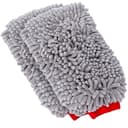
How to choose a car wash mitt
Mitts look similar in the bag, but a few real differences decide how safely and comfortably one washes. Judge them on these.
1. Deep pile is the whole point
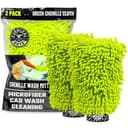
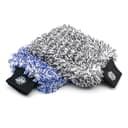
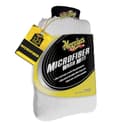
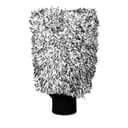
The single most important feature is a deep, plush pile — the long chenille noodles or thick microfiber fingers that reach down and lift grit off the paint. The deeper the pile, the more room dirt has to travel away from the surface instead of being dragged along it. This is exactly why any of these mitts is safer than a sponge, and it is the reason you should retire a mitt once the pile packs down flat and hard. A matted mitt has lost the very thing that made it safe.
2. Water and grit capacity
A mitt that holds a lot of water keeps the panel lubricated so the mitt glides rather than grabs, and a mitt that holds a lot of grit keeps that grit off the paint until you rinse it out. Bigger, denser mitts — like the premium Rag Company pick — hold more of both, which matters most on large vehicles or heavily soiled cars where a small mitt loads up and has to be rinsed constantly. On a small commuter car, a modest mitt is plenty.
3. Chenille vs plush microfiber
Chenille mitts have thick, twisted noodles that hold a huge amount of suds and are very forgiving; they are the popular default. Plush microfiber mitts have a denser, shorter pile that some people find easier to control and quicker to rinse. Both are safe when used correctly. The bigger determinant of safety is not the material but the technique: keeping the paint flooded with lubricating shampoo and rinsing the mitt in a separate bucket between panels.
4. Drying and durability
Thick pile is slow to dry, and a mitt that goes away damp can develop a musty smell, so wring it out well and let it air-dry fully between washes. Machine washing (no fabric softener, which clogs the fibers) extends a mitt’s life, but every mitt is a consumable — when the pile mats down or it picks up embedded grit you cannot rinse out, replace it. At these prices, that is a cheap insurance policy for your clear coat, which is why a two-pack is such good value.
Using a mitt safely: the two-bucket rule
A great mitt cannot save a bad technique. The mitt only stays clean if you rinse it in a separate bucket of clean waterbefore you reload it with soap — that is the entire idea behind the two-bucket method, and a grit guardin the bottom of each bucket traps the dirt you rinse out so it cannot swirl back onto the mitt. Wash top-down, since the lower panels are dirtiest, and never pick a dropped mitt back up and keep going — a mitt that hits the ground has grit embedded in it and needs a thorough rinse first. Foam the car first with a foam cannonso most of the grime is gone before the mitt ever touches a panel, and the mitt’s job gets easier and safer still.
Do those few things and an inexpensive mitt will out-perform an expensive one used carelessly. The full routine, in order, is laid out in our two-bucket method guide.