How Much Does Car Detailing Cost?
Professional detailing is priced by service level, vehicle size and condition — not by a flat rate. Here's what each tier buys, and where doing it yourself genuinely saves money.
How this is funded:we earn a commission if you buy through our links, at no extra cost to you. It never changes which product we recommend, and we’ll tell you plainly when we’d skip one. Full disclosure.
There is no single price, because there is no single service
The reason nobody can answer “how much does car detailing cost” in one number is that the word covers everything from a careful wash and vacuum to several hours of machine polishing. Two shops can quote you very different prices and both be fair — they are selling different amounts of labor.
Chemical Guys’ own pricing guide gives the clearest published breakdown of the tiers you will actually be quoted:
- Basic interior & exterior detail: $100–$150. A thorough wash, wheels, vacuum, interior wipe-down and glass. The car looks properly clean; the paint is not corrected.
- Full-service detail: $200–$300.The above plus deeper interior work, decontamination and a protective layer — the tier most people mean by “getting it detailed”.
- High-end detail or paint correction: $500–$1,000+. Multi-stage machine polishing to remove swirls and scratches, often paired with a coating. This is skilled, slow, irreversible work, and it is priced accordingly.
Add-ons sit on top of all three. Ceramic coating installation, engine bay cleaning and headlight restoration are each quoted separately, which is why a “$200 detail” can leave the shop at considerably more. The same guide makes the point that maintaining a car this way through the year can total well over $1,000.
What actually drives the number you are quoted
Vehicle size
A three-row SUV has far more glass, carpet and painted panel area than a compact hatchback, and detailing is priced by the hour it takes. Expect a size surcharge on anything larger than a mid-size sedan, and expect trucks with bed liners and roof racks to be quoted higher again.
Condition, not just size
This is the variable owners underestimate. A car that has been washed regularly is quick to detail. A car with ground-in pet hair, spills in the carpet, years of bonded iron fallout and tar down the rocker panels takes hours longer, and most shops price a first-time deep clean above their standard rate. Detailing is one of the few services where letting the problem run genuinely costs you more later.
Where you are
Labor rates track local costs exactly as you would expect. The same full-service detail is a different number in a major metro than in a small town, and mobile detailers who come to you generally price above a fixed unit because they are absorbing travel and their own water supply.
Who is doing the work
Detailing is not a licensed trade, and there is no universal price list. The International Detailing Association certifies skills through testing rather than setting rates, so a certified technician and a weekend operation with a pressure washer can both call the service a “detail”. When you compare quotes, compare what is written on the work order, not the word on the sign.
What the same jobs cost to do yourself
The honest comparison is not “detail versus no detail” — it is buying the service once against buying the tools once and keeping them. Every product on this site shows a live price, so you can cost a DIY setup at today’s numbers rather than an estimate we typed in months ago.
The pattern that holds up: a complete beginner setup covering a safe wash, drying, decontamination and protection costs about the same as one full-service detail. The difference is that after the first wash you own it, and each subsequent wash costs a few cents of concentrate. Soap you dilute at roughly an ounce per bucket is the clearest example — the bottle price is nearly irrelevant next to the cost per wash.
The DIY side of the comparison

The one-box start
Chemical Guys 14-Piece Arsenal Builder Car Wash Kit
One kit that covers the wash end of the job — bucket, soap, mitts and towels — so the first DIY wash needs nothing else bought alongside it.
$124.99View on AmazonPrice as of October 18, 2026. #ad How we’re funded
The per-wash cost
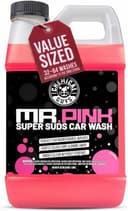
Chemical Guys Mr. Pink Super Suds Car Wash Soap
A pH-neutral concentrate diluted at roughly an ounce per bucket. The bottle price is the headline; the cost per wash is the number that matters, and it is pennies.
$27.99View on AmazonPrice as of October 18, 2026. #ad How we’re funded
The protection step
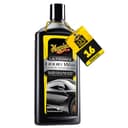
Meguiar's Ultimate Liquid Wax
The layer a shop charges labor to apply. One bottle covers several applications on an average car, which is where DIY gains most against a paid wax-and-seal add-on.
$29.99View on AmazonPrice as of October 18, 2026. #ad How we’re funded
Where DIY saves the most — and where it does not
DIY wins by the widest margin on the jobs that are mostly time and consumables: washing, drying, interior vacuuming and cleaning, wheel cleaning, dressing tires, and applying wax or a spray sealant. None needs an expensive tool, all of them are repeated often, and the technique is learnable in an afternoon — start with the two-bucket method and the correct order of steps.
DIY saves least on paint correction. A polisher, pads and compounds are a real outlay, the learning curve is steep, and the mistake mode is permanent: you are removing clear coat, and it does not grow back. A one-step machine polish is very achievable at home — our beginner correction guidewalks through it — but multi-stage correction on badly swirled paint is genuinely worth paying for, and so is a professionally installed ceramic coating, where the prep is most of the price.
The break-even, framed honestly
If you have your car professionally detailed twice a year, the annual bill lands in the same territory as building a good home setup once. So the real question is not which is cheaper — over a couple of years, DIY clearly is. The question is whether you will use it. Gear that sits in the garage cost you money and saved you nothing; a routine you enjoy on a Saturday morning turns the same spend into years of washes at pennies each.
A sensible middle path a lot of owners land on: do the routine work yourself — the washes, the interiors, the protection top-ups — and pay a professional once for the one job you genuinely cannot do, usually correction on paint that has been neglected for years. You get the expensive skill where it matters and stop paying labor rates for a vacuum and a bottle of soap.
To see what that setup costs at today’s prices, the beginner kit page lists one pick per job with a live price on each, and the budget guide covers the order to buy them in when you would rather not spend it all at once.
The other currency is time. How long it takes to detail a car breaks the same service tiers down by hours instead of dollars, which is the comparison that usually settles the DIY question.
Frequently asked questions
How much does a professional car detail cost?
It depends on the service level. Chemical Guys' pricing guide puts a basic interior-and-exterior detail at $100-$150, a full-service detail at $200-$300, and a high-end detail or paint correction at $500-$1,000 or more. Vehicle size, how dirty the car is, and where you live move those numbers, and add-ons like a ceramic coating or engine bay cleaning are priced on top.
Why do detailing prices vary so much between shops?
Because detailing is not one service. One shop's $150 package is a thorough wash, vacuum and interior wipe-down; another's is several hours of machine polishing. Vehicle size, condition, location and the technician's level of training all move the price, and detailing has no universal price list - the International Detailing Association certifies skills, not rates.
Is it cheaper to detail your own car?
Over time, yes, and by a wide margin. A complete beginner setup - soap, mitt, drying towel, protection and a vacuum - costs roughly what a single full-service detail costs, and then it is yours for years of washes. The catch is that you are buying tools and time, not a finished result, so the saving only lands if you actually use them.
How often should you get a car detailed?
Most owners who keep on top of washing only need a deeper detail once or twice a year - typically before winter and again in spring - with regular washes in between. If you never wash the car, you end up paying for the deeper, more expensive service more often, which is exactly where the annual cost climbs.
What is worth paying a professional to do?
Multi-stage paint correction and professional ceramic coating installation. Both are skill-heavy, both remove clear coat or cure permanently if done wrong, and both need equipment most owners will not buy for one job. Washing, decontaminating, interior cleaning and applying a wax or spray sealant are all well within reach at home.
Sources
- Chemical Guys — How Much Does a Car Detail Cost? — On professional detailing prices vs DIY (accessed July 19, 2026)
- International Detailing Association — Detailing Resources — IDA's public detailing resource library (accessed July 19, 2026)
- International Detailing Association — About the IDA — On professional detailing standards and certification (accessed July 19, 2026)
Keep reading
The Beginner Car Detailing Kit
The build-your-own starter setup, one pick per job — the DIY side of the cost comparison, with live prices.
See the starter kitCar Detailing on a Budget
Where cheap gear is fine and where it isn't — the order to spend your first dollars.
Read the budget guideCar Detailing vs Car Wash
What separates a quick wash from a full detail, and what each one actually fixes.
See the differenceHow to Detail a Car
The full process a professional detail follows, in order, so you can price it out job by job.
Read the full process