The picks at a glance
| Product | What it is | Published spec | Size | Price band |
|---|
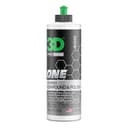
| 3D One Hybrid Compound & Polish | Hybrid one-step compound + finishing polish | Adaptive abrasive: cut then finish | 16 oz | Mid |
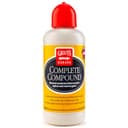
| Griot's Garage Complete Compound | Clear-coat-safe correcting compound | Medium cut; long working time | 16 oz | Budget |
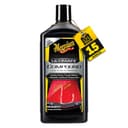
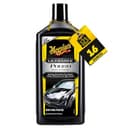
| Meguiar's Ultimate Compound | Clear-coat-safe rubbing & polishing compound | Cut + finish in one; hand or machine | 15.2 oz | Budget |
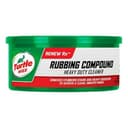
| Turtle Wax Rubbing Compound (Heavy Duty Cleaner) | Heavy-duty rubbing compound | Aggressive cut; budget shelf staple | 10.5 oz | Budget |
| Meguiar's Ultimate Polish (Pre-Wax Glaze) | Pre-wax polish & glaze | Removes fine swirls and towel marks before waxing | 16 oz | Budget |
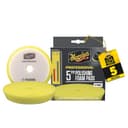
| Meguiar's Professional 5 in Polishing Foam Pad (2-Pack) | Polishing (finishing-cut) foam pads | Polishing cut | 5 in, 2-pack | Budget |
Every row is read from the product listing on the date recorded under its write-up below. No cut level here is a measurement we made - they are the manufacturers’ own descriptions of their abrasives.
How to choose a compound for black paint
1. Finishing ability first, cut second
The question to ask about a compound destined for a black car is not “will it remove this scratch” — almost all of them will, given enough passes. It is “what does the panel look like at the moment I stop?”
Diminishing or adaptive abrasives are the whole answer here. They start coarse and break down into progressively finer particles as you work them, so the end of the pass is doing the polishing that the start of the pass made necessary. 3D One is sold on exactly that mechanism, and Griot’s Complete Compound is sold on a long working time, which is the same idea stated differently: the longer the product stays workable, the more of your pass is spent refining rather than cutting.
The opposite of this is a body-shop cutting compound like Meguiar’s M105, which is on the main compound roundupand deliberately not on this one. It cuts hard and it needs a follow-up polish, by design. On black, “needs a follow-up polish” is not a footnote — it is a second whole stage of work you have just committed to.
2. You have a clear-coat budget, and it is smaller than you think
This is the constraint nobody shopping for a compound has in mind, and it deserves to be. DetailingWiki’s reference page on minimum paint thickness works through a representative paint system: around 120 micrometers total, of which the clear coat is roughly 40 micrometers — and a polishing step removes on the order of 10 micrometers each time.
Read that arithmetic honestly and a car has a handful of full corrections in it, ever. Not a handful per year. The wiki itself argues against publishing one universal minimum figure and recommends measuring the panel instead, which is the correct caution — but the direction of the point stands, and it is why on a black car the right instinct is the least aggressive product that will do the job, worked properly, rather than the strongest one available.
It is also the argument for the glaze on this page. A finishing polish that fills and refines costs you far less clear coat than another compounding pass, and on dark paint the visible difference between the two outcomes is small.
3. The pad does more of the work than the bottle
Pair a finishing compound with a cutting pad and you get a cutting result. Pair a medium compound with a soft polishing foam and you get a finishing result. The pad is the larger variable and it is the cheaper one to change, which is why a pair of polishing-cut foam pads is a pick on this page rather than an accessory note.
The practical rule for a dark car: own one cutting pad you rarely use, and two polishing pads you use constantly. Start every panel with the softer pad and the milder product, and only step up if that genuinely fails. Our guide to choosing a polishing pad has the full cut hierarchy, and the polishing pad roundup has the options.
4. Single-stage black is a different material
One genuine exception to everything above. Cars built before clear coat became universal — and some fleet and commercial vehicles since — wear single-stage paint, where the pigment is in the top layer. Polish one and your pad comes away black, because you are removing colored paint rather than clear lacquer.
Single-stage black oxidizes to a chalky gray and responds dramatically to an aggressive compound, which is why the Turtle Wax rubbing compound is on this list for exactly that case and for almost nothing else. If that is your car, read how to remove oxidation from car paint before you start — the method is different and the thickness arithmetic above does not apply in the same way.
What the compound will not fix
Wash-induced swirls that you keep re-installing. Correction is the expensive half of a cycle whose cheap half is washing properly. If the car goes back to a sponge and a bucket of grit, the swirls come back faster than your clear coat can afford. The two-bucket method and a safe drying routine are not optional on black; they are the only reason correcting it is worth doing.
Deep scratches.If your fingernail catches in it, polishing will not remove it — it will only round the edges and make it less obvious. The depth test and the four honest answers are in our scratch remover roundup.
The thing people actually want, which is depth. Correction removes defects; it does not add gloss. What makes a black car look wet is the finishing polish and then a glaze or a dark-paint wax over the top. The wax and glaze roundup for black cars covers that stage, and it is the one that changes photographs.
The order we would actually work in
- Wash and decontaminate — a clay bar before any abrasive, every time.
- Test one panel with the mildest combination you own: polishing pad, 3D One.
- Inspect in direct sun or with a single point light. If the defects are gone and the finish is clean, you are done correcting; do not do the rest of the car twice because the first pass felt too easy.
- Only if that failed, step up the pad before you step up the product.
- Finish with Meguiar’s Ultimate Polish on a soft pad, by hand or machine.
- Protect. A glaze and a wax, or a sealant, within the same session.
If you have never used a machine before, start with paint correction for beginners instead of this page — the sequencing matters more than the product choice, and a dark car is the least forgiving place to learn it.
Our call
3D One on a polishing pad, finished with Meguiar’s Ultimate Polish. That is the whole answer for a modern clear-coated black car with normal swirl marks, and it is two bottles.
Griot’s Complete Compound if you are new to a machine and want the product to stay workable while you figure out your speed and arm pressure. Meguiar’s Ultimate Compoundif you are working by hand or on a budget — it is the only thing here the manufacturer states works both ways. Turtle Wax Rubbing Compound only for old single-stage paint that has gone chalky.