Rated GPM is the spec. Max PSI is marketing.
Pressure washers are sold on PSI and used on GPM. Pressure loosens dirt; flow carries it away — and on a car, carrying away is most of the job. Rinsing soap off a roof, flushing grit out of panel gaps, and feeding a foam cannon thick suds are all flow problems. Pressure past a surprisingly low threshold adds nothing to a car wash except risk to trim and badges.
Which makes the headline numbers actively misleading. Pro Tool Reviews bench-measured the “PSI max” and “GPM max” claims on consumer washers against PWMA-certified rated performance and found the marketing figures are not what the machine delivers in use. That gap is visible on this page in the manufacturers’ own numbers:
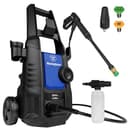
- Westinghouse ePX3050— 2100 max PSI / 1.76 max GPM on the box, 1800 PSI / 1.2 GPM in the rated specification.
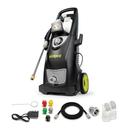
- Sun Joe SPX3550— 2350 max PSI / 1.8 max GPM, against 2000 PSI / 1.1 GPM rated.
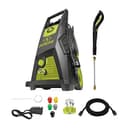
- Sun Joe SPX3000— 2500 max PSI, against a 2030 PSI PWMA rated figure. The listing states no flow figure at all, so we print none.
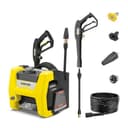
- Kärcher K1700 Cube— a flat 1700 PSI / 1.2 GPM with a CETA certification behind it, and no “max” number anywhere.
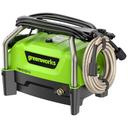
- Greenworks 1900— 1900 PSI max / 1.2 GPM max, with no rated or certified pair published.
Read that list again and the ranking on this page explains itself. Every one of these machines delivers roughly the same usable flow. What separates them is whether the manufacturer tells you so.
The certification decoder
CETA certified means an independent lab verified the pressure and flow claims, so a CETA number can be compared directly against another CETA number. PWMA ratedmeans the figure was measured to the Pressure Washer Manufacturers’ Association test standard rather than quoted at the pump outlet. “Max” means neither, and two uncertified max figures cannot be compared with each other at all. On this page the Kärcher carries a CETA certification, the Sun Joe SPX3000 publishes a PWMA rated figure, Westinghouse and Sun Joe both publish rated pairs alongside their maxima, and the Greenworks publishes max figures only. That is the hierarchy of candor, and it is most of what you are choosing between in this price band.
How much pressure does a car actually want?
Less than any of these machines can produce, which is the reassuring part. Kärcher’s own car-washing guidance is unambiguous: always wash with the flat jet and never the rotor nozzle, keep a minimum distance of 15 centimeters from the car’s surface and at least 30 centimeters from tires, and work from the bottom up so you do not miss spots. With the right method and that distance, the manufacturer states the tires will not be damaged.
In practice that means the nozzle you choose matters more than the machine you buy, every time. Use the 40-degree tip on paint. Leave the turbo or 0-degree nozzle in the box for concrete, where it belongs. Our what PSI to pressure wash a car guide covers the numbers, and how to pressure wash a car covers the sequence.
What the $300 cap actually excludes
Two machines we rate are not on this page, and it is worth knowing what you are giving up rather than wondering.
- The Active 2.0is the only unit in our registry designed around washing cars rather than cleaning concrete, and it is rated 2.0 GPM at a deliberately modest 1800 peak PSI. More water and less pressure is exactly the trade a detailer wants: foam comes out faster and rinsing stops being the slow part of the wash. That is a genuine step up over everything here, and it is the main thing the cap costs you.
- The Greenworks 2700 brushlessis the pick for a household where the washer also has to do the driveway and the siding. Worth reading twice before you aspire to it: Greenworks publishes a 1.2 GPM rated flow behind the 2.3 GPM max headline, so on the spec that rinses a car it sits with the budget picks on this page despite the much higher pressure figure.
We show a price for a machine only when the live price layer has one, so if either of those appears without a number on our uncapped roundup, that is the system working as designed rather than an omission.
What to spend the rest of the budget on
If your cap is $300 for the whole setup rather than for the machine, this is the part that changes your wash more than any upgrade between these five units.
- A real foam cannon.The Westinghouse includes one, and a bundled cannon is a starter piece rather than the equal of a dedicated one. A proper cannon on a 1.2 GPM machine produces better foam than a bundled cannon on a stronger machine. See best foam cannons.
- A dedicated cannon concentrate. A bucket shampoo in a cannon makes thin foam that slides off before it has done anything. See best foam cannon soap.
- Two buckets and grit guards. Nearly all swirl marks on a daily driver come from washing it, not from driving it, and no machine on this page prevents that. See the two bucket method.
- Something for the tires while the water is out.A pressure washer makes the sidewall prep step quick, which is the step that decides whether a durable tire product works at all — see best tire coatings.
A whole-setup plan is also a page: best pressure washer car wash kits covers the bundles, and pressure washer vs garden hose is worth reading first if you are not yet sure you need one at all.
Who each pick is for
- Westinghouse ePX3050— for most people, and especially for a first washer bought to run a foam cannon. Cannon and turbo nozzle in the box, published rated figures, 14 lb so it actually gets carried out and put away. The trade is that 1.2 GPM rated is the floor of comfortable, and the light body feels less planted when you pull the hose taut.
- Kärcher K1700 Cube— for a small garage and for anyone who wants a verified number instead of a peak. The cube body stores on a shelf at 16.3 lb, there is a foot switch and an onboard detergent tank, and the warranty is three years. Modest on paper, and the paper is accurate. The 0.3 gal detergent tank runs dry quickly on a full car.
- Sun Joe SPX3550— for buyers who care about motor longevity and noise. A brushless induction motor instead of the universal motor almost everything else in this band uses, plus the largest detergent tank here at 40.6 fl oz. It also carries the lowest rated flow on the page at 1.1 GPM, and it ships with a 0-degree pencil jet that has no business near paint.
- Sun Joe SPX3000— for the buyer who wants a certified number and a middle price. The 2030 PSI PWMA rated figure is the most trustworthy pressure claim on this page. The honest caveat is the one we cannot fill in: this listing states no flow figure, so GPM here is genuinely unknown rather than low.
- Greenworks 1900— our budget pick. Cheapest here, 1.2 GPM max, and it includes the 40-degree tip you should be using plus a 20 ft hose and a 35 ft GFCI cord. Only max figures are published, and the bundled soap applicator is a low-pressure siphon rather than a cannon, so budget for a cannon separately.
Our call
Buy the Westinghouse if you want the complete first setup for the least money and you want the manufacturer to tell you the truth about its numbers.
Buy the Kärcher if storage space is tight or if a certified rating is what you want to pay for.
Buy the SPX3550 if you expect to use the machine often enough that motor type and noise matter.
Buy the SPX3000 if you want the certified pressure figure at a middle price and you are comfortable with an unpublished flow spec.
Buy the Greenworks 1900 if the goal is the lowest spend that still rinses a car properly, and put the difference into a cannon and a second bucket. Head to head, we have written up both of the obvious cross-shops: Kärcher vs Sun Joe and Sun Joe vs Greenworks.