TWO BUCKET CLUB

Kärcher vs Sun Joe Pressure Washers (2026)

One publishes a certified rated number. The other publishes a max. Read the two spec sheets on the same basis and the comparison stops being close - and the answer flips from the one the headline figures suggest.

By Stephen V.Last updated How we pick

For washing a car, buy the Kärcher K1700 Cube.Not because it is the more powerful machine — on the headline numbers it plainly is not — but because it is the only one of the two whose numbers mean anything. Kärcher publishes a flat 1700 PSI / 1.2 GPM with a CETA certification behind it. Sun Joe publishes 2350 PSI / 1.8 GPM max on the box and 2000 PSI / 1.1 GPM rated in the specification table. Compare rated against rated, which is the only honest comparison available, and the smaller-sounding Kärcher moves more water than the bigger-sounding Sun Joe.

Buy the Sun Joe SPX3550instead if what you want from a pressure washer is longevity and quiet. It uses a brushless induction motor rather than the universal motor almost everything else in this price band runs, and it carries a 40.6 fl oz detergent tank against the Kärcher’s 0.3 gallon. Those are real advantages, and they are not the ones the marketing leads with.

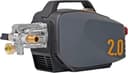
And the honest third answer: if the reason you are buying a pressure washer at all is to run a foam cannon, neither of these is the machine. Both sit at the bottom of the usable flow range, and flow is what makes foam. The Active 2.0 is in the table below for that reason — it is the only unit on this site specified around cars rather than concrete, and at 2.0 GPM rated it moves roughly two-thirds more water per minute than either of the other two.

What follows is the three machines side by side, why the spec sheets are not directly comparable until you force them to be, and the two or three things that matter more than brand once you have picked one. Live prices on every row.

How this is funded:we earn a commission if you buy through our links, at no extra cost to you. It never changes which product we recommend, and we’ll tell you plainly when we’d skip one. Full disclosure.

Quick picks

Ranked on published specs, value and buyer fit. Select a row to jump to the full write-up. We have not lab-tested these products — here is exactly what we do instead.

#ProductBest forPrice
1
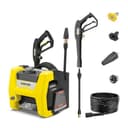
Kärcher K1700 Cube Pressure Washer

Kärcher K1700 Cube Pressure Washer

The honest one. Kärcher quotes a flat 1700 PSI and 1.2 GPM with a CETA certification behind it rather than a peak figure with an asterisk, and the cube body stores in a fraction of the space a wheelbarrow-frame washer needs. Modest on paper, and the paper is accurate.

Best for a car, of these two
$169.99View on Amazon

$206.9918% off

Price as of October 18, 2026. #ad How we’re funded

2
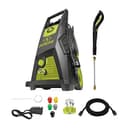
Sun Joe SPX3550 Brushless Induction Pressure Washer

Sun Joe SPX3550 Brushless Induction Pressure Washer

A brushless induction motor instead of the universal motor almost everything else in this price band uses — quieter, cooler and longer-lived. Sun Joe also publishes both sets of numbers (2350 PSI / 1.8 GPM max against 2000 PSI / 1.1 GPM rated), which is more candor than most of this category manages.

Best motor and tank
$269.99View on Amazon

Price as of October 18, 2026. #ad How we’re funded

3
Active 2.0 Electric Pressure Washer

Active 2.0 Electric Pressure Washer

The only unit here designed around washing cars rather than cleaning concrete, and it shows in the spec that matters: 2.0 GPM of flow at a deliberately modest 1800 peak PSI. More water and less pressure is exactly the trade a detailer wants — foam comes out faster and rinsing stops being the slow part of the wash.

Best if foam is the point
$299.99View on Amazon

Price as of October 18, 2026. #ad How we’re funded

The picks in full

#1Best for a car, of these two

Kärcher K1700 Cube Pressure Washer

The honest one. Kärcher quotes a flat 1700 PSI and 1.2 GPM with a CETA certification behind it rather than a peak figure with an asterisk, and the cube body stores in a fraction of the space a wheelbarrow-frame washer needs. Modest on paper, and the paper is accurate.

What we like

  • CETA-certified rating — the PSI and GPM claims were verified by an independent lab
  • Compact cube body at 16.3 lb stores on a shelf
  • On/off foot switch and an onboard detergent tank
  • Three-year limited warranty

Trade-offs

  • 1.2 GPM is modest flow; foam rinses off noticeably slower than the 2.0 GPM pick
  • 1700 PSI is the second-lowest here, which is fine on paint and limited on concrete
  • The 0.3 gal detergent tank runs dry quickly on a full car
  • The bundled turbo nozzle should never be pointed at bodywork
TypeCold-water electric pressure washer
Standout spec1700 PSI / 1.2 GPM, CETA certified
Size16.3 lb, 0.3 gal detergent tank
Best forSmall garages, and anyone who wants a verified number rather than a peak
Price tierMid

Cost-to-use note. A CETA certification means an independent lab verified the pressure and flow claims, so the 1700 PSI / 1.2 GPM here is directly comparable to another certified unit. Most of this category quotes uncertified 'max' figures that are not comparable to anything.

Specs read from the product listing, on July 20, 2026. “Not listed” means the listing does not state that figure.

#2Best motor and tank

Sun Joe SPX3550 Brushless Induction Pressure Washer

A brushless induction motor instead of the universal motor almost everything else in this price band uses — quieter, cooler and longer-lived. Sun Joe also publishes both sets of numbers (2350 PSI / 1.8 GPM max against 2000 PSI / 1.1 GPM rated), which is more candor than most of this category manages.

What we like

  • Brushless induction motor — quieter and cooler-running than a universal motor
  • Sun Joe publishes rated figures (2000 PSI / 1.1 GPM) as well as max ones
  • Large 40.6 fl oz onboard detergent tank
  • Five quick-connect nozzles plus a total-stop system that cuts the pump off the trigger

Trade-offs

  • 1.1 GPM rated flow is the lowest rated figure on this page
  • Ships with a 0-degree pencil-jet nozzle that has no business near paint
  • 20 ft hose means repositioning the unit partway around a larger vehicle
TypeCold-water electric pressure washer
Standout spec2350 max PSI / 1.8 max GPM (2000 / 1.1 rated)
Size20 ft hose, 40.6 fl oz detergent tank
Best forBuyers who care about motor longevity and noise as much as output
Price tierMid

Cost-to-use note. The gap between Sun Joe's max and rated figures is the clearest illustration on this page of why the headline number misleads: 2350 PSI / 1.8 GPM on the box, 2000 PSI / 1.1 GPM under typical load. Both are published by the manufacturer; only one describes washing a car.

Specs read from the product listing, on July 20, 2026. “Not listed” means the listing does not state that figure.

#3Best if foam is the point

Active 2.0 Electric Pressure Washer

The only unit here designed around washing cars rather than cleaning concrete, and it shows in the spec that matters: 2.0 GPM of flow at a deliberately modest 1800 peak PSI. More water and less pressure is exactly the trade a detailer wants — foam comes out faster and rinsing stops being the slow part of the wash.

What we like

  • 2.0 GPM — the highest rated flow in this group, on a standard 15-amp circuit
  • Runs a foam cannon hard — 2.0 GPM of flow makes thick foam and a quick rinse
  • 20 ft rubber hose with an M22-14mm fitting, so aftermarket detailing accessories bolt straight on
  • Deliberately low peak pressure is a feature around paint, trim and badges

Trade-offs

  • The most expensive pick here by a clear margin
  • 1800 peak PSI is the lowest on this page — it is not the tool for stripping a driveway
  • Sold as both a tool-only and a full-kit listing at different prices; check which one is in your cart
TypeCold-water electric pressure washer
Standout spec1800 peak PSI / 2.0 GPM
Size20 ft hose, 35 ft GFCI cord
Best forAnyone who bought a pressure washer specifically to detail cars
Price tierPremium

Cost-to-use note. Active rates this at 2.0 GPM from a standard 15-amp household outlet — roughly two-thirds more water per minute than the 1.2 GPM rated units on this page. That flow is what makes a foam cannon produce thick foam and what makes the rinse pass quick, which is the whole argument for paying the premium.

Specs read from the product listing, on July 20, 2026. “Not listed” means the listing does not state that figure.

Side by side

 Kärcher K1700 Cube Pressure WasherSun Joe SPX3550 Brushless Induction Pressure WasherActive 2.0 Electric Pressure Washer
What it isCold-water electric pressure washerCold-water electric pressure washerCold-water electric pressure washer
Published output1700 PSI / 1.2 GPM, CETA certified2350 max PSI / 1.8 max GPM (2000 / 1.1 rated)1800 peak PSI / 2.0 GPM
Size / what ships16.3 lb, 0.3 gal detergent tank20 ft hose, 40.6 fl oz detergent tank20 ft hose, 35 ft GFCI cord
Best forSmall garages, and anyone who wants a verified number rather than a peakBuyers who care about motor longevity and noise as much as outputAnyone who bought a pressure washer specifically to detail cars
Price bandMidMidPremium

Every figure above is read from the product listing on the date recorded under each write-up below. Where a maker does not publish a figure, this table says so rather than estimating one.

The only number that is comparable is the rated one

This is the whole comparison, so it is worth being precise about it. A pressure washer has two output figures and manufacturers are free to quote either. A max(or “peak”) figure is what the pump can hit momentarily, typically at the instant the trigger closes and under no real load. A rated figure is what it holds while you are actually washing something. They can differ by a lot.

Pro Tool Reviews has made exactly this point about the category’s headline claims, bench-testing units against their PWMA-certified rated performance rather than their “PSI Max” stickers. Kärcher sells the K1700 on a CETA certification, which means an independent lab verified the claim; Sun Joe, to its credit, publishes both sets of numbers for the SPX3550 rather than only the flattering pair.

So line them up properly:

  • Kärcher K1700 Cube: 1700 PSI / 1.2 GPM, certified. There is no second number.
  • Sun Joe SPX3550:2350 PSI / 1.8 GPM max — 2000 PSI / 1.1 GPM rated.

On pressure, the Sun Joe genuinely wins: 2000 rated against 1700. On flow, the Kärcher wins by a tenth of a gallon a minute. And for washing a car, flow is the figure that matters, because flow is what carries soap onto the panel and rinses it off again. Pressure, past a surprisingly low threshold, is just risk you are carrying around.

Why flow beats pressure on a car, in one paragraph

A foam cannon works by forcing water through a small orifice and pulling soap into the stream. Starve it of water and you get a thin, wet soap mist that runs straight off the panel. Feed it and you get the thick clinging layer the whole method depends on, because the dwell time of that layer is what lifts grit before a mitt touches the paint. Rinsing works the same way: volume sheets contamination off, pressure just concentrates force on a smaller spot. Our pressure washer roundup sorts the whole category on rated GPM for this reason, and what PSI to use on a car covers the other half of it.

Where the Sun Joe genuinely wins

The motor. A brushless induction motor has no brushes to wear, runs cooler and is audibly quieter than the universal motor in most machines at this price. If you expect to own this thing for a decade, that is a real argument, and it is not one the Kärcher answers.

The tank.40.6 fl oz against 0.3 gallon (38.4 fl oz) is close on paper, but in practice the Kärcher’s small tank is a known annoyance on a full-size car — it runs dry mid-wash. Neither tank is a substitute for a proper foam cannon; both are for the onboard detergent siphon, which produces soapy water rather than foam.

Nozzles.The SPX3550 ships five quick-connect tips and a total-stop system. One of those tips is a 0-degree pencil jet, which should never be pointed at bodywork under any circumstances. The Kärcher’s bundled turbo nozzle deserves the same treatment. Kärcher’s own car-wash guidance is explicit: “Always wash your car with the flat jet and not with the rotor nozzle”, keep a minimum distance of 15 centimetres from the surface and 30 centimetres from tyres, and work from the bottom up.

Where the Kärcher genuinely wins

It fits on a shelf. 16.3 lb in a cube body is the single most underrated feature in this category. A pressure washer you have to drag out from behind the lawnmower is a pressure washer you stop using. The Sun Joe is a wheeled frame; it lives on the floor.

The number is verified. This matters more than it sounds, because it means you can compare the K1700 to another certified unit and get a real answer. Most of the category quotes uncertified max figures that are not comparable to each other, to the Kärcher, or to anything.

The warranty. Three years, limited, from a manufacturer that has been making these since before the category had a US retail presence.

What neither machine changes

Both of these run on a standard 15-amp household circuit, so neither can exceed what that outlet supports — which is why no electric washer in this price band produces both high pressure and high flow. You are choosing which side of that budget to spend. Both ship a 20 ft hose, which means repositioning the unit once partway around a larger vehicle. And neither one washes the car: the two-bucket contact wash does that, and the machine only handles the pre-soak and the rinse.

If what you actually wanted was the complete setup rather than the machine alone, the six pieces of a pressure-washer wash and which fittings have to match are set out separately. And if you are still deciding whether to buy a machine at all, read pressure washer versus garden hose first — for a lot of people the honest answer is that a hose and a good bucket wash gets the car equally clean.

Our call

Between these two specifically: Kärcher K1700 Cube for a car. Higher rated flow, a certified number you can trust, and a body that stores where you will actually reach for it. Sun Joe SPX3550 if the brushless motor and the bigger tank matter more to you than a tenth of a gallon per minute, or if you want the extra pressure headroom for a patio.

And the answer neither brand gives you: if the point of the purchase is foam, spend the extra on the Active 2.0. 2.0 GPM rated against 1.2 and 1.1 is not a marginal difference — it is the difference between a cannon that works and one that disappoints you every Saturday.
Frequently asked questions

Is Kärcher better than Sun Joe?

For washing a car, yes - but not for the reason the boxes suggest. The Kärcher K1700 Cube publishes 1700 PSI and 1.2 GPM as a CETA-certified rating, verified by an independent lab. The Sun Joe SPX3550 publishes 2350 PSI and 1.8 GPM as max figures, with 2000 PSI and 1.1 GPM as its rated figures. Compared rated-to-rated, the Kärcher moves more water and the Sun Joe makes more pressure. On a car, water volume is what rinses and what feeds a foam cannon, so the Kärcher is the better car machine despite looking weaker. The Sun Joe is the better machine in two other respects: a brushless induction motor that should outlast a universal one, and a larger onboard detergent tank.

What is the difference between max PSI and rated PSI?

Max (or peak) is the figure the pump can touch momentarily, usually at the instant the trigger closes with no load on the nozzle. Rated is what the machine holds while you are actually spraying something. Both are real numbers and both get printed, but only the rated pair describes washing a car. The gap is not small: Sun Joe's own published figures for the SPX3550 are 2350 PSI / 1.8 GPM max against 2000 PSI / 1.1 GPM rated. A CETA or PWMA certification means an independent lab verified the rated figures, which is what makes two certified machines comparable to each other.

Will a Kärcher K1700 run a foam cannon?

It will run one, but not well. 1.2 GPM is at the bottom of the range where a cannon produces thick, clinging foam rather than soapy drizzle, and the thickness of that layer is the entire point of a pre-wash. The same caveat applies to the Sun Joe SPX3550 at 1.1 GPM rated, slightly more so. If foam is the reason you are buying, a 2.0 GPM machine is a different experience - and if you already own one of these and the foam is disappointing, the fix is usually the cannon's orifice and the soap concentration rather than the machine.

Is 2000 PSI too much for a car?

It is more than you need, and it is only a problem if you use the wrong tip or stand too close. Kärcher's own published car-washing guidance is to use the flat jet rather than the rotor nozzle, hold a minimum of 15 centimetres from the bodywork and 30 centimetres from tyres, and work from the bottom of the car upward. Followed, that makes 2000 PSI safe. Ignored, 1700 PSI with a turbo nozzle at four inches will lift a chipped edge of clear coat or a loose trim badge. The nozzle and the distance matter far more than the number on the box.

Which is quieter?

The Sun Joe, by design. Brushless induction motors run cooler and quieter than the universal motors used in most machines at this price, which is the main reason to pay for one. Neither manufacturer publishes a decibel figure we could verify, so we are not printing one - what we can say is that the motor type is a published difference and that quieter running is the documented reason the category uses induction motors in its higher-end units.

Do I need a pressure washer to detail a car properly?

No. A pressure washer buys you a pre-wash - a layer of foam that loosens and floats off grit before anything touches the paint - and a faster rinse. It does not clean the car; the contact wash does that. Plenty of very clean cars are washed with a hose, two buckets and a grit guard. The case for a machine is strongest if you park outdoors under trees, drive in winter salt, or own something dark where wash-induced swirls show.

Sources

Keep reading