Pressure Washer vs Garden Hose for Washing a Car
A hose gets a car just as clean. What a machine buys you is the step before the wash - and whether that is worth several hundred dollars depends on one thing about where you park.
How this is funded:we earn a commission if you buy through our links, at no extra cost to you. It never changes which product we recommend, and we’ll tell you plainly when we’d skip one. Full disclosure.
The short version
A garden hose will get your car just as clean as a pressure washer. That is not a consolation prize, it is the actual answer: the step that removes dirt from paint is the contact wash, a lubricated mitt moving in straight lines, and that step does not know or care what rinsed the car beforehand.
What a pressure washer buys you is the step before the wash. A machine with enough flow and a foam cannon lays a thick, clinging layer of soap over the car that sits there for several minutes softening and floating grit off the paint. Most of what you remove in that stage never gets touched by a mitt, which means it never gets dragged across the clear coat. That is a paint-safety benefit, not a cleanliness one, and it is the honest case for spending the money.
So the decision comes down to a single question: how dirty is your car when you wash it?A garaged car washed every week has almost nothing for a pre-wash to remove. A car parked outdoors under trees, driven on salted winter roads, or washed once a month has a great deal — and dragging that through the paint with a mitt is how dark cars acquire swirl marks.
Side by side
| Garden hose | Pressure washer | |
|---|---|---|
| Gets the car clean | Yes. The contact wash does the cleaning, and it is identical either way | Yes - no cleaner than a hose, despite how it feels |
| Touchless pre-wash | Limited. A hose-end foam gun makes thin foam that runs off quickly | This is the whole advantage. Thick clinging foam that dwells and lifts grit before a mitt touches paint |
| Rinse speed | Slow on a dirty car, fine on a maintained one | Noticeably faster, and the gap grows with vehicle size |
| Wheels, arches, underside | Hard. A hose cannot reach or shift bonded brake dust and road salt | The clearest practical win, especially with an undercarriage attachment |
| Risk to the car | Essentially none | Real but entirely avoidable - the wrong nozzle at close range lifts failing clear coat and badge edges |
| What it needs | An outdoor tap | An outdoor tap, a GFCI outlet within reach, and somewhere to store it |
| Water used | More per rinse, by a wide margin | Less water for the same rinse, because flow is pressurized rather than poured |
| Cost | You already own it | The machine, plus a cannon and soap before it does anything a hose does not |
Where the machine genuinely wins
The pre-wash
This is the real one. A foam cannon forces water through a small orifice and pulls soap into the stream, producing a foam thick enough to stay on a vertical panel for several minutes. That dwell time is the entire mechanism: the foam softens road film, surrounds loose grit, and carries it down the panel under gravity.
A hose-end foam gun does a thinner version of the same thing and it is better than nothing — but mains pressure cannot generate the same density, so the foam runs off before it has done much. The gap between the two is covered in foam cannon versus foam gun.
Wheels, arches and the underside
This is the win people underrate. Brake dust bonds to wheels, and the inner arches and the underside of a car in a salt-belt winter accumulate a slurry a hose simply cannot shift. A pressure washer with the right attachment reaches all of it, and an undercarriage attachment turns the part of the car that actually rusts into a two-minute job. Our undercarriage cleaner roundup covers that specific case.
Rinse time on a big vehicle
On a sedan the difference is marginal. On a crew-cab truck or a three-row SUV it is not, because a slow rinse means the soap you applied at one end is drying by the time you reach the other. That is the argument in our truck and SUV kit, and it is about flow rather than pressure.
Where the hose wins
It cannot hurt the car. No nozzle on a garden hose lifts a chipped edge of clear coat, forces water past a door seal or strips an old decal. A pressure washer can do all three in the hands of somebody who has not read the nozzle guidance.
It costs nothing and stores itself. A pressure washer is a purchase, a cannon is a second purchase, a dedicated soap is a third, and then it all has to live somewhere. A machine you have to dig out from behind the lawnmower is a machine that quietly stops getting used.
It is enough for a maintained car. A car washed weekly, parked under cover, driven in a dry climate: there is very little for a pre-wash to remove, and a hose plus two buckets plus a grit guard is a genuinely complete setup.
If you buy a machine, read this part
Two mistakes account for nearly all pressure-washer paint damage, and both are free to avoid.
The nozzle. Kärcher’s own car-wash guidance says “Always wash your car with the flat jet and not with the rotor nozzle,” keep “a minimum distance of 15 centimetres” from the surface, 30 centimetres from tyres, and “Always clean from the bottom up.” Almost every machine ships a 0-degree pencil jet or a turbo nozzle. Neither belongs anywhere near bodywork; they are for concrete.
The spec you shop on.Buy on rated flow, not on headline pressure. Pro Tool Reviews has bench-tested the category’s “PSI Max” claims against certified rated performance and found the two describe very different things. Flow is what rinses a car and what feeds a cannon; pressure past a low threshold is just risk. Our guide to pressure and nozzles has the numbers, and Kärcher vs Sun Joe shows how far apart the two figures can be on the same box.
What to buy, either way
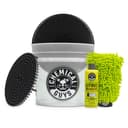
Buy this before anything else
Chemical Guys Ultimate Car Wash Bucket Kit
Whichever way you rinse, the contact wash is what cleans the car and the grit guard is what keeps the dirt you removed at the bottom of the bucket instead of back on your mitt. This is the cheapest meaningful upgrade available to a hose washer and it is still mandatory if you buy a machine.
$49.99View on AmazonPrice as of October 18, 2026. #ad How we’re funded
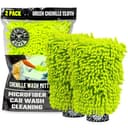
The thing that actually cleans the paint
Chemical Guys Chenille Microfiber Wash Mitt
Deep chenille pile lifts grit up off the paint and holds it away from the panel, which is the entire job of a wash mitt. A sponge does the opposite - it traps grit flat against the surface. If you are still washing with a sponge, replacing it does more for your paint than a pressure washer would.
$17.98View on AmazonPrice as of October 18, 2026. #ad How we’re funded
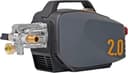
If you do buy a machine
Active 2.0 Electric Pressure Washer
Specified around washing cars rather than cleaning concrete: 2.0 GPM of rated flow at a deliberately modest 1800 peak PSI, which is the right trade around paint and badges. Flow is what makes a cannon produce thick foam, so the machine that reads as weakest on PSI is the one that pre-washes best.
$299.99View on AmazonPrice as of October 18, 2026. #ad How we’re funded
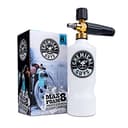
The reason to own the machine
Chemical Guys TORQ Professional Foam Cannon
A pressure washer without a cannon is just a faster hose. The cannon is what converts flow into a clinging layer of foam that dwells on the panel and floats grit off before a mitt touches the paint - which is the entire paint-safety argument for the purchase.
$99.97View on AmazonPrice as of October 18, 2026. #ad How we’re funded
Our call
Buy the machine if the car lives outdoors, you drive on salted winter roads, the paint is dark enough to show swirls, or the vehicle is large enough that a slow rinse is a real problem. In those cases the pre-wash is doing genuine work every single time and the money is well spent.
Stay with the hose ifthe car is garaged, you wash it weekly, or you have nowhere sensible to store a machine. Put the money into two buckets with grit guards, a good mitt and a proper drying towel instead — that combination protects your paint more than the machine would, and it is a tenth of the price.
And if you have no outdoor tap at all, neither answer applies. A rinseless wash is the method for apartment parking, and how to wash a car without a hose walks through it.
Frequently asked questions
Do I need a pressure washer to wash my car?
No. The part of a wash that removes dirt is the contact wash - a lubricated mitt moving across the paint - and that step is identical whether the car was rinsed with a hose or a machine. Plenty of immaculate cars have never seen a pressure washer. What the machine adds is a touchless pre-wash: a thick layer of foam that dwells on the panel and floats grit off before anything touches it. That matters most if your car gets genuinely dirty between washes, and barely at all if it lives in a garage and gets washed weekly.
Is a pressure washer better than a hose for washing a car?
Better at three specific things, equal at everything else. It is better at pre-washing, because flow and a foam cannon make a clinging layer a hose-end gun cannot. It is better at wheels, arches and the underside, where bonded brake dust and road salt need force a hose does not have. And it rinses faster, which matters more the larger the vehicle. On the actual cleaning of the paint, it is not better at all - that is the mitt's job, and the mitt does not know what rinsed the car.
Can a pressure washer damage car paint?
Yes, and almost always through the nozzle rather than the machine. Kärcher's own car-washing guidance is explicit: use the flat jet and not the rotor nozzle, keep a minimum of 15 centimetres from the surface and 30 centimetres from tyres, and work from the bottom up. Follow that and 2000 PSI is safe on sound paint. Ignore it - a zero-degree pencil jet at four inches - and you will lift a chipped edge of clear coat, drive water past a window seal, or blow a loose badge off. Healthy paint is tougher than people think; failing paint and old vinyl decals are not.
Does a pressure washer use less water than a hose?
Yes, for the same rinse. A pressure washer uses a small volume at high velocity, where an open hose pours a large volume at low velocity - so you reach the same result with less water even though it feels like the opposite. A typical consumer electric machine moves roughly one to two gallons a minute; an open garden hose is usually well above that. The caveat is behavioral: people who own a machine tend to wash more often and spend longer on the driveway and wheel arches.
What can I use instead of a pressure washer for a foam cannon?
A hose-end foam gun, with lowered expectations. A foam gun attaches to a garden hose and makes foam from mains pressure; it works, and it is genuinely better than nothing, but the foam is thinner and runs off the panel faster so it has less dwell time to do its job. That is the difference, and it is the difference the cannon is sold on. We cover the two formats and what each one is actually good for in our foam cannon versus foam gun comparison.
Is a pressure washer worth it for an apartment with no outdoor tap?
No. A pressure washer needs a tap and an outlet, and if you have neither then the machine is not the purchase - a rinseless wash is. A rinseless concentrate lets you wash a car safely with a bucket of solution and a stack of towels, no running water and no runoff, which is why it is the standard answer for apartment parking and covered garages. That is a different method rather than a compromise, and we have a separate roundup for it.
Sources
- Kärcher — Car Washing at Home: Tips and Tricks — Pressure-washer manufacturer technique guidance: “Always wash your car with the flat jet and not with the rotor nozzle”; “Keep a minimum distance of 15 centimetres” from the car's surface and “For tyres, it should be a minimum of 30 centimetres”; “Always clean from the bottom up, to avoid missing any spots”; with the right method and that minimum distance the tyres will not be damaged (accessed October 5, 2026)
- Chemical Guys — Two Bucket Method Car Wash Guide — Manufacturer how-to on the two-bucket wash and grit guards (accessed July 19, 2026)
- Detailed Image (Ask a Pro) — The Grit Guard 2x4 Wash Method — Detailing knowledge base on grit-guard wash technique (accessed July 19, 2026)
- Pro Tool Reviews — Pressure Washer PSI That's Too Good to Be True? It Probably Is! — Independent bench measurements of "PSI Max"/"GPM Max" claims vs PWMA-certified rated performance (accessed July 19, 2026)
Keep reading
Best Pressure Washers for Car Detailing
If you decide to buy one - the category sorted on rated flow rather than headline PSI, because flow is what rinses a car.
See the picksFoam Cannon vs Foam Gun
The hose-powered alternative to a cannon, what it can actually produce, and when the thinner foam is good enough.
Read the guideThe Two-Bucket Method
The contact wash that does the actual cleaning, whichever way you rinsed the car first.
Read the methodBest Rinseless & Waterless Washes
The answer when there is no hose and no outlet - washing safely with a bucket of solution and a stack of towels.
See the picks