Gas vs Electric Pressure Washer for Cars
For a car, buy electric. The thing a gas machine sells you is pressure, and pressure is the one spec a car wash does not need more of - every consumer electric unit already has a surplus. Here is the whole argument, including the two cases where gas genuinely wins.
How this is funded:we earn a commission if you buy through our links, at no extra cost to you. It never changes which product we recommend, and we’ll tell you plainly when we’d skip one. Full disclosure.
The answer, before the reasoning
If the car is the reason you are buying a pressure washer, buy electric. This is not a close call and it is not a budget compromise. It is that the two machines are optimised for different variables, and the variable gas optimises for is the one a car wash needs least.
We will go further, because it is the honest position: there is no gas pressure washer in our registry at all. Not because gas machines are bad — a gas unit is the right tool for stripping a deck, cleaning concrete or washing a barn — but because we rank machines for washing cars, and on that job every gas machine we looked at is paying a real penalty in exchange for a capability you cannot use. If you want a single machine for a car and a driveway, read on; that is the one scenario where this gets interesting.
Why pressure is the wrong axis
A pressure washer does two things in a car wash: it pre-soaks, and it rinses. Both of those are water-volume jobs.
A foam cannon makes foam by forcing water through a soap solution and a restrictive orifice, so how much foam you get is set by how much water arrives per minute. Rinsing is the slow part of any wash, and flow is what shortens it — more water per minute means foam leaves panel gaps and door shuts faster. Neither of those improves when you raise pressure.
Meanwhile, pressure is something every consumer electric machine already has in surplus. Kärcher’s own car-washing guidance does not mention a PSI figure anywhere. What it says instead is: always wash your car with the flat jet and not with the rotor nozzle, keep a minimum distance of 15 centimetres from the surface and a minimum of 30 centimetres for tyres, and always clean from the bottom up. A manufacturer that sells pressure washers is telling you the technique matters and the pressure number does not.
So the shopping spec is rated gallons per minute. Among our own picks, the range runs from 1.2 GPM rated (the Kärcher K1700 Cube, the Westinghouse ePX3050) to 2.0 GPM rated (the Active 2.0, at a deliberately modest 1800 peak PSI). That is roughly two-thirds more water per minute at the top, and it is the difference you actually feel. The whole field ranked on that basis is in best pressure washers for detailing.
What a gas machine costs you, concretely
These are not abstractions. They are the reasons a gas machine ends up unused in a corner.
You cannot run it in a closed garage. It is an internal combustion engine producing exhaust. For anyone who details indoors, in winter, or in an apartment parking structure, this ends the conversation on its own.
It is loud. Loud enough that a Saturday morning wash becomes a neighbour issue, and loud enough that you will not hear the hose catch on something.
It needs maintenance you will forget. Fuel that goes stale, oil changes, a carburettor that gums up over a winter of standing. An electric unit that sat for six months starts; a gas unit that sat for six months is a project.
It is heavy.Our electric picks run from 14 lb (Westinghouse ePX3050) and 16.3 lb (Kärcher K1700 Cube) upward. A gas unit is a wheelbarrow frame with an engine on it. Weight decides whether a tool gets carried out for a twenty-minute wash, and that decides whether you wash the car at all.
The engine runs at a fixed speed.With the trigger released, pressure has to go somewhere, which means unloader valves and bypass heat become things you think about — particularly during the several-minute foam dwell that is the whole point of using a foam cannon. An electric machine with a total-stop system simply switches off when you let go.
And it gives you pressure you cannot spend. A 3000 PSI machine does not clean paint better than a 1700 PSI one. Intact paint is tough and both numbers are far past what road film needs. What the bigger number changes is the cost of a mistake.
The damage question, answered properly
It would be dishonest to say a gas pressure washer will wreck your car. People wash cars with them every day without incident, and force at the panel is a product of pressure, nozzle angle and distance — a 3000 PSI machine with a 40 degree tip held two feet back delivers less force than a 1700 PSI machine with a turbo nozzle held six inches away.
The honest framing is margin for error. The realistic failure modes are all edges and openings rather than open paint: lifting the edge of clear coat that was already failing, finding its way past a door or window seal, popping a loose badge or trim clip, etching a tyre sidewall, or lifting the edge of aftermarket vinyl. Every one of those gets more likely as pressure rises, and every one of them is a moment of inattention rather than a technique failure.
If you already own a gas machine, use it: widest fan tip you have, generous distance, keep the wand moving, and put the turbo nozzle somewhere you will not reach for it absent-mindedly. The method is unchanged — how to pressure wash a car applies exactly the same way, and the nozzle-versus-rating argument is in what PSI to pressure wash a car.
The two cases where gas genuinely wins
1. You need one machine for the car and for real outdoor work. This is the legitimate case, and it is common. If the same purchase has to strip a deck, clean a long concrete drive or wash siding, a 1.2 GPM electric unit will frustrate you on all three. Buy for the harder job, then treat the car as the delicate application it is: wide tip, distance, and discipline about the turbo nozzle.
2. You have no reliable mains power where you wash.A gas unit needs no outlet. If you wash at a farm, a yard, a roadside or anywhere a 35 ft GFCI cord does not reach, the argument is over — electric is not an option.
Note what is noton that list: wanting better foam. Foam tracks flow, and you can buy flow without buying an engine. A 2.0 GPM rated electric machine gets most of the way to a gas unit’s foaming with none of the drawbacks, which is exactly why it is our top pick for detailing.
Read the rated figures, whichever you buy
One trap spans both camps. Many manufacturers publish a peak or “max” figure measured at the pump under ideal conditions rather than a rated, sustained output at the nozzle. Pro Tool Reviews has documented the gap between those advertised numbers and bench-measured performance, and the gap can be substantial.
The tell is a listing quoting two sets of figures. Westinghouse, to its credit, publishes both for the ePX3050: 2100 max PSI and 1.76 max GPM on the box, 1800 rated PSI and 1.2 rated GPM in the specification table. The rated pair is what you will feel at the wand. Kärcher goes a step further on the K1700 Cube and carries a CETA certification — an independent lab verified the 1700 PSI / 1.2 GPM claim, which makes it directly comparable to another certified unit. Most of the category quotes uncertified maximums that are not comparable to anything.
Practical shopping rule: treat roughly 1500 to 2000 rated PSI as plenty for a car, and spend the rest of the budget on flow.
Electric sub-choices that matter more than gas versus electric
Having settled the big question, the decisions inside the electric category are the ones that will actually affect your Saturdays.
Rated flow is first, for every reason above. Weight and storage formatis second and underrated — a cube that lives on a shelf gets used more than a wheeled frame that has to be dragged out. Hose length and fitting third: a 20 ft hose with a standard M22 fitting means aftermarket detailing accessories bolt straight on, while a proprietary bayonet means buying an adapter before your foam cannon will attach at all. And whether a cannon is in the box, because the Westinghouse including one makes it close to a complete starting setup for roughly what a good standalone cannon costs.
Those four, in that order, are what we rank on in the roundup, and the full chain of six things a pressure-washer wash needs is in the pressure washer wash kit.
The electric machines we would buy
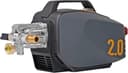
Best for detailing
Active 2.0 Electric Pressure Washer
The only machine in our registry designed around washing cars rather than cleaning concrete, and the spec shows it: 2.0 GPM of rated flow at a deliberately modest 1800 peak PSI. More water and less pressure is exactly the trade a detailer wants, and the 20 ft hose with an M22-14mm fitting means aftermarket accessories bolt straight on. The most expensive pick here by a clear margin.
$299.99View on AmazonPrice as of October 10, 2026. #ad How we’re funded
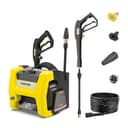
The honest numbers
Kärcher K1700 Cube Pressure Washer
A flat 1700 PSI and 1.2 GPM with a CETA certification behind it rather than a peak figure with an asterisk — an independent lab verified the claim, so it is comparable to another certified unit. The cube body stores on a shelf at 16.3 lb. Modest on paper, and the paper is accurate. Never point its bundled turbo nozzle at bodywork.
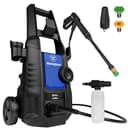
Cheapest way in
Westinghouse ePX3050 Electric Pressure Washer
It includes a foam cannon in the box, which makes it close to a complete starting setup for roughly what a good cannon costs on its own. Westinghouse also publishes the rated 1800 PSI / 1.2 GPM next to the 2100 / 1.76 max headline, which is more candour than most of the category offers. At 14 lb it actually gets carried out.
$109.00View on AmazonPrice as of October 10, 2026. #ad How we’re funded
The short version
Washing cars rewards flow, quiet running, indoor use and light weight, and punishes surplus pressure. That is an electric machine’s profile and the inverse of a gas machine’s. Buy electric, shop on rated GPM, treat 1500 to 2000 rated PSI as plenty, and read the rated figures rather than the maximums.
Buy gas only if the same machine has to do serious outdoor work as well, or if there is no outlet where you wash. In both of those cases, fit the widest fan tip, keep your distance, and leave the turbo nozzle in the box.
Work safely. Detailing chemicals and machine polishers can damage paint, trim or your own skin if misused. Always follow the manufacturer’s instructions, test in an inconspicuous spot first, work out of direct sun, and wear eye protection and gloves where the label calls for them. Two Bucket Club is general guidance from an enthusiast, not a substitute for a product’s own directions.
Frequently asked questions
Is a gas or electric pressure washer better for washing cars?
Electric, for almost everyone. A car wash needs flow to make foam and rinse quickly, and it needs pressure only in modest amounts — every consumer electric machine already has more pressure than paint requires. Gas machines sell pressure you cannot use on a car, at the cost of noise, fumes, maintenance and weight. Our entire pressure washer registry is electric for exactly this reason.
Can you use a gas pressure washer on a car?
Yes, carefully. Fit the widest fan tip you have, keep your distance, and never use the turbo nozzle. The risk is not that gas machines are inherently paint-destroying; it is that a 3000+ PSI machine raises the cost of every mistake. A moment of inattention near a stone chip, a failing clear coat edge or a tyre sidewall does more damage than the same moment with a 1700 PSI unit.
Is 3000 PSI too much for a car?
It is far more than paint needs, and it does not guarantee damage either. Force at the surface is a product of pressure, nozzle angle and distance, so a 3000 PSI machine with a 40 degree tip held two feet back can be gentler than a 1700 PSI unit with a turbo nozzle held close. The problem is margin for error, not physics.
Do you need high PSI to wash a car?
No. Shop on flow instead. Pressure dislodges stuck dirt; flow carries it off the panel and rinses foam out of panel gaps, and rinsing is the slow part of a wash. The spec worth paying for is rated gallons per minute, which is also what makes a foam cannon produce thick foam rather than drizzle.
What are the downsides of a gas pressure washer for detailing?
Six, in rough order of how much they matter day to day: you cannot run it in a closed garage because of exhaust fumes; it is loud enough to be antisocial in a driveway; it needs fuel, oil and off-season carburettor care; it is heavy; it almost always comes with more pressure than paint wants; and the engine runs at a fixed speed, so unloader and bypass behaviour becomes something you have to think about during long foam dwells.
Why do detailers use electric pressure washers?
Because the job rewards flow, quiet operation and indoor use, and punishes excess pressure. An electric unit starts instantly, runs in a garage, is quiet enough to hold a conversation next to, needs essentially no maintenance, and is lighter to carry out and put away — which in practice means it actually gets used.
What PSI and GPM should you look for in a car pressure washer?
Treat roughly 1500 to 2000 rated PSI as plenty and spend your money on flow: 1.2 GPM is the workable floor, 2.0 GPM rated is noticeably better at both foaming and rinsing. Read rated figures rather than 'max' ones — the honest listings publish both, and the gap between them can be large.
Does a gas pressure washer make better foam?
It can, but not because it is gas — because gas machines usually move more water. Foam thickness tracks flow, so a 2.5 GPM gas unit will out-foam a 1.2 GPM electric one. The point is that you can buy the flow without the gas: a 2.0 GPM electric machine gets most of the way there with none of the drawbacks.
Sources
- Kärcher — Car Washing at Home: Tips and Tricks — Pressure-washer manufacturer technique guidance: “Always wash your car with the flat jet and not with the rotor nozzle”; “Keep a minimum distance of 15 centimetres” from the car's surface and “For tyres, it should be a minimum of 30 centimetres”; “Always clean from the bottom up, to avoid missing any spots”; with the right method and that minimum distance the tyres will not be damaged (accessed October 5, 2026)
- Pro Tool Reviews — Pressure Washer PSI That's Too Good to Be True? It Probably Is! — Independent bench measurements of "PSI Max"/"GPM Max" claims vs PWMA-certified rated performance (accessed July 19, 2026)
- International Detailing Association — Detailing Resources — IDA's public detailing resource library (accessed July 19, 2026)
Keep reading
Best Pressure Washers for Car Detailing
Five electric machines ranked on rated flow, with the honest-figures argument spelled out.
See the machinesWhat PSI to Pressure Wash a Car
Why the number on the box is usually a peak, and what nozzle and distance do to it.
Read the answerBest Pressure Washer Car Wash Kit
Once you have picked a machine, the five other pieces that have to fit it.
Build the kitHow to Pressure Wash a Car
The full sequence, including the nozzle and distance rules that matter more than the machine.
Read the method