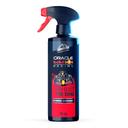
What makes a tire coating different from a tire dressing
Both products leave a film on the sidewall. The difference is what the film is made of and what it is trying to do. A dressing is mostly a carrier plus a gloss agent, often silicone-based, designed to look wet immediately. A coating is a thin cross-linking film — the makers here name SiO2 or graphene chemistry — designed to stay put while the carrier evaporates. That is why coatings are applied thinly and dressings are flooded on, and why the two fail differently: a dressing slings or washes off, a coating fades.
The silicone point is worth one extra sentence because it is the quiet reason many people go looking for a coating in the first place. Gold Eagle, which makes 303 Automotive Protectant, sells that product specifically on containing no harmful silicone oils — the company’s stated position is that those oils can dry out and damage surfaces. Whether or not you accept that framing for every silicone product on the shelf, it is the argument the industry itself makes for moving to SiO2 and graphene chemistry on rubber.
Practically: if you want your tires black for a car show this afternoon, buy a dressing. If you want them to look like new rubber for a month without washing your rocker panels twice, buy something on this page.
Why nobody sells a permanent tire coating
The query “best permanent tire coating” is one of the most common ways people arrive at this topic, so here is the honest answer in full.
Tire sidewalls are the most hostile surface on a car for any coating. They flex through every rotation, which cracks a rigid film. They run hot and then cool. They sit in standing water and road salt. And they are not inert: tire compounds contain antiozonant waxes that migrate to the surface over time — the mechanism behind brown tires, which we cover in why are my tires turning brown. That migration pushes outward from under any film you apply, which is the fundamental reason a tire product has a lifespan measured in weeks.
For a sense of scale on adjacent rubber and plastic: Chemical Guys publishes that most trim restorers last anywhere from a few weeks to a couple of months, and recommends reapplying every three to four weeks in sunny, arid regions. Trim does not flex or spin, so treat that band as the optimistic end of what a tire film does. Chemical Guys also states plainly that a restorer will not reverse cracking or pitting — and neither will anything on this page. A coating protects rubber that is still healthy; it does not repair rubber that is not.
How we ranked these
Finish: satin beats gloss on a real car
A new tire from the factory is satin. High-gloss dressings look striking in a product photo and slightly plastic in a driveway, and gloss is also strongly correlated with sling, because the agents that create a wet look stay mobile on the surface. Four of the five picks here are satin or deep-black matte for exactly that reason; the gloss option is the budget pick, and it is a deliberate choice rather than an oversight.
Sling: the failure mode that costs you a wash
Sling is product centrifuging off the tread shoulder onto the lower body panels at speed, and it is the single most annoying failure in tire care because you discover it after you have finished detailing the car. It comes from over-application far more often than from the product itself, which is why our method section below matters more than the pick you choose. Our how to apply tire shine without sling guide covers the technique in full.
Prep demand: the honest cost of the coating class
Every product here needs a genuinely clean, dry tire, and that is the real price of admission. Chemical Guys’ own trim guidance is to clean with an all-purpose cleaner or degreaser and dry the surface first, and to apply in the shade rather than in direct sun. On a tire carrying months of old silicone dressing, nothing in this class bonds and everything in this class slings. Budget twenty minutes with a stiff brush and a cleaner before you open the bottle you bought.
Cost per tire, not price per bottle
Container sizes here run from 10 oz to 500 mL, and because coatings are applied in a thin film rather than flooded on, the bottle price tells you very little. The largest bottle on the page is the most expensive and also among the cheapest per tire. Every row carries its own live price so you can do that arithmetic against today’s number rather than one we typed last month.
The method that decides whether any of this works
- Clean the wheels first, then the tires. Wheel cleaner and brake dust run downhill onto rubber you have already dressed. See how to clean wheels and tires and best wheel cleaners.
- Scrub the sidewall with an all-purpose cleaner and a stiff brush until the foam stops turning brown. Brown foam is blooming and old dressing lifting off, and it is the step people skip.
- Rinse and dry.A pressure washer makes this quick; Kärcher’s own guidance is to use the flat jet rather than the rotor nozzle and to hold a minimum of 30 cm from tires. If you are shopping for the machine that does this step, see best pressure washers under $300.
- Apply to the applicator, not to the tire. This is the whole trick. Load a foam or microfiber pad, then wipe an even film on the sidewall. Spraying a tire directly puts product in the tread, on the wheel face and on the paint.
- Let it flash, then wipe the excess. One thin even coat that has dried is worth more than two wet ones. Anything still glossy and mobile after a few minutes is the product that will end up on your paint.
Do that and a product on this page will give you weeks. Skip step two and the most expensive bottle here will fail inside a week, which is why so many reviews of these products contradict each other.
Who each pick is for
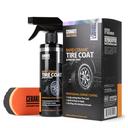
- Cerakote Rapid Ceramic Tire Coat— for most people. Satin, no-sling, the cheapest bottle in the class, and the one to try first if you have never used anything but a dressing. The 10 oz container is the smallest here, so buy it knowing you will reorder if you treat more than one car.
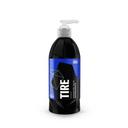
- Gyeon Tire SiO2— for the person who wants the most control and the lowest cost per tire. The gel body stays where you put it instead of running down the sidewall while you work, and 500 mL is by volume the most product on the page. You supply the applicator, and you accept satin as the only finish on offer.
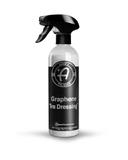
- Adam’s Graphene Tire Dressing— for a deep black that is not wet-look. Adam’s calls this a dressing with coating-like protection rather than a coating, and we have kept the maker’s own word for it; read it as the most durable end of the dressing class. Its directions name the tire-cleaner step, which is the most useful thing printed on any bottle here.
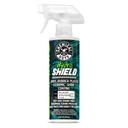
- Chemical Guys HydroShield— for the car where the tires are not the only tired rubber. One bottle covers sidewalls, cowl, mirror caps and bumper textures, which is genuinely efficient. The trade is that a formula safe on interior plastic is not optimizing for a sidewall, so expect a dedicated tire coating to outlast it on the tire. If faded trim is the actual problem, start at best trim restorers instead.
- Armor All Podium Series hybrid ceramic spray— our budget pick, and the only gloss option here. A trigger spray needs no applicator, which is why it is the pick for someone who wants the look back today. Spray it onto a pad rather than onto the tire, because gloss plus direct spraying is the classic recipe for sling.
What a tire coating will not do
- It will not fix cracked or pitted rubber. Chemical Guys states that about trim restorers and it is equally true here. Cracking is structural; a film on top of it is cosmetic.
- It will not stop browning on a dirty tire. Blooming comes from inside the compound. Coating over it traps it. Deep-clean first, every time.
- It will not survive a tire shine applied on top.Layering a silicone dressing over a coating gives you the dressing’s lifespan and the coating’s price. Pick one class of product and stay in it.
- It will not last through a season regardless of the claim. Treat reapplication as part of the routine, roughly monthly, the way you would with any exterior rubber or trim product.
Our call
Buy the Cerakote if you want the satin, no-sling result for the least money and the least thinking.
Buy the Gyeon gel if you detail more than one car, reapply monthly, and want the lowest cost per tire with the most controlled application.
Buy the Adam’s if deep black matters more to you than the word on the label.
Buy the Chemical Guys HydroShield if the trim and plastics need attention too and you would rather own one bottle than three.
Buy the Armor All if you want gloss, you want it cheap, and you are happy reapplying more often. If that describes you, the full dressing field at best tire shineis probably the better page for you anyway — and alternatives to Chemical Guys VRP covers the all-surface bottles that sit between the two classes.