Foam or microfiber?
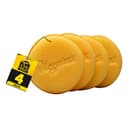
Foam is the default for liquid and paste waxes, sealants and trim dressings. Open-cell foam holds a small amount of product at the surface and releases it evenly, so a thin film goes down and comes off easily. It does not soak product away from the paint, which matters when a bottle is expensive.
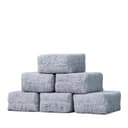
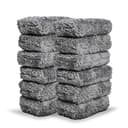
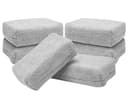
Microfibergrips thicker products — compounds, glazes, some coatings — and spreads them more evenly than foam does. It is also more durable and washes better. The one place foam still wins outright is a thin liquid sealant, where a microfiber pad will absorb more of the product than it applies.
For an actual ceramic coating, neither of these is the right tool: coatings ship with a suede-wrapped foam block for a reason, and the applicator is part of the product. Use what came in the box.
One pad per product, and why it matters
Cross-contamination is the failure mode nobody sees coming. A pad that applied a silicone-heavy tire dressingkeeps traces of it. Use that pad on paint and you have introduced a release agent under your wax, which shows up as patchy beading a week later. The same applies to a pad that has had compound in it — those abrasives do not fully wash out.
The fix costs almost nothing: buy a multipack, dedicate pads by job, and label or color-code them. Wax, sealant, dressing, interior protectant, and a spare. This is the same separation principle behind keeping paint towels away from wheel towels and behind the two-bucket method itself.
How to use an applicator properly
- Prime it. A dry foam pad soaks up the first application unevenly. Put a few dabs of product on, work it into the face, and only then start on the panel.
- Less product than you think. Three or four small dabs covers a panel section. If you are wiping away more than you left behind, you are wasting money and creating work.
- Overlapping straight lines. Circles are a habit from television adverts. Straight, overlapping passes give even coverage and make a missed section obvious.
- Light pressure. The pad should glide. Pressing harder does not apply more evenly, it just compresses the foam.
- Wash and dry face-up. Rinse immediately after use, wash without fabric softener, and let them dry with the working face upward so nothing settles into it.
How many do you need?
For a normal home setup: one for wax or sealant, one for interior protectant, one for tire and trim dressing, and a spare for whatever you buy next. That is four, which is why almost everything on this page is sold in multiples. At these prices the honest advice is to buy more than you need and throw away the one that ends up covered in tar rather than trying to rescue it.
If you are putting a first kit together from scratch, applicators are one of the small items that get forgotten until the wax is already open — our beginner kit page lists them alongside everything else a first wash-and-protect actually needs.