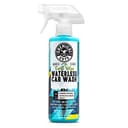
How to do a rinseless wash safely
The method carries a real risk if you rush it, and a very small one if you follow the sequence. The whole game is making sure a piece of grit is never dragged across paint on a towel face you have already used.
- Assess the car honestly.Light road film and dust: fine. Mud, winter salt, or visible grit: stop. That car needs a hose, or at minimum a pre-rinse with a pump sprayer — and a salted car also needs its underside flushed, which a bucket cannot do at all (see undercarriage cleaners for road salt).
- Mix to the stated ratio in a bucket — a grit guard in the bottom is just as useful here as in a conventional wash.
- Work one panel at a time, top down. Soak a plush towel, fold it in quarters, wipe in straight lines with almost no pressure, then refold to a clean face for the next section.
- Dry each panel immediately with a separate drying towel before the solution can dry on its own.
- Do the wheels and lower rockers last, with towels you never put back on paint.
The two rules that matter most: one towel face per section, and never any pressure. You are lifting encapsulated dirt off, not scrubbing it off.
Where waterless is and is not appropriate
Waterless products are lubricants first and cleaners second. Sprayed on a dusty car they encapsulate the light soil and let a towel carry it off safely. Sprayed on a gritty car they do not have enough volume to float grit away from the paint, and the towel does exactly what a dirty sponge does: it grinds.
The reasonable uses are a quick clean-up before an event, keeping a garaged car presentable, wiping down a coated car that only carries dust, or cleaning the interior glass and door shuts. The unreasonable use is a car that has been driven through a week of rain.
Why the cost per wash is lower than it looks
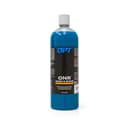
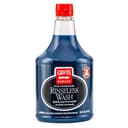
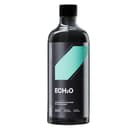
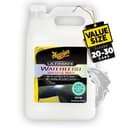
Rinseless concentrates dilute enormously — typically an ounce or two into a couple of gallons of water. A single bottle therefore covers a large number of washes, and unlike a conventional wash you are not paying for the water you would have run down the drain. Several of the products here dilute at three different ratios to become a wash, a drying aid and a clay lubricant, which removes another two bottles from your shelf.
That flexibility is the strongest practical argument for keeping a rinseless concentrate around even if you have a hose. It is the product you reach for when the car is only slightly dirty, when it is too cold to be outside, or when you need clay lube and do not want to buy a dedicated bottle.
What rinseless washing does not do
It does not decontaminate. Bonded iron fallout, tar and industrial deposits need chemical decontamination and clay, both of which want a rinse. It does not remove heavy brake dust from wheels. And it does not protect — some products leave a light gloss enhancer behind, but that is a top-up, not a substitute for a wax or sealant.
Treat it as what it is: a genuinely safe way to keep a car clean between proper washes, and the only realistic option for a lot of people who do not have a driveway. If that is your situation, our guide to washing a car without a hose walks through the full apartment-friendly setup.