Rinseless vs Waterless Car Wash
Both let you wash a car with no hose. They are not interchangeable — one uses a bucket of water to carry dirt away, the other relies entirely on lubrication, and that difference decides how dirty a car each can safely handle.
How this is funded:we earn a commission if you buy through our links, at no extra cost to you. It never changes which product we recommend, and we’ll tell you plainly when we’d skip one. Full disclosure.
The mechanical difference, in one paragraph
In a conventional wash, a large volume of water does most of the safety work: it floats grit off the paint and carries it away before your mitt reaches it. Take the hose away and you have to replace that function with chemistry.
A rinseless washreplaces it partially. You dilute a polymer-rich concentrate into a bucket of water, and those polymers encapsulate dirt particles so they release from the paint and stay suspended in the towel rather than being dragged. There is still water — a few gallons of it — doing the floating.
A waterless washreplaces it entirely with lubrication. You spray a solution onto a panel, the surfactants and polymers wrap the light soil, and a towel lifts it away. There is no reservoir of water carrying anything anywhere. That is why it is safe on dust and unsafe on grit — the entire margin comes from how little dirt is on the car.
Which method for which car
- Garaged car, a week of dust.Waterless is ideal — ten minutes, a spray bottle, a stack of towels.
- Daily driver, light road film, no mud.Rinseless. This is the method’s home ground.
- Coated car being maintained between proper washes. Either, and both are gentler on the coating than a brush wash.
- Winter salt, mud, sand, visible grit. Neither. That car needs flowing water, even if it is a coin-op bay or a pressure washer and a foam cannon.
The judgment call is the whole skill. People do not scratch their cars because they chose the wrong product; they scratch them because they used a low-water method on a car that needed a hose.
One of each, if you want the method covered
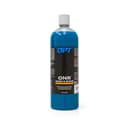
The rinseless benchmark
Optimum No Rinse Wash & Shine (Version 5)
The product that made the method mainstream. Heavily diluted into a bucket, and it doubles as a clay lubricant, which saves buying a second bottle.
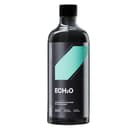
The waterless one
CarPro ECH2O Waterless Wash & Quick Detailer
A high-lubricity concentrate for the dust-only jobs. Because it is a concentrate, a bottle refills a spray bottle many times over.
$35.97View on AmazonPrice as of October 18, 2026. #ad How we’re funded
Doing a rinseless wash properly
- Check the car honestly. Run a finger down a rear quarter panel. Grit means stop.
- Mix to the stated ratio in a bucket — a grit guard is as useful here as in a conventional wash.
- Top down, one section at a time. Soak a plush towel, fold it into quarters, and wipe in straight lines with the weight of the towel and nothing more.
- New face every section. Eight faces per folded towel, and when they are used, take a new towel. This is the step people skip and the reason the method gets blamed for scratches.
- Dry immediately with a dedicated drying towel before the solution can dry on its own.
- Wheels and lower rockers last, with towels that never go back on paint.
Doing a waterless wash properly
Spray generously — being stingy is the classic mistake, because the liquid is the only thing standing between the towel and your clear coat. Work one small section at a time. Wipe in one direction only, never back and forth, and turn to a clean towel face constantly. Use a second, dry towel to buff each section immediately.
Expect to use a lot of towels. A full car done waterless can go through six to eight, which is why cheap plush multipacks matter more here than the product itself. If you find yourself reusing a face because you have run out, stop — that is exactly the moment the method turns into fine scratching.
What neither method does
Neither decontaminates. Bonded iron fallout, tar and industrial fallout need chemical decontamination and clay, both of which want rinsing. Neither deep-cleans wheels, where brake dust and a dedicated cleanerare the right answer. And neither protects — a gloss enhancer left behind by a wash-and-wax formula is a top-up, not a substitute for a sealant.
Used within those limits, both are genuinely useful. Rinseless in particular is the difference between a clean car and a dirty one for anyone without a driveway, and the cost per wash is lower than a conventional wash because the concentrate dilutes so far.
Work safely. Detailing chemicals and machine polishers can damage paint, trim or your own skin if misused. Always follow the manufacturer’s instructions, test in an inconspicuous spot first, work out of direct sun, and wear eye protection and gloves where the label calls for them. Two Bucket Club is general guidance from an enthusiast, not a substitute for a product’s own directions.
Frequently asked questions
What is the difference between rinseless and waterless washing?
A rinseless wash is a concentrate diluted into a bucket of water; you wash with a soaked towel or mitt and dry, with no rinse step. A waterless wash is sprayed straight onto the panel and wiped off, with no bucket at all. The bucket is the important difference — it carries dirt away from the paint, which is why rinseless can handle a dirtier car.
Is waterless washing safe for paint?
On a lightly dusty car, yes. On a genuinely dirty one, no. Waterless products work by lubricating and encapsulating light soil so a towel can lift it away, and there is simply not enough liquid to float grit off the surface. If you can see or feel grit, waterless washing will drag it across your clear coat.
How dirty can a car be for a rinseless wash?
Light to moderate road film and dust is fine. Mud, winter salt, sand or anything visibly gritty is not — that car needs a pre-rinse at minimum, ideally a conventional hose wash. A useful test is to run a clean finger down a lower panel: if it comes away gritty rather than just grubby, do not go straight to rinseless.
Do rinseless washes scratch your paint?
Not when the method is followed. The risks are using it on a car that is too dirty, using too much pressure, and reusing a towel face that already has dirt in it. One panel section per clean towel face, no pressure, and honest judgment about how dirty the car is — that is the whole safety story.
Can I use rinseless wash solution as a clay lubricant?
Many rinseless products are explicitly rated for it at a stronger dilution than the wash mix, and it is one of the best reasons to keep a bottle around. Mix to the ratio the maker publishes for clay lube — wash-strength solution is usually too thin to give the clay enough lubrication.
Sources
- Chemical Guys — Two Bucket Method Car Wash Guide — Manufacturer how-to on the two-bucket wash and grit guards (accessed July 19, 2026)
- International Detailing Association — Detailing Resources — IDA's public detailing resource library (accessed July 19, 2026)
- US EPA — Safer Choice — EPA program certifying safer cleaning-product chemistry (accessed July 19, 2026)
Keep reading
Best Rinseless & Waterless Washes
Both categories compared on dilution, lubrication and cost per wash.
See the picksHow to Wash a Car Without a Hose
The full apartment-friendly wash, start to finish.
Read the guideThe Two-Bucket Method
The conventional wash these methods are an alternative to, and why it works.
Learn the methodBest Microfiber Towels for Cars
Both methods live or die on having enough clean plush towel faces.
See the towels