TWO BUCKET CLUB

Best Car Wax for Hot Climates (2026)

Florida, Arizona, Texas - sun is the thing that shortens protection, and it also makes the job of applying it harder. The products that hold up, and the application window that decides whether any of them get the chance to.

By Stephen V.Last updated How we pick

Buy Chemical Guys JetSeal.In a hot climate the right answer is a synthetic sealant rather than a carnauba wax, and JetSeal is the one most people mean when they say sealant — a durable synthetic layer sold on corrosion protection as much as gloss, which is the honest reason to choose a sealant over a wax in the first place. It is for a daily driver that lives outside in strong sun. The budget pick is Turtle Wax ICE Seal N Shine at around fifteen dollars: a carnauba-sealant hybrid that sprays on and wipes off, and the cheapest route into sealant-grade durability — which matters most where protection gets used up fastest.

Here is the mechanism, because it explains every pick below. UV is what degrades paint, and DetailingWiki is unusually direct about how protection interacts with it: a layer of wax will itself oxidize more than the surface underneath it, a sealant uses different ingredients that are less prone to disintegration, and ceramic coatings are harder and tougher still — with those last two having more effect on UV than wax does. So in a hot, sunny climate the chemistry you want is synthetic, not natural.

And then the part that catches people out, which has nothing to do with which bottle you buy. In a hot climate the hardest thing is not finding a durable product — it is finding an hour cool enough to apply it. Chemical Guys publishes a 50–85°F working range, warns that sunlight flash-dries wax into streaks and residue, and says to check the panel is cool to the touch and allow 30 to 60 minutes in shade for a hot panel to cool. Turtle Wax states the same thing independently: never wax in direct sunlight or extreme cold, because direct sunlight will bake the wax onto the surface. In Phoenix in July, that is a real scheduling constraint.

How this is funded:we earn a commission if you buy through our links, at no extra cost to you. It never changes which product we recommend, and we’ll tell you plainly when we’d skip one. Full disclosure.

Quick picks

Ranked on published specs, value and buyer fit. Select a row to jump to the full write-up. We have not lab-tested these products — here is exactly what we do instead.

#ProductBest forPrice
1
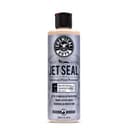
Chemical Guys JetSeal Anti-Corrosion Paint Sealant

Chemical Guys JetSeal Anti-Corrosion Paint Sealant

The sealant most people mean when they say sealant: a durable synthetic layer sold on corrosion protection as much as gloss, which is the honest reason to choose a sealant over a carnauba wax in the first place.

Best overall for sun and heat
$39.99View on Amazon

Price as of November 23, 2026. #ad How we’re funded

2
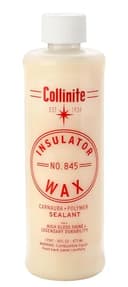
Collinite 845 Insulator Wax

Collinite 845 Insulator Wax

The durability champion of traditional waxes: a carnauba-plus-polymer liquid that routinely outlasts everything else in this class. It's a little fussier to apply thinly, but few waxes protect this long per coat.

Best traditional wax for durability
$17.57View on Amazon

$20.9516% off

Price as of November 23, 2026. #ad How we’re funded

3
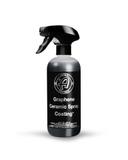
Adam's Polishes Graphene Ceramic Spray Coating

Adam's Polishes Graphene Ceramic Spray Coating

The best all-round spray for most people. A graphene-boosted SiO2 spray that lays down strong, tight water beading and a slick finish with nothing more than a spray-and-wipe on clean paint. Treat the durability claims as best-case marketing — it is a maintenance layer measured in months, not the years a real coating claims.

Longest protection
$30.34View on Amazon

$35.6915% off

Price as of November 23, 2026. #ad How we’re funded

4
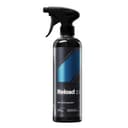
CarPro Reload 2.0 Spray Sealant

CarPro Reload 2.0 Spray Sealant

The enthusiast's choice, and the one to reach for as a booster over an existing coating. A silica-and-siloxane spray with a reputation for slickness and beading that outlasts most of the category, provided you apply it to a genuinely clean surface so it can bond.

Best top-up between applications
$39.99View on Amazon

Price as of November 23, 2026. #ad How we’re funded

5
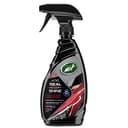
Turtle Wax ICE Seal N Shine Hybrid Wax Sealant

Turtle Wax ICE Seal N Shine Hybrid Wax Sealant

A hybrid: carnauba for the look, sealant polymers for the staying power, in a spray-on wipe-off bottle that sits in the cheapest band on this page. The compromise is real but so is the value.

Best on a budget
$15.52View on Amazon

Price as of November 23, 2026. #ad How we’re funded

The picks in full

#1Best overall for sun and heat

Chemical Guys JetSeal Anti-Corrosion Paint Sealant

The sealant most people mean when they say sealant: a durable synthetic layer sold on corrosion protection as much as gloss, which is the honest reason to choose a sealant over a carnauba wax in the first place.

What we like

  • Positioned around anti-corrosion protection, not just shine
  • Synthetic chemistry lasts longer than carnauba between applications
  • Works on paint, wheels and metal trim

Trade-offs

  • Gloss is clean and sharp rather than the warm carnauba look
  • Needs decontaminated paint to bond properly - clay first
TypeSynthetic paint sealant
Standout specAnti-corrosion synthetic sealant
Size16 oz
Best forLong-haul protection on a daily driver
Price tierMid

Specs read from the product listing, on August 18, 2026. “Not listed” means the listing does not state that figure.

#2Best traditional wax for durability

Collinite 845 Insulator Wax

The durability champion of traditional waxes: a carnauba-plus-polymer liquid that routinely outlasts everything else in this class. It's a little fussier to apply thinly, but few waxes protect this long per coat.

What we like

  • Outstanding durability for a wax — months of real protection
  • Excellent value; a bottle lasts years of occasional use
  • Great on daily drivers that live outside

Trade-offs

  • Must be applied in very thin coats or it's hard to buff off
  • Old-school application feel; less beginner-forgiving
TypeCarnauba + polymer liquid wax
Standout specLong-durability formula
Size16 oz
Best forLongest-lasting protection from a traditional wax
Price tierBudget

Cost-to-use note. Very thin coats are essential; a single bottle can last for years, giving it excellent cost-per-application.

Specs read from the product listing, on July 19, 2026. “Not listed” means the listing does not state that figure.

#3Longest protection

Adam's Polishes Graphene Ceramic Spray Coating

The best all-round spray for most people. A graphene-boosted SiO2 spray that lays down strong, tight water beading and a slick finish with nothing more than a spray-and-wipe on clean paint. Treat the durability claims as best-case marketing — it is a maintenance layer measured in months, not the years a real coating claims.

What we like

  • Strong, tight hydrophobic beading right after application
  • Genuinely easy: mist onto clean, cool paint and wipe off
  • Adds noticeable slickness and gloss over wax or a coating

Trade-offs

  • Durability is months, far short of a full ceramic coating
  • Needs clean, cool paint or it can streak
  • Per-bottle cost adds up if it is your only protection
TypeGraphene-infused SiO2 spray coating
Standout specGraphene + SiO2 spray-on formula
SizeNot listed
Best forA do-everything spray sealant for regular top-ups
Price tierMid

Specs read from the product listing, on August 7, 2026. “Not listed” means the listing does not state that figure.

#4Best top-up between applications

CarPro Reload 2.0 Spray Sealant

The enthusiast's choice, and the one to reach for as a booster over an existing coating. A silica-and-siloxane spray with a reputation for slickness and beading that outlasts most of the category, provided you apply it to a genuinely clean surface so it can bond.

What we like

  • Excellent slickness and durable beading for a spray
  • A well-regarded booster over an existing ceramic coating
  • A little goes a long way per application

Trade-offs

  • Needs a spotless, decontaminated surface to bond properly
  • Premium price per bottle
  • Not a substitute for a full coating on bare paint
TypeSilica + siloxane SiO2 spray sealant
Standout specSilica + siloxane; strong coating topper
Size500 mL (17 oz)
Best forTopping up a real coating, or maintenance on well-prepped paint
Price tierPremium

Specs read from the product listing, on August 7, 2026. “Not listed” means the listing does not state that figure.

#5Best on a budget

Turtle Wax ICE Seal N Shine Hybrid Wax Sealant

A hybrid: carnauba for the look, sealant polymers for the staying power, in a spray-on wipe-off bottle that sits in the cheapest band on this page. The compromise is real but so is the value.

What we like

  • Spray on, wipe off with a microfiber - no applicator pad and no cure window to manage
  • Hybrid carnauba-plus-sealant look sits between the two categories
  • Stated safe on paint, glass, wheels and plastic trim, so there is nothing to tape off

Trade-offs

  • A hybrid does not match a dedicated sealant on longevity
  • Turtle Wax's own claim is that it lasts for months, with no figure you can hold it to
TypeHybrid carnauba/sealant
Standout specCarnauba-sealant hybrid
Size16 oz
Best forThe cheapest way into sealant-grade durability
Price tierBudget

Specs read from the product listing, on September 5, 2026. “Not listed” means the listing does not state that figure.

Why a hot climate changes the answer

UV degrades the protection faster than time does

A wax layer in Minnesota and the same layer in Florida are not doing the same amount of work. Strong, constant UV is what breaks down the protective layer, and DetailingWiki’s point that wax oxidizes more readily than the surface under it is the whole argument for buying synthetic in a sunny state. A carnauba that gives you three months in a mild climate may give you weeks on a car parked outside in July.

Heat shortens your application window

This is the practical problem. Wax wants a cool panel inside a stated temperature range; a hot climate gives you cool panels early in the morning, late in the evening, or in a garage. Products that spray on and wipe off immediately are far easier to use inside a narrow window than products with a haze-and-buff cure step, which is a large part of why two of the picks here are sprays. Our can you wax a car in the sun guide covers exactly what happens when you ignore that.

Water spots become the second enemy

Hot panels plus sprinkler water or a quick rinse in the sun equals mineral deposits baked onto the clear coat. That is a bigger cosmetic problem in a hot, hard-water state than swirls are, and good protection helps because deposits sit on the layer rather than on the paint. Wash early, dry immediately, and keep a water spot remover on the shelf. See also how to dry a car without water spots.

Interior and trim need as much attention as paint

Worth saying plainly because paint gets all the attention: in a hot climate the dashboard, door cards and black exterior trim degrade faster than the clear coat does, and nothing about waxing helps them. UV is the same mechanism and the fix is a protectant on the inside and a restorer or coating on the trim. See best interior protectants and best trim restorers.

Who each pick is for

  • Chemical Guys JetSeal— for a daily driver that parks outside. A synthetic sealant sold on corrosion protection as much as gloss, which is the right priority in heat, humidity and coastal air. It looks cooler and glassier than a carnauba, with none of the warmth, which is a genuine trade on dark paint.
  • Collinite 845 Insulator Wax— for the person who wants a traditional wax and still wants it to last. It is the durability champion in that class and it is cheap for what it does. The one habit it demands is thin coats — applied thick it is genuinely hard to buff, and in heat you have less time to correct a thick coat than you think.
  • Adam’s Graphene Ceramic Spray Coating— for the longest protection on this page from something you can still apply in twenty minutes. A graphene-boosted SiO2 spray that lays down tight beading on clean paint, and the spray format is exactly what a narrow cool window rewards. Treat the durability claims as best case rather than as a figure you can hold anyone to.
  • CarPro Reload 2.0— for topping up, which in a hot climate you will be doing more often than the label implies. A silica-and-siloxane spray with a reputation for slickness and beading that outlasts most of the category, provided you apply it to genuinely clean paint. It is a booster, not a base layer.
  • Turtle Wax ICE Seal N Shine— our budget pick, and a sensible default if heat means you are reapplying often. A carnauba-sealant hybrid in a spray-on wipe-off bottle at the cheapest price here. The compromise is real: a hybrid does not match a dedicated sealant on longevity. So is the value.

How to wax a car when it is 100°F outside

  1. Work early morning or late evening, or in a garage.Chemical Guys’ published advice is exactly this: early morning or late afternoon if you have no garage. In high summer that may mean before 8am.
  2. Check the panel with your hand, not the thermometer. Air temperature can be inside the range while a dark hood in sun is far above it. Cool to the touch is the test, and a hot panel wants 30 to 60 minutes in shade first.
  3. Wash and dry completely out of the sun. Water drying on a hot panel is how you get spots before you have even started protecting it.
  4. Do one panel at a time, and less of it than you would in spring. Half a hood is a reasonable section when the product is flashing quickly.
  5. Use noticeably less product. Thin coats are the rule everywhere and they are non-negotiable in heat, because a thick coat bakes before you remove it.
  6. Two clean towels, and swap them often. A saturated towel on a warm panel smears rather than lifts.
  7. Prefer a spray-and-wipe product if the window is tight. No cure step means nothing can bake on while you are working the far side of the car.

How often, and what to expect

AAA’s general guidance is washing about every two weeks and waxing roughly twice a year, which is a reasonable baseline for a temperate climate. Treat that as a floor rather than a target in a hot one: a car parked outside in Florida or Arizona is using up its protection faster, and the realistic pattern is a durable base layer twice a year plus a spray top-up every month or two.

Do not take anyone’s word for the interval, including ours. After a wash, rinse one panel and watch the water: tight beads that sheet off means the layer is alive; water lying flat and the panel staying wet means it has gone. That test is free and it is the only durability figure that will ever be true for your car in your climate. For the category ranked on durability without the heat angle, see best long-lasting car wax.

Should you just get a ceramic coating instead?

In a hot climate the argument is stronger than anywhere else, and we would rather make it honestly than sell you five bottles of wax. DetailingWiki’s position is that coatings are harder and tougher than wax and have more effect on UV — and the practical upside is that a coating survives a summer that would strip a carnauba twice over.

The catch is also worse in a hot climate: a coating wants a stable, moderate temperature while it cures, and a sunny driveway in August is the worst possible place to apply one. If you have a garage, a coating is probably the right long-term answer — see best DIY ceramic coatings. If you do not, a sealant plus a spray top-up is the honest best plan, and it is what this page recommends.

Our call

Buy JetSeal if your car lives outside in the sun. Synthetic chemistry is the right call in heat and this is the straightforward version of it.

Buy Collinite 845 if you want a traditional wax anyway, and commit to thin coats and an early start.

Buy the Adam’s graphene spray if you want the longest protection here and the easiest application window.

Buy Reloadas the monthly top-up over whichever base you choose — in a hot climate the top-up matters more than the base.

Buy Seal N Shine if you would rather spend fifteen dollars and reapply more often than spend forty and still reapply.
Frequently asked questions

What is the best car wax for hot climates like Florida or Arizona?

A synthetic sealant rather than a carnauba wax, and Chemical Guys JetSeal is the straightforward version of that - a durable synthetic layer sold on corrosion protection as much as gloss. The reason is mechanism rather than marketing: DetailingWiki's position is that a layer of wax oxidizes more readily than the surface underneath it, while a sealant uses ingredients less prone to disintegration and has more effect on UV than wax does. If you want a traditional wax anyway, Collinite 845 is the durability champion in that class. On the cheapest route, Turtle Wax ICE Seal N Shine is a hybrid at around fifteen dollars.

Can you wax a car in hot weather?

Only inside the manufacturer's stated conditions, and in a hot climate that is a scheduling problem rather than a product problem. Chemical Guys publishes a 50 to 85 degree Fahrenheit working range, warns that sunlight flash-dries wax into streaks and residue, and advises checking the panel is cool to the touch and allowing 30 to 60 minutes in shade for a hot panel - working early morning or late afternoon if you have no garage. Turtle Wax says the same independently: direct sunlight bakes wax onto the surface. Air temperature is not the test; a dark hood in sun is far hotter than the air.

How often should I wax my car in a hot climate?

More often than the general advice, and the honest pattern is a durable base twice a year plus a spray top-up every month or two. AAA's general guidance is washing about every two weeks and waxing roughly twice a year, which is a temperate-climate baseline - strong constant UV uses protection up faster than that. Rather than following a calendar, use the beading test after a wash: tight beads that sheet off mean the layer is alive, water lying flat means it has gone. That is the only durability figure that will be true for your car.

Does heat make wax come off faster?

UV does most of the damage; heat makes the application harder and compounds the problem in two ways. First, a thick coat applied to a warm panel bakes before you can remove it evenly, so you end up with patchy protection that fails early in places. Second, hot panels and water are how you get mineral spots etched into the clear coat, which no wax prevents once they have baked on. So in a hot climate, synthetic chemistry plus a cool application window plus washing out of the sun are three parts of one answer.

Is a ceramic coating better than wax in a hot climate?

On durability, yes - and the gap is bigger in a hot climate than anywhere else. DetailingWiki's position is that ceramic coatings are harder and tougher than wax and have more effect on UV, which is exactly the property a car parked in strong sun needs. The catch is application: a coating wants a stable, moderate-temperature space while it cures, and a sunny driveway in August is the worst possible place to apply one. With a garage, a coating is probably the right long-term answer. Without one, a sealant plus regular spray top-ups is the honest best plan.

Will a ceramic spray coating survive a hot summer better than wax?

Generally yes, and the application window is the underrated reason to prefer one. A graphene or SiO2 spray applies in a spray-and-wipe pass with no cure step to time, which is exactly what you want when cool panels are only available for an hour at dawn. It will also outlast a carnauba under UV. Two honest caveats: no maker in this category publishes a durability figure attached to a test method, so treat the claims as best case, and a spray is a thinner layer than a full coating - plan on topping it up rather than forgetting it.

What else should I protect in a hot climate besides the paint?

The interior and the black exterior trim, both of which usually degrade faster than the clear coat does and neither of which waxing helps. UV is the same mechanism: dashboards and door cards fade and eventually craze, and black trim goes chalky as its oils leave the surface. A UV protectant on interior plastics is the cheapest preventive maintenance on a hot-climate car, and a trim restorer or trim coating handles the outside. Both are preventive rather than curative - treat a dash before it cracks, because a dressing on crazed plastic only hides it.

Sources

  • Chemical Guys — Why Waxing Your Car In Direct Sunlight Could Be A Mistake — Manufacturer guidance on waxing temperature: sun makes wax flash-dry into streaks and residue, a 50–85°F working range, check the surface is cool to the touch, allow 30–60 minutes in shade to cool, and work early morning or late afternoon (accessed September 18, 2026)
  • Turtle Wax — How to Properly Wash and Wax a Car: By Hand or With a Buffer — A second manufacturer saying the same thing independently: "Never attempt to wax in direct sunlight or extreme cold. The heat from direct sunlight will 'bake' the wax onto the car's surface" — use a garage on a cold day or shade on a hot one (accessed September 18, 2026)
  • DetailingWiki — What is oxidation — Detailing reference wiki (Vinnie van Rooij): oxidation changes the paint surface so "the smooth flat and highly refractive surface changes into a matte surface with a low refractive index. Simply put: less shiny"; fading "happens mainly to cars that have no clear coat," and while red is said to fade most, "there are no statistics that support this claim" - DuPont research simply found red was among the most popular colors; prevention is possible because "certain protective products seal in the surface well enough to prevent it from oxidizing," but "a layer of wax will oxidize more then the surface underneath," a sealant "might offer more protection against oxidation because it uses different ingredients that are less prone to disintegration," ceramic coatings "might offer more protection seeing as their hard and tough nature," and "these last 2 protective products will also have more effect on UV than wax"; two forms cannot be reversed at all - "surface breakdown" and "rubber vulcanization," where "using a dressing will hide it a bit" (accessed October 18, 2026)
  • AAA (The Auto Club Group) — How Often Should You Wash Your Car? — AAA: "Industry experts recommend washing your car about every two weeks"; bird droppings, dead bugs and tree sap are highly acidic and damage paint if left too long; salt exposure means washing more often; waxing twice a year (accessed September 18, 2026)

Keep reading