Can You Wax a Car in the Sun?
You can, and you will regret it. Two manufacturers say the same thing independently: heat flash-dries wax into streaks that are hard to buff off. Here is the temperature window, the recovery fix, and the products that tolerate warmth.
How this is funded:we earn a commission if you buy through our links, at no extra cost to you. It never changes which product we recommend, and we’ll tell you plainly when we’d skip one. Full disclosure.
The short answer, from two manufacturers
This is one of the rare detailing questions where the brands agree with each other and with the enthusiasts, which makes it easy to answer confidently.
Chemical Guys’ guidance is that waxing in direct sunlight causes the product to dry too quickly, leading to streaks, leftover residue and uneven coverage, and that high heat shortens your working time. Turtle Wax puts it more bluntly: “Never attempt to wax in direct sunlight or extreme cold. The heat from direct sunlight will ‘bake’ the wax onto the car’s surface, which will make it difficult to remove any product deposits.”
Two companies with opposite market positions, no incentive to agree, and the same instruction. That is about as close to settled as car care gets.
The temperature window
Chemical Guys puts the workable range at roughly 50°F to 85°F, and adds the test that actually matters: “always check that the surface feels cool to the touch before applying the product.”
Note that the test is about the panel, not the weather. This is the detail people miss. A dark hood sitting in August sun runs far hotter than the air around it — hot enough to be uncomfortable to rest a palm on — while the thermometer on your porch reads a perfectly reasonable 80°F. The air temperature tells you almost nothing; the back of your hand on the paint tells you everything.
If the car has been out in the sun, Chemical Guys suggests allowing 30 to 60 minutes in shade to cool down, and recommends working in early morning or late afternoon. Turtle Wax’s version is to use a garage on a cold day and find shade on a hot one. Both amount to the same plan: wax at the ends of the day, not the middle of it.
What actually goes wrong
A liquid or paste wax is a carrier plus the protective solids. You spread it thin, the carrier flashes off over a minute or two, the solids haze, and you buff the haze away leaving an even film bonded to the clear coat. That sequence needs time between “spread” and “haze.”
Heat collapses that window. The carrier evaporates while you are still spreading, so the solids never level out — they set in whatever streaky, patchy state your applicator left them in. Removing that takes far more pressure and passes than a normal buff, and every one of those extra passes on hot paint is an opportunity to add the fine marring that waxing was supposed to make less visible. Residue also tends to dry hard in panel gaps, badge surrounds and trim edges, where it is genuinely awkward to get out.
On dark paint the result is worse again, because the surface runs hotter and every mark shows. If that is your situation, our dark-paint guide covers the products that suit it and removing swirl marks covers the cleanup if it has already gone wrong.
How to rescue a panel you already baked
This works and it is much gentler than scrubbing:
- Move the car into shade and let the panel cool. Nothing you do while it is hot will help.
- Mist a little quick detailer or spray wax onto the dried residue. You are re-wetting the solids so they release, not adding more product.
- Give it a few seconds, then buff with a clean, plush microfiber using light pressure and a folded face you turn often.
- For residue in gaps and around badges, use a soft detailing brush rather than digging with a towel corner.
What not to do is attack dry residue with a rough towel and force. That turns a cosmetic problem into a correction job.
What to look for if you have no shade
Plenty of people have a driveway, a sun, and no garage. In that case the product choice does most of the work for you, and there are three things to look for:
- A wet, slow-flashing formula. Carnauba waxes with a high oil content stay workable longer than a fast-curing synthetic paste.
- A spray format. Spray products go on in a thin, even film in seconds, which sidesteps the spreading window almost entirely.
- Forgiving removal. Anything that buffs off with light pressure rather than needing effort, because effort on hot paint is where the marring comes from.
Chemical Guys specifically names Butter Wet Wax and Blazin’ Banana Spray Wax among the formulas that handle heat better, which lines up with both of those being high-oil carnauba products. The three below are the picks that meet the brief, and they are all deliberately easy rather than impressive — in bad conditions, easy is what wins.
What to use when you cannot get out of the sun
Most forgiving in warmth
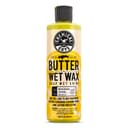
Chemical Guys Butter Wet Wax
A high-oil carnauba that spreads and buffs off with almost no effort, and one of the formulas Chemical Guys names as better suited to heat. Shorter durability than a synthetic, which is the trade you make for a wax that does not fight you on a warm panel.
$19.97View on AmazonPrice as of September 17, 2026. #ad How we’re funded
Best spray option in heat
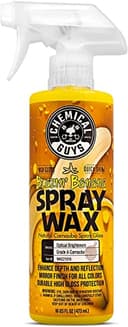
Chemical Guys Blazin' Banana Carnauba Spray Wax
Also named by Chemical Guys as a warm-weather formula. Being a carnauba spray it lays down in a thin even film in seconds, so the flash-off window that ruins a paste application barely applies — and it doubles as a drying aid straight after a wash.
$14.97View on AmazonPrice as of September 17, 2026. #ad How we’re funded
Best panel-at-a-time top-up
Meguiar's Ultimate Quik Wax
A 24 oz synthetic spray at the lowest price here, which is what makes a panel-by-panel approach practical rather than precious. Sprays on and wipes off a still-damp car, and layers over an existing wax or sealant rather than fighting it.
Cold is the other half of the rule
Turtle Wax’s wording covers both ends — direct sunlight or extreme cold — and the cold failure is the mirror image. Below roughly 50°F waxes stiffen, spread unevenly and take a long time to haze, and a paste can become almost unusable. The recommendation is a garage, and it is a good one: a heated or simply enclosed space brings both the panel and the product into range.
If waxing is not practical in your conditions at all, the honest alternative is a product designed for exactly that constraint. A ceramic spray applied on a wet car and rinsed off has almost no working window to get wrong, and a synthetic sealant applied on the right evening lasts long enough that you only need a few good weather windows a year. Planning the job around the forecast is genuinely easier than fighting it.
Frequently asked questions
Can you wax a car in direct sunlight?
You can, but both Chemical Guys and Turtle Wax advise against it. Sun makes the product flash-dry before you have spread it, which leaves streaks, uneven coverage and residue that is hard to remove. Turtle Wax describes the heat as baking the wax onto the surface.
What temperature is best for waxing a car?
Chemical Guys puts the working range at roughly 50 to 85 degrees Fahrenheit and adds the more practical test: check that the panel feels cool to the touch before you apply anything. Air temperature matters less than panel temperature, because dark paint in sun runs far hotter than the air around it.
What happens if you wax a car in the sun?
The solvents evaporate before the wax has leveled, so it dries as a patchy haze rather than a thin even film. Buffing it off takes far more effort, you often end up with streaks and residue in panel gaps and badges, and the extra rubbing on hot paint is itself a way to add fine marring.
How do I fix wax that has dried on too hard?
Get the panel cool and out of the sun first. Then mist a little quick detailer or spray wax onto the dried residue, let it soften for a moment, and buff with a clean plush microfiber. Re-wetting the residue is what makes it release. Never attack it dry with a rough towel — that is how a cosmetic problem turns into swirl marks.
Can you wax a car when it is cold?
Cold is the other end of the same problem. Turtle Wax says never to wax in direct sunlight or extreme cold, and recommends a garage on a cold day. Below roughly 50F most waxes go stiff, spread unevenly and take much longer to haze, and paste waxes in particular become very difficult to apply thinly.
Can you wax a car in the sun if you work panel by panel?
It helps, and it is the right compromise when you genuinely have no shade — do a section at a time, apply thinner than usual, and buff immediately rather than waiting for a haze. A spray wax or carnauba spray is far more forgiving than a paste in these conditions. It is still a worse result than waiting for the evening.
Sources
- Chemical Guys — Why Waxing Your Car In Direct Sunlight Could Be A Mistake — Manufacturer guidance on waxing temperature: sun makes wax flash-dry into streaks and residue, a 50–85°F working range, check the surface is cool to the touch, allow 30–60 minutes in shade to cool, and work early morning or late afternoon (accessed September 18, 2026)
- Turtle Wax — How to Properly Wash and Wax a Car: By Hand or With a Buffer — A second manufacturer saying the same thing independently: "Never attempt to wax in direct sunlight or extreme cold. The heat from direct sunlight will 'bake' the wax onto the car's surface" — use a garage on a cold day or shade on a hot one (accessed September 18, 2026)
- International Detailing Association — Detailing Resources — IDA's public detailing resource library (accessed July 19, 2026)
Keep reading
Best Car Wax
The full comparison, including which formulas are the most forgiving to apply.
See the wax roundupHow to Apply Spray Wax
The panel-at-a-time method that works best when conditions are not ideal.
Read the guideBest Spray Waxes
The quick-cure products that tolerate warm paint better than a paste ever will.
Compare spray waxesHow Often to Wax Your Car
How long each type of protection really lasts, so you can plan the job for good conditions.
Read the guide