How to Protect Car Paint From the Sun
Every other kind of paint damage can be polished out. Sun damage is the one you can only prevent - so the useful question is not which wax, it is what you can actually control, in order.
How this is funded:we earn a commission if you buy through our links, at no extra cost to you. It never changes which product we recommend, and we’ll tell you plainly when we’d skip one. Full disclosure.
The short version
Sun damage is the only kind of paint damage that is genuinely one-way. A swirl can be polished out. A scratch can be filled or compounded. Bonded contamination can be clayed off. But ultraviolet light does not mark the surface of your paint — it breaks the paint down, and once a layer of it has died you can only remove the dead material, never replace it.
DetailingWiki describes the mechanism in a sentence worth remembering: oxidation changes the paint so that “the smooth flat and highly refractive surface changes into a matte surface with a low refractive index. Simply put: less shiny.” That is why an old car in strong sun goes chalky rather than scratched, and why no amount of waxing brings it back once it has gone.
So the useful framing is not “which product blocks UV best.” It is: what can I actually control, in order of effect? The answer has three steps, and only the second one involves buying anything.
Step 1: Where the car parks beats anything in a bottle
This is the part product pages leave out because nobody earns a commission on it. A car that sleeps in a garage receives a tiny fraction of the UV dose of one parked on a south-facing driveway, and no coating closes that gap. Ranked by effect:
A garage or carport is the whole answer if you have one. Any shade at all— the north side of a building, a tree you trust not to drop sap, the far end of a parking lot next to a wall — is the next best thing, and it is free. Orientation matters more than people expect: parking so the windshield and the hood are not facing the afternoon sun spares the two panels that take the heaviest dose and the dash behind them.
A windshield sunshadeis the cheapest genuinely effective upgrade on this page, and it protects the surface that suffers most. A dash sitting under raked glass in summer gets both the UV and a greenhouse, which is why interiors crack long before paint fades — and why there is a whole separate product category for interior UV protectants.
A car cover is the conditional one. Clean, dry and breathable, it helps. Dirty, or thrown over a wet car, it does harm: grit trapped underneath abrades the paint with every gust, and a non-breathable cover holds moisture against the surface. If you cannot keep a cover clean, skip it.
Step 2: Keep a durable layer on the paint — and not any layer
Here is where the product choice genuinely matters, and where most advice is vague. DetailingWiki confirms protection works — “certain protective products seal in the surface well enough to prevent it from oxidizing” — and then ranks the three options in a way that is inconvenient for the wax aisle.
On wax: “a layer of wax will oxidize more then the surface underneath, but it will not last forever because the layer of wax will disintegrate over time.”That is not a criticism — being consumed instead of your clear coat is precisely what a sacrificial layer is for. It just means the layer is gone sooner than you think.
On sealants: a sealant “might offer more protection against oxidation because it uses different ingredients that are less prone to disintegration and deterioration.” On coatings: ceramic coatings “might offer more protection seeing as their hard and tough nature.” And then the line that decides this guide: “these last 2 protective products will also have more effect on UV than wax.”
So if UV is your actual concern — a car that lives outdoors in a hot, bright climate — the honest ranking is coating > sealant > wax, and the gap between “a wax” and “nothing” is still much larger than the gap between wax and ceramic. Bare paint is the only genuinely bad answer. If you are weighing the three against each other on cost and effort rather than UV alone, we lay that out in wax vs sealant vs ceramic coating.
Two details that decide whether the layer actually does its job. First, decontaminate before you protect. DetailingWiki notes that removing surface oxidation “will help protective products such as wax, sealants and coatings to bond better with the surface,” and that dirty paint oxidizes slightly faster because its microscopic hills and valleys increase the effective surface area. A proper decontamination is the difference between a coating that bonds and one that sits on top of a contaminated layer and leaves with it.
Second, do not trust water beading as your gauge. It is the test everyone uses and it is quietly unreliable, because a quick detailer or a drying aid leaves a film of its own. Per DetailingWiki, a detailer “can improve beading and sheeting for a short period of time, mostly because the layer that interacts with the water is actually the quick detailer and not the protective layer underneath,” so “the surface may show good beading and sheeting even though the layer underneath is worn.” Top up on a schedule instead of waiting for beading to fail.
What to use
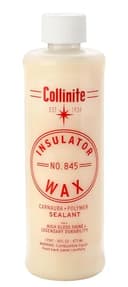
The long-lasting base layer
Collinite 845 Insulator Wax
If you want one traditional product that stays on the car through a summer, this is the durability end of the wax category - a carnauba-plus-polymer formula applied in very thin coats. It is also the cheapest route to a layer that is genuinely still there in two months, which matters more for UV than any single application ever does.
$20.95View on AmazonPrice as of October 19, 2026. #ad How we’re funded
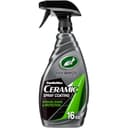
The easy top-up
Turtle Wax Hybrid Solutions Ceramic Spray Coating
An SiO2 spray is the realistic way most people keep a layer on a daily driver, because it goes on in minutes after a wash and needs no cure time or technique. Use it every few washes on top of a durable base rather than as the base itself - the schedule is what protects the paint, not the single strongest product you own.
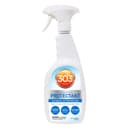
For the trim and plastics that fade first
303 Aerospace Protectant
Paint is rarely the first thing to go. Gold Eagle publishes the only durability figure in this category - protection 'for up to 30-45 days' - and names trim, tires, wiper blades and weather seals among the surfaces, which are exactly the parts that look old long before the paint does. Matte finish, and the maker says to apply out of direct sunlight.
$23.50View on AmazonPrice as of October 19, 2026. #ad How we’re funded
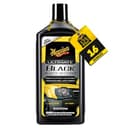
For trim that has already gone gray
Meguiar's Ultimate Black Plastic Restorer, 16 oz
A protectant keeps good trim good; it does not bring faded trim back. This is the cheap, fast restorer for bumpers, moldings, mirror housings and cowlings, and Meguiar's own claim for it is honest about the interval - darkness and shine that 'lasts for weeks' - so treat it as maintenance rather than a permanent fix.
Step 3: Wash in a way that does not thin the barrier
The clear coat is the UV barrier. Everything you do to the paint either preserves it or removes a little of it, and this is the step people accidentally get backwards — washing and polishing a car hard in the name of looking after it, while thinning the only layer standing between ultraviolet light and the color underneath.
Wash often, but wash gently. Contamination and sun are multiplicative: bird droppings and bug splatter etch dramatically faster on hot paint than on cool paint, so getting them off quickly is real protection. Doing it with a gritty mitt or a gas-station brush is not. The two-bucket method exists for exactly this reason, and washing without scratching covers the rest of the technique.
Wash out of direct sun. On a hot panel the water dries before you can dry it, and you trade a sun problem for a hard-water spotting problem. The same physics applies to applying protection — Gold Eagle’s own directions for its protectant say to apply it “out of direct sunlight,” and the reason is identical to why waxing in the sun goes wrong.
Correct sparingly.Polishing is the fix for oxidation that has already happened, and it works — but it works by removing material. That is a budget, not a renewable resource. Our oxidation guide goes through the arithmetic, and the point for this page is simple: a car that gets protected does not need correcting, and a car that gets corrected annually runs out of clear coat.
The parts that fade before your paint does
If you look at any ten-year-old car parked outdoors, the paint is usually the last thing to look tired. What gives it away is gray plastic trim, chalky rubber seals, cloudy headlights and a cracked dash, and all four are the same chemistry happening to less protected materials.
Chemical Guys describes exterior black trim as porous plastic and rubber that goes brittle and discolored under UV, road salt, heat and moisture as the oils leave the surface — and it is blunt about the limit: restorers “will not reverse cracking or pitting.” DetailingWiki puts rubber in the unrecoverable column outright: rubber vulcanization “can not be removed, using a dressing will hide it a bit.”
Which means the trim is where protection pays back fastest, because the material is cheaper to protect and impossible to restore. Do the plastics on the same schedule as the paint. If yours have already faded, a dedicated trim restorer is the product that brings them back, and headlight restoration handles the lenses. Inside the car, the dash takes the hardest dose of all, and the interior protectant roundup covers that surface specifically — including the one published reapplication window anyone in the category is willing to print.
What this looks like as a routine
For a car that lives outdoors in strong sun, the whole program fits in a paragraph. Park in shade whenever the choice exists, and keep a sunshade in the car. Wash every week or two, out of the sun, two buckets, plush drying towel. Put a sealant or coating on the paint twice a year after a proper decontamination, and a ceramic or sealant spray on top every few washes. Do the trim and the rubber seals monthly with a protectant, and the dash at the same time.
For a garaged car, halve all of it. The exposure is a fraction of the outdoor case and the maintenance follows.
And treat the one-way nature of this damage as the reason to bother. Swirls come out. Scratches can be addressed. Sun damage is the kind you only get to prevent.
Frequently asked questions
Does the sun really damage car paint?
Yes, and it is the one form of paint damage you cannot polish away afterwards without removing material. Ultraviolet light and oxygen break down the surface of the top layer so that, as DetailingWiki puts it, 'the smooth flat and highly refractive surface changes into a matte surface with a low refractive index. Simply put: less shiny.' That is oxidation, and on a clear-coated car it means hazy, chalky lacquer; on single-stage paint it means faded pigment. Heat makes it worse by accelerating the chemistry and by baking contamination - bird droppings and bug splatter - into the surface far faster than they would etch in the shade.
Does red car paint fade faster than other colors?
Probably not, and the evidence for the claim does not exist. DetailingWiki addresses this directly: older cars with badly faded paint are most commonly noticed in red, but 'although it is commonly said that red fades the most, there are no statistics that support this claim.' The explanation it offers is a sampling effect - DuPont research found red was among the most popular colors alongside white, black and silver, so there are simply more red cars out there to fade. The variable that genuinely matters is whether the paint has a clear coat at all: fading 'happens mainly to cars that have no clear coat,' because an unprotected pigmented layer reacts differently to light and oxygen than clear lacquer over the top of it does.
Is wax or ceramic coating better for UV protection?
For UV specifically, a sealant or a coating - and DetailingWiki is explicit about the ranking. A wax works, but 'a layer of wax will oxidize more then the surface underneath,' which is exactly what a sacrificial layer is supposed to do; it just means it is consumed faster. A sealant 'might offer more protection against oxidation because it uses different ingredients that are less prone to disintegration and deterioration,' and ceramic coatings 'might offer more protection seeing as their hard and tough nature.' The wiki's conclusion is the line that matters here: 'these last 2 protective products will also have more effect on UV than wax.' A wax is still far better than bare paint - the real failure mode is having nothing on the car at all.
How often should I reapply protection to stop sun damage?
Match the schedule to the product and to where the car sleeps, and top up between full applications. A traditional carnauba wax is a weeks-to-a-few-months product; a synthetic sealant typically runs longer; a true ceramic coating is measured in years but still wants a maintenance spray on top. The practical routine for a car parked outdoors in strong sun is one durable base layer a couple of times a year, plus a ceramic or sealant spray every few washes. One warning worth knowing: do not use water beading as your only test. A quick detailer leaves a thin film of its own that, per DetailingWiki, 'can improve beading and sheeting for a short period of time' so 'the surface may show good beading and sheeting even though the layer underneath is worn.'
Do car covers and sunshades actually help?
They are the highest-leverage thing on this page, because they remove exposure rather than resisting it - and none of this site's product recommendations will out-perform a garage. A windshield sunshade is the cheapest meaningful upgrade for the interior, which bakes harder than the paint does under a raked windshield. A car cover helps if it is clean, dry and breathable, and actively hurts if it is not: grit trapped under a cover rubs with every gust, and a non-breathable cover over a damp car traps moisture against the paint. If you only change one thing, change where the car parks.
Can sun-damaged paint be repaired?
Oxidized paint can be corrected if there is enough clear coat left to work with, because the dead layer is physically removed by abrasion. What cannot be undone is material that has broken down completely - DetailingWiki lists 'surface breakdown' as something that 'can not be removed, it is simply a degradation and disintegration of an object,' which is the case with peeling, flaking clear coat. Correction is also a finite resource: every pass takes clear coat, and clear coat is the UV barrier, so a car cannot be polished indefinitely. If your paint is already chalky, our oxidation guide covers the diagnostic test and the clear-coat budget before you start.
Does washing my car more often protect it from the sun?
Washing protects it from contamination, which the sun then makes much worse - so yes, but indirectly, and only if you wash correctly. Bird droppings and bug splatter etch faster on hot paint, so getting them off quickly matters. What does not help is washing badly: every abrasive shortcut, from a dirty mitt to a gas-station brush, removes a little clear coat, and the clear coat is the thing standing between UV and your color. Wash out of direct sunlight with the two-bucket method, dry with a plush towel, and keep a protective layer on top. Washing in the sun is its own problem - the water dries before you can dry it, and you trade sun damage for hard-water spotting.
Sources
- DetailingWiki — What is oxidation — Detailing reference wiki (Vinnie van Rooij): oxidation changes the paint surface so "the smooth flat and highly refractive surface changes into a matte surface with a low refractive index. Simply put: less shiny"; fading "happens mainly to cars that have no clear coat," and while red is said to fade most, "there are no statistics that support this claim" - DuPont research simply found red was among the most popular colors; prevention is possible because "certain protective products seal in the surface well enough to prevent it from oxidizing," but "a layer of wax will oxidize more then the surface underneath," a sealant "might offer more protection against oxidation because it uses different ingredients that are less prone to disintegration," ceramic coatings "might offer more protection seeing as their hard and tough nature," and "these last 2 protective products will also have more effect on UV than wax"; two forms cannot be reversed at all - "surface breakdown" and "rubber vulcanization," where "using a dressing will hide it a bit" (accessed October 18, 2026)
- Gold Eagle (303 Products) — 303 Automotive Protectant — Manufacturer product page for the protectant this site's interior roundup picks first: "Originally engineered for aerospace and aviation applications," it "provides superior protection against harmful UV rays that can cause discoloration, fading, and cracking of vinyl, rubber and plastic surfaces"; it "dries to a clean, matte finish - no slick residue" and "does not contain any harmful silicone oils, which can dry out and damage surfaces"; the published durability figure is "One application provides long-lasting protection for up to 30-45 days"; directions are to apply "Out of direct sunlight"; and the published exclusion list is "DO NOT use on unfinished leathers (such as suede), fabrics, floorings, clear plastics, gauge panels, or headlights" (accessed October 18, 2026)
- Chemical Guys — Revive Your Car's Exterior: Best Products to Restore Black Trim — Manufacturer guidance: black trim is porous plastic or rubber that goes brittle and discolored under UV, road salt, heat and moisture as oils leave the surface; "Most trim restorers last anywhere from a few weeks to a couple of months"; reapply every 3-4 weeks in sunny, arid regions; clean with an APC or degreaser and dry first; apply in shade; test on an inconspicuous area; restorers will not reverse cracking or pitting (accessed September 20, 2026)
- DetailingWiki — What is a quick detailer — Detailing reference wiki (Vinnie van Rooij): a QD works "by leaving a very small layer of wax and or polymers on top of the existing layer"; it is normally "sprayed on a micro fibre towel and then smeared across the surface," and spraying straight onto the panel "is rarely recommended" because product can dry in places a towel cannot reach; the documented downside is that a QD "can improve beading and sheeting for a short period of time, mostly because the layer that interacts with the water is actually the quick detailer and not the protective layer underneath," so "the surface may show good beading and sheeting even though the layer underneath is worn"; 'boosting' a wax "would imply that it revives the layer of wax underneath, which is not the case"; concentrates meant for dilution should be diluted with demineralized water to avoid water spotting (accessed October 11, 2026)
Keep reading
Best Paint Sealants
The durability tier above wax - synthetic layers that resist breakdown for longer, which is exactly what a UV layer needs to do.
See the sealantsBest Interior Protectants for Cars
The dash bakes harder than the paint does. The UV layer for vinyl, rubber and plastic, sorted by the finish it leaves.
See the protectantsHow to Remove Oxidation From Car Paint
For paint that has already gone chalky - the damp-towel diagnostic and the clear-coat budget that limits how often you can correct it.
Read the guideHow to Maintain a Ceramic Coating
A coating is the strongest UV layer you can put on paint, and it still needs upkeep. The maintenance routine that keeps it working.
Read the guide