TWO BUCKET CLUB

Best Long-Lasting Car Wax (2026)

Sorted on durability and nothing else. Where a maker publishes a figure we print it; where a maker publishes only the word months, we say so - because that is the difference between a claim you can hold them to and marketing.

By Stephen V.Last updated How we pick

Buy Collinite 845 Insulator Wax.It is the most durable traditional wax we stock and it costs less than most supermarket paste waxes — a carnauba-plus-polymer liquid that routinely outlasts everything else in its class. It is for someone who wants one spring application to still be working in autumn and does not mind learning one habit: thin coats. The budget pick is Turtle Wax Hybrid Solutions Pro to the Max Graphene Liquid Wax, under ten dollars — the cheapest product here that is engineered for longevity rather than for gloss alone.

Now the honest part, because this is a category built on claims nobody can check. No wax on this page comes with a verifiable durability figure, and we have not tested any of them — we own no units and run no panels. What we have done instead is read what each maker publishes and rank on that, printing nothing where a maker publishes nothing. Several say “months” and leave it there. That vagueness is itself useful information, and we would rather tell you a figure does not exist than invent one.

One structural point that outranks every product choice. Durability is decided more by preparation and coat thickness than by which bottle you buy. Wax applied over bonded contamination sits on the contamination, not the clear coat, and comes off with it. Wax applied thick does not last longer — it just takes longer to buff and is more likely to be removed unevenly. If you want the category sorted on shine or on ease instead, start at best car wax or best easy-to-apply car wax.

How this is funded:we earn a commission if you buy through our links, at no extra cost to you. It never changes which product we recommend, and we’ll tell you plainly when we’d skip one. Full disclosure.

Quick picks

Ranked on published specs, value and buyer fit. Select a row to jump to the full write-up. We have not lab-tested these products — here is exactly what we do instead.

#ProductBest forPrice
1
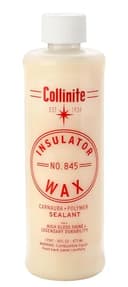
Collinite 845 Insulator Wax

Collinite 845 Insulator Wax

The durability champion of traditional waxes: a carnauba-plus-polymer liquid that routinely outlasts everything else in this class. It's a little fussier to apply thinly, but few waxes protect this long per coat.

Best overall
$17.57View on Amazon

$20.9516% off

Price as of November 23, 2026. #ad How we’re funded

2
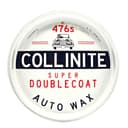
Collinite 476 Super DoubleCoat Wax

Collinite 476 Super DoubleCoat Wax

A carnauba-plus-polymer paste with a reputation built almost entirely on how long it lasts through weather. It is harder work to apply than a liquid sealant, and it is the one people come back to after chasing easier products.

Longest-lasting paste
$19.95View on Amazon

$21.959% off

Price as of November 23, 2026. #ad How we’re funded

3
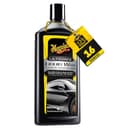
Meguiar's Ultimate Liquid Wax

Meguiar's Ultimate Liquid Wax

The best all-round starter wax: a synthetic polymer sealant that wipes on and off easily, tolerates being applied in less-than-perfect conditions, and lasts meaningfully longer than a traditional carnauba. Hard to go wrong here.

Best synthetic liquid
$28.19View on Amazon

Price as of November 23, 2026. #ad How we’re funded

4
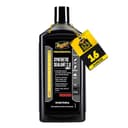
Meguiar's Professional M21 Synthetic Sealant 2.0

Meguiar's Professional M21 Synthetic Sealant 2.0

From Meguiar's professional line rather than the consumer shelf, which shows in how it behaves: a thin, even coat that wipes off cleanly and is designed to be layered, so a second coat an hour later is part of the plan rather than a mistake.

Best if you will step up to a sealant
$19.34View on Amazon

Price as of November 23, 2026. #ad How we’re funded

5
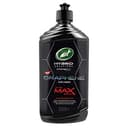
Turtle Wax Hybrid Solutions Pro to the Max Graphene Liquid Wax

Turtle Wax Hybrid Solutions Pro to the Max Graphene Liquid Wax

The cheap way to find out whether you like how graphene behaves on your paint. It is a liquid wax with graphene in it rather than a coating, so judge it against waxes on effort and against coatings on nothing at all.

Best on a budget
$9.00View on Amazon

$11.9024% off

Price as of November 23, 2026. #ad How we’re funded

The picks in full

#1Best overall

Collinite 845 Insulator Wax

The durability champion of traditional waxes: a carnauba-plus-polymer liquid that routinely outlasts everything else in this class. It's a little fussier to apply thinly, but few waxes protect this long per coat.

What we like

  • Outstanding durability for a wax — months of real protection
  • Excellent value; a bottle lasts years of occasional use
  • Great on daily drivers that live outside

Trade-offs

  • Must be applied in very thin coats or it's hard to buff off
  • Old-school application feel; less beginner-forgiving
TypeCarnauba + polymer liquid wax
Standout specLong-durability formula
Size16 oz
Best forLongest-lasting protection from a traditional wax
Price tierBudget

Cost-to-use note. Very thin coats are essential; a single bottle can last for years, giving it excellent cost-per-application.

Specs read from the product listing, on July 19, 2026. “Not listed” means the listing does not state that figure.

#2Longest-lasting paste

Collinite 476 Super DoubleCoat Wax

A carnauba-plus-polymer paste with a reputation built almost entirely on how long it lasts through weather. It is harder work to apply than a liquid sealant, and it is the one people come back to after chasing easier products.

What we like

  • Carnauba and polymer blend known for long weather durability
  • A 9 oz tin covers many applications - the cost per coat is low
  • Hydrophobic beading that survives repeated washing

Trade-offs

  • Paste application takes real effort compared with a liquid
  • Apply thin - a heavy coat is difficult to buff off
TypeCarnauba + polymer paste sealant
Standout specCarnauba/polymer blend
Size9 fl oz
Best forMaximum durability through a hard winter
Price tierBudget

Cost-to-use note. A 9 oz tin applied thinly covers a car many times over, which is why the cost per application is among the lowest of any protection here.

Specs read from the product listing, on August 18, 2026. “Not listed” means the listing does not state that figure.

#3Best synthetic liquid

Meguiar's Ultimate Liquid Wax

The best all-round starter wax: a synthetic polymer sealant that wipes on and off easily, tolerates being applied in less-than-perfect conditions, and lasts meaningfully longer than a traditional carnauba. Hard to go wrong here.

What we like

  • Forgiving to apply — won't stain trim white the way some waxes do
  • Synthetic durability outlasts a pure carnauba
  • Strong gloss and water beading for the money

Trade-offs

  • Synthetic 'wax' purists may prefer a warmer carnauba glow
  • Still months, not years, of protection versus a coating
TypeSynthetic polymer liquid wax/sealant
Standout specPolymer sealant, easy on/off
Size16 oz
Best forMost people's first wax — easy, durable, glossy
Price tierBudget

Cost-to-use note. A thin coat is all it needs; one bottle covers many applications. Reapply every few months for continuous protection.

Specs read from the product listing, on July 19, 2026. “Not listed” means the listing does not state that figure.

#4Best if you will step up to a sealant

Meguiar's Professional M21 Synthetic Sealant 2.0

From Meguiar's professional line rather than the consumer shelf, which shows in how it behaves: a thin, even coat that wipes off cleanly and is designed to be layered, so a second coat an hour later is part of the plan rather than a mistake.

What we like

  • Professional-line product designed to be layered
  • Wipes off cleanly without the dusting cheap sealants cause
  • Ideal base coat under a carnauba topper for depth plus durability

Trade-offs

  • Body-shop-safe formulations are unremarkable on gloss alone
  • Priced above consumer-line sealants of the same size
TypeSynthetic paint sealant
Standout specLayerable professional-line sealant
Size16 oz
Best forLayering a durable base under a wax
Price tierMid

Specs read from the product listing, on August 18, 2026. “Not listed” means the listing does not state that figure.

#5Best on a budget

Turtle Wax Hybrid Solutions Pro to the Max Graphene Liquid Wax

The cheap way to find out whether you like how graphene behaves on your paint. It is a liquid wax with graphene in it rather than a coating, so judge it against waxes on effort and against coatings on nothing at all.

What we like

  • Lowest-cost graphene product here by a distance
  • Applies like any liquid wax - no special technique
  • Widely stocked in parts stores

Trade-offs

  • A wax with graphene in it, not a coating - expect wax-like life
  • Little of the multi-year durability the category is marketed on
TypeGraphene-infused liquid wax
Standout specGraphene liquid wax
Size14 oz
Best forTrying graphene for the price of a bottle of wax
Price tierBudget

Specs read from the product listing, on August 18, 2026. “Not listed” means the listing does not state that figure.

What actually makes a wax last

Four things, in roughly this order of importance. Only the fourth is the product.

1. What is underneath it

A wax layer is microns thick and it bonds to whatever is on top of the paint. If that is bonded iron fallout and tree-sap residue, the wax bonds to the contamination and leaves when the contamination does. This is the single biggest reason two people get wildly different durability from the same bottle. Decontaminate first: how to decontaminate car paint and how to use a clay bar cover the two routes.

2. How thin the coat is

Counter-intuitive and non-negotiable. A thick coat does not last longer; the wax that bonds to the paint is the bottom few molecules, and everything above that is residue you have to remove. With Collinite in particular, a thick coat is genuinely difficult to buff off and is the complaint behind almost every bad review of it. Less product, more panels.

3. The conditions when you apply it

Chemical Guys publishes a 50–85°F working range, says sunlight makes wax flash-dry into streaks and residue, and recommends checking that the surface is cool to the touch and allowing 30 to 60 minutes in shade for a hot panel to cool. Turtle Wax states the same thing independently: never wax in direct sunlight or extreme cold, because direct sun will bake the wax onto the surface. A wax applied badly in the sun will not reach its stated life no matter which one you bought.

4. The chemistry

Last, and genuinely fourth. Broadly: a pure carnauba gives the warmest look and the shortest life; a synthetic polymer sealant gives the longest life and a cooler, glassier look; a blend sits between. Collinite’s products are dense blends, which is why they behave more like sealants than like show waxes. Graphene and SiO2-infused waxes are a newer branch making longevity their selling point. Carnauba vs ceramic and wax vs sealant vs ceramic coating lay the families out properly.

Who each pick is for

  • Collinite 845 Insulator Wax— for the person who wants maximum durability per dollar and will accept one quirk. It is a liquid, dense, and it wants genuinely thin coats; applied that way it is the longest-serving recommendation in this category among detailers, and it is cheap. Applied thick it is a chore. The look is a clean wet gloss rather than a deep warm glow.
  • Collinite 476 Super DoubleCoat— for the same buyer who prefers a paste. A carnauba-plus-polymer paste whose reputation rests almost entirely on how long it lasts through weather, which is why it is the pick for a hard winter as much as a long summer. A paste is slower and messier than a liquid, and that is the whole trade.
  • Meguiar’s Ultimate Liquid Wax— for most people, honestly. A synthetic polymer that wipes on and off, tolerates imperfect conditions, will not stain plastic trim white, and lasts meaningfully longer than a pure carnauba. It does not match the Collinites on longevity, and it is the most expensive bottle here.
  • Meguiar’s M21 Synthetic Sealant 2.0— for the buyer whose real question is “what lasts longest” rather than “what wax lasts longest”. A professional-line sealant at a consumer price, and the honest answer to the brief: a synthetic sealant outlasts a wax. It looks cooler and glassier than carnauba, with no warmth at all.
  • Turtle Wax Pro to the Max Graphene Liquid Wax— our budget pick. A graphene-infused liquid wax sold on longevity and water behaviour for under ten dollars, which makes it the cheapest serious entry into this category. Turtle Wax publishes no durability figure we can hold them to, so treat the claim as directional and judge it by when beading stops.

The claims problem, and how to test durability yourself

Every maker in this category says their product lasts a long time, and almost none of them publishes a number attached to a test method. There is no industry standard for wax durability, no required disclosure, and no neutral referee. So the only durability figure that will ever mean anything to you is the one you measure on your own car in your own climate.

The test is simple and costs nothing. After a wash, rinse one panel and watch the water. On fresh wax it pulls into tight beads and sheets off fast. As the layer thins, beads flatten and spread; when water lies flat and the panel stays wet, the wax is functionally gone whatever the calendar says. Write the application date on a strip of tape inside the fuel door and you will have a real figure for your car in one season.

Two things will shorten any figure you get. Automatic car washes with harsh detergents strip wax quickly, and so does hot sun on a parked car. AAA’s guidance is that industry experts recommend washing roughly every two weeks and waxing twice a year, which is a reasonable default for a daily driver in a temperate climate. In a hot climate, plan on more often — see best car wax for hot climates.

If maximum durability is really the goal

Then the honest answer may not be a wax at all, and we would rather say that than sell you one. The durability ladder runs roughly: carnauba wax, then blended wax, then synthetic sealant, then ceramic spray, then a full DIY ceramic coating. Each step up lasts longer and asks more of your preparation.

A paint sealant is the step most people should take: longer life than wax, applied the same way, no new skill required. A ceramic spray coating goes further again and several apply like a spray wax. A DIY ceramic coatingis the longest-lived option by a wide margin and also the least forgiving — the prep, not the chemistry, is the hard part.

Our view: the best long-lasting protection is the one you renew on schedule. Collinite 845 reapplied each spring and autumn will protect paint better across five years than a coating applied once over unprepared paint.

Our call

Buy Collinite 845 if durability is the whole brief and you can commit to thin coats. Best protection per dollar in this category, comfortably.

Buy Collinite 476 if you prefer a paste and will do the two coats its name asks for.

Buy Meguiar’s Ultimate Liquid Wax if you want very good durability with none of the technique, and a product that forgives a trim edge.

Buy the M21 sealant if you are willing to stop calling it wax. It is the longest-lasting thing on this page.

Buy the Turtle Wax graphene liquid if you want to spend under ten dollars and still buy for longevity rather than shine.
Frequently asked questions

What is the longest-lasting car wax?

Among traditional waxes, Collinite 845 Insulator Wax is the one detailers reach for when durability is the brief, and it is cheap for what it does - a dense synthetic-carnauba blend originally made as an electrical insulating coating, which is why it sheds water so persistently. Two caveats we will not hide. First, it only reaches its potential in thin coats; applied thick it is hard to buff and performs no better. Second, if you will accept a synthetic sealant rather than a wax, a sealant like Meguiar's M21 lasts longer still. We have not tested any of these ourselves and no maker in this category publishes a durability figure attached to a test method.

How long should a car wax actually last?

The honest range is weeks to months, and the spread is mostly down to you rather than the product. A spray wax is a per-wash or every-few-washes product. A pure carnauba is realistically weeks to a couple of months. A blended or synthetic wax is a seasonal product. A synthetic sealant pushes past that. Nobody in this category publishes a verifiable figure, so rather than trust a label, test it: when rinse water lies flat on the panel instead of beading, the layer has gone. Note the application date on tape inside the fuel door and you will have a real number for your car in one season.

Does applying a thicker coat of wax make it last longer?

No, and this is the most common and most costly misunderstanding in the category. Only the thin layer in contact with the clear coat bonds to it; everything above that is residue you then have to remove, and a thick coat is harder to buff evenly, so you are more likely to leave patches and strip others. With a dense wax like Collinite, a thick coat is the single biggest cause of bad reviews. Use noticeably less product than feels right and cover more panels with it.

Is a sealant better than wax if I want long-lasting protection?

Yes, generally, and it is worth being plain about it. A synthetic sealant is engineered polymers that cross-link on the paint; a carnauba wax is a natural oil-and-wax film. The sealant lasts longer per application, resists detergents better and holds up to heat better. What you give up is the warm, deep glow carnauba gives dark paint - a sealant looks cooler and glassier. That is why Meguiar's M21 is on this page even though it is not a wax, and why wax vs sealant vs ceramic coating is worth reading before you buy.

How often do I need to reapply a long-lasting wax?

Twice a year is the sensible default for a daily driver in a temperate climate, which matches AAA's guidance of waxing roughly twice a year alongside washing about every two weeks. Shorten that if the car lives outside in strong sun, sees road salt, or goes through automatic washes with harsh detergents - all three strip wax faster than time does. Lengthen it only on evidence: the beading test tells you where you actually are, and it costs nothing to check after a wash.

Can I layer waxes to make protection last longer?

Within one product line, sometimes yes - Collinite 476 is literally named Super DoubleCoat and is designed to be layered, with the second coat where its durability claim lives. Across brands it is unpredictable: a second product may bond to the first layer rather than to the paint, and if that first layer fails they both go. The dependable version of layering is a sealant as a base with a wax on top for looks, applied in that order and allowed to cure in between. Mixing three brands of wax does not compound their claims.

Will a long-lasting wax protect against UV and oxidation?

Partly, and less well than a sealant or a coating. DetailingWiki's position is that certain protective products seal the surface well enough to prevent oxidation, but that a layer of wax will itself oxidize more than the surface underneath it, while a sealant uses ingredients less prone to disintegration and a ceramic coating is harder and tougher still - and that those last two have more effect on UV than wax does. So wax is real protection that needs renewing, not a permanent UV barrier. If sun damage is your specific concern, a sealant or coating is the better buy.

Sources

  • Chemical Guys — Why Waxing Your Car In Direct Sunlight Could Be A Mistake — Manufacturer guidance on waxing temperature: sun makes wax flash-dry into streaks and residue, a 50–85°F working range, check the surface is cool to the touch, allow 30–60 minutes in shade to cool, and work early morning or late afternoon (accessed September 18, 2026)
  • Turtle Wax — How to Properly Wash and Wax a Car: By Hand or With a Buffer — A second manufacturer saying the same thing independently: "Never attempt to wax in direct sunlight or extreme cold. The heat from direct sunlight will 'bake' the wax onto the car's surface" — use a garage on a cold day or shade on a hot one (accessed September 18, 2026)
  • AAA (The Auto Club Group) — How Often Should You Wash Your Car? — AAA: "Industry experts recommend washing your car about every two weeks"; bird droppings, dead bugs and tree sap are highly acidic and damage paint if left too long; salt exposure means washing more often; waxing twice a year (accessed September 18, 2026)
  • DetailingWiki — What is oxidation — Detailing reference wiki (Vinnie van Rooij): oxidation changes the paint surface so "the smooth flat and highly refractive surface changes into a matte surface with a low refractive index. Simply put: less shiny"; fading "happens mainly to cars that have no clear coat," and while red is said to fade most, "there are no statistics that support this claim" - DuPont research simply found red was among the most popular colors; prevention is possible because "certain protective products seal in the surface well enough to prevent it from oxidizing," but "a layer of wax will oxidize more then the surface underneath," a sealant "might offer more protection against oxidation because it uses different ingredients that are less prone to disintegration," ceramic coatings "might offer more protection seeing as their hard and tough nature," and "these last 2 protective products will also have more effect on UV than wax"; two forms cannot be reversed at all - "surface breakdown" and "rubber vulcanization," where "using a dressing will hide it a bit" (accessed October 18, 2026)

Keep reading