TWO BUCKET CLUB

Best Wet/Dry Vacs for Car Detailing (2026)

A wet/dry vac is the only vacuum that can finish the job - the dry reset and the water you have to pull back out afterwards. Sorted on drum size, hose geometry and wet pickup, not on peak-horsepower numbers nobody can compare.

By Stephen V.Last updated How we pick

Buy the RIDGID 4-gallon portable wet/dry vac if you only want to make this decision once — it is the largest drum here that one person can still carry around a car, and the extra capacity is what stops a genuinely dirty interior becoming a two-session job. The budget pick is the CRAFTSMAN 2.5-gallon, which does the same work in a smaller drum for roughly a third of the money. If you already own DEWALT 20V MAX batteries, the DCV581H is the only pick here that runs cordless or corded. And whichever machine you buy, the accessory that decides whether you enjoy using it is the hose — see the last two rows.

This page is deliberately narrower than our main car vacuum roundup, which also ranks 12V plug-ins and cordless handhelds. Everything below is a wet/dry machine, because wet pickup is the one capability that separates a vacuum that cleans a car from a vacuum that finishes one. Shampoo a seat, extract a spilled drink, or rinse a set of carpet mats and you have put water into a sealed box — and the US EPA’s mold guidance is that wet material should be dried within 24 to 48 hours. A dry-only vacuum cannot help you hit that window. A wet/dry vac is the cheapest machine that can.

It is also why “home and car” is such a common way to search for this: one 2.5 to 4-gallon drum handles the footwells, the garage floor, the sawdust and the washing-machine overflow. Future Market Insights tracks portable car vacuums as a growth segment on convenience, and that is real — but convenience is what the handheld category sells. This category sells capability. Below, every spec is read from the listing, anything the listing does not state renders “Not listed,” and no air-watt or CFM figure is invented, because none of these makers publishes a comparable one for these models.

How this is funded:we earn a commission if you buy through our links, at no extra cost to you. It never changes which product we recommend, and we’ll tell you plainly when we’d skip one. Full disclosure.

Quick picks

Ranked on published specs, value and buyer fit. Select a row to jump to the full write-up. We have not lab-tested these products — here is exactly what we do instead.

#ProductBest forPrice
1
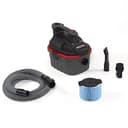
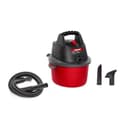
RIDGID 4-Gallon Portable Wet/Dry Vac (4000RV)

RIDGID 4-Gallon Portable Wet/Dry Vac (4000RV)

The sweet-spot car vacuum: a compact wet/dry shop vac with enough suction to actually pull debris out of seat seams and floor mats, small enough to carry around the car, and with detailing attachments available. This is what most home detailers should own.

Best overall
$125.45View on Amazon

$147.6015% off

Price as of November 20, 2026. #ad How we’re funded

2
CRAFTSMAN 2.5-Gallon Wet/Dry Shop Vac

CRAFTSMAN 2.5-Gallon Wet/Dry Shop Vac

A tidy little 2.5-gallon shop vac that's easy to carry and store, with enough peak power for interior work. A good pick if the RIDGID is more vac than you want and the 12V units are too weak.

Best on a budget
$49.99View on Amazon

Price as of November 20, 2026. #ad How we’re funded

3
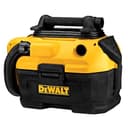
DEWALT DCV581H 20V MAX Wet/Dry Vacuum (cordless or corded)

DEWALT DCV581H 20V MAX Wet/Dry Vacuum (cordless or corded)

The pick if you already own DeWalt 20V batteries: genuinely cordless freedom around the car, with a mains lead as the fallback for when the battery dies halfway through a footwell. It is sold as a bare tool, so the sticker price is the vacuum only.

Best cordless
$149.00View on Amazon

$177.5816% off

Price as of November 20, 2026. #ad How we’re funded

4
Armor All 2.5-Gallon Utility Wet/Dry Vac

Armor All 2.5-Gallon Utility Wet/Dry Vac

A car-focused small wet/dry vac that usually ships with detailing attachments in the box — the crevice and brush tools you'd otherwise buy separately. A convenient one-box interior-cleaning solution.

Best attachments in the box
$61.08View on Amazon

$75.9920% off

Price as of November 20, 2026. #ad How we’re funded

5
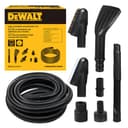
DEWALT 8-Piece Car Detailing Vacuum Hose Accessory Kit (DXVA13-0801)

DEWALT 8-Piece Car Detailing Vacuum Hose Accessory Kit (DXVA13-0801)

The upgrade that turns a shop vac from a garage tool into a car tool, and the one kit here whose fitment problem is solved in the box. The published contents are a 1-1/4 in x 14.75 ft hose, a soft bristle brush, a stiff bristle brush, a claw utility nozzle, a flexible crevice tool, and adapters, with the maker stating it fits wet/dry vacs with hose ports from 1-1/4 in to 2-1/2 in. A stock 2-1/2 in hose and floor nozzle cannot get into a seat rail; this drops the business end to a slim hose with car-shaped tools, and everything after that is easier.

Best hose upgrade
$43.99View on Amazon

$59.9927% off

Price as of November 20, 2026. #ad How we’re funded

6
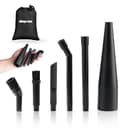
Shop-Vac Micro Cleaning Nozzle Kit (6-piece)

Shop-Vac Micro Cleaning Nozzle Kit (6-piece)

The cheapest meaningful improvement to any shop vac used on a car. Six miniature nozzles that fit a standard 1-1/4 in hose and get into vents, seat rails, console seams and the gap between the seat and the center tunnel where every coin in your life has gone.

Best cheap fix
$7.99View on Amazon

$9.9920% off

Price as of November 20, 2026. #ad How we’re funded

The picks in full

#1Best overall

RIDGID 4-Gallon Portable Wet/Dry Vac (4000RV)

The sweet-spot car vacuum: a compact wet/dry shop vac with enough suction to actually pull debris out of seat seams and floor mats, small enough to carry around the car, and with detailing attachments available. This is what most home detailers should own.

What we like

  • Strong suction that genuinely lifts embedded grit
  • Handles wet spills as well as dry debris
  • Compact and portable versus a full-size shop vac

Trade-offs

  • Corded — you're managing a hose and a cord
  • Stock nozzle is wide; add a detailing kit for tight spots
TypePortable wet/dry shop vacuum
Standout spec4-gallon wet/dry
Size4 gal
Best forThe one vacuum most home detailers should buy
Price tierMid

Specs read from the product listing, on July 19, 2026. “Not listed” means the listing does not state that figure.

#2Best on a budget

CRAFTSMAN 2.5-Gallon Wet/Dry Shop Vac

A tidy little 2.5-gallon shop vac that's easy to carry and store, with enough peak power for interior work. A good pick if the RIDGID is more vac than you want and the 12V units are too weak.

What we like

  • Compact and light — easy to move around the car
  • Enough suction for real interior cleaning
  • Wet/dry capability for spills

Trade-offs

  • Small 2.5-gallon drum fills quickly on a messy car
  • Corded, with a shorter hose than larger units
TypeCompact wet/dry shop vacuum
Standout spec2.5-gallon, 2.5 peak HP
Size2.5 gal
Best forA small, storable wet/dry vac for tight garages
Price tierBudget

Specs read from the product listing, on July 19, 2026. “Not listed” means the listing does not state that figure.

#3Best cordless

DEWALT DCV581H 20V MAX Wet/Dry Vacuum (cordless or corded)

The pick if you already own DeWalt 20V batteries: genuinely cordless freedom around the car, with a mains lead as the fallback for when the battery dies halfway through a footwell. It is sold as a bare tool, so the sticker price is the vacuum only.

What we like

  • Runs on a 20V MAX battery or plugs in — the only pick here that does both
  • Ships with a HEPA filter, a wide gulper nozzle and a crevice tool
  • Wet/dry capable, with a washable, reusable filter

Trade-offs

  • Battery sold separately — the listing is tool-only
  • 2-gallon drum fills quickly on a genuinely dirty car
TypeCordless/corded 20V MAX wet/dry vacuum
Standout spec2-gallon, 20V MAX battery or corded (tool only)
Size2 gal
Best forDeWalt battery owners who want to ditch the cord
Price tierMid

Specs read from the product listing, on September 5, 2026. “Not listed” means the listing does not state that figure.

#4Best attachments in the box

Armor All 2.5-Gallon Utility Wet/Dry Vac

A car-focused small wet/dry vac that usually ships with detailing attachments in the box — the crevice and brush tools you'd otherwise buy separately. A convenient one-box interior-cleaning solution.

What we like

  • Often includes car-detailing nozzles in the box
  • Compact 2.5-gallon size, easy to store
  • Wet/dry capability for spills

Trade-offs

  • Suction trails the RIDGID on ground-in grit
  • Small drum fills fast
TypeCompact utility wet/dry vac
Standout spec2.5-gallon, detailing nozzles
Size2.5 gal
Best forA one-box vacuum-plus-attachments interior kit
Price tierBudget

Specs read from the product listing, on July 19, 2026. “Not listed” means the listing does not state that figure.

#5Best hose upgrade

DEWALT 8-Piece Car Detailing Vacuum Hose Accessory Kit (DXVA13-0801)

The upgrade that turns a shop vac from a garage tool into a car tool, and the one kit here whose fitment problem is solved in the box. The published contents are a 1-1/4 in x 14.75 ft hose, a soft bristle brush, a stiff bristle brush, a claw utility nozzle, a flexible crevice tool, and adapters, with the maker stating it fits wet/dry vacs with hose ports from 1-1/4 in to 2-1/2 in. A stock 2-1/2 in hose and floor nozzle cannot get into a seat rail; this drops the business end to a slim hose with car-shaped tools, and everything after that is easier.

What we like

  • Long 1-1/4 in hose (stated 14.75 ft) reaches the far footwell without moving the vacuum
  • Adapters included for 1-1/4 in, 1-7/8 in and 2-1/2 in ports, so the fitment guesswork the RIDGID-only kit had is gone
  • Two brushes at different stiffness plus a flexible crevice tool - the tools a car actually needs, not a floor nozzle

Trade-offs

  • Costs a meaningful fraction of a small shop vac on its own
  • Narrower hose means lower airflow, so it is a detailing hose, not a general one
  • The listing says 'compatible with most' wet/dry vacs - confirm your port is one of the three stated sizes before ordering
TypeVacuum hose and nozzle accessory kit
Standout spec8 pieces; 1-1/4 in x 14.75 ft hose; adapters for 1-1/4, 1-7/8 and 2-1/2 in ports
SizeNot listed
Best forMaking any 1-1/4 in, 1-7/8 in or 2-1/2 in port wet/dry vac usable inside a car
Price tierMid

Specs read from the product listing, on September 20, 2026. “Not listed” means the listing does not state that figure.

#6Best cheap fix

Shop-Vac Micro Cleaning Nozzle Kit (6-piece)

The cheapest meaningful improvement to any shop vac used on a car. Six miniature nozzles that fit a standard 1-1/4 in hose and get into vents, seat rails, console seams and the gap between the seat and the center tunnel where every coin in your life has gone.

What we like

  • Costs less than a bottle of soap and fixes the single biggest shop-vac limitation
  • Standard 1-1/4 in fitment, so it works with most wet/dry vacs and not just Shop-Vac
  • Six shapes covers the awkward geometry inside a modern cabin

Trade-offs

  • Tiny openings clog on anything larger than grit — vacuum the loose stuff first
  • Airflow drops sharply through a micro nozzle; it is a detail tool, not a main one
  • Small parts, easy to lose in a drawer
TypeMicro vacuum nozzle set
Standout spec6 pieces; 1-1/4 in fitment
SizeNot listed
Best forVents, seams and seat rails, on a shop vac you already own
Price tierBudget

Specs read from the product listing, on September 3, 2026. “Not listed” means the listing does not state that figure.

Who each pick is for

  • RIDGID 4-Gallon Portable Wet/Dry Vac (4000RV)— for the owner who wants one machine for the car, the garage and the spill under the sink. Four gallons is the practical ceiling for something you carry around a vehicle rather than drag; the honest cost is that it is corded, so you are managing a hose and a cable at the same time, and the stock nozzle is too wide for anything inside a cabin.
  • CRAFTSMAN 2.5-Gallon Wet/Dry Shop Vac— for a tight garage, an apartment storage closet, or anyone who wants real suction without the RIDGID’s footprint. Our budget pick. The 2.5-gallon drum fills fast on a neglected car and the hose is shorter, which means moving the machine more often.
  • DEWALT DCV581H 20V MAX— for people already on the DEWALT 20V platform. It runs on a battery or on mains power, which is the only genuinely cordless-but-not-limited option on this page. Two caveats that matter: the listing is tool-only, so the battery is a separate purchase, and the 2-gallon drum is the smallest here.
  • Armor All 2.5-Gallon Utility Wet/Dry Vac— for someone who wants the car nozzles in the same box as the vacuum instead of ordering them later. That is a real convenience, and the trade is honest: suction trails the RIDGID on ground-in grit, and the small drum fills just as quickly as the CRAFTSMAN’s.
  • DEWALT 8-Piece Car Detailing Vacuum Hose Kit (DXVA13-0801) — for anyone whose vacuum came with a 2-1/2 in hose and a floor nozzle. The published contents are a 1-1/4 in x 14.75 ft hose, a soft brush, a stiff brush, a claw utility nozzle, a flexible crevice tool and adapters, with DEWALT stating fitment from 1-1/4 in to 2-1/2 in ports. It costs a meaningful fraction of a small shop vac, and a narrower hose carries less air — that is the trade for reaching a seat rail at all.
  • Shop-Vac Micro Cleaning Nozzle Kit (6-piece)— for the person who already owns a vacuum with a standard 1-1/4 in hose and simply cannot get into the vents and seams. The cheapest meaningful upgrade on this page. Micro openings clog on anything bigger than grit, so it is a finishing tool rather than a main one.

How to choose a wet/dry vac for car detailing

1. Hose geometry decides this, not suction

Almost every complaint about using a shop vac on a car is a geometry complaint wearing a suction costume. A 2-1/2 in hose with a 14 in floor nozzle physically cannot enter a seat rail, the slot beside the center console, the trough at the bottom of a door card, or a dashboard vent — and those four places hold most of what you are trying to remove. Dropping to a 1-1/4 in hose with car-shaped tools fixes a problem that no amount of extra motor power addresses.

That is why two accessory kits appear on a list of vacuums. Check your machine’s port size before you buy either one — fitment, not quality, is the usual reason an accessory kit gets returned. Our shop vac detailing setups page costs out the full combinations end to end.

2. Match the drum to the mess, not to the specification sheet

Drum capacity is the spec that actually changes your afternoon. A 2-gallon or 2.5-gallon drum is plenty for a maintained car vacuumed every couple of weeks. On a car that has carried kids, dogs or a building project, a small drum means stopping to empty mid-job — and the stop is where people quit. Four gallons buys you one uninterrupted pass. It also buys you enough volume to be useful for wet pickup, where a drum fills with liquid far faster than it ever fills with crumbs.

Peak horsepower numbers are not a useful way to compare these machines. The CRAFTSMAN publishes 2.5 peak HP; the others do not publish a comparable figure at all, and “peak” ratings are measured at stall rather than in use. We are not going to rank machines on a number three of them do not state, so those cells render “Not listed.” Pro Tool Reviews has made the same point about inflated “max” ratings on pressure washers, and the logic carries straight across.

3. Wet pickup is the whole reason to buy this class

Every machine on this page handles liquid, which means swapping or removing the dry filter per the manufacturer’s instructions before you start. This matters more than it sounds. Any upholstery or carpet cleaner you spray into fabric has to come back out, and in a sealed cabin evaporation is slow enough to be a problem: the EPA’s guidance is a 24 to 48 hour drying window for wet materials. Pulling the water out mechanically is how you stay inside it.

A wet/dry vac is not a carpet extractor, though. An extractor sprays solution and recovers it in one pass through a dedicated recovery tank; a shop vac recovers only. For light work the difference is academic — spray, agitate, dwell, then suck it out. For set-in stains it is not, and best carpet extractors covers the machines built for that. Our steam cleaner vs carpet extractor comparison explains which of the three tools belongs in which job.

4. Corded, cordless, or both

Corded is the default in this class and it is not a compromise: a shop vac draws far more current than a handheld, and a cord means the run time is unlimited. The cost is that you need an outlet within reach of the car, which rules it out entirely if the car lives on a street.

The DEWALT is the hedge. On a 20V MAX battery it works on a driveway with no outlet; on mains power it does not stop when the battery does. If you already own the batteries, that flexibility costs you nothing extra. If you do not, a bare tool plus a battery and charger is a different purchase from the one the sticker price implies. Our corded vs cordless car vacuum guide works through the trade in detail.

5. One machine for home and car is a legitimate goal

The most common version of this search pairs home and car, and it is a sensible way to buy. A 2.5 to 4-gallon wet/dry vac is genuinely the same machine for footwells, a garage floor, a workshop bench, a flooded utility room and a car mat rinse. Nothing about car detailing requires a specialized vacuum — it requires specialized nozzles, which is a twenty-dollar problem, not a two-hundred-dollar one.

The one place the dual-use logic breaks down is frequency. A shop vac lives in the garage and gets dragged out for projects; a small cordless lives in the house and gets used weekly. If what you actually want is a four-minute tidy rather than a reset, read best handheld car vacuums instead — that page argues the opposite case honestly.

What a wet/dry vac will not do

It will not pull embedded pet hair out on suction alone. Nothing will. Hair woven into carpet pile is a mechanical problem and needs mechanical agitation: a brush, or a drill brush, to stand the fibers up and release it, then the vacuum to remove it. See best car vacuums for pet hair and how to remove pet hair from a car.

It will not clean what it cannot reach. Buy the hose kit or the nozzle set. This is the single highest-return accessory purchase in interior detailing and it is the reason both of them are ranked here rather than mentioned in passing.

It will not fix a smell. Odor lives in fabric, in the carpet backing and in the cabin air path, not in the debris you removed. Vacuuming is step one; odor eliminators are where the rest of that job gets done, and moisture you failed to extract is very often the cause.

It will not replace a quieter machine indoors. Shop vacs are loud. That is an inherent property of a high-airflow motor in a plastic drum, and no model here publishes a dB figure we can compare, so none is quoted.

How to use one on a car properly

  1. Take the mats out first.Anything you vacuum off a mat in place ends up underneath it. Do them separately — our floor mat guide treats rubber liners and carpet mats as two different jobs, because they are.
  2. Fit the small hose before you start, not halfway through. Swapping mid-job is how a twenty-minute interior becomes an hour.
  3. Dry debris first, liquid second.Vacuum everything loose with the dry filter in place, then change the filter per the manufacturer’s instructions before any wet pickup. Pulling water through a dry filter is how filters die.
  4. Work top down. Headliner, seat backs and seat bases before footwells, so what you dislodge lands on something you have not cleaned yet.
  5. Move the seats fully forward, then fully back. Two passes. The debris under a seat base is the stuff that never gets reached.
  6. Agitate the carpet before the final pass. Short firm strokes with a brush in one direction, then vacuum. This is the step that makes a cheap machine look powerful.
  7. Extract, then ventilate. After any wet work, get as much liquid back out as the machine will give you, then leave the doors open in moving air. You are aiming to be dry inside 24 to 48 hours, not inside a week.
  8. Empty the drum before it looks full. Airflow falls off well before capacity does, and a half-full drum is the usual reason people think a vacuum has lost suction.

Our call

Buy the RIDGID 4000RV if you want one vacuum to cover the car and the house and you would rather not think about capacity again. Add the hose kit at the same time; the stock nozzle is the only genuinely weak thing about it.

Buy the CRAFTSMAN 2.5-gallon if storage space or money is the binding constraint. It does the same work in a smaller drum, and on a maintained car you will not notice the difference.

Buy the DEWALT DCV581H if you already have 20V MAX batteries on the shelf. Nothing else here works on a driveway with no outlet and still runs indefinitely when you plug it in.

Buy the Armor Allif you would rather not assemble a tool list — the car nozzles come in the box, which is worth something real on a first purchase.

Buy one of the two accessory kits regardless of which machine you choose. The micro nozzle set if you only need to reach vents and seams; the DEWALT hose kit if your vacuum’s hose is the problem. Either one changes the job more than upgrading the motor would.
Frequently asked questions

What is the best wet/dry vac for car detailing?

For most people the RIDGID 4-gallon portable wet/dry vac (4000RV). It is the biggest drum on this list that one person can still carry around a car, it handles wet pickup as well as dry debris, and detailing attachments are readily available for it. If space or budget is tight, the CRAFTSMAN 2.5-gallon does the same work in a smaller drum. If you already own DEWALT 20V MAX batteries, the DCV581H is the only pick here that runs cordless or corded. Whichever you choose, budget for a 1-1/4 in hose and car-shaped nozzles - the stock hose and floor nozzle are the real limitation, not the motor.

Can one wet/dry vacuum cover both home and car?

Yes, and it is a sensible way to buy. A 2.5 to 4-gallon wet/dry vac is the same machine for footwells, a garage floor, a workshop bench and a flooded utility room. Nothing about car detailing needs a car-specific vacuum; it needs car-specific nozzles, which is a cheap accessory rather than a second machine. The one caveat is frequency - a shop vac lives in the garage and comes out for projects, so if what you want is a weekly four-minute tidy, a small cordless handheld is the tool that actually gets picked up.

Do I need to change the filter before wet pickup?

Yes - follow the filter instructions for your specific model before you vacuum any liquid. Standard dry filters are paper or pleated media and pulling water through one ruins it, and in some cases blocks airflow enough to stress the motor. Most wet/dry vacs either use a separate foam sleeve for wet work or specify removing the dry filter entirely. It is a thirty-second job, and it is the single most common way people damage a new shop vac.

Is a wet/dry vac the same as a carpet extractor?

No. An extractor sprays cleaning solution and recovers it in the same pass through a dedicated recovery tank; a wet/dry vac only recovers. In practice that means with a shop vac you spray a fabric cleaner yourself, agitate, let it dwell, then vacuum the liquid out - which works well for light soiling and spills. For set-in stains and whole-seat work, a purpose-built extractor does a better job because it keeps putting clean solution in while pulling dirty liquid out. The extractor roundup covers those machines separately.

How many gallons do I need for a car?

Two to four. A 2-gallon or 2.5-gallon drum is enough for a car that gets vacuumed regularly, and it is far easier to store and carry. Four gallons is worth it if the car is genuinely dirty, if you are doing wet pickup where liquid fills the drum quickly, or if the same machine is going to do garage and household duty. Larger than four gallons and you stop carrying it around the car, which in practice means you use it less.

Why does my shop vac seem to have no suction inside the car?

Three usual causes, in order of likelihood. The drum or filter is partly full, which drops airflow long before capacity is reached - empty it earlier than you think you need to. The nozzle is wrong: a wide floor head cannot create useful velocity in a seat rail or a vent, and the fix is a narrow nozzle rather than a bigger motor. Or the debris is woven into the carpet pile rather than sitting on it, in which case no vacuum of any size removes it on suction alone and you need to agitate with a brush first.

Are peak horsepower ratings a useful way to compare these?

Not really, and we do not rank on them. Peak HP is measured at motor stall rather than in normal use, so it does not describe the airflow you get while vacuuming, and only one machine on this page publishes a figure at all. What does predict how a vacuum performs on a car is the hose: internal diameter, length, and whether the nozzle on the end can physically enter the space you are trying to clean. Where a maker publishes no comparable figure, this site prints Not listed rather than inventing one.

Sources

Keep reading