TWO BUCKET CLUB

Best Car Odor Eliminators (2026)

Six products, six different mechanisms - and the EPA's own finding that the most effective approach of all is not a product. Find the source first, then buy the thing that treats it.

By Stephen V.Last updated How we pick

Nearly every “best car odor eliminator” list is six fragrances in a row. That is why so many people buy three of them and still have the problem: a smell is not a thing in the air, it is a thing in a place, and the air is just how you find out about it.

The US EPA says this more plainly than any detailing brand will. In its review of ozone generators — the devices sold as the nuclear option for car odor — it lists the three approaches to indoor air pollution “in order of effectiveness” as source control, ventilation, then air cleaning, and states flatly that “the first approach — source control — is the most effective.” Everything below is in service of that order.

So this page is sorted by mechanism, not by brand or scent. There is a sprayable surface treatment for the fabric a smell is held in, a fast air sanitizer for the air itself, a one-shot mist that circulates through the HVAC, an enzyme for anything organic, an evaporator cleaner for the one permanently damp surface in your car, and a fragrance-free absorber for afterwards. Six products because there are six genuinely different causes, and the right one depends entirely on which you have.

We also explain, with the EPA’s own words, why there is no ozone generator on this list despite them being the highest-margin product in the category. Live prices on every row.

How this is funded:we earn a commission if you buy through our links, at no extra cost to you. It never changes which product we recommend, and we’ll tell you plainly when we’d skip one. Full disclosure.

Quick picks

Ranked on published specs, value and buyer fit. Select a row to jump to the full write-up. We have not lab-tested these products — here is exactly what we do instead.

#ProductBest forPrice
1
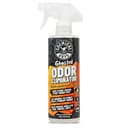
Chemical Guys Ghosted Complete Interior Vehicle Odor Eliminator, 16 fl oz (SPI23216)

Chemical Guys Ghosted Complete Interior Vehicle Odor Eliminator, 16 fl oz (SPI23216)

The pick to start with, because it is a sprayable treatment for the surfaces that actually hold a smell rather than an air freshener for the air above them. A 16 fl oz trigger bottle is enough to wet carpet, mats, seat fabric and the headliner on a full-size interior, which is where a smell lives.

Best overall
$14.99View on Amazon

Price as of October 19, 2026. #ad How we’re funded

2
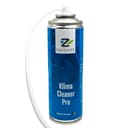
nextzett Klima Cleaner Pro Automotive AC Odor Eliminator & Evaporator Cleaner, 10 fl oz

nextzett Klima Cleaner Pro Automotive AC Odor Eliminator & Evaporator Cleaner, 10 fl oz

The pick for the smell that arrives a few seconds after you turn on the air conditioning. The listing describes an evaporator cleaner supplied with a 2-foot application hose, and the hose is the part that matters: the foam is meant to be fed down to the evaporator core itself, the one surface in a car that stays wet in the dark all summer.

Best for a musty A/C smell
$19.95View on Amazon

Price as of October 19, 2026. #ad How we’re funded

3
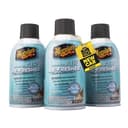
Meguiar's Whole Car Air Refresher Odor Fighting Mist, New Car Scent, 2 oz

Meguiar's Whole Car Air Refresher Odor Fighting Mist, New Car Scent, 2 oz

The one-shot option for a smell you cannot find. The whole 2 oz can discharges in one go with the fan running, so the mist is pulled through the vents and the ducting instead of being sprayed at the carpet - the only treatment in this group that reaches inside the HVAC rather than the cabin.

Best one-shot treatment
$29.42View on Amazon

Price as of October 19, 2026. #ad How we’re funded

4
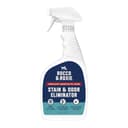
Rocco & Roxie Enzyme Stain & Odor Eliminator, 32 fl oz

Rocco & Roxie Enzyme Stain & Odor Eliminator, 32 fl oz

The only pick here that destroys the source instead of treating the symptom, and the right answer whenever the smell is organic - pet urine, vomit, spilled milk, a forgotten gym bag. The listing describes a bio-enzymatic urine destroyer that is CRI Certified Safe and names cars among its uses alongside carpets, bedding and crates.

Best for pet, urine and spills
$23.92View on Amazon

Price as of October 19, 2026. #ad How we’re funded

5
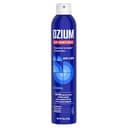
Ozium Air Sanitizer Spray, Original Scent, 8 oz

Ozium Air Sanitizer Spray, Original Scent, 8 oz

The fast knockdown. A couple of short bursts into a closed cabin and a strong smell is gone in minutes, which is why this small aerosol has lived in detailers' kits for decades. It treats the AIR, not the carpet, so it is the right product before a test drive or a handover and the wrong one for a smell that comes back every morning.

Best fast knockdown
$6.48View on Amazon

$6.997% off

Price as of October 19, 2026. #ad How we’re funded

6
Moso Natural Air Purifying Bag, 200g (2-Pack)

Moso Natural Air Purifying Bag, 200g (2-Pack)

The pick that adds no fragrance and no moisture, which is exactly what you want in a car that already smells damp. The listing describes unscented bamboo charcoal bags that last two years and recharge in sunlight - so this is the maintenance product you leave under a seat after a treatment, not the thing that removes a bad smell on its own.

Best fragrance-free upkeep
$23.95View on Amazon

Price as of October 19, 2026. #ad How we’re funded

The picks in full

#1Best overall

Chemical Guys Ghosted Complete Interior Vehicle Odor Eliminator, 16 fl oz (SPI23216)

The pick to start with, because it is a sprayable treatment for the surfaces that actually hold a smell rather than an air freshener for the air above them. A 16 fl oz trigger bottle is enough to wet carpet, mats, seat fabric and the headliner on a full-size interior, which is where a smell lives.

What we like

  • 16 fl oz trigger spray - enough to treat carpet, mats, fabric and headliner
  • Rated by the maker for cars, trucks, SUVs and RVs as well as indoors
  • A surface treatment, so it works on the source rather than the air

Trade-offs

  • Will not fix a smell whose source is the A/C evaporator or a wet carpet pad
  • Fabric needs to dry fully afterwards or you have added moisture to a damp problem
  • No published figure for how long the effect lasts
TypeSprayable interior odor eliminator for fabric, carpet and hard surfaces
Standout spec16 fl oz trigger spray, rated for vehicle interiors
Size16 fl oz
Best forTreating the fabric and carpet a smell is actually coming from
Price tierBudget

Cost-to-use note. One full-size interior treated properly - carpet, mats, seats and headliner - uses a meaningful share of the bottle, so budget most of it per deep treatment.

Specs read from the product listing, on October 18, 2026. “Not listed” means the listing does not state that figure.

#2Best for a musty A/C smell

nextzett Klima Cleaner Pro Automotive AC Odor Eliminator & Evaporator Cleaner, 10 fl oz

The pick for the smell that arrives a few seconds after you turn on the air conditioning. The listing describes an evaporator cleaner supplied with a 2-foot application hose, and the hose is the part that matters: the foam is meant to be fed down to the evaporator core itself, the one surface in a car that stays wet in the dark all summer.

What we like

  • Includes a 2-foot application hose to reach the evaporator core
  • Treats the one surface in the car that is permanently damp
  • Addresses a cause no cabin spray or fogger can reach

Trade-offs

  • You have to find the evaporator drain or housing access on your car first
  • A 10 fl oz can is one or two treatments, not a season's worth
  • Does nothing at all for odor held in carpet, fabric or the headliner
TypeFoaming automotive A/C evaporator and HVAC cleaner
Standout spec10 fl oz with 2-foot application hose (listing)
Size10 fl oz
Best forA musty or sour smell that appears when the A/C or the fan runs
Price tierMid

Cost-to-use note. One can is one evaporator treatment on most cars.

Specs read from the product listing, on October 18, 2026. “Not listed” means the listing does not state that figure.

#3Best one-shot treatment

Meguiar's Whole Car Air Refresher Odor Fighting Mist, New Car Scent, 2 oz

The one-shot option for a smell you cannot find. The whole 2 oz can discharges in one go with the fan running, so the mist is pulled through the vents and the ducting instead of being sprayed at the carpet - the only treatment in this group that reaches inside the HVAC rather than the cabin.

What we like

  • Discharges in a single shot and circulates through the HVAC system
  • Reaches ducting and vents no spray bottle can get to
  • Honest about what it is - a cabin air treatment, not a cleaner

Trade-offs

  • One can is one treatment; there is no part-use option
  • Leaves a strong New Car Scent fragrance, which is not to everyone's taste
  • Most expensive per treatment here, and it does not clean the evaporator the mist passes over
TypeSingle-use whole-car odor eliminating mist
Standout spec2 oz single-discharge can, circulated through the HVAC
Size2 oz
Best forA smell you cannot locate, or one that arrives through the vents
Price tierMid

Cost-to-use note. One can per treatment - the can empties itself.

Specs read from the product listing, on October 18, 2026. “Not listed” means the listing does not state that figure.

#4Best for pet, urine and spills

Rocco & Roxie Enzyme Stain & Odor Eliminator, 32 fl oz

The only pick here that destroys the source instead of treating the symptom, and the right answer whenever the smell is organic - pet urine, vomit, spilled milk, a forgotten gym bag. The listing describes a bio-enzymatic urine destroyer that is CRI Certified Safe and names cars among its uses alongside carpets, bedding and crates.

What we like

  • Bio-enzymatic - it digests the odor source rather than covering it
  • Listing states CRI Certified Safe and names car use explicitly
  • 32 fl oz, so you can saturate a stain properly instead of misting it

Trade-offs

  • Enzymes need dwell time and moisture - this is a slow fix, not a quick one
  • Saturating automotive carpet means a real drying plan afterwards
  • Does nothing for smoke, for mildew in the A/C, or for a general stale smell
TypeBio-enzymatic stain and odor eliminator
Standout specBio-enzymatic; CRI Certified Safe (listing)
Size32 fl oz
Best forAn organic source: urine, vomit, milk, anything that can rot
Price tierMid

Cost-to-use note. An organic stain has to be saturated to the depth it soaked in, so one bad spill can use several ounces.

Specs read from the product listing, on October 18, 2026. “Not listed” means the listing does not state that figure.

#5Best fast knockdown

Ozium Air Sanitizer Spray, Original Scent, 8 oz

The fast knockdown. A couple of short bursts into a closed cabin and a strong smell is gone in minutes, which is why this small aerosol has lived in detailers' kits for decades. It treats the AIR, not the carpet, so it is the right product before a test drive or a handover and the wrong one for a smell that comes back every morning.

What we like

  • Works in minutes on airborne odor, including smoke
  • Small 8 oz can that lives in a door pocket or a detailing bag
  • Cheapest product in this group

Trade-offs

  • Treats the air, so a smell with a source in the carpet or A/C returns
  • Carries its own distinct scent - not a fragrance-free option
  • An aerosol, so it needs ventilation and should not be used with people in the car
TypeAerosol air sanitizer and odor eliminator
Standout spec8 oz aerosol, Original Scent
Size8 oz
Best forClearing a smell from the air right now, before a drive or a viewing
Price tierBudget

Cost-to-use note. A treatment is a short burst rather than a soaking, so one 8 oz can covers many cabins.

Specs read from the product listing, on October 18, 2026. “Not listed” means the listing does not state that figure.

#6Best fragrance-free upkeep

Moso Natural Air Purifying Bag, 200g (2-Pack)

The pick that adds no fragrance and no moisture, which is exactly what you want in a car that already smells damp. The listing describes unscented bamboo charcoal bags that last two years and recharge in sunlight - so this is the maintenance product you leave under a seat after a treatment, not the thing that removes a bad smell on its own.

What we like

  • Completely unscented - it absorbs rather than masks
  • Listing states a two-year life, recharged by sunlight
  • Adds nothing wet to a car that may already have a moisture problem

Trade-offs

  • Passive and slow - it will not clear a strong smell
  • Only works on what reaches it, so position matters
  • Two bags is a modest amount of charcoal for a large cabin
TypeUnscented bamboo charcoal odor absorber bags
Standout spec200g bags, two-year life, sunlight-rechargeable (listing)
Size200g x 2
Best forKeeping a treated car from going stale again, with no added scent
Price tierMid

Cost-to-use note. Reusable for about two years per the listing, recharged in direct sunlight.

Specs read from the product listing, on October 18, 2026. “Not listed” means the listing does not state that figure.

How to choose a car odor eliminator

1. Diagnose before you buy — the five-minute test

Every product on this page treats a different cause, so spending five minutes narrowing it down is worth more than any bottle. Sit in the car cold, with the engine off and the windows up, and work through this in order:

Is the smell there before you start the car?Then it is in the cabin materials — carpet, mats, seat fabric, headliner, trunk. That is the surface-treatment pick, or the enzyme if the cause was a spill.

Does it arrive a few seconds after the fan comes on, worst on first start? That is the air conditioning. Specifically the evaporator core, which sits in a dark housing and is wet every time you run the A/C. Nothing you spray in the cabin reaches it. That is the evaporator cleaner.

Is it worse after rain, or does the carpet feel cool and heavy?You have water getting in — a blocked A/C drain, a door or sunroof seal, a leaking windshield surround. No product fixes that. Find the leak, dry the car out, and then treat what is left.

Is it a sharp, sour, biological smell? Urine, vomit, milk, food. Something organic is decomposing, and the only thing that actually ends it is an enzyme that digests the source.

Is it stale tobacco? Smoke residue coats every surface including the headliner and the inside of the glass, and it is the hardest case in this category. Expect a full clean plus a treatment plus a cabin filter, not a single spray.

2. The EPA on ozone generators — why none is on this list

Ozone machines are everywhere in detailing, they are sold as the thing that “kills” odor at the molecular level, and we are not recommending one. The reason is the EPA’s own review of the evidence, which is unusually direct for a government document.

On effectiveness: “Available scientific evidence shows that at concentrations that do not exceed public health standards, ozone has little potential to remove indoor air contaminants,” and specifically on smell, “there is evidence to show that at concentrations that do not exceed public health standards, ozone is not effective at removing many odor-causing chemicals.”

On the thing that feels like success: the EPA notes experiments suggesting that “body odor may be masked by the smell of ozone but is not removed by ozone,” and that “ozone is not considered useful for odor removal in building ventilation systems.” The sharp, electrical post-treatment smell people read as proof the machine worked is, per the EPA, part of the problem.

The EPA does acknowledge the industrial use case: high concentrations “when people are not present” are sometimes used to decontaminate an unoccupied space. That is a professional operation with a sealed, ventilated-afterwards workflow — not a $70 box plugged into a car in a home garage. For a home detailer, the EPA’s own ranking is the better buy: source control first, ventilation second, air treatment third.

3. Treat the material, not the air

Cabin textiles are the single biggest odor reservoir in a car, and they are the reason the top pick here is a 16 fl oz trigger spray rather than an aerosol. Carpet, floor mats, seat fabric and the headliner have an enormous surface area and they hold volatile compounds the way a sponge holds water.

Which means the real sequence is mechanical first, chemical second. A thorough vacuum removes the solids that are feeding the smell. If the carpet is genuinely soiled, an upholstery and carpet cleaner does more for a smell than any deodorizer, and our carpet guide covers how to do it without soaking the padding. Only then does a treatment spray have a clean surface to work on.

Pull the mats out and do them separately, outside the car, and do the trunk. A smell that survives a cabin treatment is very often coming from a trunk liner, a spare-wheel well with standing water in it, or a gym bag that has been living in the back for a month.

4. Moisture is the cause behind most mystery smells

A damp car smells, and it keeps smelling, because the biology never stops. The EPA’s mold guidance puts a hard number on the window you have: wet materials should be dried within 24 to 48 hours to prevent mold growth. A car carpet soaked by a leaking door seal or an over-wet extraction is well past that by the time you notice the smell.

Practical consequences. First, any wet cleaning needs a real drying plan — doors open, a fan running, warm dry weather — not a hope that the car will sort itself out overnight. Second, this is why the fragrance-free charcoal pick is on this page: the last thing a damp interior needs is more liquid sprayed into it. Third, if the carpet gets wet again after you have fixed the smell, you have a leak, not an odor problem, and no product on this page is the answer.

A steam cleaneris worth mentioning here precisely because it adds the least water of any wet method while still reaching into vents, seams and stitching — and steam versus extraction is largely an argument about how much moisture you are prepared to put into a car you then have to dry.

5. The A/C evaporator: the cause nobody checks

If the smell is strongest in the first ten seconds after you turn the fan on, stop buying cabin sprays. The evaporator core is a cold, finned heat exchanger buried in a housing under the dash. Running the air conditioning condenses water onto it continuously; it drains, but it never truly dries, and it sits in the dark. It is the only surface in a car that is permanently damp, and it is where that distinctive sour, socks-in-a-locker smell comes from.

That is what the nextzett pick is for, and the detail that makes it the right product is the one in its listing: a 2-foot application hose supplied with the can. The foam has to be fed down to the core itself through the housing or the drain, which is the part a general-purpose air freshener cannot do at any price.

Two cheap things to do at the same time. Replace the cabin air filter — it is a paper filter sitting in the same damp airflow, it is often behind the glovebox, and on many cars it is a five-minute job. And get into the habit of switching the compressor off a few minutes before you arrive while leaving the fan running, which dries the core on the way home instead of parking it wet.

6. Enzymes are slow, and that is why they work

For anything organic, an enzyme is in a different class from the rest of this page. The Rocco & Roxie listing describes a bio-enzymatic urine destroyer, CRI Certified Safe, with car use named alongside carpets and bedding. The mechanism is biological digestion of the compounds causing the smell, rather than covering, oxidizing or absorbing them.

The catch is that enzymes need two things people do not give them: contact with the whole stain and time to work. Urine wicks down through automotive carpet into the jute backing and the foam underneath, so a surface misting treats maybe a third of the problem. You have to saturate to the depth it soaked, keep it damp for the dwell time on the label, and then dry it properly — back to the 24–48 hour rule above.

If the source was a pet, do the mechanical work first: embedded hair holds odor and keeps releasing it, which is why getting the hair out and, for a car that carries a dog regularly, a vacuum with real agitation do more for the smell than another bottle will.

7. Where fragrance is actually the right answer

Two of the picks here are scented, deliberately. There is a legitimate job for a fast, fragranced product: the car is clean, the source is gone, and you want the cabin to smell neutral in ten minutes because someone is about to sit in it. A viewing, a handover, a first date, a rideshare shift. That is the Ozium pick, and it is the cheapest product on this page for a reason — it is doing the easiest job.

The Meguiar’s one-shot sits between the two camps. The entire 2 oz can discharges in one go with the fan running, so the mist is drawn through the vents and the ducting rather than being sprayed at a surface — genuinely useful when you cannot locate the source and you want everything, including the HVAC path, treated at once. It is also the most expensive per treatment and it does not clean the evaporator the mist passes over, so it is a complement to the evaporator cleaner, not a substitute.

What fragrance must not become is the strategy. A masking product on a live source means you now have two smells, and a hot dashboard in summer amplifies both.

8. Keeping the car from going stale again

Once the source is gone, upkeep is cheap. Charcoal absorbers like the Moso pick add no fragrance and no moisture, which is exactly what a car that just had a damp problem needs; the listing claims a two-year life, recharged in sunlight. They are slow and passive, so they will not clear a bad smell — they stop a treated car drifting back.

The rest is habit. Take food, gym kit and wet towels out the same day. Crack the windows for two minutes when you park in the heat so the cabin is not held at 60 °C with yesterday’s coffee in the cupholder. Vacuum monthly. And wipe the hard surfaces down with an interior cleaner rather than letting a film build up on the dash, which holds odor the same way fabric does — then protect them with an interior protectant so the next wipe-down is easier.

For the full step-by-step on the hard cases — smoke, pets, spilled milk — our guide to getting smells out of a car walks the whole process in order.

The short version

Find the source. If the smell is in the fabric, vacuum, clean, then use the surface treatment. If it arrives with the fan, buy the evaporator cleaner and change the cabin filter. If something organic spilled, buy the enzyme and give it the dwell time and the drying it needs.

Buy the air sanitizer for the ten-minute version of the problem, and the one-shot mist when you genuinely cannot find the source. Leave a charcoal bag under a seat afterwards so you do not end up back here.

And skip the ozone machine. The EPA’s position is that at concentrations that stay within public health standards it is not effective at removing many odor-causing chemicals, and that its own smell can mask rather than remove. Source control first — that is the EPA’s ranking, and it is also the cheapest.
Frequently asked questions

What actually removes a smell from a car instead of covering it?

Removing the source. The US EPA ranks the three approaches to indoor air pollution in order of effectiveness as source control, ventilation, then air cleaning, and states that 'the first approach - source control - is the most effective.' In a car that means: find where the smell lives, then treat that. Fabric and carpet hold volatile compounds, so they need vacuuming and cleaning, then a surface treatment. An organic spill needs an enzyme that digests it. A smell that arrives with the fan is the A/C evaporator and needs an evaporator cleaner. An air freshener treats none of those - it treats the air above them, which is the symptom.

Do ozone generators work for car odor?

Not at concentrations that are safe to use, according to the EPA's review of the evidence. The agency states that 'available scientific evidence shows that at concentrations that do not exceed public health standards, ozone has little potential to remove indoor air contaminants,' and specifically that 'ozone is not effective at removing many odor-causing chemicals' at those levels. It also cites experiments suggesting that 'body odor may be masked by the smell of ozone but is not removed by ozone' - which is why a car often smells 'clean' straight after a treatment and smells the same as before a week later. The EPA does note that high concentrations are sometimes used to decontaminate an unoccupied space when people are not present, which is a professional, sealed-and-ventilated operation rather than a consumer box left running in a home garage. That is why there is no ozone generator among our picks.

Why does my car smell musty only when the air conditioning is on?

Because the source is the evaporator core, not the cabin. The evaporator is a cold finned heat exchanger inside a housing under the dash; running the A/C condenses water onto it continuously, and while it drains, it never fully dries and it sits in the dark. It is the only permanently damp surface in a car, which makes it the classic home of that sour, locker-room smell. Nothing you spray into the cabin reaches it. The fix is an evaporator cleaner fed down to the core - the nextzett pick on this page ships with a 2-foot application hose for exactly that - plus a new cabin air filter, which sits in the same damp airflow. A useful habit afterwards: switch the compressor off a few minutes before you arrive and leave the fan running, so the core dries on the way home instead of being parked wet.

What is the best car odor eliminator for pet smells?

An enzyme, applied properly, after the mechanical work. The Rocco & Roxie pick is a bio-enzymatic formula - the listing describes a urine destroyer that is CRI Certified Safe and names car use explicitly - and it digests the compounds causing the smell rather than masking them. Two things decide whether it works: saturation and time. Urine wicks down through automotive carpet into the backing and the foam underneath, so a light misting treats a fraction of the problem; you have to soak to the depth it soaked and let it dwell. Then dry the area properly, because the EPA's mold guidance is that wet materials should be dried within 24 to 48 hours. Before any of that, get the hair out - embedded pet hair holds odor and keeps releasing it.

How do you get cigarette smoke smell out of a car?

It is the hardest case in this category and it is not a single-product job. Smoke residue coats every surface in the cabin, including the headliner and the inside of the glass, which is why a car can smell of smoke after the ashtray has been emptied and the seats have been cleaned. Expect a full interior clean of every hard surface, a fabric and carpet clean, the inside of the glass done properly, a new cabin air filter, and then a surface treatment - with a fast air sanitizer at the end for the air itself. A smoke-saturated headliner is sometimes the limiting factor, and it is also the surface you have to be gentlest with, since the adhesive holding it up does not like moisture.

Are charcoal bags any good for car odor?

They are good at the job they are actually for, which is upkeep rather than removal. The Moso pick is unscented bamboo charcoal that absorbs rather than masks, with a claimed two-year life recharged in sunlight. That makes it the right product to leave under a seat after you have fixed a smell - particularly after a damp problem, because unlike every spray here it adds no moisture and no fragrance to a car you are trying to dry out. What it will not do is clear a strong, live smell: it is passive, it only works on what reaches it, and two bags is a modest amount of charcoal for a large cabin. Buy it as maintenance, not as the fix.

Will an odor eliminator work if the carpet is still wet?

No, and treating a wet car is how a temporary smell becomes a permanent one. The EPA's mold guidance is that wet materials should be dried within 24 to 48 hours to prevent mold growth, and a car carpet soaked by a leaking seal, a blocked A/C drain or an over-wet extraction has usually been past that window for a while by the time it smells. Find and fix the water first - door and sunroof seals, the A/C drain, the windshield surround, the spare wheel well - then dry the car out with the doors open and a fan running. Only then is a treatment worth applying. If the carpet gets wet again after you have fixed the smell, you have a leak, not an odor problem.

Where should I spray a car odor eliminator?

On the material the smell is in, not into the air - and after vacuuming, not before. Carpet, floor mats, seat fabric, the headliner and the trunk liner are the reservoirs, so a trigger-spray surface treatment like the Chemical Guys pick goes onto those, with the mats pulled out and done separately outside the car. Keep it off glass, instrument cluster lenses and infotainment screens. Then let the car dry fully with the doors open before you close it up, because adding moisture to a cabin and then sealing it is the one way to make the problem worse rather than better.

Sources

  • US EPA — Ozone Generators that are Sold as Air Cleaners — EPA Indoor Air Quality: "Available scientific evidence shows that at concentrations that do not exceed public health standards, ozone has little potential to remove indoor air contaminants"; "There is evidence to show that at concentrations that do not exceed public health standards, ozone is not effective at removing many odor-causing chemicals"; experiments "suggest that body odor may be masked by the smell of ozone but is not removed by ozone"; "Ozone is not considered useful for odor removal in building ventilation systems (ASHRAE, 1989)"; high concentrations are "sometimes used to help decontaminate an unoccupied space," people not present; and the three approaches to indoor air pollution "in order of effectiveness" are source control, ventilation, then air cleaning, of which "the first approach - source control - is the most effective" (accessed October 18, 2026)
  • US EPA — A Brief Guide to Mold, Moisture and Your Home — EPA guidance that wet materials should be dried within 24–48 hours to prevent mold growth (accessed August 23, 2026)
  • International Detailing Association — Detailing Resources — IDA's public detailing resource library (accessed July 19, 2026)

Keep reading