How to Detail a Truck
Same products, different problem. What changes on a pickup is reach, sequence and the race against drying - and the bed is a separate job that has to come last or it undoes the rest.
How this is funded:we earn a commission if you buy through our links, at no extra cost to you. It never changes which product we recommend, and we’ll tell you plainly when we’d skip one. Full disclosure.
The short version
A truck uses the same products as a car. What changes is three things, and only one of them is something you can buy:
- Reach. You cannot get a mitt onto the center of the roof or the middle of the bed floor from the ground. No product solves this. The method does: a pre-soak has to do the cleaning on the surfaces you can only rinse.
- Order. The bed is unpainted, abrasive and full of the coarsest grit on the vehicle. It comes last, or it contaminates everything you just did.
- Dry time. More panel area means a longer job, which means the first thing you soaped is drying while you are still washing the last thing. That is why the wash is sectional rather than whole-vehicle.
Everything else — the soap, the mitt, the wax — is the same decision it is on a sedan. If what you want is the shopping list rather than the method, the truck and SUV kit page costs the whole setup out.
Problem 1: You cannot reach the middle
This is the real difference between washing a truck and washing a car, and most guides skip it because there is nothing to sell against it.
On a sedan you can lay a mitt flat on the center of the roof. On a full-size pickup you cannot, and reaching for it is actively harmful: you end up dragging the mitt in long, uncontrolled strokes with no idea how much pressure you are applying, while pressing your waist, belt buckle and jacket zip against the top of the door and the rocker. People produce more scratches trying to reach a truck roof than they do washing the rest of the vehicle.
Two honest answers:
Stand on something stable. A step stool parked beside the open door is what most owners settle on, and it turns the roof into a normal panel. This is the better answer and it costs almost nothing.
Or let the pre-soak be the wash up there.A thick layer of foam left to dwell and then rinsed off will lift most of a road film without anything touching the paint. It is not as thorough as a contact wash, and on a roof that nobody ever sees it is a reasonable trade. The thing to understand is that this makes your foam step load-bearing rather than optional — so use a dedicated snow foam through a foam cannon rather than bucket shampoo through a hose attachment, and give it real dwell time. Our snow foam vs car shampoo comparison covers why those are different products.
Problem 2: The bed is a separate job, and it is last
A bed is not a panel. It is an unpainted, deliberately textured or lined box that collects gravel, sand, sawdust, bark and whatever else the truck does for a living. The grit in a bed is coarser than anything on the paint.
So the sequence matters more here than almost anywhere else in detailing:
Empty it and sweep it dry first, before any water touches the vehicle. Dry debris is easy; wet debris is mud and it travels.
Then leave it alone until the paint is finished. If you wash the bed early, that grit is in your wash water, on your mitt and running down your quarter panels. If you wash it last, the worst it can do is land on paint you are about to rinse anyway.
Clean it with a diluted all-purpose cleaner and a stiff brush. This is one of the few places on a vehicle where you can be genuinely aggressive. Rinse with the tailgate down so the water exits the back instead of sheeting over the rear quarters and the bumper.
If you have a drop-in liner that lifts out, pull it. The gap between a loose plastic liner and the bed floor traps water, salt and grit against bare metal where you cannot see it. That gap is one of the more common places a truck starts rusting from the inside out, and nothing you spray over the top of the liner reaches it.
One thing not to do: do not put a coating or a dressing on a bed floor. A slick bed floor is a hazard when you are climbing in and out of it with something heavy in your hands. The same logic applies to a driver’s floor mat, and for the same reason.
Problem 3: Volume and the race against drying
A pickup carries substantially more painted area than a sedan, and two consequences follow from that.
Your buckets run out.The two-bucket method works because the rinse bucket releases grit from the mitt before it goes back into clean soap. A standard 3.5-gallon detailing bucket does not hold enough rinse water to get through a full-size truck, so by the back half of the vehicle you are rinsing a dirty mitt in dirty water — which is the exact failure the method exists to prevent. A 5-gallon pair with grit guards fixes it, and if you would rather not buy anything, change the water partway through. Just actually do it. Our grit guard explainer covers why the insert matters as much as the bucket size.
And panels dry before you rinse them.This is the one that ruins results. Soap drying on paint leaves residue; water drying on paint leaves mineral spots, and a truck’s big flat hood and roof are the most visible horizontal surfaces on any vehicle. The fix is sequence, not product:
- Work in shade, or early, or late. Never in direct sun.
- Wash one section at a time— roof, then one side’s uppers, rinse; that side’s lowers, rinse; then the other side. Never soap the whole truck and then start rinsing.
- Dry each section as you finish it rather than at the end, and use a towel big enough that you are not wringing it out every two feet.
Kärcher’s published car-washing guidance applies unchanged on a truck, and is worth repeating because the extra height tempts people to get closer: use the flat jet rather than the rotor nozzle, keep at least 15 centimeters from the bodywork and 30 centimeters from the tires, and work from the bottom of the vehicle upward. Drying without water spots covers the rest.
The surface class a car does not have: cladding
Fender flares, bumper caps, bed rail caps, running boards, mirror housings, grille surrounds. On a lot of trucks and crossovers a meaningful share of the exterior is textured unpainted black plastic, and it is a different material with different needs.
Wax and sealant do very little for it and can actively make it look worse, because the texture holds residue the applicator cannot level out. You end up chasing white streaks out of a grain pattern.
It fades faster than paint does.Chemical Guys describes black trim as porous plastic or rubber that goes brittle and discolored under UV, road salt, heat and moisture as the oils leave the surface — and a truck typically has far more of it, lower down, where road spray hits.
It wants its own product, after the wash.Either a dressing, which is cosmetic and gets reapplied regularly, or a trim coating, which lasts longer but has to go on properly cleaned plastic. Be realistic about the ceiling: Chemical Guys’ own guidance is that most trim restorers last anywhere from a few weeks to a couple of months, and that they will not reverse cracking or pitting. Our trim restorer picks sort the category by how long each one claims to last, and protecting paint and plastics from the sun covers why these parts go first.
Underneath is where a truck is actually decided
If a truck works — gravel roads, job sites, boat ramps, salted highways — the underside matters more to how long you keep it than anything you put on the paint. AAA has warned that winter road salt causes hidden, costly vehicle damage, and a truck’s underside is both more exposed and more structurally significant than a car’s.
The habit that pays is flushing it regularly through winter — and the spec that does it is volume, not pressure. You are trying to dissolve and carry brine out of frame rails and seams, not blast at them. An undercarriage wand on a hose or a washer does this far better than a jet aimed upward at arm’s length, and undercarriage cleaners covers the tools plus the salt-specific chemistry.
A corrosion-protection film is a reasonable addition on an older truck or a working one. What it is not is a substitute for rinsing: a protective coating laid over trapped salt and moisture is worse than bare metal you keep clean. Washing a car in winter has the cold-weather version of the whole routine.
Order of operations, start to finish
- Empty the bed and the cab. Pull the floor mats and any liftable bed mat.
- Wheels, tires, wheel wells, undercarriage. Dirtiest first, always.
- Foam pre-soak the whole truck. Dwell. Rinse.
- Contact wash in sections, top down, two buckets with grit guards. Rinse and dry each section before moving on.
- Decontaminate and correct if you are doing that — clay, then polish.
- Protect the paint. Wax, sealant or coating.
- Cladding and trim. Tires last, so sling lands on nothing you care about.
- Glass, inside and out.
- Interior: vacuum, surfaces, mats back in only once they are dry.
- The bed. Separate job, last, tailgate down.
The general version of this sequence — and why dirtiest-first and tires-last are not arbitrary — is in the order of detailing steps, and how to detail a car is the full walkthrough this page assumes.
What a truck specifically needs
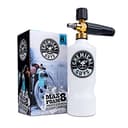
The reach answer
Chemical Guys TORQ Professional Foam Cannon
On a truck the pre-soak stops being a nice-to-have and becomes the only cleaning the center of the roof and the upper cab will ever get. A cannon on a pressure washer makes a layer thick enough to dwell; a hose-end foam gun does not.
$94.97View on AmazonPrice as of November 20, 2026. #ad How we’re funded
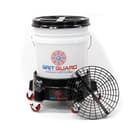
The bucket upgrade
Grit Guard 5 Gallon Washing System (Black)
The one genuinely size-driven upgrade. A 3.5-gallon bucket does not carry enough rinse water for a full-size pickup, so the back half of the truck gets washed with a mitt rinsed in dirty water - which is the exact failure the two-bucket method exists to prevent.
$79.99View on AmazonPrice as of November 20, 2026. #ad How we’re funded
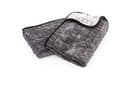
The drying capacity
The Rag Company Gauntlet Drying Towel
Surface area is the problem and towel capacity is the answer. A large, thirsty drying towel means fewer wring-outs across a hood and roof that hold a lot of standing water, and drying section by section is how you avoid spots on the most visible panels on the vehicle.
$32.95View on AmazonPrice as of November 20, 2026. #ad How we’re funded
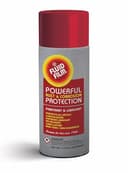
The underside
Fluid Film Rust & Corrosion Protection Aerosol, 11.75 oz
For a truck that works or sees salted roads, the underside decides how long you keep it. A corrosion-protection film is a sensible addition on an older or working truck - but only over metal you actually rinse, because a coating laid over trapped salt is worse than bare metal kept clean.
Frequently asked questions
How do you detail a truck properly?
In the same order as a car, but with three adjustments. First, work in sections rather than treating the whole vehicle as one panel - a pickup has enough area that the first thing you soap will be drying before you finish the last. Second, lean on a foam cannon pre-soak, because that is the only thing that cleans the center of the roof and the upper cab, which you cannot reach with a mitt from the ground. Third, do the bed last and treat it as a separate job, because it is unpainted and full of abrasive grit. Add one surface class a car does not have: unpainted textured cladding on flares, bumpers and running boards, which wants a trim product rather than wax.
How do you wash the roof of a truck if you cannot reach it?
Honestly, you either stand on something or you accept that the roof gets a pre-soak and a rinse rather than a contact wash. There is no product that solves this and we are not going to invent one. A stable step stool next to the door is the practical answer and it is what most owners end up using. Reaching across a roof on tiptoe is where two bad things happen: you drag the mitt in long uncontrolled strokes with no pressure control, and you press your waist and belt buckle against the upper door and rocker. If the roof is only ever going to get foam and a rinse, make that foam count - dwell it properly, and use a dedicated snow foam rather than a bucket shampoo.
Should you wash a truck bed?
Yes, and last. The bed is unpainted, deliberately textured or lined, and it accumulates the coarsest grit on the vehicle. Washing it before or alongside the paint means that grit is in your wash water, on your mitt and running down your panels. Sweep it out dry first, then clean it with a diluted all-purpose cleaner and a stiff brush, and rinse with the tailgate down so water exits the back rather than sheeting over the rear quarters. If you have a drop-in plastic liner, pull it if it lifts out - the gap between a loose liner and the bed floor traps water and grit and is a common place for rust to start out of sight.
Can you wax truck bed liner or fender flares?
Wax does very little for them and can make them look worse. Textured unpainted plastic - flares, bumper caps, bed rail caps, running boards - has a surface the wax cannot level, so you get white residue sitting in the texture that is awkward to remove. These surfaces want a trim product: either a dressing, which is cosmetic and needs regular reapplication, or a trim coating, which lasts longer but has to go onto a properly cleaned surface. Spray-in bed liner is its own case; clean it with an APC and leave coatings off the floor, because a slick bed floor is a real hazard when you are climbing into it.
Do you need a bigger bucket to wash a truck?
It is one of the few genuinely size-driven changes, yes. A pickup has substantially more painted area than a sedan, and the standard 3.5-gallon detailing bucket does not carry enough rinse water to get through it - you end up rinsing a dirty mitt in dirty water, which is the exact failure the two-bucket method exists to prevent. A 5-gallon pair with grit guards is the straightforward fix, and it is cheaper than almost anything else in this hobby. The alternative is to keep the small buckets and change the water partway through, which works fine as long as you actually do it.
How long does it take to detail a truck?
Expect a full wash, dry and protect on a full-size pickup to run meaningfully longer than the same job on a sedan - the panel area, the wheel count and the bed all add time, and the bed alone is a job in itself. The variable that catches people out is not total time but dry time: because you are working longer, the risk that an early panel dries before you rinse it goes up, which is why the method here is sectional rather than whole-vehicle. Working in shade and drying each section as you finish it is what keeps a longer job from producing a worse result.
Is undercoating or rust protection worth it on a truck?
If the truck sees salted roads or gravel, the underside is where its working life is actually decided. AAA has warned that winter road salt causes hidden, costly vehicle damage, and a truck's underside is both more exposed and more structurally important than a car's. The highest-value habit is simply flushing the underside regularly through winter - volume rather than pressure - and a corrosion-protection product is a reasonable addition on an older truck or one that works for a living. What it is not is a substitute for washing: a protective film over trapped salt and moisture is worse than bare metal you rinse.
What is the difference between detailing a truck and an SUV?
Less than you would think, and the differences follow the body rather than the badge. Both share the reach problem, the extra panel area and the heavier wheel-well load. The bed is the one thing a pickup has that an SUV does not, and in exchange an SUV gives you a large rear hatch glass and a much bigger cargo-area carpet to clean - which moves work from the exterior to the interior. Both commonly carry the same unpainted textured cladding, so the trim step applies to each. If you are shopping rather than reading up on method, our truck and SUV kit page costs out the whole setup.
Sources
- Chemical Guys — Two Bucket Method Car Wash Guide — Manufacturer how-to on the two-bucket wash and grit guards (accessed July 19, 2026)
- Kärcher — Car Washing at Home: Tips and Tricks — Pressure-washer manufacturer technique guidance: “Always wash your car with the flat jet and not with the rotor nozzle”; “Keep a minimum distance of 15 centimetres” from the car's surface and “For tyres, it should be a minimum of 30 centimetres”; “Always clean from the bottom up, to avoid missing any spots”; with the right method and that minimum distance the tyres will not be damaged (accessed October 5, 2026)
- AAA (The Auto Club Group) — Winter Road Salt Can Cause Hidden, Costly Vehicle Damage — AAA on salt-accelerated undercarriage corrosion, insurance exclusion, and washing at least every two weeks (accessed August 31, 2026)
Keep reading
Best Car Detailing Kit for Trucks and SUVs
The shopping list rather than the method - what a truck setup needs that a sedan kit leaves out, costed end to end.
See the kitThe Two Bucket Method
The contact wash this whole page is built on, and why the rinse bucket is the one that does the work.
Read the methodBest Undercarriage Cleaners
The part of a truck that decides how long it lasts. Flooding-volume tools and the salt chemistry that goes with them.
See the picksBest Trim Restorers
Flares, bumper caps and running boards are a different surface class from paint. What actually works on faded textured plastic.
Fix the cladding