What “easy” actually means, broken into four things
“Easy to apply” is treated as one property and it is really four. Separating them is what lets you choose, because the easiest product on one axis is often the hardest on another.
1. How it goes on: wet, damp or dry
A rinse-off ceramic spray is applied to a wetcar and then rinsed, which removes the hardest part of waxing — working a panel at a time and keeping track of what you have done. A spray wax goes on a damp or dry car and gets wiped through with a microfiber. A liquid or paste wax goes on a fully dry, cool car with an applicator pad. Each step along that line adds control and adds work.
2. Whether there is a cure window to manage
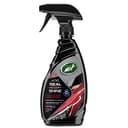
This is the step people get wrong. A traditional wax is applied thin, allowed to haze, and then buffed off — and the window between “hazed” and “baked on” is what the sun closes. Products that spray on and wipe off immediately have no window at all, which is why they feel so much easier even when the chemistry is similar. Turtle Wax ICE Seal N Shine is on this page specifically because it reaches sealant-grade durability without a cure window to manage.
3. Whether it stains trim
A white chalky line along every plastic trim edge is the classic first-wax disappointment, and it is tedious to remove. Meguiar’s Ultimate Liquid Wax is forgiving here, which is a large part of why it is our pick for people who want easy anddurable. Chemical Guys lists Butter Wet Wax as safe on most exterior surfaces including trim and glass, and Turtle Wax states Seal N Shine is safe on paint, glass, wheels and plastic trim — so with those two there is nothing to tape off, which is a real time saving on a modern car full of black plastic.
4. How much of it you can do at once
A rinse-off spray treats the whole car in one pass. A spray wax is comfortable two panels at a time. A paste wax is one panel at a time, and on a hot day half a panel. The practical consequence is time, and time is the thing that decides whether the job gets finished or abandoned at the rear quarter.
Who each pick is for
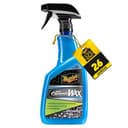
- Meguiar’s Hybrid Ceramic Wax— for anyone who wants beading with essentially no technique. Spray onto the wet car, rinse, dry. Nothing to streak, nothing to buff. The cons are real and we are not hiding them: it is the shortest-lived product here, and it is better understood as a wash-day booster than as standalone protection.
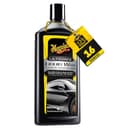
- Meguiar’s Ultimate Liquid Wax— for a first proper wax. A synthetic polymer that wipes on and off, holds up longer than a pure carnauba, and does not punish you for imperfect conditions or a trim edge. If you want a carnauba glow specifically, it will feel a little cooler and more glassy than warm.
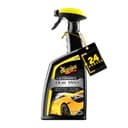
- Meguiar’s Ultimate Quik Wax— our budget pick, and the one that makes topping up a habit rather than a decision. 24 oz, sprays onto a still-damp car, and the synthetic chemistry layers over an existing wax or sealant. Durability for any spray wax is weeks, not months, and on a genuinely dirty car it just moves grit around — wash first.
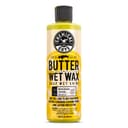
- Chemical Guys Butter Wet Wax— for the warm, wet-look carnauba finish with the least effort in that category. It spreads and buffs off exceptionally easily, including for beginners. The trade is that carnauba protection life is shorter than a synthetic, so plan on reapplying more often.
- Turtle Wax ICE Seal N Shine— for the cheapest route into sealant-grade durability without the usual sealant application routine. Spray on, wipe off with a microfiber; no applicator pad, no cure window. Turtle Wax’s own claim is that it lasts for months, with no figure you can hold it to, and a hybrid does not match a dedicated sealant on longevity.
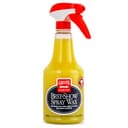
- Griot’s Garage Best of Show Spray Wax— for a car that is already ceramic coated or wearing paint protection film. The listing is explicit that it works over both, which matters because plenty of spray waxes are vague about it and you discover the answer by ruining the beading. It is priced above the supermarket sprays, and like all spray waxes it tops protection up rather than providing it.
The two easy-wax mistakes that have nothing to do with the wax
Waxing in the sun
Covered above because it is the whole game. Work in shade, on a panel that is cool to the touch, inside the manufacturer’s stated temperature range. Chemical Guys’ published guidance is 50–85°F, with 30 to 60 minutes in shade to let a hot panel cool, and early morning or late afternoon if you have no garage. Our can you wax a car in the sun guide works through what actually happens to the product when you ignore that.
Waxing a car that has not been properly washed
Wax does not clean. Applying any of these over bonded contamination traps it and makes the finish feel gritty no matter how carefully you buffed. A proper two-bucket wash first, and on an older car a decontamination step, is what makes a cheap wax look expensive. AAA’s guidance is that industry experts recommend washing roughly every two weeks, and that bird droppings, dead bugs and tree sap are acidic enough to damage paint if left — those are the marks a wax will not hide. Start at best car wash soap and, if the paint feels rough, how to use a clay bar.
What we did not pick, and why it is still on the site
Three waxes we rate highly are deliberately absent, because this page is ranked on effort rather than results and it would be dishonest to put them here.
- Collinite 845 Insulator Waxis the durability champion among traditional waxes and it is cheap for what it does. It is also fussy: it has to be applied in very thin coats or it is hard to buff off, and the application feel is old-school. If you are willing to learn the thin-coat habit, it is the best value in the category — see best car wax.
- Meguiar’s Gold Class Paste Wax gives a deep warm carnauba shine and a tin lasts for years. A paste is simply messier and slower than a liquid, which is the opposite of what this page is sorting on. Spray wax vs paste wax sets out the trade.
- Mothers Pure Brazilian Carnauba is a final-step product with no cleaning or filling ability at all, so the paint has to be corrected or glazed first. That is extra work before you start, not less.
Easy wax, or skip wax entirely?
Worth asking honestly. If the appeal of an easy wax is that you do not want to do this often, the logical end of that thought is a longer-lasting product rather than an easier one.
A paint sealant is a synthetic that lasts longer per application than a carnauba. A ceramic spray coating sits a step beyond that and several apply much like a spray wax. A full DIY ceramic coatingis the longest-lived option and also by far the most demanding to apply — the prep, not the chemistry, is the hard part, and a high spot in a real coating is a correction job rather than a re-wipe. Our wax vs sealant vs ceramic coating comparison lays the three side by side, and how often to wax your car covers the maintenance interval each one implies.
Our view: for most people an easy wax reapplied often beats a demanding product applied once and then neglected. Protection you actually renew is worth more than protection you meant to.
How to apply an easy wax without making it hard
- Wash and dry the car first. Every product here goes onto clean paint. Two buckets, a clean mitt, and a drying towel rather than circling with a chamois.
- Get out of the sun and check the panel is cool to the touch. If the hood is warm, wait. This is the one step that changes everything.
- Decide which kind of product you have. Rinse-off sprays go on the wet car before you dry it. Spray waxes go on damp or dry. Liquids go on dry paint with an applicator.
- Use less than you think.Thin is easier to remove and works just as well. Almost every “this wax is hard to buff” complaint is a thick-coat complaint.
- Two towels, not one. One to remove the bulk, a second clean one for the final wipe. A saturated towel smears whatever it is holding.
- Do the glass and trim edges last, and wipe any residue off the trim while it is still fresh rather than after it dries.
- Top up rather than redo.A spray wax over an existing layer after a wash keeps the beading alive for a fraction of the effort — see how to apply spray wax.
Our call
Buy Meguiar’s Hybrid Ceramic Wax if the goal is beading with no technique and no risk. It is the only product here where it is hard to imagine getting a bad result, and it costs very little.
Buy Meguiar’s Ultimate Liquid Wax if you want one bottle that is easy to use and still worth having applied in three months. This is the pick for most people and it is also our overall wax pick sitewide.
Buy Ultimate Quik Waxif you want the habit more than the foundation — biggest bottle, lowest price, five minutes after a wash.
Buy Butter Wet Wax if you want the warm carnauba look and do not want to work for it.
Buy Seal N Shine if you want the longest protection you can get from something that still just sprays on and wipes off.
Buy the Griot’s spray if your car is coated or has PPF, because it is the pick here whose maker states plainly that it is safe on both.