How Long Do Microfiber Towels Last?
About 500 washes if you launder them properly - and one cycle with fabric softener can end a towel permanently. Here is how to tell, and why a worn towel costs more than a new one.
How this is funded:we earn a commission if you buy through our links, at no extra cost to you. It never changes which product we recommend, and we’ll tell you plainly when we’d skip one. Full disclosure.
The short version
Professional Carwashing & Detailing puts a properly maintained microfiber towel at approximately 500 washes. For somebody washing a car most weekends and rotating a reasonable stack, that is several years out of a paint towel — long enough that the towel usually dies of mistreatment rather than of age.
And that is the real finding here. The 500 figure assumes the towel was laundered correctly every single time. In practice most towels are killed prematurely by one of three things: fabric softener, heat, and cross-contaminationwith towels that have been on wheels. Any of the three can end a towel’s useful life as a paint towel in a single cycle.
The practical answer, then, is not a number of months. It is three tests you run on the towel itself, and a demotion path for the ones that fail.
The three retirement tests
1. The water test — is it still absorbing?
Hold the dry towel flat and drip water onto it from a few inches up. A healthy microfiber pulls the drop straight in and leaves a dark spot. A clogged or melted one lets the water bead on the surface for a second, or runs it off the edge.
That is the diagnostic for the two failure modes that are invisible to the eye. Fabric softener coats the strands; excessive dryer heat melts the wedge-shaped filaments closed. Either way the towel looks exactly the same and no longer does the one thing you bought it for — and a towel that is not absorbing is pushing residue around the panel rather than collecting it.
2. The snag test — is it still safe?
Drag the towel slowly across the back of a clean fingernail, then over the back of your hand, then run a finger along the edge binding. You are feeling for three things: a catch in the pile, a hardened or curled edge, and any grittiness that suggests something is embedded in the fibers.
Edge binding is the one people miss. A stitched border stiffens with repeated washing, and a stiff border dragged across a panel leaves long straight marks that only show in direct sun. It is the single most common source of towel-induced marring, and it is why edgeless and twisted-loop towels exist.
3. The look test — is the pile standing up?
Lay the towel flat in good light and look across it rather than down at it. New plush microfiber has a pile that stands up and catches the light unevenly. A worn one lies flat and matted, often shinier than it was, sometimes stiff enough to hold a crease.
A matted towel has lost most of its surface area, which is where the absorbency lived. It is not dangerous in the way a stiff edge is, but it is no longer the tool you think you are using.
What kills towels early
Fabric softener — permanent, and usually accidental
This is the big one. Chemical Guys’ own laundering guidance is flat: “Never use fabric softener or dryer sheets. These coat the microfiber strands, reducing their ability to trap dirt and absorb water.” Professional Carwashing & Detailing is harsher still — softener “will actually clog the small wedge-shaped filaments of the microfiber and render it useless.”
Most people who do this did not mean to. A dryer sheet already in the drum, a machine with a softener dispenser that was not emptied, a well-meaning family member running a mixed load — and a drawer of good towels is finished at once. Wash car towels on their own, in a machine you have checked.
Heat — the invisible one
Microfiber is a polyester and polyamide blend, and it melts. Trade guidance puts the ceiling at around 105 degrees Fahrenheit for washing, and says drying should be on the “coolest setting, either permanent press or air fluff” because “high heat will cause melting, which will close the wedge-shaped fibers.”
Chemical Guys recommends warm rather than hot water specifically to break down wax and polish residue without damaging the fibers, and drying on low heat or air drying completely. A heat-damaged towel does not look damaged. It just fails the water test.
Cross-contamination — the expensive one
Both sources say to separate paint-safe towels from wheel, engine and heavily soiled ones before washing. The reason is specific: a wheel towel carries iron particles and brake dust, and washing it alongside your paint towels redistributes that across every towel in the load. You then take an invisibly contaminated towel to a hood.
Also keep microfiber away from cotton. Microfiber grabs cotton lint and holds onto it, which is why a towel that has shared a load with a bath towel leaves fluff on glass.
The full routine — detergent choice, what to do about bleach, and how to strip a towel that has already been softened — is in how to wash microfiber towels.
Demote, do not discard
A towel that fails a test is not garbage. It has simply moved down a grade, and the hierarchy only runs one way:
- Paint and coatings— plush, edgeless, perfect condition. The moment one fails the snag test it leaves this tier forever.
- Glass and interiors— lower pile, still clean, still absorbing.
- Door shuts, jambs and engine bay— anything still absorbing but no longer trusted near a visible panel.
- Wheels and tires— the end of the line. Nothing comes back from here.
Mark the demotion physically so you cannot make a mistake at the end of a long afternoon: cut a corner off, buy each tier in a different color, or keep them in separate boxes. Our count of how many towels a full detail needs is built around keeping that rotation alive.
What a worn towel actually costs
It is easy to treat this as frugality. It is not — it is paint safety, and the arithmetic is unflattering.
A plush paint towel costs a few dollars. A panel full of fine straight-line marks from a hardened edge costs you a machine polish, which costs you clear coat you do not get back. On a dark car, where every mark shows, that trade is absurd. Retire the towel.
The one place to spend more and replace sooner is the drying towel, because it covers more panel area per pass than anything else you own and it is the last thing that touches the car. If you have a coated car, there is a dedicated roundup for drying towels for coated paint, where edge construction matters more than anywhere else.
What to restock with
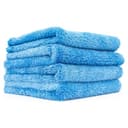
The paint tier
The Rag Company Eagle Edgeless 500 Microfiber Towels
500 GSM and genuinely edgeless, which removes the stitched border that is the most common cause of towel-induced marring as a towel ages. These are the ones to buy in a four-pack and retire ruthlessly the moment one fails the snag test.
$25.95View on AmazonPrice as of October 18, 2026. #ad How we’re funded
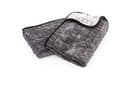
The drying towel to protect
The Rag Company Gauntlet Drying Towel
900 GSM twisted loop in a 15 x 24 in format, two to a pack. A drying towel covers more panel per pass than anything else in your stack and it is the last thing to touch the car, so this is the one worth laundering carefully and replacing before you have to.
$32.95View on AmazonPrice as of October 18, 2026. #ad How we’re funded
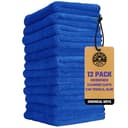
The general-purpose bin
Chemical Guys Professional Microfiber Towels (12-Pack)
A twelve-pack of 16 x 16 in towels for glass, interiors and door shuts - the middle tier that absorbs the demotions from your paint stack and gets replaced without anybody agonizing over it.
$36.99View on AmazonPrice as of October 18, 2026. #ad How we’re funded
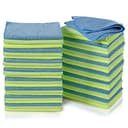
The ones meant to be used up
Zwipes Microfiber Cleaning Cloths (48-Pack)
Forty-eight cheap cloths for wheels, jambs, engine bays and anything you would not put near paint. Buying these in bulk is what stops you reaching for a good towel on a dirty job, which is the actual mechanism by which good towels die early.
$25.01View on AmazonPrice as of October 18, 2026. #ad How we’re funded
Our call
Plan on years, not months, and judge the towel rather than the calendar. Run the water test on your drying towel at the start of every season and the snag test on any paint towel before it touches a panel you care about.
Then do the one thing that actually protects the 500-wash figure: wash car towels by themselves, warm not hot, no softener, no dryer sheets, coolest dry setting, and never in the same load as anything that has been on a wheel.
Frequently asked questions
How long do microfiber towels last?
Trade guidance from Professional Carwashing & Detailing puts a properly maintained microfiber towel at approximately 500 washes. That is a laundering figure rather than a calendar one, and for most home detailers washing a car weekly it means several years out of a paint towel. The important part is the word 'properly' - the same guidance is clear that fabric softener, bleach and high dryer heat each damage microfiber, and a single cycle with softener can finish a towel on the spot by clogging the fibers permanently.
How do you know when to replace a microfiber towel?
Three tests. The water test: drip water onto the dry towel - if it beads or runs off instead of being pulled straight in, the fibers are clogged and the towel is done for paint work. The snag test: drag the towel slowly over the back of a fingernail and over a clean hand; if you feel catching, roughness or a stiffened edge, retire it from paint. The look test: if the pile lies flat and matted rather than standing up, or the edge binding has hardened, it has stopped being a paint towel. Any one of those is enough.
Does fabric softener ruin microfiber towels?
Yes, and it is usually permanent. Chemical Guys' laundering guidance says never to use fabric softener or dryer sheets because 'these coat the microfiber strands, reducing their ability to trap dirt and absorb water.' Professional Carwashing & Detailing puts it more bluntly: softener 'will actually clog the small wedge-shaped filaments of the microfiber and render it useless.' A softener sheet left in the dryer with a load of car towels can ruin all of them at once, which is the most common way a drawer of good towels dies.
Can you wash microfiber towels in hot water?
No. Trade guidance is that microfiber should be washed in cold or warm water and that the temperature should never exceed around 105 degrees Fahrenheit, and that drying should be on the coolest setting - permanent press or air fluff - because 'high heat will cause melting, which will close the wedge-shaped fibers.' Chemical Guys recommends warm rather than hot water to break down wax and polish residue without damaging the fibers, and drying on low heat or air drying completely. A melted towel does not look melted; it just stops absorbing.
Are old microfiber towels bad for car paint?
Yes, in two ways. A towel whose fibers have been clogged or melted closed no longer pulls water and residue into itself, so instead of collecting what is on the panel it pushes it around - which is a dragging action over the clear coat. And a towel with a hardened edge binding, a matted pile or trapped grit from a previous job is carrying an abrasive. That is why worn paint towels get demoted to wheels, engine bays and door jambs rather than thrown away, and why nothing ever gets promoted in the other direction.
Should you wash car towels separately from household laundry?
Yes, and separately from each other. Both Chemical Guys and Professional Carwashing & Detailing advise washing microfiber on its own - away from cotton especially, because microfiber grabs lint from cotton and holds it - and separating the paint-safe towels from the wheel, engine and heavily soiled ones before washing. A wheel towel in a load with paint towels redistributes iron particles and brake dust across all of them, which is a scratching risk on every panel you then touch.
Sources
- Professional Carwashing & Detailing — How to properly wash and care for microfiber towels — Trade-press guidance (Maria Woodie, March 1, 2016): microfiber should be washed in cold or warm water and the temperature should “never exceed around 105 degrees Fahrenheit”; wash separately from other fabrics, especially cotton; “Fabric softener will actually clog the small wedge-shaped filaments of the microfiber and render it useless”; no bleach, because it “will take the color out of the cloth”; dry on the “coolest setting, either permanent press or air fluff” because “high heat will cause melting, which will close the wedge-shaped fibers”; a properly maintained towel lasts “approximately 500 washes” (accessed October 5, 2026)
- Chemical Guys — How To Wash Microfiber Towels: Keep Them Soft And Scratch-Free — Manufacturer laundering guidance: “Use warm water, not hot, to help break down waxes and polish residues without damaging fibers”; “Choose a microfiber-safe detergent without fabric softeners, fragrances, or additives”; “Never use fabric softener or dryer sheets. These coat the microfiber strands, reducing their ability to trap dirt and absorb water”; “Dry towels on low heat or air dry them completely. High heat can melt or harden synthetic fibers”; separate paint-safe towels from wheel, engine or heavily soiled towels before washing (accessed October 5, 2026)
- International Detailing Association — Detailing Resources — IDA's public detailing resource library (accessed July 19, 2026)
Keep reading
How to Wash Microfiber Towels
The full laundering routine - temperature, detergent, what never goes in the drum, and how to strip a towel that has already been softened.
Read the guideBest Microfiber Towels for Cars
Plush edgeless towels for paint, general-purpose packs for glass and interiors, and cheap bulk cloths for the dirty jobs - compared on cost per towel.
See the picksHow Many Microfiber Towels Do You Need?
Sixteen to twenty-five for a full detail, in three grades - counted job by job, which is also the number you need to keep a rotation alive.
Read the guideMicrofiber GSM Explained
What the density figure on the label actually describes, and why a higher number is not automatically a better towel for your job.
Read the guide