How to Use a Foam Cannon
A foam cannon is a soap bottle with an air-injecting orifice on it, driven by your pressure washer. Three things decide what comes out: how much water your machine moves, how much soap is in the bottle, and which way the dials are turned. Here is the setup, the method, and the fix for thin foam.
How this is funded:we earn a commission if you buy through our links, at no extra cost to you. It never changes which product we recommend, and we’ll tell you plainly when we’d skip one. Full disclosure.
What a foam cannon actually is
Strip the marketing away and a foam cannon is three parts: a bottle holding a soap solution, a brass or plastic body that draws that solution into the water stream, and a restrictive orifice with a mesh behind it that whips air into the mixture on its way out. That last part is the whole trick. Soap and water make suds; soap, water and injected air make the clinging foam you are after.
Which tells you what the cannon depends on. It needs enough water per minute to force through that orifice, which is why flow is the spec that matters and pressure is not. It needs a soap formulated to foam and to cling rather than one formulated for lubricity in a bucket. And it needs its two adjustments set correctly, which most people never touch after the first wash.
Before the first use: the fitting
This is the step that ruins the most first purchases in this category, and it happens before any water flows. A cannon attaches to the end of your wand, and the connector is not standardised. Most American consumer electric machines use a 1/4 inch quick-connect. Several Kärcher consumer models use a Kärcher-specific bayonet. Some cannons are sold threaded for M22 wands.
Go and look at the end of your wand before you order anything. Chemical Guys itself puts the warning on the TORQ listing — check the connector matches your washer — and adapters cost a few dollars and are everywhere, so this is only a problem if you discover it on a Saturday morning with a car already wet. The cannons themselves, including the budget option that usually ships with an adapter in the box, are in best foam cannons.
Mixing: soap first, then water, then start weak
Put the soap into the empty bottle before the water. Fill it the other way round and the bottle foams up as you pour, you cannot see the level, and you end up guessing. Use warm water — it helps a concentrate dissolve — but not hot, which stresses the plastic and the seals for no benefit. And do not feed hot water into the machine itself; every pressure washer we rank is specified cold-water only.
On quantity, follow the soap’s own label and start at the low end. This is a genuine gap in the category: plenty of concentrates do not publish a ratio for cannon use at all. Adam’s Mega Foam is a good product and its listing states no dilution ratio, which we record as a con on that entry rather than filling in a number we cannot source. Where there is no published figure, start with a conservative pour, see what comes out, and increase next wash.
The thing worth internalising: more soap stops helping surprisingly early. Past a point you are not making thicker foam, you are making rinsing slower and wasting product. If you are using half a bottle of concentrate per wash, the problem is almost certainly not the dilution.
The two dials, and what each one does
Nearly every cannon has two adjustments and most people only ever discover one.
The tip adjusts the spray pattern— usually by rotating the nozzle between a narrow vertical jet and a wide fan. Use the wide fan. A narrow pattern paints a stripe and makes you cover the car in twenty passes; a fan covers most of a door in one, which matters because you want the whole car coated before the first panel starts to dry.
The knob on top adjusts the soap-to-water mix, metering how much solution is drawn from the bottle. Open it fully toward soap to start. This is the dial people leave halfway and then conclude their cannon is weak.
Both are worth deliberately experimenting with on one wash. Set the mix fully open, foam a door, then close it halfway and foam the next door. You will learn more about your own setup in five minutes than from any amount of reading.
Applying it: wet car, bottom up, then leave it alone
Rinse the car with plain water first. Foam clings to a wet surface and slides straight off dry, dusty paint, and the rinse also removes the loose grit you would otherwise be letting sit on the clear coat for five minutes.
Then coat the car working upward. Foam drains downward, so starting low means it keeps running over surfaces you have already covered rather than over bare paint. This is the same bottom-up logic Kärcher gives for rinsing — always clean from the bottom up, to avoid missing any spots — and it applies to foam for an additional reason: the lower third of the car carries the heaviest road film and benefits most from the longest dwell.
Now the important part: walk away for several minutes. The dwell is the only reason foaming is worth doing. It is softening bonded film so your mitt removes it with less pressure, and less pressure is fewer swirls. Use the time on the wheels.
What you must not do is let it dry. Work out of direct sun on cool panels — Chemical Guys makes the point for waxing and it holds for the whole wash — because dried soap is harder to remove than the dirt was. If a panel starts going matte or patchy, rinse that panel immediately and stop worrying about the rest of the dwell.
Then rinse, and then do the wash
Swap the cannon for the widest fan nozzle you have and rinse thoroughly, bottom-up again, including the places foam hides: door shuts, grille slats, mirror housings, behind the wheels, under the rear bumper. Soap left in a shut will run out onto a clean panel later.
And then do the contact wash, because the foam has not cleaned the car. This is the sentence the product category would rather we did not write. Foam removes loose dirt contact-free and softens what is bonded; it does not remove bonded road film, brake dust or bug residue. Two buckets, grit guards, mitt rinsed between panels, top-down — the two-bucket method and how to wash a car without scratching cover it. The honest version of the foam question is in snow foam vs car shampoo.
Thin foam: the four causes, in order
1. Flow.This is the answer most of the time and the one nobody wants. A cannon makes foam by pushing water through a restriction, so gallons per minute sets the ceiling. A 1.2 GPM machine foams visibly thinner than a 2.0 GPM one and no amount of soap closes that gap. Check your machine’s ratedflow rather than its “max” figure — Pro Tool Reviews has documented how far advertised peaks sit from measured output, and the rated pair is what you have. The field ranked on exactly this spec is in best pressure washers for detailing.
2. The soap. A bucket shampoo in a cannon underperforms a dedicated foaming soap, sometimes dramatically. Snow foams and high-foaming cannon soaps are formulated with surfactant packages chosen to produce stable, clinging foam; a lubricity-focused shampoo is not. See best foam cannon soap.
3. The dials. Mix knob halfway, or the tip on a narrow pattern. Free to check.
4. A blocked orifice or filter.Cannons draw solution through a small filter and push it through a small hole, and both silt up over a season — particularly with thicker concentrates or hard water. Unscrew the bottle, pull the filter, rinse everything through with warm water, clear the orifice with a soft pick rather than anything metal. This is also why you should run clean water through the cannon after every wash rather than putting it away wet with soap in it.
Two things a cannon is genuinely good for beyond the wash
Winter salt flushing. A foam dwell on the lower third of the car and the arches is a sensible way to loosen chloride before you rinse it off in salt season, when washing frequency matters more than finish. How to wash a car in winter covers the order, and undercarriage cleaners reach the part a cannon cannot.
Bug and bumper pre-soak.Foam clinging to a front clip for five minutes softens insect residue meaningfully, which is less dwell time you need from a dedicated product afterwards — and the less you scrub a bug-covered bumper, the better. Best bug and tar removers handles the chemistry half.
What a cannon is not for: anything you need to control precisely. It is a broadcast tool. Wheel cleaner, iron remover and bug remover all go on with a trigger sprayer, where you can keep them off the surfaces they should not touch and off a hot panel.
What the method needs
The cannon
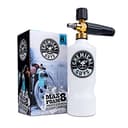
Chemical Guys TORQ Professional Foam Cannon
Both adjustments done properly — spray pattern at the tip and a soap-to-water dial on top — which is what makes the experiment in the dials section above possible. Solid build and a widely supported brand, so replacement seals and adapters are easy to find. Check your wand's connector before ordering; the listing says so too.
$99.97View on AmazonPrice as of October 10, 2026. #ad How we’re funded

The cheaper cannon
AstroAI Heavy Duty Foam Cannon
Does the same job for roughly a fifth of the price, with an adjustable nozzle and ratio, and it commonly ships with a quick-connect adapter in the box — which removes the single most common first-purchase problem. Build quality is fine rather than heirloom, and the seals may want attention after a season.
The soap
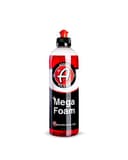
Adam's Polishes Mega Foam
pH neutral, so a long dwell will not strip the wax or coating you paid for, and explicitly rated by Adam's for foam cannon, foam gun and bucket use — one bottle covers the pre-soak and the contact wash. Its honest flaw is that the listing publishes no dilution ratio, so start weak and work up as described above.
$16.99View on AmazonPrice as of October 10, 2026. #ad How we’re funded
If you want a bigger bottle
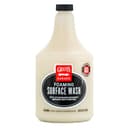
Griot's Garage BOSS Foaming Surface Wash
A 35 oz concentrate formulated for a cannon first and a bucket second, built around Griot's own auto-mix system, so mixing guidance is unusually clear. Most sensible if you already run their cannon; priced above the supermarket foaming soaps either way.
$21.99View on AmazonPrice as of October 10, 2026. #ad How we’re funded
The short version
Check the fitting. Soap in the bottle first, warm water, start weak. Mix dial fully open, tip on a wide fan. Rinse the car, foam bottom-up, walk away for a few minutes, never let it dry. Rinse thoroughly. Then do the two-bucket wash, because the foam was a pre-wash and nothing more. If the foam is thin, look at your machine’s rated flow before you buy a different cannon.
Work safely. Detailing chemicals and machine polishers can damage paint, trim or your own skin if misused. Always follow the manufacturer’s instructions, test in an inconspicuous spot first, work out of direct sun, and wear eye protection and gloves where the label calls for them. Two Bucket Club is general guidance from an enthusiast, not a substitute for a product’s own directions.
Frequently asked questions
How much soap do you put in a foam cannon?
Start at the low end of whatever ratio the soap's own label states and work up over a few washes — commonly somewhere between one and four ounces in a one-litre bottle, but it depends entirely on the product. Several concentrates, including Adam's Mega Foam, do not publish a ratio at all, in which case calibrate by eye. More soap does not keep making thicker foam past a point; it mostly makes rinsing slower.
Why is my foam cannon not making thick foam?
Four causes, in order of likelihood. Flow: a 1.2 GPM machine will never foam like a 2.0 GPM one, and this is the most common answer. Dilution: too little soap, or a soap not designed for a cannon. The mix dial set toward water rather than soap. Or a partially blocked orifice or filter in the cannon, which is a two-minute clean.
Can you use a foam cannon without a pressure washer?
Not a cannon — a cannon needs pressure-washer flow to drive air through the orifice. What you can use on a garden hose is a foam gun, which is a different product that produces thinner, wetter suds. It is better than nothing as a pre-soak, and the comparison is in our foam cannon vs foam gun guide.
How long should you leave foam on a car?
Several minutes, and never long enough to dry. The dwell is the entire value of foaming — it is softening road film so your mitt removes it with less pressure. Work out of direct sun on cool panels so the foam stays wet long enough to do that, and rinse any panel that starts going matte.
Will any foam cannon fit my pressure washer?
No. Check the connector on the end of your wand before ordering. Most American consumer electric machines use a 1/4 inch quick-connect, but several Kärcher models use a Kärcher-specific bayonet, and some cannons are sold threaded for M22 wands. Chemical Guys flags this on the TORQ listing itself. Adapters are cheap once you know which one you need.
Should you use hot water in a foam cannon?
Warm, not hot. Warm water helps a concentrate dissolve and foam more readily. Hot water is unnecessary and risks the plastic bottle and seals, and you should not feed hot water into a cold-water pressure washer — every machine we rank is specified as cold-water only.
Does foaming a car actually do anything?
Yes, but less than the videos suggest. It removes some loose dirt contact-free, which means less grit in your mitt and fewer swirls, and the dwell softens bonded film. What it does not do is clean the car — that still needs a contact wash. Judge a foam by dwell and cling rather than by how thick it looks for the camera.
Do you rinse the car before foaming?
Yes. Foam clings to a wet surface and slides straight off dry, dusty paint, so a plain water rinse first both improves the coverage and gets loose grit off before anything sits on the panel for five minutes.
Sources
- Kärcher — Car Washing at Home: Tips and Tricks — Pressure-washer manufacturer technique guidance: “Always wash your car with the flat jet and not with the rotor nozzle”; “Keep a minimum distance of 15 centimetres” from the car's surface and “For tyres, it should be a minimum of 30 centimetres”; “Always clean from the bottom up, to avoid missing any spots”; with the right method and that minimum distance the tyres will not be damaged (accessed October 5, 2026)
- Chemical Guys — Why Waxing Your Car In Direct Sunlight Could Be A Mistake — Manufacturer guidance on waxing temperature: sun makes wax flash-dry into streaks and residue, a 50–85°F working range, check the surface is cool to the touch, allow 30–60 minutes in shade to cool, and work early morning or late afternoon (accessed September 18, 2026)
- Chemical Guys — Two Bucket Method Car Wash Guide — Manufacturer how-to on the two-bucket wash and grit guards (accessed July 19, 2026)
- Pro Tool Reviews — Pressure Washer PSI That's Too Good to Be True? It Probably Is! — Independent bench measurements of "PSI Max"/"GPM Max" claims vs PWMA-certified rated performance (accessed July 19, 2026)
- International Detailing Association — Detailing Resources — IDA's public detailing resource library (accessed July 19, 2026)
Keep reading
Best Foam Cannons
The cannons compared, including the budget pick that usually ships with the adapter in the box.
Compare the cannonsBest Foam Cannon Soap
The soaps formulated to cling and dwell rather than to lubricate a mitt.
See the soapsFoam Cannon vs Foam Gun
The other product people mean by this question — what a garden hose can and cannot do.
Read the comparisonHow to Pressure Wash a Car
Where the foam step sits in the full wash, and the nozzle and distance rules around it.
Read the method