Who each pick is for
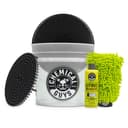
- Chemical Guys Ultimate Car Wash Bucket Kit— for someone starting from nothing who would rather buy one box than five items. The Dirt Trap insert, a chenille mitt, soap and a lid that doubles as a seat all arrive together.
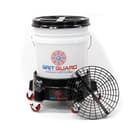
- Grit Guard 5 Gallon Washing System— for someone who washes most weekends and is tired of dragging a full bucket around. The dolly and the Gamma Seal lid are the two parts people end up buying separately later anyway.
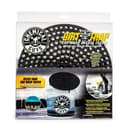
- Chemical Guys Cyclone Dirt Trap— for someone who owns a bucket and wants the filter-screen style of insert rather than a flat grate. At a stated 12 inches it is the widest insert on this page.
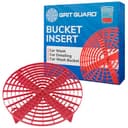
- Grit Guard Original Bucket Insert— for anyone who wants the largest reduction in wash-induced swirls for the smallest amount of money. It is the budget pick here, and it is the item we would buy twice: one per bucket.
How to choose a car wash bucket
1. Buy two buckets before you buy a nicer one
This is the one place where spending more is the wrong move. A second plain five-gallon bucket with a ten-dollar insert in it beats a single premium bucket with every accessory, because a single bucket has no rinse step and the rinse step is the entire point. If your budget is forty dollars, two buckets and two inserts is a better wash than one bucket kit.
Our two-bucket method guide walks through the sequence panel by panel, and do I need a grit guard answers the question people usually ask first. The short version of both: rinse the mitt in the rinse bucket, scrub it against the insert, then go back to the soap bucket. Never go mitt to paint to soap.
2. Insert type: flat grate or filter screen
The Grit Guard Original is a rigid radial grate, and the listing states a 10-inch diameter that fits 3.5, 4, 5 and 6 gallon buckets. The Chemical Guys Cyclone Dirt Trap is a 12-inch filter screen rather than a grate. Both do the same job the same way — keep the mitt off the sediment, give you a surface to scrub against — and the choice is mostly about which one fits your bucket. Measure the inside diameter at the bottom, not the top: buckets taper.
Two inserts stacked in one bucket is a real technique rather than a marketing idea. It raises the working floor and gives you two scrubbing surfaces. At about ten dollars each, that is a cheap upgrade.
3. Volume, and why five gallons is the number
Five gallons is the standard because of dilution. Soap concentrates are dosed per gallon, and a smaller bucket means the same amount of grit ends up suspended in less water — a higher concentration of exactly the thing you are trying to keep away from the paint. A 3.5-gallon bucket is easier to carry and worse at its job. On a truck or a large SUV, go five gallons in both buckets and expect to change the rinse water halfway through; our truck detailing guide covers where the extra dirt comes from.
4. The lid is not a gimmick
A sealing lid does two useful things. It lets you store the bucket with the mitt, soap and brushes inside instead of spread across a shelf, and it gives you something to sit on while you do wheels and lower rockers — which is where a surprising share of a wash is spent. The Gamma Seal lid on the Grit Guard system threads on and seals; the Chemical Guys kit lid is a seat lid. Neither is essential. Both are the kind of thing people add within a year.
What a bucket cannot do
It cannot replace a pre-rinse. The grit that causes the worst scratches is the grit still on the car when the mitt arrives. A foam or pressure-wash pre-soak lifts the loose layer before contact, which is why a foam cannon and a pressure washer reduce contact damage more than any bucket does. A bucket manages the grit you have already picked up.
It cannot fix a bad mitt.A thin sponge holds grit against the paint no matter what is in the bucket. Depth of pile is what pulls particles away from the contact face — see best car wash mitts for what to look for.
It cannot undo a dropped mitt. If the mitt hits the driveway, it is finished for that wash. Rinsing does not reliably get embedded grit out of deep chenille, and this is the most common cause of a fresh scratch on an otherwise careful wash.
How to use the setup
- Fill the rinse bucket first, then the soap bucket, so you never dose soap into the wrong one. Mark them if you have to; a strip of tape is fine.
- Pre-rinse or foam the whole carbefore the mitt touches anything. AAA notes that industry guidance is a wash roughly every two weeks, and that bird droppings, dead bugs and tree sap are acidic enough to damage paint if left too long — those are the deposits a pre-soak softens.
- Work top down, one panel at a time, and return to the rinse bucket between panels rather than between whole sections.
- Scrub the mitt against the insert for a few seconds in the rinse bucket. This is the step most people skip, and it is the one that releases embedded grit from the pile.
- Do the lower quarter of the car last, with its own dedicated mitt if you have one. Rockers and bumpers carry the heaviest road film.
- Do wheels with separate tools entirely. Brake dust is metal particles, so it never goes in the paint bucket. Use a dedicated wheel brush and a separate bucket of water.
- Dump both buckets. Standing water starts to smell, and sediment cements to the bottom if you leave it. Rinse the insert and let it dry sitting on top.
Our call
Buy the Grit Guard Original Insert if you own a bucket. Buy two. It is the cheapest item on this page, it fits the bucket already in your garage, and per dollar it is the highest-return purchase on this site.
Buy the Chemical Guys Ultimate Bucket Kit if you are starting from zero and would rather make one decision than five. The mitt and soap in the box are the same class of product we recommend separately anyway.
Buy the Grit Guard 5 Gallon Washing System if you wash weekly. The dolly changes how the job feels more than any chemical on this site will, and the sealing lid means the whole kit lives in the bucket.
And if you are building the whole wash rather than just the bucket, our pressure washer car wash kit page lists the machine, cannon, soap, bucket, mitt and towel as one matched set, and the guides librarycovers the method side — drying, decontamination and the order the whole job goes in.