The picks at a glance
| Product | What it is | Published spec | Size | Price band |
|---|
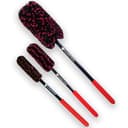
| Wheel Woolies Wheel Brush Set (3-Piece) | Soft wheel & barrel brush set | 3 sizes; no-scratch heads | 3-piece (18", 12", 12") | Premium |
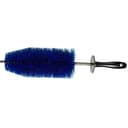
| EZ Detail Big Wheel Brush (18-inch) | Flexible nylon wheel & barrel brush | 18 in; flexible, non-scratch | 18 in | Mid |
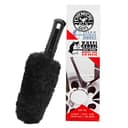
| Chemical Guys Gerbil Wheel & Rim Brush | Natural-bristle wheel & rim brush | Soft natural bristles; faces | Not listed | Budget |
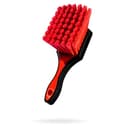
| Adam's Polishes Wheel Brush | Soft-bristle wheel brush | Soft bristles; rubberized handle | Not listed | Budget |
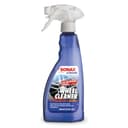
| SONAX Wheel Cleaner Full Effect | Non-acid iron-removing wheel cleaner | Color-changing iron remover | 16.9 oz | Mid |
| Chemical Guys Diablo Foaming Wheel & Rim Gel | Clinging gel wheel cleaner (all finishes) | Cling gel, all-finish safe | 16 oz | Budget |
Read from each product listing on the date recorded under its write-up below. Two of these brushes publish no size figure and the table says so rather than estimating one.
How to choose a brush for a gloss black wheel
1. Head material, then what holds the head on
Soft synthetic noodle heads and soft natural bristle are the two constructions that belong anywhere near a painted wheel. Both deform around a spoke rather than dragging across it, and both carry cleaner into recesses by capillary action rather than by force.
What you are checking after that is the hardware. Run the brush head between your fingers and feel for the collar, the ferrule or the molded hub. If any of it is exposed metal or rigid plastic that can reach the wheel when the head compresses, it will eventually reach the wheel. That is the single most common way people scratch a gloss black face, and it leaves an arc-shaped mark right where the brush pivots.
2. Three reaches, not one brush
A wheel is three jobs, and the reason people end up pressing too hard is almost always that they are using the wrong-length tool for the one they are on.
- The face and the spokes— a short, soft brush you can control precisely. Stiffness is irrelevant here; what you want is a head that follows the spoke contour.
- The barrel— the inside of the rim, which is where most of the brake dust actually accumulates and where no short brush reaches. An 18 inch flexible handle is the tool, and it is the one most people do not own.
- The lip and the lug recesses— tight, awkward, and the place where a small detailing brush does more than a wheel brush. Our detailing brush guide covers the technique, and the brush roundup has the options.
3. The cleaner is what protects the finish, not the brush
Here is the part that actually prevents scratches. Brake dust is embedded iron that has arrived hot and bonded itself into the clear coat on the wheel. You cannot scrub that off without abrading the surface it is bonded to. You can dissolve it.
A non-acid, iron-removing wheel cleaner changes the chemistry instead: it reacts with the embedded iron, turns a conspicuous purple as it does so, and releases the particle so a soft brush can lift it away with no pressure at all. SONAX Wheel Cleaner Full Effect is the pick for that job; Chemical Guys Diablo is the clinging gel for routine maintenance between the deeper cleans, and its listing states it is safe on all wheel finishes.
What you must not use on a gloss black wheel is an acid-based cleaner. Acid wheel cleaners exist, they are sold for bare aluminum and for neglected fleet wheels, and they will stain or strip a painted finish. If a bottle does not state that it is acid-free or safe on all finishes, assume it is not safe on yours. The wheel cleaner roundup sorts the category on exactly this.
4. Clean them cold, and clean them often
Two habits do more for a gloss black wheel than any product on this page.
Cold. Never spray a chemical onto a wheel that has just come off a drive. A hot wheel flashes the cleaner dry before it can react, which means you get no dissolving action and a streak of dried product that you then scrub at. Let the car sit, or rinse the wheels with plain water first.
Often. A wheel cleaned every wash needs a two-minute dwell and a light pass. A wheel cleaned twice a year has baked-on deposits that need pressure, and pressure is what marks the finish. The frequency is the protection.
A third habit worth the trouble: keep wheel brushes and wheel towels completely separate from everything that touches paint, and wash them separately. Chemical Guys’ microfiber guidance says the same thing about towels — separate the paint-safe ones from the wheel, engine and heavily soiled ones before washing. A brush that has lived in brake dust is a grinding tool if it ever touches a body panel.
What about a coating on the wheel?
Sealing or coating a gloss black wheel is worth doing and it changes the cleaning job meaningfully: the iron lands on the coating rather than in the clear coat, so most of a wash becomes a rinse. It does not make the wheel scratch-proof, and it does not change any of the brush advice above — a coated wheel still marks if you drag a ferrule across it, and the mark is now in a layer you paid for.
The practical version for most people is to use a spray sealant on the wheels at the same time as the paint. Our ceramic spray roundup covers the products, and how to remove brake dust covers the underlying problem they reduce.
Our call
Wheel Woolies plus SONAX Full Effect. That pairing is the whole job: a chemical that releases the iron and a set of heads with nothing hard on them to reach the finish while you lift it away. It is the most expensive answer on this page by a clear margin and it is the one we would buy for a car with gloss black wheels we cared about.
Cheaper and still safe: EZ Detail Big Wheel Brush for barrels, Chemical Guys Gerbil or the Adam’s brush for faces, and Diablo gel as the week-to-week cleaner with SONAX kept for the quarterly decontamination.