TWO BUCKET CLUB

Best Car Glass Cleaner and Water Repellent (2026)

One bottle that cleans and repels is a real category, and its genuine advantage is not performance - it is that the repellent gets applied at all. Here is what that convenience costs, and the exact point where two bottles win.

By Stephen V.Last updated How we pick

Buy a 2-in-1 for the reason nobody advertises: it is the only kind of glass repellent that actually ends up on your windshield. A dedicated treatment is the better product — it is not close. But Rain-X’s own published directions for its standalone repellent are clean and dry the glass, apply above 40 degrees Fahrenheit, wipe on with a folded dry cloth in firm overlapping circles, let it haze, reapply for uniform coverage, then remove the final haze with a dry cloth. That is a job. Most people do it once, in October, and never again. A cleaner that leaves repellency behind happens every time you clean the glass, which is a job you were doing anyway.

It matters more than it sounds. The Federal Highway Administration’s five-year crash averages put roughly 745,000 weather-related crashes a year in the US, and “over 77 percent of most weather-related crashes happen during rain or mist conditions” — far more than freezing precipitation or low visibility. Glass you can see through in rain is a safety item, not a detailing flourish.

So this page sorts six picks on the half you can genuinely assess: the cleaner. Because here is the thing nobody in this sub-category will tell you — not one of them publishes a durability figure for the repellent. Rain-X doesn’t. Invisible Glass doesn’t. In the dedicated-treatment aisle exactly one manufacturer publishes a number at all, and we have put that product on this page so you can see what you are choosing between. Live prices on every row.

How this is funded:we earn a commission if you buy through our links, at no extra cost to you. It never changes which product we recommend, and we’ll tell you plainly when we’d skip one. Full disclosure.

Quick picks

Ranked on published specs, value and buyer fit. Select a row to jump to the full write-up. We have not lab-tested these products — here is exactly what we do instead.

#ProductBest forPrice
1
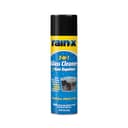
Rain-X 2-in-1 Glass Cleaner Plus Rain Repellent (5080233), 18 oz

Rain-X 2-in-1 Glass Cleaner Plus Rain Repellent (5080233), 18 oz

The category default, and the cheapest bottle on this page by a wide margin. It is a trigger-spray glass cleaner from the brand that invented consumer glass repellency, and the listing sells it on exactly that pairing - a streak-free clean for automotive glass with a rain repellent built in. The reason it is first is not performance, it is compliance: a repellent you apply during the job you already do is a repellent that actually stays on your windshield, and Rain-X's own standalone treatment requires a wipe-on, haze, buff sequence that most people do once and never repeat. What you are giving up is real and Rain-X does not hide it by publishing a durability claim here, because there is none - a cleaner-borne repellent is topped up every wash rather than bonded to the glass. Treat it as the floor of the category, not the ceiling.

Best for most people
$5.97View on Amazon

Price as of November 20, 2026. #ad How we’re funded

2
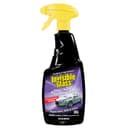
Invisible Glass Cleaner + Rain Repellent (92184), 22 fl oz

Invisible Glass Cleaner + Rain Repellent (92184), 22 fl oz

The pick if you care which half of a 2-in-1 is the better product, because the cleaner half is the half you can actually judge. Invisible Glass is the streak-free benchmark in the plain glass-cleaner aisle - ammonia-free, so it is safe on tinted windows and rubber seals - and this is that cleaner with a repellent added. The listing describes it as a 2-in-1 spray that cleans automotive glass and repels rain, sleet and snow for better wet-weather visibility. At 22 fl oz it is also the largest trigger bottle here. The same caveat applies as to everything on this page: no durability figure is published for the repellent, and a repellent carried in a cleaner is a reapplication product rather than a bonded one.

Best cleaner half
$9.99View on Amazon

Price as of November 20, 2026. #ad How we’re funded

3
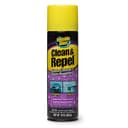
Invisible Glass Clean & Repel Aerosol (91184), 19 oz

Invisible Glass Clean & Repel Aerosol (91184), 19 oz

The same idea in an aerosol, and the format change matters more than it sounds. The listing describes an aerosol cleaner that removes grime and repels rain, sleet and snow to improve wet-weather windshield visibility. An aerosol lays down a clinging foam rather than a running liquid, which is the difference between product that sits on a near-vertical windshield long enough to dissolve bonded film and product that drains into the cowl - the same reason a foaming glass cleaner outperforms a watery one on a bug-splattered screen. The trade is control: an aerosol is one strength, it is easy to over-apply, and spraying it at interior glass puts a fine mist on your dash. Use it on the outside and keep a towel-sprayed cleaner for the inside.

Best for bonded film
$9.99View on Amazon

Price as of November 20, 2026. #ad How we’re funded

4
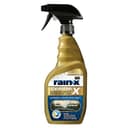
Rain-X Cerami-X Glass Cleaner + Water Repellent, 23 oz

Rain-X Cerami-X Glass Cleaner + Water Repellent, 23 oz

The honest answer for most drivers who are never going to do a two-stage glass job. The listing describes a 23 oz spray that cleans "effectively while remaining streak free" and protects "against contaminants and stains" - a glass cleaner that leaves some repellency behind rather than a treatment you apply on its own. That is a weaker proposition than a bonded silane and we are not pretending otherwise: a cleaner you reapply every wash cannot build up the same durability. What it buys is that the repellency never gets forgotten, because it happens during the job you already do. It is also the cheapest bottle in this roundup, in the largest size.

Best big bottle
$7.98View on Amazon

Price as of November 20, 2026. #ad How we’re funded

5
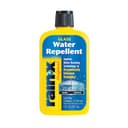
Rain-X Original Glass Water Repellent, 7 fl oz

Rain-X Original Glass Water Repellent, 7 fl oz

The benchmark everything else in this category is measured against, and still the right first purchase. Rain-X describes it as treating the glass with "a super-slick, non-stick invisible barrier that repels rain, sleet and snow on contact," and its published directions are the whole method: clean and dry the glass, apply above 40 degrees Fahrenheit, wipe on with a folded dry cloth in firm overlapping circles, let it haze, reapply for uniform coverage, then remove the final haze. Rain-X publishes no durability figure for it and we are not going to invent one; what the bottle buys you is the cheapest honest way to find out whether you like driving with a repellent at all. Note the California Proposition 65 warning Rain-X prints on this product: it can expose you to naphthalene.

Best repellency if you will do two steps
$9.18View on Amazon

Price as of November 20, 2026. #ad How we’re funded

6
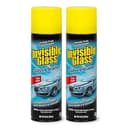
Invisible Glass Premium Glass Cleaner

Invisible Glass Premium Glass Cleaner

The streak-free default. It is ammonia-free, so it is safe on tinted windows and rubber seals, and it wipes down to genuinely clear glass with good technique. The aerosol sprays an even, fine mist — just aim it at the towel indoors so you are not misting the dash and electronics.

Best cleaner if you will do two steps
$10.36View on Amazon

Price as of November 20, 2026. #ad How we’re funded

The picks in full

#1Best for most people

Rain-X 2-in-1 Glass Cleaner Plus Rain Repellent (5080233), 18 oz

The category default, and the cheapest bottle on this page by a wide margin. It is a trigger-spray glass cleaner from the brand that invented consumer glass repellency, and the listing sells it on exactly that pairing - a streak-free clean for automotive glass with a rain repellent built in. The reason it is first is not performance, it is compliance: a repellent you apply during the job you already do is a repellent that actually stays on your windshield, and Rain-X's own standalone treatment requires a wipe-on, haze, buff sequence that most people do once and never repeat. What you are giving up is real and Rain-X does not hide it by publishing a durability claim here, because there is none - a cleaner-borne repellent is topped up every wash rather than bonded to the glass. Treat it as the floor of the category, not the ceiling.

What we like

  • The cheapest product on this page, in a format you already use every few weeks
  • Collapses two jobs into one, which is the only reason most windshields ever get treated at all
  • No haze-and-buff stage - the step people get wrong with the standalone treatment is simply absent

Trade-offs

  • Rain-X publishes no durability figure for the repellent half, so there is no number to compare against a bonded treatment
  • 18 oz is the smallest bottle here, and it is the one you will use most often
  • Repellency is topped up rather than built up - on a car that sees regular highway rain this is not a substitute for a dedicated treatment
TypeTrigger-spray automotive glass cleaner with a rain repellent
Standout specListing states a streak-free clean for automotive glass plus a rain repellent; no durability figure published
Size18 oz trigger spray
Best forMost people - some rain shedding with no extra step and no extra bottle
Price tierBudget

Cost-to-use note. 18 oz is roughly a season of cleaning every window on a car. Because the repellency rides along with the cleaning, the cost of keeping it topped up is whatever you were already spending on glass cleaner.

Specs read from the product listing, on November 1, 2026. “Not listed” means the listing does not state that figure.

#2Best cleaner half

Invisible Glass Cleaner + Rain Repellent (92184), 22 fl oz

The pick if you care which half of a 2-in-1 is the better product, because the cleaner half is the half you can actually judge. Invisible Glass is the streak-free benchmark in the plain glass-cleaner aisle - ammonia-free, so it is safe on tinted windows and rubber seals - and this is that cleaner with a repellent added. The listing describes it as a 2-in-1 spray that cleans automotive glass and repels rain, sleet and snow for better wet-weather visibility. At 22 fl oz it is also the largest trigger bottle here. The same caveat applies as to everything on this page: no durability figure is published for the repellent, and a repellent carried in a cleaner is a reapplication product rather than a bonded one.

What we like

  • Built on the ammonia-free Invisible Glass formula, which is tint-safe and the streak-free standard in the plain-cleaner aisle
  • 22 fl oz - the largest trigger bottle on this page
  • Named on the listing for rain, sleet and snow, not just rain, which matters from November onward

Trade-offs

  • No published durability figure for the repellent half - treat it as a per-wash top-up
  • Costs more per bottle than the Rain-X 2-in-1 for a repellent neither maker quantifies
  • A trigger spray mists onto the dash if you spray the inside of a windshield directly - spray the towel instead
TypeTrigger-spray ammonia-free glass cleaner with a rain repellent
Standout specAmmonia-free and tint-safe; listing states it cleans automotive glass and repels rain, sleet and snow
Size22 fl oz trigger spray
Best forAnyone who wants the better glass cleaner and will take the repellency as a bonus
Price tierBudget

Cost-to-use note. The biggest trigger bottle here, and the repellency is reapplied every time you clean. On a car washed every couple of weeks that is a treated windshield all winter for the price of glass cleaner.

Specs read from the product listing, on November 1, 2026. “Not listed” means the listing does not state that figure.

#3Best for bonded film

Invisible Glass Clean & Repel Aerosol (91184), 19 oz

The same idea in an aerosol, and the format change matters more than it sounds. The listing describes an aerosol cleaner that removes grime and repels rain, sleet and snow to improve wet-weather windshield visibility. An aerosol lays down a clinging foam rather than a running liquid, which is the difference between product that sits on a near-vertical windshield long enough to dissolve bonded film and product that drains into the cowl - the same reason a foaming glass cleaner outperforms a watery one on a bug-splattered screen. The trade is control: an aerosol is one strength, it is easy to over-apply, and spraying it at interior glass puts a fine mist on your dash. Use it on the outside and keep a towel-sprayed cleaner for the inside.

What we like

  • Clinging aerosol foam stays on a raked windshield instead of running off, which is what buys dwell on bonded film
  • Sprays an even fine mist over a large pane quickly, with no trigger fatigue on a full set of windows
  • Cleans and leaves repellency in one pass, same as the trigger sprays, at a similar price

Trade-offs

  • No published durability figure for the repellent half, same as everything else in this category
  • An aerosol is a fixed strength with no option to dilute, and overspray reaches the dash and A-pillars indoors
  • 19 oz of aerosol is less working product than 22 fl oz of liquid, because propellant takes up part of the can
TypeAerosol foaming glass cleaner with a rain repellent
Standout specAerosol cleaner; listing states it removes grime and repels rain, sleet and snow
Size19 oz aerosol
Best forExterior glass with bonded film on it - bugs, road grime, wiper smear
Price tierBudget

Cost-to-use note. An aerosol covers a full set of windows fast, which is its real advantage over a trigger bottle. Because part of the can is propellant, do not read 19 oz as more product than the 22 fl oz trigger spray above.

Specs read from the product listing, on November 1, 2026. “Not listed” means the listing does not state that figure.

#4Best big bottle

Rain-X Cerami-X Glass Cleaner + Water Repellent, 23 oz

The honest answer for most drivers who are never going to do a two-stage glass job. The listing describes a 23 oz spray that cleans "effectively while remaining streak free" and protects "against contaminants and stains" - a glass cleaner that leaves some repellency behind rather than a treatment you apply on its own. That is a weaker proposition than a bonded silane and we are not pretending otherwise: a cleaner you reapply every wash cannot build up the same durability. What it buys is that the repellency never gets forgotten, because it happens during the job you already do. It is also the cheapest bottle in this roundup, in the largest size.

What we like

  • Cheapest product here and the largest bottle - 23 oz of trigger spray
  • Collapses two jobs into one, so the glass gets treated every time it gets cleaned
  • No haze stage, which is the part of the Original treatment people get wrong

Trade-offs

  • Weakest and shortest-lived repellency in this roundup by design - it is a cleaner first
  • No published durability claim, and the mechanism is reapplication rather than a bonded layer
  • Not a substitute for the bonded treatments on a car that sees highway rain regularly
TypeGlass cleaner with a water-repellent component
Standout specListing states streak-free cleaning plus protection against contaminants and stains
Size23 oz
Best forDrivers who want some rain shedding without adding a separate step to the wash
Price tierBudget

Cost-to-use note. A 23 oz trigger spray is many washes of glass cleaning. Because the repellency rides along with the cleaning, the practical cost of keeping it topped up is close to zero.

Specs read from the product listing, on October 11, 2026. “Not listed” means the listing does not state that figure.

#5Best repellency if you will do two steps

Rain-X Original Glass Water Repellent, 7 fl oz

The benchmark everything else in this category is measured against, and still the right first purchase. Rain-X describes it as treating the glass with "a super-slick, non-stick invisible barrier that repels rain, sleet and snow on contact," and its published directions are the whole method: clean and dry the glass, apply above 40 degrees Fahrenheit, wipe on with a folded dry cloth in firm overlapping circles, let it haze, reapply for uniform coverage, then remove the final haze. Rain-X publishes no durability figure for it and we are not going to invent one; what the bottle buys you is the cheapest honest way to find out whether you like driving with a repellent at all. Note the California Proposition 65 warning Rain-X prints on this product: it can expose you to naphthalene.

What we like

  • Cheapest entry into the category by a wide margin, and sold in nearly every parts store
  • A 7 oz bottle does the whole car's glass many times over, unlike the single-use applicators
  • Manufacturer directions are explicit about temperature, technique and the haze-removal step

Trade-offs

  • Rain-X publishes no durability claim for it, and owner reports on its own product page range from weeks to a reapplication every 2 to 3 weeks
  • The haze is real - skip the final buff and you get a smeary windshield at night
  • Carries a California Prop 65 naphthalene warning; wear gloves and work in ventilated air
TypeWipe-on silicone glass water repellent
Standout specManufacturer directions: apply above 40 F, wipe on, let haze, buff off
Size7 fl oz
Best forA first repellent, and for topping up a windshield every few weeks in a wet season
Price tierBudget

Cost-to-use note. A few milliliters on a folded cloth does a windshield, so one 7 oz bottle covers a full season of frequent top-ups on every window of the car. That is what makes it cheap per application even though it is the shortest-lived product here.

Specs read from the product listing, on October 11, 2026. “Not listed” means the listing does not state that figure.

#6Best cleaner if you will do two steps

Invisible Glass Premium Glass Cleaner

The streak-free default. It is ammonia-free, so it is safe on tinted windows and rubber seals, and it wipes down to genuinely clear glass with good technique. The aerosol sprays an even, fine mist — just aim it at the towel indoors so you are not misting the dash and electronics.

What we like

  • Ammonia-free, so safe on window tint and rubber trim
  • Wipes down to clear, streak-free glass
  • Even aerosol spray covers fast

Trade-offs

  • Aerosol overspray reaches the dash if you spray glass directly indoors
  • No added water-repellent function
TypeAutomotive glass cleaner (aerosol)
Standout specAmmonia-free, tint-safe
SizeNot listed
Best forA safe, streak-free do-everything glass cleaner
Price tierBudget

Specs read from the product listing, on August 7, 2026. “Not listed” means the listing does not state that figure.

How to choose a 2-in-1 glass cleaner and repellent

Three questions, and the first one is really about you rather than the product.

1. Honestly: will you do a two-step glass job?

This is the whole decision, and it is worth being blunt about. A dedicated repellent is a bonded or semi-bonded layer applied to clean, dry glass in a separate operation. Done properly it outperforms anything carried in a cleaner, by a lot. Aquapel — the only manufacturer in the whole category that publishes a durability claim — sells its treatment on a 6-month guarantee and describes it as forming a “chemical bond with automotive glass — unlike other products that simply coat.” Nothing on this page is that.

But a treatment applied once a year is a treatment that is working for two months of the year. If the realistic alternative to a 2-in-1 is a half-finished bottle of standalone repellent in the garage, the 2-in-1 is the better buy and we are not going to pretend otherwise. Our windshield rain repellent roundup covers the dedicated products properly, and Rain-X vs Aquapel is the head-to-head between the two most people choose between.

2. Judge the cleaner, because it is the only half with evidence

Since no maker here quantifies the repellent, the cleaner is what you are actually buying. Two things to read for:

Ammonia-free. Ammonia is what makes household glass cleaner the wrong bottle for a car: it attacks aftermarket window tint from the inside and dries out rubber seals over time. Every pick on this page is an automotive formula, and the Invisible Glass products are built on the ammonia-free, tint-safe base that is the streak-free benchmark in the plain glass-cleaner aisle.

Trigger or aerosol.An aerosol lays down a clinging foam; a trigger sprays a liquid that starts running the moment it lands on a raked windshield. On bonded film — bug splatter, road grime, the smeary band a worn wiper leaves — dwell is what does the work, so foam wins outside. Inside, a trigger sprayed onto the towel wins, because neither format belongs misted across a dashboard. Most people want one of each eventually, and that is also true of plain glass cleaners.

3. Size, because this is a per-wash product

A dedicated repellent is a seasonal purchase; a 2-in-1 is a consumable you reach for every couple of weeks. That inverts the usual value math. The 18 oz Rain-X bottle is the cheapest here and also the one that empties first; the 23 oz Cerami-X is the biggest bottle on the page. Across a winter the difference is a bottle or two, which is not much money — but it is the only durability-adjacent number in this category that is actually printed on the label.

What a 2-in-1 cannot do

It cannot build up. A bonded treatment accumulates protection on the glass; a cleaner-borne repellent is removed and replaced every time you clean. That is why none of them can honestly publish a month figure. Repellency that resets on every wash is a floor, not a ceiling.

It cannot fix contaminated glass. If water sheets unevenly or your wipers judder, the problem is usually bonded mineral and film on the surface, and no cleaner lifts that. Glass is far harder than paint, so it takes a dedicated water spot remover or a glass polish — see how to remove water spots from car glass for the diagnostic. Treat a 2-in-1 as maintenance for glass that is already clean.

It cannot replace wipers. This is the most common disappointment with every product in this category. A repellent changes how water behaves on glass; it does not change what a torn wiper blade does to it. If you are buying a repellent because of night-time smearing, replace the blades first and then decide whether you still have a problem.

And one thing worth knowing before you spend: there is a documented downside to judging any glass treatment by beading alone. DetailingWiki makes the point about quick detailers on paint and the mechanism is identical on glass — a fresh top layer “can improve beading and sheeting for a short period of time, mostly because the layer that interacts with the water is actually the quick detailer and not the protective layer underneath.” Good beading the afternoon you apply something tells you almost nothing about next month.

How to actually use one

  1. Start with genuinely clean glass. If the windshield has a season of film on it, the first pass is a cleaning pass and the second is the one that leaves repellency. One pass on dirty glass gets you neither.
  2. Work out of direct sun, on cool glass. Same rule as every other product on this site. Hot glass flashes the liquid off before you can spread it, which is how streaks happen.
  3. Two towels, and keep them for glass only. One damp to clean, one dry to finish. A towel that has been near wax or a tire dressing will smear glass no matter what you spray. Our streak-free glass guide covers the technique in full.
  4. Spray the towel for interior glass. Never the pane. The inside of a windshield is six inches from your instrument cluster.
  5. Finish in straight lines, and change direction inside versus out. Horizontal outside, vertical inside. Then you know which side a remaining streak is on without guessing.
  6. Expect to reapply on a wash cadence, not a seasonal one. Nobody here publishes an interval. Every time you clean the glass, you have re-treated it — that is the deal.

Our call

Buy the Rain-X 2-in-1 if you want the honest default. It is the cheapest bottle here, it does the thing the category exists to do, and the money you save over a dedicated treatment is money you will not resent when the bottle empties in February.

Buy the Invisible Glass Cleaner + Rain Repellent if you want the better cleaner. Ammonia-free, tint-safe, the largest trigger bottle on the page, and the repellency is the same kind of bonus it is on everything else here.

Add the Clean & Repel aerosolif your exterior glass is the problem — bugs, highway film, wiper smear. Foam dwells; liquid runs.

And buy two bottles insteadif you are the kind of person who will genuinely do a wipe-on treatment twice a year. Rain-X Original plus a dedicated Invisible Glass cleaner is the better-performing setup and it is on this page for exactly that reason. If you are not that person — and most of us are not — the top of this page is the answer that actually ends up on your windshield.

And if the bottle you are replacing is a Rain-X one, our alternatives to Rain-X page sorts the swaps by which product in that family you own — the wipe-on treatment, the 2-in-1 or the Cerami-X cleaner all have different answers.
Frequently asked questions

What is the best car glass cleaner and water repellent?

For most people the Rain-X 2-in-1 Glass Cleaner Plus Rain Repellent, because it is the cheapest bottle in the category and it puts repellency on the glass during a job you already do. If you care more about the cleaning half, the Invisible Glass Cleaner + Rain Repellent is built on an ammonia-free, tint-safe formula and comes in the largest trigger bottle here. For exterior glass with bonded film on it, the Invisible Glass Clean & Repel aerosol lays down a clinging foam that dwells on a raked windshield instead of running off. All three are reapplication products rather than bonded treatments, and none of their makers publishes a durability figure for the repellent half.

Is a 2-in-1 glass cleaner as good as Rain-X Original?

No, and nobody claims it is. Rain-X Original is a wipe-on treatment applied to clean, dry glass as its own operation - the published directions are to apply above 40 degrees Fahrenheit, wipe on in firm overlapping circles, let it haze, reapply for uniform coverage, then buff the haze off. That produces a longer-lasting layer than anything carried in a cleaner. The honest counterpoint is compliance: a treatment that requires a separate twenty-minute job tends to get done once a year, while a 2-in-1 gets applied every time the glass is cleaned. If you will genuinely do the two-step job, do it. If you know you won't, the 2-in-1 is the product that will actually be on your windshield in January.

How long does the repellent in a 2-in-1 glass cleaner last?

Nobody publishes a figure, and we are not going to invent one. That is not an oversight on our part - it is the defining characteristic of this sub-category. Rain-X publishes no durability claim for its 2-in-1 or for its Cerami-X cleaner, and neither does Invisible Glass. The mechanism explains why: the repellency is carried in a cleaner that gets removed and replaced on every wash, so it is topped up rather than built up. For comparison, Aquapel is the only manufacturer in the whole glass-treatment category that publishes a number at all, and it sells its dedicated bonded treatment on a 6-month guarantee. Plan on reapplying a 2-in-1 whenever you clean the glass, which in practice means every week or two.

Can I use household glass cleaner on car windows instead?

You can, and it is a bad habit for two reasons. Most household glass cleaners contain ammonia, which attacks aftermarket window tint from the inside and dries out rubber seals over the years - and the tint is on the inner surface, which is exactly where you spray. Automotive formulas are ammonia-free for that reason. The second reason is that household cleaner contains nothing that repels water, so you get none of the wet-weather benefit this whole page is about. If you want one bottle for the house and the car, that bottle should be the automotive one, not the other way around.

Will a glass repellent stop my wipers from juddering or smearing?

Usually not, and this is the most common misdiagnosis in the category. Judder and night-time smearing are almost always a torn or hardened wiper blade, or bonded mineral and film on the glass surface. A repellent changes how water behaves on clean glass; it does not resurface contaminated glass and it cannot fix a blade. The order that works is: replace the blades, decontaminate the glass with a dedicated water spot remover or glass polish, then apply a repellent to the clean surface. Applying a repellent as step one is how people conclude that repellents do not work.

Does a repellent on glass actually matter for safety?

The exposure is larger than most people assume. The Federal Highway Administration's five-year averages, analyzed from NHTSA data, put roughly 745,000 weather-related crashes a year in the US out of about 6,035,000 total - and "over 77 percent of most weather-related crashes happen during rain or mist conditions," against 18 percent in freezing precipitation and 4 percent in low visibility. Rain is where the weather risk is concentrated. A repellent will not change the physics of stopping distance, but anything that keeps the windshield clearer at 60 mph in rain is working on the right problem.

Can you apply a 2-in-1 glass cleaner over an existing Rain-X treatment?

Yes, and it is a reasonable maintenance routine - a dedicated bonded treatment in the fall, then a 2-in-1 as the regular glass cleaner through the wet months so the surface keeps getting topped up. What you should not expect is for the cleaner to extend the bonded layer's life; it leaves its own thin repellent film rather than reviving what is underneath. One practical warning: that is also why beading is a poor test of whether your treatment is still working. A fresh film can bead beautifully over a layer that has largely worn through.

Sources

  • FHWA Road Weather Management — How Do Weather Events Affect Roads? — US Federal Highway Administration, five-year averages 2019-2023 analyzed by Athey Creek Consultants from NHTSA data: of roughly 6,035,000 vehicle crashes a year, "Approximately 12 percent of these crashes - nearly 745,000 - are weather-related," and "Over 77 percent of most weather-related crashes happen during rain or mist conditions" - against 18 percent in freezing precipitation and 4 percent in low visibility (accessed October 11, 2026)
  • Rain-X — Original Glass Water Repellent — Manufacturer product page: the treatment "treats the glass surface with a super-slick, non-stick invisible barrier that repels rain, sleet and snow on contact"; published directions are clean and dry the surface first, "Apply in temperatures above 40 degrees F," wipe on with a small folded dry cloth in "a firm, circular and overlapping motion," allow to dry as "a slight haze may appear," reapply for complete coverage, then "Remove final haze with a dry cloth or by sprinkling water onto the haze"; the page carries a California Proposition 65 warning for naphthalene and publishes no durability figure (accessed October 11, 2026)
  • Aquapel — Glass Treatment (PGW/Everything Autoglass) — Manufacturer product line page: the treatment "Dramatically improves visibility in rain and forms chemical bond with automotive glass - unlike other products that simply coat," sold as a "New Single Pack" with a "6 Month Guarentee" [sic] and described as "Used by professionals"; the company also states the treatment's "performance can be restored in just minutes" when it is time to renew (accessed October 11, 2026)
  • DetailingWiki — What is a quick detailer — Detailing reference wiki (Vinnie van Rooij): a QD works "by leaving a very small layer of wax and or polymers on top of the existing layer"; it is normally "sprayed on a micro fibre towel and then smeared across the surface," and spraying straight onto the panel "is rarely recommended" because product can dry in places a towel cannot reach; the documented downside is that a QD "can improve beading and sheeting for a short period of time, mostly because the layer that interacts with the water is actually the quick detailer and not the protective layer underneath," so "the surface may show good beading and sheeting even though the layer underneath is worn"; 'boosting' a wax "would imply that it revives the layer of wax underneath, which is not the case"; concentrates meant for dilution should be diluted with demineralized water to avoid water spotting (accessed October 11, 2026)

Keep reading