Rain-X vs Aquapel: Which Windshield Treatment Should You Buy?
One wipes a slick film onto the glass and costs a few dollars. The other claims a chemical bond and backs it with a guarantee. They are not competing for the same job as closely as the shelf suggests.
How this is funded:we earn a commission if you buy through our links, at no extra cost to you. It never changes which product we recommend, and we’ll tell you plainly when we’d skip one. Full disclosure.
The short version
Both products make rain bead up and roll off your windshield instead of sheeting across it, and that is worth doing: the Federal Highway Administration, working from five-year NHTSA averages for 2019 to 2023, reports that over 77 percent of weather-related crashes happen during rain or mist. Where the two part company is what they do to the glass and how you buy them.
Rain-X Originalis a wipe-on treatment in a bottle. Rain-X describes it as treating the glass with “a super-slick, non-stick invisible barrier that repels rain, sleet and snow on contact,” and publishes a precise method for applying it. It publishes no durability claim at all. It is inexpensive, available everywhere, and forgiving: a bottle treats every pane on the car several times over.
Aquapelis a sealed single-use applicator. Aquapel says its treatment “forms chemical bond with automotive glass — unlike other products that simply coat,” sells it to professional glass installers, and puts a “6 Month Guarantee” on the single pack. It costs more per application, it does one windshield, and you get one attempt.
So: if you want one windshield treated properly before a wet season, buy Aquapel and prep the glass first. If you want to treat all the glass on the car, or you are not sure you will even like driving with a repellent, buy the Rain-X bottle. The rest of this page is why, and the parts of the decision that are not about the products at all.
Side by side
| Rain-X Original | Aquapel Glass Treatment | |
|---|---|---|
| What the maker says it does | Treats the glass with "a super-slick, non-stick invisible barrier that repels rain, sleet and snow on contact" | "Forms chemical bond with automotive glass - unlike other products that simply coat" |
| Published durability | None. Rain-X publishes no figure for the Original treatment | A "6 Month Guarantee" on the single applicator pack |
| Format | Bottle you keep - 7 fl oz treats all the glass on the car many times | Sealed single-use applicator, sized for one windshield |
| Cost per application | Cents - the bottle is the cheapest product in the category | The price of one applicator, each time |
| Published application rules | Clean and dry glass, apply above 40 F, wipe on in firm overlapping circles, let haze, reapply, buff the haze off | Break the seal, wet the pad, work the glass in overlapping passes before it flashes |
| Margin for error | High - go back over a missed patch any time, the bottle is still there | Low - one sealed unit, one pass, no second attempt |
| Who sells it | Nearly every parts store, supermarket and gas station in the US | Online and through professional glass installers |
| Best use | Frequent top-ups, trying the category, treating every pane on the car | One properly prepped windshield before a wet season |
Bonded versus coating: the claim that justifies the price gap
Aquapel’s marketing contains the single most useful sentence anyone in this category has written, and it is a sentence about the competition: its treatment forms a chemical bond with automotive glass unlike other products that simply coat. That is the whole argument for paying several times as much per windshield.
A film that coats glass can be taken off it. Wiper rubber sweeping the same arc tens of thousands of times takes it off. Alkaline washer fluid takes it off. An ammonia-based household glass cleaner takes it off quickly. A treatment that has chemically attached to the silica in the glass has to be abraded or chemically broken down instead, which is slower and more even.
We cannot verify the chemistry of either product independently — we own no lab and we are not going to pretend to — so what we can do is tell you who stands behind a number. Aquapel publishes six months and guarantees it. Rain-X publishes nothing, which is not the same as the product being bad; Rain-X has sold this treatment for decades and it is arguably the most recognized car-care product in America. It just means the only claim on the table is Aquapel’s.
Owner comments on Rain-X’s own product page are the closest thing to a durability signal for it, and they cluster around weeks: one commenter reapplies “every 2 to 3 weeks,” another says it “lasts for weeks,” another wishes “it lasted longer before needing to be reapplied.” Those are reports, not measurements, and they come from a manufacturer-moderated page — we are quoting them because they are the only duration figures that exist for the product, with that caveat attached.
Format changes the answer more than chemistry does
Here is the part most comparisons skip. The two products are not just different formulas, they are different purchases.
A 7 fl oz Rain-X bottle holds enough product for dozens of applications. It lives in the garage, it treats the windshield, both front side windows, the rear glass and both mirrors, and it is still mostly full. If you miss a patch you go back over it. If the beading fades in a month you do it again for cents. That tolerance for repetition is worth real money.
An Aquapel applicator is sealed, single-use, and sized for one windshield. You break the seal, squeeze until the pad is wet, and work the whole screen in overlapping passes before the carrier flashes off. There is no going back tomorrow to touch up the bottom corner. Treating a whole car this way means buying the multi-applicator pack, which changes the price comparison considerably.
That difference maps onto two genuinely different buyers. If you are the kind of person who already follows a wash routine with a checklist, the one-shot format is fine and the six-month claim is what you want. If your car care is opportunistic — you do things when you notice them — a bottle you can grab is worth more than a guarantee you have to earn with prep.
Neither one works on dirty glass
Both manufacturers say this and almost nobody does it. Rain-X’s directions begin with “clean and dry surfaces before treating.” Aquapel sells a dedicated glass cleaner alongside the treatment and sells an installation pack that pairs the two.
Glass that has been outdoors for a few years is not clean in the sense these products need. It carries baked-on road film, transfer from wiper rubber, exhaust residue, and usually mineral spotting from sprinklers and hard water. Hardness is measured as calcium carbonate — the USGS calls anything over 180 mg/L very hard — and those are the minerals that dry onto glass and stay. A treatment applied over that bonds to the contamination rather than the glass, and it leaves when the contamination does.
The fix is a glass polish, used once, before either product: clean the glass with an automotive ammonia-free glass cleaner, polish it, clean it again to remove polish residue, then treat dry, cool glass in the shade. If you are going to spend money on a six-month treatment, this step is what makes the six months possible. If you are buying the cheap bottle instead, it is still the difference between three weeks and three months.
Temperature, haze and the mistake everyone makes
Rain-X publishes two constraints that apply to both products in practice: work above 40 degrees Fahrenheit, and deal with the haze. Its method is wipe on with a small folded dry cloth in “a firm, circular and overlapping motion,” let it dry while “a slight haze may appear,” reapply for uniform coverage, then “remove final haze with a dry cloth or by sprinkling water onto the haze and wiping with a paper towel.”
Nearly every complaint that a glass treatment “ruined my visibility” is that last instruction being skipped. Residual film is invisible in daylight and dreadful at night, because oncoming headlights scatter in it. Buff until the glass squeaks, then drive after dark before forming an opinion. Work in the shade too — the same reason waxing in the sun goes wrong applies to glass: a hot surface flashes the carrier off before the product has leveled.
What neither product fixes
Worn wipers. A treated windshield is slicker, so a hardened blade that dragged quietly on bare glass can chatter on treated glass. The treatment revealed the blade. Replace streaking blades first.
Pitted glass. A windshield sandblasted by years of highway gravel scatters light regardless of how water behaves on it. No treatment addresses that, and a windshield that bad is a replacement.
Interior film. Most night glare comes from the inside of the windshield, where plastics off-gas onto the glass. Both of these products go on the outside. The two-towel interior clean is what fixes that, and it costs nothing.
What to buy, by job
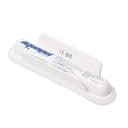
The one with a guarantee
Aquapel Windshield Glass Treatment, single applicator
The only product in the category whose maker publishes both a mechanism and a duration - a stated chemical bond with the glass and a 6-month guarantee on the single pack. Buy it for a windshield you have cleaned and polished first, and buy the multi-applicator pack if you want the side glass done too, because one unit is a windshield.
$15.99View on AmazonPrice as of October 11, 2026. #ad How we’re funded
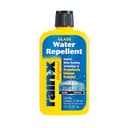
The one to try first
Rain-X Original Glass Water Repellent, 7 fl oz
Cheapest honest way to find out whether you like driving with a repellent, and the bottle treats every pane on the car repeatedly. Follow the published method exactly - clean dry glass, above 40 F, let it haze, then buff the haze off properly - and note the California Prop 65 naphthalene warning Rain-X prints on it.
$9.23View on AmazonPrice as of October 11, 2026. #ad How we’re funded
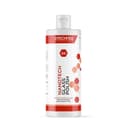
The step that makes either one last
Gtechniq G4 Nanotech Windshield Polish, 3.4 fl oz
A glass-specific polish, used once on glass that has never been decontaminated. It removes the baked road film and wiper transfer that a treatment would otherwise bond to instead of the glass. If you only add one thing to this purchase, add this - it moves durability more than the choice between the two treatments does.
$22.95View on AmazonPrice as of October 11, 2026. #ad How we’re funded
Our call
For one car, one windshield, before the wet months: Aquapel, on polished glass. It is the only product here with a published guarantee and a stated bonding mechanism, and the single-use format stops you from under-applying.
For everything else — all the glass on the car, a car you treat casually, a first try at the category, or a second car you do not care as much about — Rain-X Original. The economics are not close, and a treatment you will actually reapply beats one you resent buying.
And for either: polish the glass once, clean it with an automotive cleaner rather than the household bottle, and buff the haze until the glass squeaks. Those three habits are worth more than the difference between the two products. The full set of options, including the bottled sealants that make more sense for side glass, is in our rain repellent roundup.
Frequently asked questions
Is Aquapel better than Rain-X?
On published claims, Aquapel makes the stronger one: it states that its treatment forms a chemical bond with automotive glass rather than simply coating it, and it sells the single pack with a 6-month guarantee. Rain-X publishes no durability figure for its Original Glass Water Repellent at all. But 'better' depends on what you are buying. Aquapel comes as a sealed single-use applicator sized for one windshield, so treating six panes costs six applicators and a botched pass costs you the unit. Rain-X is a bottle you keep, cheap enough to use on every window and to redo whenever beading drops off. For one windshield done once before a wet season, Aquapel. For the whole car, maintained often, Rain-X.
How long does Aquapel last compared to Rain-X?
Aquapel publishes a 6-month guarantee on its single applicator pack. Rain-X publishes nothing for the Original treatment - its product page details the barrier and the application method and never states a duration, and owner comments on that same page describe reapplying every two to three weeks. We are repeating those comments as owner reports rather than as a measurement, because that is what they are. The honest summary is that a bonded treatment is sold in months and a wipe-on film is used in weeks, and that how thoroughly you cleaned and polished the glass first moves both numbers more than the brand does.
Can you apply Rain-X over Aquapel?
Neither manufacturer publishes guidance for layering one over the other, so anything we told you here would be invention. What we can say is why people ask: once a bonded treatment starts wearing unevenly, the temptation is to top it up with the cheap bottle rather than strip and redo it. That will give you a mixed surface and will not restore the bonded layer. Aquapel's own answer to a worn treatment is to renew it - the company says performance 'can be restored in just minutes.' If you want to switch products, clean the glass thoroughly, polish it, and start from a bare surface.
Why does my windshield look hazy after a glass treatment?
Because the final buff was skipped or was not thorough enough. Rain-X's published directions are explicit: allow the product to dry, expect that 'a slight haze may appear,' reapply for uniform coverage, then 'remove final haze with a dry cloth or by sprinkling water onto the haze and wiping with a paper towel.' A thin film left on glass is close to invisible in daylight and produces real glare at night against oncoming headlights. Buff with a clean, dry glass towel until the surface squeaks, then check it after dark before deciding the product is at fault.
Do glass treatments work on side windows and mirrors?
Yes, and the benefit there is arguably bigger than on the windshield, because side glass and mirrors have no wipers - the treatment is doing all the work rather than helping a blade. The constraint is format: single-use applicators are sized for a windshield, so doing every pane that way is expensive. This is where the bottled products make more sense, including a polymer glass sealant for the panes and mirrors with a bonded treatment on the windshield. Our rain repellent roundup covers the bottled sealants we would use for that.
Does Rain-X damage glass or wipers?
There is no evidence that it damages glass, and it does not wear wiper rubber out. What it does is make the glass slicker, which changes how a blade behaves on it - a hardened or worn blade that dragged quietly on untreated glass can chatter or skip on treated glass. The treatment revealed the blade rather than ruined it. Replace streaking blades before treating the glass. One genuine caution on the product itself: Rain-X prints a California Proposition 65 warning on the Original treatment stating that it can expose you to naphthalene, so wear gloves and work in ventilated air.
Sources
- Rain-X — Original Glass Water Repellent — Manufacturer product page: the treatment "treats the glass surface with a super-slick, non-stick invisible barrier that repels rain, sleet and snow on contact"; published directions are clean and dry the surface first, "Apply in temperatures above 40 degrees F," wipe on with a small folded dry cloth in "a firm, circular and overlapping motion," allow to dry as "a slight haze may appear," reapply for complete coverage, then "Remove final haze with a dry cloth or by sprinkling water onto the haze"; the page carries a California Proposition 65 warning for naphthalene and publishes no durability figure (accessed October 11, 2026)
- Aquapel — Glass Treatment (PGW/Everything Autoglass) — Manufacturer product line page: the treatment "Dramatically improves visibility in rain and forms chemical bond with automotive glass - unlike other products that simply coat," sold as a "New Single Pack" with a "6 Month Guarentee" [sic] and described as "Used by professionals"; the company also states the treatment's "performance can be restored in just minutes" when it is time to renew (accessed October 11, 2026)
- FHWA Road Weather Management — How Do Weather Events Affect Roads? — US Federal Highway Administration, five-year averages 2019-2023 analyzed by Athey Creek Consultants from NHTSA data: of roughly 6,035,000 vehicle crashes a year, "Approximately 12 percent of these crashes - nearly 745,000 - are weather-related," and "Over 77 percent of most weather-related crashes happen during rain or mist conditions" - against 18 percent in freezing precipitation and 4 percent in low visibility (accessed October 11, 2026)
Keep reading
Best Windshield Rain Repellents
The full roundup, sorted by mechanism: bonded treatments, polymer sealants, wipe-on silicones and the glass polish that decides how long any of them last.
See all the picksBest Glass Cleaners for Cars
Ammonia-free, tint-safe cleaners - the prep step for either treatment, and the reason the kitchen bottle should stay indoors.
See the glass cleanersHow to Clean Car Glass Without Streaks
The two-towel method and why most night glare comes from the inside of the windshield rather than the outside.
Read the guideBest Water Spot Removers
Hard-water rings on glass, what dissolves them, and how to tell when a spot has etched past the point a treatment can hide.
See the picks