How to choose a windshield rain repellent
1. Bonded or sitting on top — the only question that matters
Every product on this page makes water bead and roll instead of sheeting across your line of sight. They differ in what happens a month later, and that comes down to whether the product is attached to the glass or resting on it.
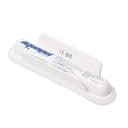
Aquapel states the distinction in its own marketing, and it is the clearest sentence anyone in this category has written: its treatment “forms chemical bond with automotive glass — unlike other products that simply coat.” A bonded treatment has to be worn away — by wiper rubber, by washer fluid, by UV — before the repellency goes. A film that merely coats can be removed by a strong glass cleaner, an ammonia-based household spray, or a few weeks of wiper passes over the same arc.
That is also why the beading you see is a bad guide to what you bought. A fresh wipe-on silicone beads beautifully. So does a six-month-old bonded treatment. The difference only shows up in week five, in traffic, at night.
2. Who publishes a durability figure (and who does not)
We went looking for a number from every manufacturer here on the build date. One published one. Aquapel sells its single applicator pack with a “6 Month Guarantee”and describes the product as used by professionals, with performance that “can be restored in just minutes” when it is time to renew.
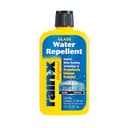
Rain-X, which is the best-known name in the category by a wide margin, publishes no durability claim at all for the Original Glass Water Repellent. Its product page describes the barrier and the method in detail and never says how long it lasts. The owner comments on that same page say weeks, with several people reporting that they reapply every two to three weeks. We are repeating that as what owners say, not as a measurement, because it is not one.
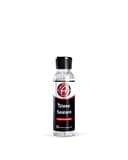
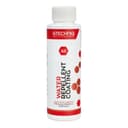
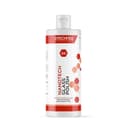
Adam’s and Gtechniq both describe mechanism rather than duration on the listings we read these from. So the ranking above is not a durability league table — it cannot be, honestly — it is a mechanism-and-format ranking with one published guarantee at the top. Treat anyone selling you a specific month count for a product whose maker does not publish one with suspicion.
3. The prep step is most of the result
This is the part the category does not advertise. Glass that has lived outdoors for a few years is not a clean surface. It carries baked road film, wiper-rubber transfer, exhaust residue, and often mineral water spots etched into the surface by sprinklers and hard water. A bonded treatment applied over that bonds to the contamination, not the glass, and leaves with it.
Rain-X’s own directions open with “clean and dry surfaces before treating.” That is the floor, not the ceiling. The sequence that actually makes a treatment last is: wash the car, clean the glass with a dedicated automotive glass cleaner, then polish the glass with a glass-specific polish like the Gtechniq G4 pick above, then clean it again to remove polish residue, then apply the treatment to dry, cool glass. Skip the polish on a car whose glass has never been decontaminated and you have bought a one-month version of a six-month product.
4. Temperature and the haze stage
Rain-X publishes two numbers that apply to almost everything in this aisle: apply above 40 degrees Fahrenheit, and expect a haze. Its directions are specific — wipe on with a small folded dry cloth using “a firm, circular and overlapping motion,” let it dry as “a slight haze may appear,” reapply to get uniform coverage, then “remove final haze with a dry cloth or by sprinkling water onto the haze and wiping with a paper towel.”
Almost every complaint about a smeary, glare-prone windshield after a treatment traces to that last line being skipped. A hazy film on glass is invisible in daylight and awful at night against oncoming headlights. Buff until the glass squeaks, then check it after dark before you decide the product is bad. The same logic that governs waxing in the sun applies here too: hot glass flashes the carrier off before the product levels, so work in shade or a garage.
5. Windshield only, or all the glass?
Most people treat the windshield and stop. There is a real argument for doing the side glass and mirrors instead or as well, and it changes which product you should buy.
The windshield has wipers. Side glass and mirrors do not, which means a repellent is doing allthe work there rather than helping a blade — and the gain in a rainy merge, when you need to see a mirror, is bigger than most drivers expect. Single-use applicator formats are sized for one windshield, so treating the whole car with them gets expensive fast. That is exactly the case for a bottle format like the Adam’s sealant or the Gtechniq coating: you can dose a little on an applicator, do six panes and both mirrors, and still have most of the bottle.
6. What a repellent does not fix
It does not fix worn wipers. A repellent reduces how often the blades have to clear the screen and it makes a chattering blade more noticeable, not less — the slicker surface changes how the rubber drags. If your blades streak on dry glass, replace them first and treat the glass second.
It does not fix pitted or sandblasted glass. A windshield with thousands of tiny stone chips scatters light no matter how well water runs off it, and a repellent on top of that still scatters light. Nor does any of this touch the inside of the glass, which is where night glare usually comes from: interior film from off-gassing plastics needs cleaning from the inside with a clean towel, and our streak-free glass guide covers the two-towel method for that.
7. The ammonia problem
One practical warning that sits across both halves of this topic. Household glass cleaners are commonly ammonia-based, and ammonia is hard on the films people put on glass — which is why every automotive glass product we recommend is an automotive one. It is also hard on window tint. If you have treated your glass and then clean it with the blue bottle from under the kitchen sink, you are stripping what you paid for. Keep a dedicated automotive glass cleaner and two glass towels, and keep the household spray away from the car.
8. What we would actually buy
If you want one thing, done once, before a wet season: the Aquapel applicator, on properly cleaned glass. It is the only product here with a published guarantee behind it and the only one whose maker claims a chemical bond.
If you have never used a repellent and are not sure you will like driving with one — some people find the beading distracting at low speed — buy the Rain-X Original bottle, treat half the windshield, and see which half you prefer at 60 mph in rain. It is a few dollars and it answers the question permanently.
And if your glass has never been polished, buy the glass polish at the same time as whichever treatment you choose. It is the difference between a treatment that lasts its stated life and one that does not, and it is the single piece of advice on this page we would not skip.