Waffle Weave vs Twisted Loop Towels
Two completely different ways to get water off a car. One traps it in a grid, the other soaks it into deep fibers — and the right answer depends on how you dry rather than which is better.
How this is funded:we earn a commission if you buy through our links, at no extra cost to you. It never changes which product we recommend, and we’ll tell you plainly when we’d skip one. Full disclosure.
Two designs solving the same problem differently
Both towels are microfiber, usually a 70/30 polyester-polyamide blend, and both are trying to lift a film of water off paint without dragging anything across it. They just go about it in opposite ways.
A waffle weave is a relatively thin, flat towel with a raised grid pressed into it. Water is drawn into the pockets between the ridges and held there by capillary action. Because the structure rather than the pile depth does the work, a waffle towel keeps absorbing even when it is already damp, and there is not much fabric to saturate in the first place.
A twisted loop towel is built the other way: long fibers twisted into loops, with a great deal of open space between them. Water soaks into that open structure. It holds far more per square inch than a waffle can, and the deep pile physically separates the fabric backing from the paint, which is why these towels feel so forgiving to use.
How they compare where it matters
Absorbency per pass
Twisted loop wins clearly. A 900 GSM twisted loop towel can take a full panel of water in a single blot where a waffle needs a couple of passes. On a big vehicle, that difference is the whole argument — fewer passes means fewer contact events with your clear coat, which is the same logic behind every other swirl-avoidance habit we recommend.
Working when damp
Waffle weave wins here. Once a twisted loop towel is saturated it stops absorbing and starts pushing water around, and a saturated plush towel is heavy and awkward to wring out mid-job. A waffle keeps pulling water long after it feels wet, which is why a lot of people use a plush towel for the main pass and a waffle to finish.
Drying out between washes
Waffle weave again, and by a lot. Deep pile stays damp for a long time, and a damp towel folded in a drawer goes musty. Waffle towels dry quickly, which matters if you wash weekly and store towels somewhere without much airflow.
Glass and second jobs
The waffle wins outright. Its grid is excellent for a final buff on windows, so one towel dries the car and then finishes the glass. A twisted loop towel is far too plush for glass work.
Price
Waffle weave towels are generally cheaper for the same coverage, and are often sold in threes. Premium twisted loop towels cost meaningfully more per towel, which is fair — there is simply more material in one.
One of each, if you are buying twice
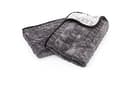
The twisted loop
The Rag Company Gauntlet Drying Towel
900 GSM of deep twisted pile, sold in twos. This is the towel for the big panels — blot, lift, move on, with the fewest passes over your paint.
$32.95View on AmazonPrice as of October 19, 2026. #ad How we’re funded
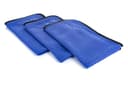
The waffle weave
The Rag Company Dry Me A River Waffle-Weave Drying Towel
390 GSM waffle with suede edges, three to a pack. It keeps working when damp, dries out fast between washes and finishes the glass afterwards.
$24.95View on AmazonPrice as of October 19, 2026. #ad How we’re funded
Which one should you buy first?
If you own no drying towel at all, buy the waffle weave. It is cheaper, more versatile, easier to look after, and it will stop you drying the car with a bath towel today. If you already have one and the job feels slow — particularly on an SUV or truck — add a twisted loop and use it for the roof, hood and doors, keeping the waffle for glass, mirrors and door shuts.
The dark-paint question comes up constantly, and the honest answer is that both are safe when used properly and both will mark paint when used badly. What actually causes drying marks is pressure, a contaminated towel, or a car that was not clean when you started. Use no pressure, keep towels off the ground, and use a drying aid to add lubrication where the paint has none.
Looking after either type
Wash drying towels on their own, with a small amount of liquid detergent, and never with fabric softener or dryer sheets — both coat the fibers and kill absorbency, which is the single most common reason a good towel “stopped working”. Tumble dry on low or air dry. Keep them away from towels that have handled wax, dressing or compound, because that residue transfers and shows up as smearing.
Retire a drying towel from paint duty the moment it touches the ground or a wheel. Demote it to door jambs and sills instead. That separation is the same principle as the two-bucket method: keep the grit and the paint apart, and most of the ways a wash goes wrong disappear.
Frequently asked questions
Which is better, waffle weave or twisted loop?
Neither, in the abstract. A twisted loop towel holds far more water per pass, so it dries a car in fewer contacts with the paint. A waffle weave is thinner, keeps working when damp, dries out much faster between washes and doubles as a glass towel. Most people end up owning one of each.
Why do twisted loop towels have such high GSM numbers?
Because the pile is the mechanism. A twisted loop towel absorbs by holding water among long, twisted fibers, so more fabric per square meter means more capacity — 700 to 1,000 GSM is normal. A waffle weave absorbs mostly through its raised grid structure rather than pile depth, so a 300-400 GSM waffle is doing its job properly. Comparing the two numbers directly tells you nothing.
Which drying towel is safer on black paint?
A deep twisted loop with soft or edgeless borders, used with almost no pressure. The deep pile keeps any grit it picks up suspended away from the surface, and fewer passes means fewer opportunities to mark the paint. A waffle weave is also safe used correctly — what causes marks is pressure and a dirty towel, not the weave.
Can I use a waffle weave towel on glass?
Yes, and it is one of the best things about the design. The grid structure is excellent for a final buff on windows, so a waffle towel that has dried the car can finish the glass afterwards. Keep it away from anything that has had wax or dressing on it, or it will smear the glass instead.
How do I stop my drying towel from losing absorbency?
Never wash it with fabric softener and never use dryer sheets — both coat the fibers and are the usual cause of a towel that suddenly pushes water around instead of soaking it up. Wash detailing towels separately with a small amount of detergent, then tumble dry low or air dry. A towel that has gone slick can often be recovered with a wash without softener.
Sources
- International Detailing Association — Detailing Resources — IDA's public detailing resource library (accessed July 19, 2026)
- Chemical Guys — Two Bucket Method Car Wash Guide — Manufacturer how-to on the two-bucket wash and grit guards (accessed July 19, 2026)
Keep reading
Best Microfiber Drying Towels
Both weaves, compared on stated GSM, size and how each one handles a full car.
See the picksMicrofiber GSM, Explained
What the number actually measures, and when a higher one is not better.
Read the explainerHow to Dry a Car Without Water Spots
The drying order and technique that keeps minerals off the paint.
Read the guideBest Microfiber Towels for Cars
The towels for everything that is not drying — buffing, interiors and dirty jobs.
See the towels