TWO BUCKET CLUB

Best Car Detailing Chemicals (2026)

The chemistry only - no machines, no towels. One bottle per job, chosen on what it costs per use after dilution rather than what it costs on the shelf, because that is the number that decides whether you keep using it.

By Stephen V.Last updated How we pick

If you buy one chemical, buy Meguiar’s Professional D101 All Purpose Cleaner. It is a concentrate, so the bottle on the shelf is not the bottle you use — diluted it becomes interior cleaner, carpet pre-spray, wheel-well cleaner, engine-bay cleaner and bug remover, and it is the single biggest cost-per-use win in home detailing. It is for anyone whose shelf is currently six ready-to-use sprays that each do one thing. The budget pick is Sprayway Glass Cleaner at around four dollars — the cheapest bottle on this page and the one job where paying more buys you the least.

This page is deliberately chemicals only. Our car detailing tools page covers the machines, and the master roundup mixes both. Here the question is narrower and more useful: which seven bottles cover a full detail, and what does each one actually cost you per car once you have followed the label?

That distinction matters more than brand loyalty. A concentrate that dilutes ten to one is cheaper per use than a ready-to-use spray at half the shelf price, and it is not close. So the ranking below runs on three things: whether the product is a concentrate or ready-to-use, what the listing states about dilution and coverage, and whether it is the right chemistry for its job rather than a compromise that half-works on four. Where a maker publishes no dilution figure we print none — that is a finding, not a gap.

How this is funded:we earn a commission if you buy through our links, at no extra cost to you. It never changes which product we recommend, and we’ll tell you plainly when we’d skip one. Full disclosure.

Quick picks

Ranked on published specs, value and buyer fit. Select a row to jump to the full write-up. We have not lab-tested these products — here is exactly what we do instead.

#ProductBest forPrice
1
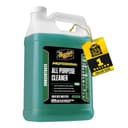
Meguiar's Professional D101 All Purpose Cleaner

Meguiar's Professional D101 All Purpose Cleaner

A gallon of professional-line APC concentrate. Bought this way the cost per spray bottle is trivial, which is the entire argument for an APC: you dilute one product weak for interiors and strong for wheel wells instead of buying five sprays.

Best overall
$24.99View on Amazon

Price as of November 23, 2026. #ad How we’re funded

2
Optimum No Rinse Wash & Shine (Version 5)

Optimum No Rinse Wash & Shine (Version 5)

The product that made rinseless washing mainstream, and still the reference point everything else in the category is described against. One capful in a bucket of water replaces the hose, the foam and the rinse.

Best wash chemistry
$25.76View on Amazon

Price as of November 23, 2026. #ad How we’re funded

3
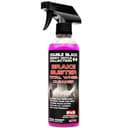
P&S Brake Buster Wheel Cleaner

P&S Brake Buster Wheel Cleaner

The pro-detailer's workhorse: a non-acid wheel and tire cleaner that also doubles as a general degreaser, sold at a value price in a big bottle. A favorite because it's versatile and dilutable, not just a one-trick wheel spray.

Best wheel chemistry
$17.09View on Amazon

$18.9910% off

Price as of November 23, 2026. #ad How we’re funded

4
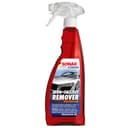
Sonax Iron + Fallout Remover

Sonax Iron + Fallout Remover

A fast-acting German fallout remover that many detailers rate as the best value in the category: it works quickly, color-changes clearly and comes in a large bottle, so the cost-per-decon is low even though it isn't the cheapest sticker price.

Best decontamination
$24.99View on Amazon

Price as of November 23, 2026. #ad How we’re funded

5
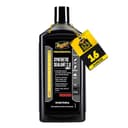
Meguiar's Professional M21 Synthetic Sealant 2.0

Meguiar's Professional M21 Synthetic Sealant 2.0

From Meguiar's professional line rather than the consumer shelf, which shows in how it behaves: a thin, even coat that wipes off cleanly and is designed to be layered, so a second coat an hour later is part of the plan rather than a mistake.

Best paint protection
$19.34View on Amazon

Price as of November 23, 2026. #ad How we’re funded

6
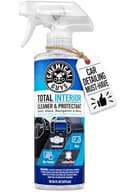
Chemical Guys Total Interior Cleaner & Protectant

Chemical Guys Total Interior Cleaner & Protectant

The convenience pick: one spray that cleans and lightly protects most interior surfaces — plastics, vinyl, leather, glass — leaving a matte, non-greasy finish. Not the strongest cleaner for one specific job, but the easiest single bottle to reach for.

Best interior chemistry
$12.97View on Amazon

Price as of November 23, 2026. #ad How we’re funded

7
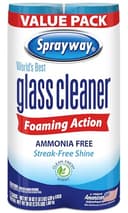
Sprayway Glass Cleaner (Foaming Aerosol)

Sprayway Glass Cleaner (Foaming Aerosol)

The clingy-foam favorite. It sprays as a foam that stays put on vertical glass instead of running off, so it has time to work before you wipe. Ammonia-free and cheap, it is a longtime detailer staple for a reason — just mind the aerosol overspray inside the car.

Best on a budget

The picks in full

#1Best overall

Meguiar's Professional D101 All Purpose Cleaner

A gallon of professional-line APC concentrate. Bought this way the cost per spray bottle is trivial, which is the entire argument for an APC: you dilute one product weak for interiors and strong for wheel wells instead of buying five sprays.

What we like

  • Gallon of concentrate - the lowest cost per bottle of working solution
  • Detailer-line product designed to be diluted across strengths
  • Handles carpets, mats, engine bays and door shuts

Trade-offs

  • You need your own spray bottles and a dilution habit
  • Strong dilutions can stain or dry out untreated interior surfaces
TypeAll-purpose cleaner concentrate
Standout specDilutable concentrate
Size1 gal
Best forOne concentrate diluted across every job
Price tierMid

Cost-to-use note. A gallon of concentrate makes many spray bottles of working solution - dilute weak for interiors, stronger for wheel wells and engine bays.

Specs read from the product listing, on August 18, 2026. “Not listed” means the listing does not state that figure.

#2Best wash chemistry

Optimum No Rinse Wash & Shine (Version 5)

The product that made rinseless washing mainstream, and still the reference point everything else in the category is described against. One capful in a bucket of water replaces the hose, the foam and the rinse.

What we like

  • Heavily diluted - a 32 oz bottle covers a great many washes
  • Rated by the maker for paint, coatings, glass and interior
  • Doubles as a clay lubricant, which saves buying a separate bottle

Trade-offs

  • Technique matters more than with a hose wash - one panel, one clean face
  • Not the right tool for a genuinely filthy, gritted winter car
TypeRinseless wash concentrate
Standout specRinseless; also a clay lubricant
Size32 oz
Best forApartment and garage washing with no hose
Price tierMid

Cost-to-use note. Diluted at a capful per couple of gallons, so one bottle covers many washes - the reason rinseless is cheap per wash as well as water-thrifty.

Specs read from the product listing, on August 18, 2026. “Not listed” means the listing does not state that figure.

#3Best wheel chemistry

P&S Brake Buster Wheel Cleaner

The pro-detailer's workhorse: a non-acid wheel and tire cleaner that also doubles as a general degreaser, sold at a value price in a big bottle. A favorite because it's versatile and dilutable, not just a one-trick wheel spray.

What we like

  • Non-acid and versatile — wheels, tires and general degreasing
  • Dilutable, so it stretches a long way
  • Trusted by professional detailers

Trade-offs

  • Not a color-changing iron remover
  • Big bottle is more than a casual user needs
TypeNon-acid wheel/tire cleaner & degreaser
Standout specDilutable, multi-use
Size1 gal
Best forDetailers who want one versatile, dilutable cleaner
Price tierMid

Cost-to-use note. Dilutes for lighter jobs; a gallon lasts a very long time, which is the value case.

Specs read from the product listing, on July 19, 2026. “Not listed” means the listing does not state that figure.

#4Best decontamination

Sonax Iron + Fallout Remover

A fast-acting German fallout remover that many detailers rate as the best value in the category: it works quickly, color-changes clearly and comes in a large bottle, so the cost-per-decon is low even though it isn't the cheapest sticker price.

What we like

  • Works fast and dissolves embedded contamination clearly
  • Large bottle brings the cost-per-use down
  • Safe on paint, glass and most wheel finishes per label

Trade-offs

  • Strong odor like all iron removers — ventilate
  • Best on already-washed paint; it's a decon step, not a wash
TypeColor-changing iron & fallout remover
Standout specFast-acting; large-bottle value
Size750 mL
Best forBest value — a big bottle of a fast, effective remover
Price tierMid

Cost-to-use note. The larger bottle covers a lot of decon work, which is what makes it a value pick despite the mid sticker price.

Specs read from the product listing, on August 7, 2026. “Not listed” means the listing does not state that figure.

#5Best paint protection

Meguiar's Professional M21 Synthetic Sealant 2.0

From Meguiar's professional line rather than the consumer shelf, which shows in how it behaves: a thin, even coat that wipes off cleanly and is designed to be layered, so a second coat an hour later is part of the plan rather than a mistake.

What we like

  • Professional-line product designed to be layered
  • Wipes off cleanly without the dusting cheap sealants cause
  • Ideal base coat under a carnauba topper for depth plus durability

Trade-offs

  • Body-shop-safe formulations are unremarkable on gloss alone
  • Priced above consumer-line sealants of the same size
TypeSynthetic paint sealant
Standout specLayerable professional-line sealant
Size16 oz
Best forLayering a durable base under a wax
Price tierMid

Specs read from the product listing, on August 18, 2026. “Not listed” means the listing does not state that figure.

#6Best interior chemistry

Chemical Guys Total Interior Cleaner & Protectant

The convenience pick: one spray that cleans and lightly protects most interior surfaces — plastics, vinyl, leather, glass — leaving a matte, non-greasy finish. Not the strongest cleaner for one specific job, but the easiest single bottle to reach for.

What we like

  • Cleans and protects most surfaces from one bottle
  • Matte, non-greasy finish (no slippery steering wheel)
  • Antistatic finish helps repel dust

Trade-offs

  • An all-in-one won't beat a dedicated cleaner on a tough stain
  • Test on delicate screens and gloss trim first
TypeAll-surface interior cleaner + protectant
Standout specMatte, antistatic finish
Size16 oz
Best forOne do-it-all interior spray for regular upkeep
Price tierBudget

Cost-to-use note. A spray-and-wipe per surface; a bottle covers many interior cleans.

Specs read from the product listing, on July 19, 2026. “Not listed” means the listing does not state that figure.

#7Best on a budget

Sprayway Glass Cleaner (Foaming Aerosol)

The clingy-foam favorite. It sprays as a foam that stays put on vertical glass instead of running off, so it has time to work before you wipe. Ammonia-free and cheap, it is a longtime detailer staple for a reason — just mind the aerosol overspray inside the car.

What we like

  • Foam clings to vertical glass instead of running off
  • Ammonia-free and inexpensive
  • A longtime detailer and pro favorite

Trade-offs

  • Aerosol overspray lands on interior plastics — spray the towel
  • Foam can feel like it uses up the can quickly
TypeFoaming aerosol glass cleaner
Standout specAmmonia-free clinging foam
Size19 oz (2-pack)
Best forFast, clingy foam on windshields and side glass
Price tierBudget

Specs read from the product listing, on August 7, 2026. “Not listed” means the listing does not state that figure.

The seven chemical jobs, and why you cannot collapse them into three

Every full detail is the same sequence of chemical jobs in the same order. People try to shorten the list and it almost always goes the same way: one product gets used outside its design range, does the job badly, and the conclusion drawn is that detailing does not work.

1. Dilutable all-purpose cleaner

An APC is the backbone. Diluted strong it cleans wheel wells, door shuts and engine bays; diluted weak it is an interior cleaner and a carpet pre-spray. This is why a concentrate like D101 is the first bottle to buy — it replaces several ready-to-use products at a fraction of the per-use cost. Our all-purpose cleaner roundup compares the category on its own terms, and APC vs dedicated interior cleaner covers where an APC stops being the right answer.

2. Wash chemistry

Soap is the only chemical on this list that touches every panel on every wash, so its cost per use compounds faster than anything else. A rinseless concentrate like Optimum No Rinse is the most efficient form it comes in: an ounce or two in a few gallons does a whole car, and it works without a hose, which is the difference between washing fortnightly and washing when the weather and the driveway allow. If you have a hose and prefer a traditional bucket wash, start at best car wash soap instead.

3. Wheel chemistry

Wheels carry baked-on brake dust that paint never sees, which is why wheel cleaner is a separate product and not strong soap. The thing to avoid is acid: we do not recommend acid cleaners on painted, powder-coated or clear-coated wheels, which is nearly every modern wheel. A pH-balanced cleaner you will use weekly beats an aggressive one you are afraid to use at all. See best wheel cleaners.

4. Decontamination

Iron fallout is the orange speckling that soap cannot touch and that makes otherwise clean paint feel gritty. A dedicated iron remover dissolves it chemically; a clay bar shears it off mechanically. Both have a place and iron remover vs clay bar sets out which to reach for. This is a once or twice a year product, not a wash-day one, which is why one bottle lasts years.

5. Paint protection

A synthetic sealant is the best protection-per-dollar on this list. It outlasts a carnauba wax per application and costs less per year than a coating, and unlike a coating it does not punish a mistake. If you want the field ranked properly, see best paint sealants and best long-lasting car wax.

6. Interior chemistry

Interiors are mixed materials — vinyl, plastic, cloth, leather, screens — so the useful product here is the one with the widest safe surface list rather than the strongest cleaner. A clean-and-protect in one is genuinely the right call for most cars, because the alternative is two bottles and two passes for a surface that gets dirty again next week.

7. Glass

The only job on the list where the cheap option is the right option. Glass cleaner is a solvent and a surfactant; the expensive ones are the same two things in nicer packaging. What decides the result is technique and towels, not the bottle — see how to clean car glass without streaks. Buy the cheap can and spend the difference on microfiber.

Who each pick is for

  • Meguiar’s D101— for the detailer who has realised they are paying for water. A professional-line concentrate, so you mix to the job. The catch is that you have to read the label and own a spray bottle, and mixing to the job means you can mix it too strong.
  • Optimum No Rinse— for an apartment, a shared driveway, a winter, or anyone tired of dragging a hose out. It is a concentrate measured in ounces per bucket, so the cost per wash is very low. It is not a pre-wash for a filthy off-road truck; heavy grit still wants a pressure rinse first.
  • P&S Brake Buster— for weekly wheel cleaning without thinking about it. A professional-line cleaner sold in volume, which is the right format for the one surface you clean most often.
  • Sonax Iron + Fallout Remover— for the twice-a-year decontamination that makes paint feel new and makes the next wax last. It smells strongly as it reacts, it is not a product for a hot panel in the sun, and you rinse it rather than letting it dry.
  • Meguiar’s M21 Synthetic Sealant 2.0— for protection that lasts months rather than weeks, applied much like a normal wax. A professional-line product at a consumer price. It gives a cooler, glassier look than carnauba, which some people actively do not want.
  • Chemical Guys Total Interior Cleaner & Protectant — for a whole cabin in one pass with a matte finish and no greasy dashboard. It is a maintenance product rather than a deep cleaner; a food-stained cloth seat wants an APC and a brush first.
  • Sprayway Glass Cleaner— our budget pick. A foaming aerosol that clings to vertical glass instead of running onto the dash, for about the price of a coffee, and it is ammonia-free — which is the property that matters around tinted glass. Use two towels.

The cost-per-use arithmetic, done honestly

This is the part most product pages skip because it undercuts the expensive recommendation. Shelf price tells you almost nothing about what a detailing chemical costs you. Three things decide that: whether it is a concentrate, what the label’s dilution ratio is, and how much of a car one mixed batch covers.

A ready-to-use interior spray is mostly water you paid shipping on. A professional concentrate is the same chemistry with the water removed. That is why our top pick is a professional-line APC rather than the friendliest bottle on the shelf — across a year of fortnightly washes the gap is not a few dollars, it is most of the budget.

Two honest caveats. First, a concentrate is only cheaper if you actually dilute it correctly; used neat it is expensive and can be too aggressive for the surface. Second, where a listing does not state a dilution ratio we do not invent one — check the bottle you receive, because manufacturers revise labels and the bottle is the authority, not us.

What this page leaves out on purpose

  • Compounds and polishes. They are abrasives, not cleaners, and they belong with a machine. See paint correction kits.
  • Tire dressing. A finish product rather than a cleaning one. Best tire shine covers it, and it is the one category where personal taste decides more than chemistry.
  • Ceramic coatings. A different commitment, with prep that matters more than the bottle. Best DIY ceramic coatings walks the whole process.
  • Everything that is not chemistry. Towels, mitts, buckets, brushes and machines all matter at least as much as the bottles, and none of them are on this page. Start with the beginner kit if you are building from nothing.

Our call

Buy the D101 first, whatever else you own. It is the bottle that makes the rest of the shelf shorter.

Buy Optimum No Rinse second if you have no hose or no patience, or a soap from best car wash soap if you do.

Buy Brake Buster and the M21 sealantnext — the two products that most visibly change how a car looks week to week.

Buy the iron remover once and forget about it until spring. And buy the cheap glass cleaner, not the premium one.
Frequently asked questions

What chemicals do I need to detail a car?

Seven, and in this order: a dilutable all-purpose cleaner, wash chemistry, a wheel cleaner, an iron remover for decontamination, a paint sealant or wax for protection, an interior cleaner-protectant, and a glass cleaner. That covers a full detail with no overlap and no gaps. If you can only buy one, buy the all-purpose cleaner concentrate - diluted at different strengths it does the interior, the carpets, the wheel wells and the door shuts, which is why it is our top pick here.

Are professional detailing chemicals worth it over consumer ones?

Often yes, but for a reason people get wrong. It is not that the chemistry is dramatically better - it is that professional lines are sold as concentrates in volume, so the cost per use is far lower. A professional APC diluted to label strength costs a fraction of a ready-to-use consumer spray doing the same job. The trade is that you have to dilute it yourself, own a spray bottle, and accept that mixing it too strong is now possible. If you will not read the label, a ready-to-use product is the better buy.

Can I use one all-purpose cleaner for everything?

For most cleaning jobs, yes - that is the point of an APC and why it is first on this page. For three jobs, no. Wheels carry baked-on brake dust that needs dedicated wheel chemistry; bonded iron fallout needs an iron remover or a clay bar, because no cleaner removes it; and glass needs a glass-specific cleaner or it streaks. An APC also does not protect anything, so it never replaces a wax, sealant or coating.

How much should I spend on detailing chemicals?

Less than most product pages imply, if you buy concentrates. Several of the products on this page are concentrates that will last a year or more of fortnightly washing, and the iron remover is a twice-a-year purchase rather than a running cost. The expensive mistake is not buying one premium bottle - it is buying six ready-to-use sprays that each do one job, which is how people end up with a shelf full of water. Our car detailing on a budget guide works through the order to buy things in.

What is the difference between a concentrate and a ready-to-use product?

A concentrate is the chemistry without the water; a ready-to-use product is the chemistry already diluted for you. That is the whole difference, and it is why price per bottle is a misleading number. Dilution ratios are printed on the label, and where a listing does not state one we do not print one - check the bottle you actually receive, because labels get revised and the bottle is the authority. Used neat, a concentrate is both wasteful and potentially too aggressive for the surface, so the saving only exists if you dilute it properly.

Do I need a separate interior cleaner and interior protectant?

Usually not, and for most cars a combined cleaner-protectant is the better call. A modern cabin is vinyl, plastic, cloth, leather and screens, so the useful property is a wide safe-surface list rather than cleaning strength, and a one-pass product is the one you will actually use. Two situations justify splitting them: heavily soiled cloth or carpet, which wants an APC and a brush first, and leather you care about, which wants a dedicated cleaner and conditioner rather than an all-surface spray.

Is expensive glass cleaner better than cheap glass cleaner?

No, and this is the one category on the page where we would actively steer you to the cheapest option. Glass cleaner is a solvent plus a surfactant; the premium bottles are the same two ingredients. Streaks come from technique and towels, not from the fluid - spray onto the towel rather than the glass on a hot day, use one towel to clean and a second dry one to finish, and do the inside of the windshield last. Spend the money you save on microfiber.

Sources

Keep reading