Who each pick is for
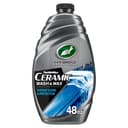
- Turtle Wax Hybrid Solutions Ceramic Wash & Wax— for the fortnightly washer who wants one bottle and one bucket step. A 48 oz bottle with an SiO2 gloss boost, and the lowest cost per wash of the wash-and-wax soaps here.
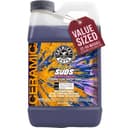
- Chemical Guys HydroSuds— for someone who cares about how the paint looks after it dries and is willing to pay for it. SiO2 infused, high foaming, and the biggest bottle on this page at 64 oz.
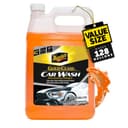
- Meguiar’s Gold Class Car Wash Shampoo & Conditioner — for anyone who wants slickness and gloss conditioners rather than a ceramic claim. A conditioning shampoo rather than a wax carrier, and it is the gentlest-feeling wash here.
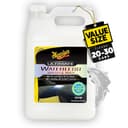
- Meguiar’s Ultimate Waterless Wash & Wax— for apartment dwellers and anyone washing a lightly dusty car with no hose. Spray on, wipe off, protection included. Only suitable on light dirt.
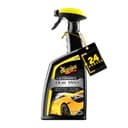
- Meguiar’s Ultimate Quik Wax— the budget pick, and the one that reframes the whole question. A 24 oz synthetic spray wax for under ten dollars: pair it with any pH-neutral soap and you get a real coat of protection for less than the price of a premium wash-and-wax.
The two-step route, and why we keep recommending it
Take the money you were going to spend on a premium wash-and-wax soap and split it: a pH-neutral shampoo for the bucket, and a spray wax used as a drying aid. You mist the spray wax onto a wet panel and dry it off with a microfiber towel. It adds about two minutes to the wash, and unlike a soap it is not diluted into five gallons of water and then rinsed away.
Our spray wax application guide covers the drying-aid technique, and best spray waxranks the field. If you would rather have the soap do everything, the picks above are the ones to buy — just know what you are trading.
How to choose a wash-and-wax soap
1. Read the dilution, not the bottle price
These products are concentrates and the bottles are different sizes, which makes the shelf price almost meaningless. The 48 oz Turtle Wax and the 64 oz HydroSuds are the two biggest here; a 16 oz boutique soap at the same price is a far more expensive wash. Work out the cost per five-gallon bucket, not the cost per bottle. Our main soap roundup does that math across the whole registry.
2. pH-neutral is still the requirement
A wash-and-wax that strips what is already on the car is self-defeating, and that is exactly what household detergent does. Chemical Guys’ own guidance on dish soap is unambiguous: it removes wax and sealant layers, can deteriorate paint protection film, shortens a ceramic coating’s life, and — not being pH-balanced for automotive surfaces — may dry out rubber seals and trim. Every soap on this page is an automotive formula. See pH-neutral car soap explained for why the number matters.
3. If the car is coated, a wash-and-wax is the wrong product
Putting a wax film over a ceramic coating does not strengthen the coating; it covers it, and the surface you are then feeling is the wax. Coated cars want a plain pH-neutral soap that cleans without adding anything, which is a different shopping list — see car wash soap for ceramic coated cars. The same logic is why coating maintenance is mostly about not adding things.
4. A wash-and-wax does not replace a wax
Turtle Wax’s own how-to on washing and waxing treats them as separate operations, with the wax applied to a clean, dry car out of the sun — “Never attempt to wax in direct sunlight or extreme cold. The heat from direct sunlight will ‘bake’ the wax onto the car’s surface.” If a soap were a substitute for that job, the manufacturer selling both would say so. Plan on a real wax or sealant two to four times a year regardless of what your soap claims; AAA’s own guidance is a wash roughly every two weeks and waxing twice a year.
What a wash-and-wax is genuinely good at
It is easy to be dismissive, so here is the fair case for buying one. Three things it does well:
It makes drying easier.A slicker surface sheets water instead of holding it, which means fewer passes with the towel and fewer chances to put marks in the paint. Drying is where a large share of wash marring happens — see how to dry a car without water spots.
It keeps a dying wax going a little longer.Not by reviving it — DetailingWiki is explicit that “boosting” a wax “would imply that it revives the layer of wax underneath, which is not the case” — but by laying its own thin film in the gaps. For a car three months past its last wax, that is a real improvement.
It is the protection that actually gets applied. A wax in a cupboard protects nothing. If the realistic choice is between a wash-and-wax soap every two weeks and a proper wax never, buy the soap. That is not a compromise we are embarrassed by.
Our call
Buy the Turtle Wax Hybrid Solutions Ceramic Wash & Wax if you want one bottle. It is the cheapest honest version of this product, the bottle is large enough to matter, and the SiO2 gloss boost is real even if nobody will tell you how long it lasts.
Buy HydroSudsif gloss is the point and the price is not an obstacle. 64 oz, SiO2-infused, and it foams well enough to use in a foam cannon as well as a bucket.
Buy Gold Class if you want a classic conditioning shampoo and are indifferent to ceramic marketing. It is the most forgiving wash on this page.
Or buy Ultimate Quik Wax and any pH-neutral soap. Ten dollars, two extra minutes per wash, and more protection on the paint than any soap here will leave. That is the recommendation we would give a friend.