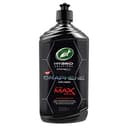
What graphene actually adds
Graphene oxide in a coating is there to change how the cured layer behaves. The three claims made most consistently across the category are:
- Reduced water spotting. Ceramic coatings are famously prone to spotting because their extreme hydrophobicity leaves discrete droplets sitting on the surface to evaporate. Graphene coatings are marketed as sheeting more and beading slightly less, which would leave fewer droplets behind.
- Lower heat retention.Marketed particularly for dark paint, on the basis of graphene’s thermal properties.
- A slicker surface and longer claimed life. Durability figures in this category are manufacturer claims, and we quote them as claims.
What none of them changes: a graphene coating on badly prepared paint fails just like a ceramic coating on badly prepared paint. The prep is the product. Our graphene vs ceramic coating guide goes deeper into where the marketing outruns the evidence.
The three things sold as “graphene”
Bottled coatings
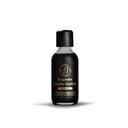
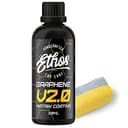
A true coating: a small bottle of liquid applied with a suede-wrapped block, leveled within a specific window and left to cure. Durability is measured in years, application is unforgiving, and preparation must be perfect because anything under the coating is sealed in. These are the expensive picks here, and they are the only ones competing with a professional installation.
Spray coatings
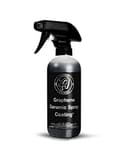
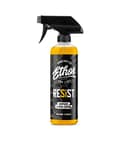
Wipe-on, buff-off SiO2-plus-graphene sprays. Months of protection rather than years, no leveling window to get wrong, and reapplication is easy enough that protection never drops off a cliff. For most people this is the sensible entry point, and the same argument we make for ceramic sprays applies unchanged.
Graphene waxes
A liquid wax with graphene in the formulation. It applies like a wax, lasts like a wax, and costs like a wax. There is nothing wrong with that — it is the cheapest way to see whether you like how the finish looks — but do not expect a coating’s durability from it, and be skeptical of any marketing that implies otherwise.
Applying a graphene coating without regretting it
The rules are the same as for any coating, and they are not negotiable:
- Decontaminate completely. Wash, iron remover, then clay. Anything left on the paint gets locked under the coating.
- Polish if the paint needs it. A coating amplifies whatever is underneath, so swirls will be sealed in and magnified. See paint correction for beginners.
- Wipe down with a panel prep so no polishing oils remain to block the bond.
- Work small, level on time. One panel section at a time, and level within the window the maker states. Miss it and you get high spots that need machine polishing to remove.
- Keep it dry while it cures. Usually 24 hours minimum before the car sees rain.
Then maintain it properly: pH-neutral soap, no automatic brushes, and a maintenance routine that does not strip what you just spent a day applying.
Should you buy graphene or ceramic?
If you are choosing between a good ceramic coating and a good graphene coating at similar prices, either is a reasonable buy and the prep will decide your result. If graphene carries a meaningful premium over an equivalent ceramic, the honest answer is that the premium is not clearly earned by evidence we can point you to. Spend the difference on a better polisheror on decontamination products instead — those changes show up in the finish regardless of what goes on top. Compare against the full ceramic coating shortlist before deciding.